


Early Georgian Grandfather Clock
An early georgian grandfather clock is a tall floor-standing timekeeper built during the eighteenth century that brings architectural presence and mechanical heritage to a room.
Early Georgian Grandfather Clock
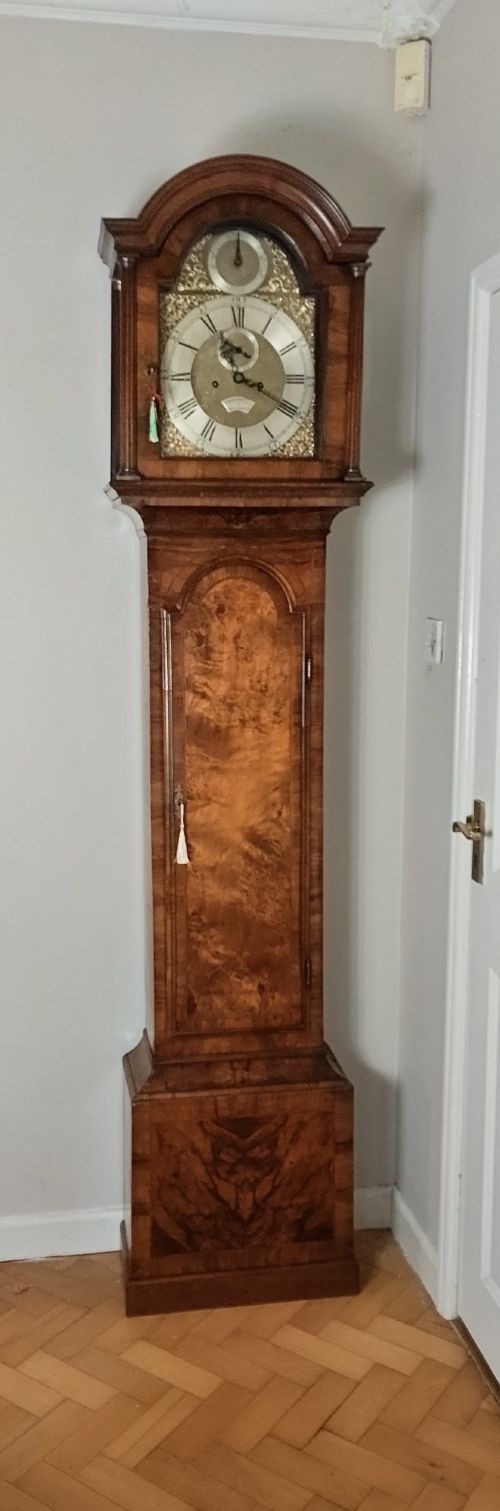
An early georgian grandfather clock stands as a monumental timekeeper from the eighteenth century, encompassing tall wooden floor cases designed to house weight-driven movements and pendulums. These pieces trace their origins to the reigns of early Hanoverian monarchs, bringing domestic timekeeping into prominence within high-status homes.
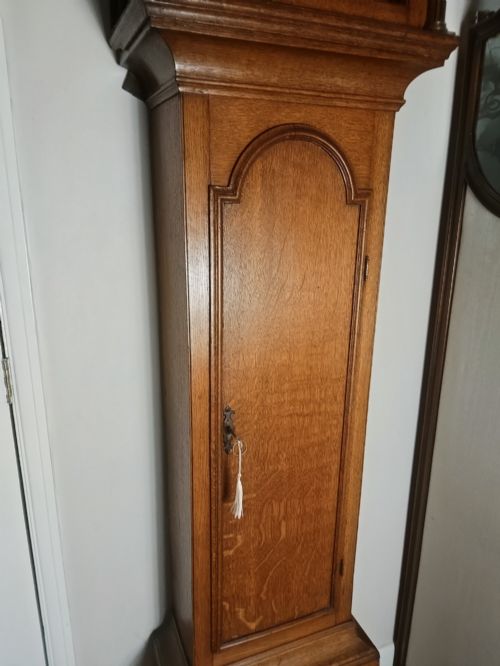
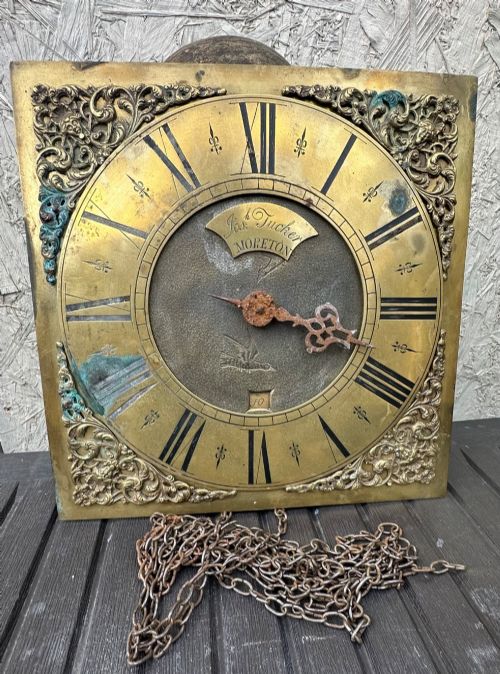
The versions most frequently met on this page include sturdy oak and figured walnut longcase clocks featuring brass dials, single-hand or eight-day movements, and regional English or Welsh craftsmanship. Such examples often display square brass dial plates or arched tops, sitting comfortably within traditional interiors.
Materials and Construction
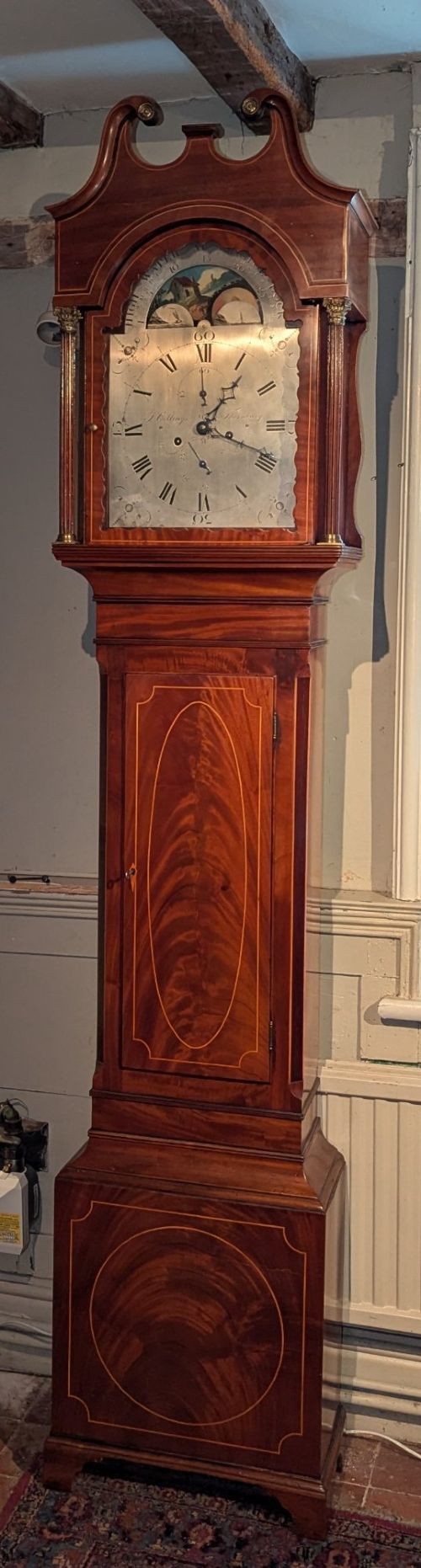
Cabinetmakers built these tall cases primarily from solid oak, dense mahogany, and burr walnut, frequently applying fine veneers, cross-banding, and inlay to enrich the timber surfaces. Glass protected the delicate dial aperture on the hood, while iron and steel formed the inner cog wheels, plates, and anchor escapements of the mechanical movements.
Dial faces combined cast brass, silvered brass chapters, and engraved spandrels in the earlier pieces, transitioning later towards painted iron dials decorated with moons and floral corners. Clockmakers housed these movements within five-pillar brass frames or birdcage structures, driving the striking trains via lead weights suspended by cords or lines.
Many of these clocks possess distinct personalities, keeping time while recording decades of family life through the gentle sway of their brass bobs.
Evaluating Distinction
Proportion and timber selection dictate the hierarchy of these clocks, separating provincial utility from metropolitan refinement. Cabinets featuring highly figured burr walnut, flame mahogany, or exceptionally slender proportions command greater appreciation among collectors than standard utility oak examples.
The integrity of the dial and movement partnership further defines excellence. Original matching brass or painted dials signed by recognised regional makers, combined with unblemished movement trains, represent the pinnacle of surviving horological achievement.
Thomas Webbe of New Quay·David Morice of Auchtermuchty·William Smith of Keighley·John Harrington of London·George Adams·Ganthony of London·Hampston Prince and Cattles·John Bishop of Sherborne·E. Sanders of Poole·Henry Smith of Petersfield·John Hancock of Yeovil·Ebenezer Handscomb·Peter Bower of Redlench·Pat Cock of Nottingham·John Stancliffe of Halifax·Thomas Hampson of Wrexham
The Early Georgian Grandfather Clock Glossary
- Longcase clock
- An alternative term for a grandfather clock, describing a tall floor-standing timekeeper that encloses its weights and pendulum within a vertical wooden trunk.
- Spandrel
- An ornamental corner piece applied to the dial of a clock, cast in brass and often chased or pierced in styles specific to the period.
- Count wheel
- A circular slotted plate mounted inside the movement that controls the number of strikes the clock executes on the bell each hour.
- Moon dial
- A secondary moving disc beneath the dial arch that tracks the lunar phases and the age of the moon through a full monthly cycle.
- Chinoiserie
- A decorative lacquer technique imitating East Asian designs, frequently applied in dark green or dark backgrounds on early eighteenth-century clock cases.
Early Georgian Grandfather Clock: Frequently Asked Questions
How do I wind an eight-day grandfather clock?
Winding requires inserting a crank key into the winding holes on the dial face and turning it slowly until the weight reaches the top of the trunk.
Care must be taken not to overwind the mechanism, stopping as soon as resistance increases to prevent damage to the gut lines or internal chains.
Where should I place a longcase clock in my home?
Position the clock against a solid interior wall away from direct sunlight, heating vents, and damp doorways to protect the antique wood veneers and movement.
Ensuring the floor is level allows the pendulum to swing evenly, keeping the clock ticking with a steady beat.
How do I tell an early eighteenth-century dial from a later one?
Early dials utilise cast brass plates with applied silvered chapter rings and detailed corner spandrels, often featuring a single hour hand or early minute hand.
Later eighteenth and nineteenth-century examples frequently employ painted iron dials decorated with nautical scenes, moons, and calendar apertures.
What is the difference between a thirty-hour and an eight-day movement?
Thirty-hour movements require winding once a day and typically feature simpler gear trains driven by a single rope or chain carrying a single weight.
Eight-day movements use two weights and require attention only once a week, driving complex gear trains that often include striking mechanisms or bell chimes.