
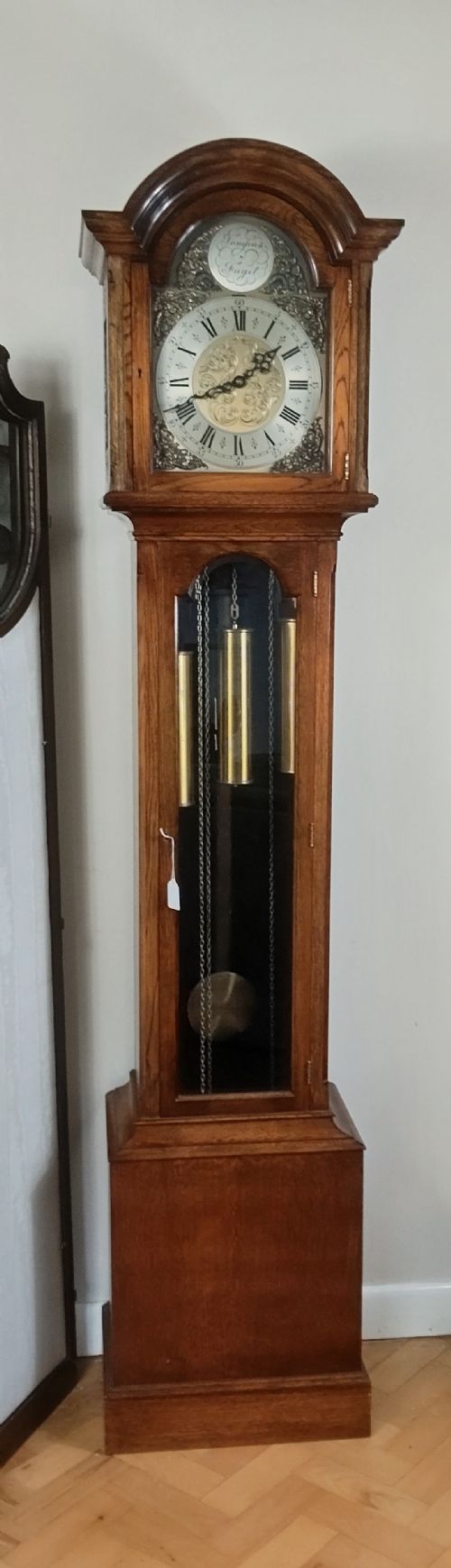


Warm Brown Floor Clock
A warm brown floor clock brings the steady tick of centuries into a room, offering the rich grain of oak or mahogany and a tall presence that anchors an interior.
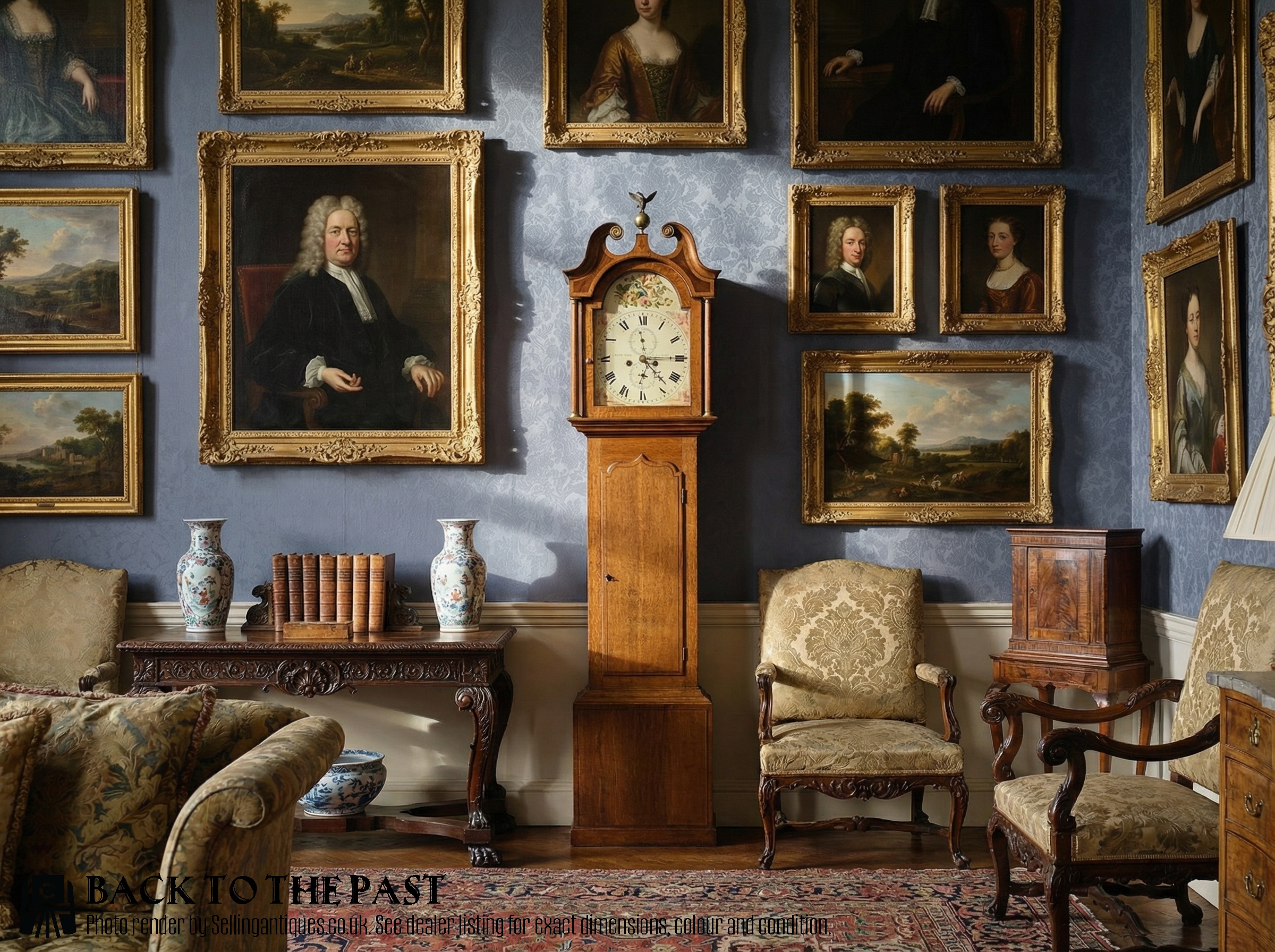
Warm Brown Floor Clock
The pieces on this page appear mostly as longcase or grandfather clocks, often featuring brass dials, arched faces, and timber cases showing deep, aged patination. Scottish and English regional makers contributed to this variety, working with local hardwoods to produce sturdy household timekeepers.
The selection leans heavily on Georgian and Victorian examples, where deep brown oak and figured mahogany dominate the visual landscape. These tall structures house weights and pendulums, combining mechanical utility with cabinetmaker artistry.
Materials and construction
Cabinetmakers constructed these tall cases using solid oak and mahogany boards, often selecting timber with rich grain patterns that developed warm brown tones over generations of polishing. Iron and brass components formed the intricate gear trains and face plates, while glass protected the dial and pendulum window.
Warm Brown Floor Clock Retail Price Guide 2026
Typical asking prices for warm brown floor clock among the pieces listed under this phrase on Sellingantiques today, from the lower quarter to the upper quarter. They describe what is for sale here now, not the wider market.
Listings span periods from early Georgian to the nineteen-thirties, utilising oak, mahogany, brass, glass, and iron.
Markers of distinction
Quality reveals itself in the selection of timber, where well-figured mahogany or richly grained oak displays superior depth and colour. The refinement of the brass dial engraving and the proportion of the case woodwork separate standard examples from finer commissions.
Case architecture also dictates standing, with slender proportions, architectural mouldings, and crisp carving reflecting the skill of the original maker. The integration of movement and case shows whether components were born together or assembled later.
The Warm Brown Floor Clock Glossary
- Longcase clock
- A tall, weight-driven pendulum clock housed in a wooden case designed to stand directly on the floor. These timepieces are frequently referred to as grandfather clocks.
- Penny moon
- A mechanical disc painted with lunar phases, visible through an aperture on the clock dial. It tracks the cycle of the moon alongside the time.
- Arch
- The curved upper section of a clock dial, often housing subsidiary dials or painted decoration. George III examples frequently utilise this space for ornamentation.
- Patina
- The surface sheen and deep coloration developed by wood and metal over centuries of handling and exposure to light. It serves as an indicator of age and care.
Warm Brown Floor Clock: Frequently Asked Questions
Where should I place a floor clock?
These tall timepieces require a stable, level floor and a secure fixing to the wall behind them to prevent tipping. Placing them away from direct sunlight and heat sources protects the timber case from drying out.
Their commanding height makes them suited to hallways, landings, or principal reception rooms where adequate vertical clearance is available.
How do I wind the clock?
Most mechanical floor clocks feature weights suspended on chains or cords that require periodic raising using a crank key. The frequency depends on whether the movement is an eight-day or thirty-hour design.
Careful handling during winding ensures the internal gear train and weights remain undisturbed and balanced.
How can I tell the period?
Case design, timber choice, and dial shape offer strong clues to the era of manufacture. Early Georgian pieces often feature plain oak and square dials, while later eighteenth-century work introduces mahogany, arched faces, and refined brass spandrels.
Victorian and later revivals often incorporate heavier proportions or regional signatures that distinguish them from earlier work.
What maintenance do they need?
Routine care involves keeping the exterior timber clean with appropriate wax polish and ensuring the clock remains upright and level. Mechanical movements benefit from periodic cleaning and oiling by a qualified horologist to maintain accurate timekeeping.
Avoiding sudden temperature fluctuations prevents the wooden case from warping and preserves the alignment of the door and movement.