
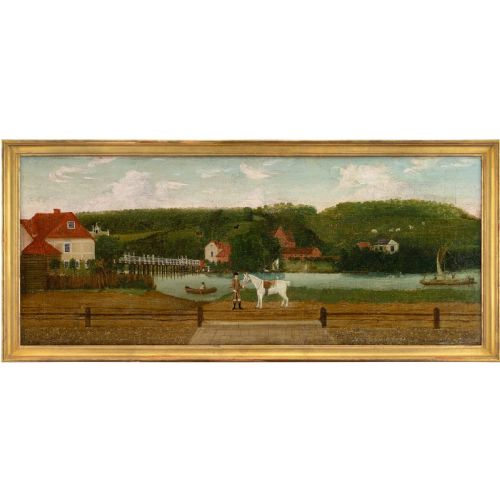
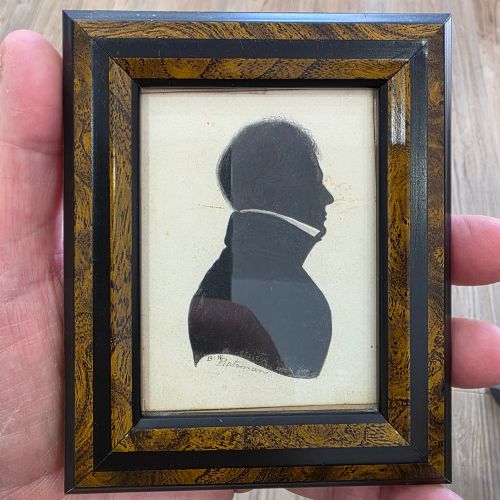
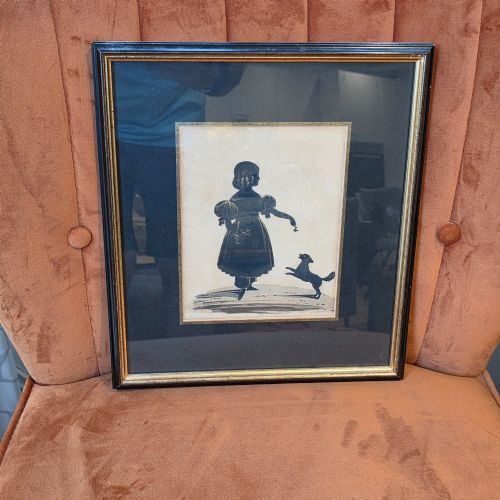
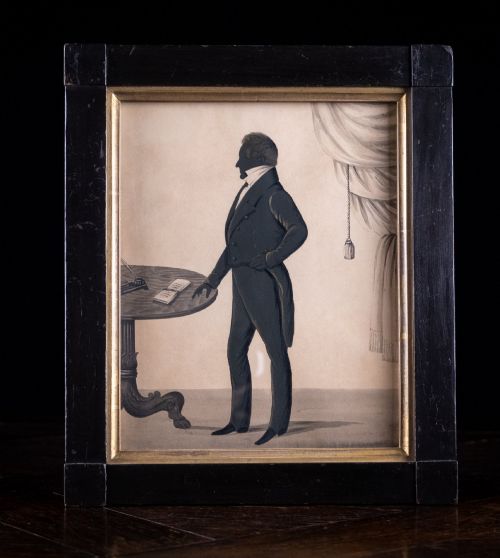
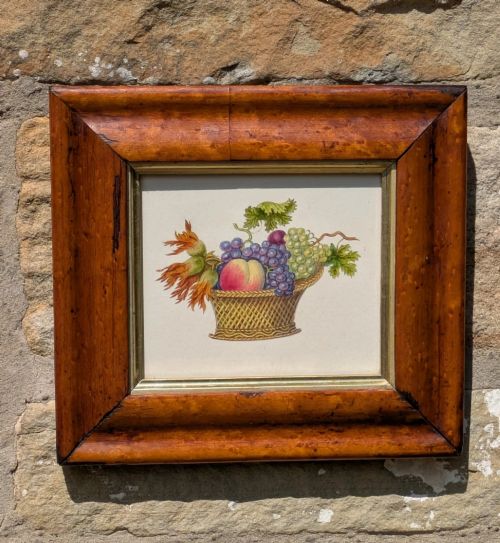
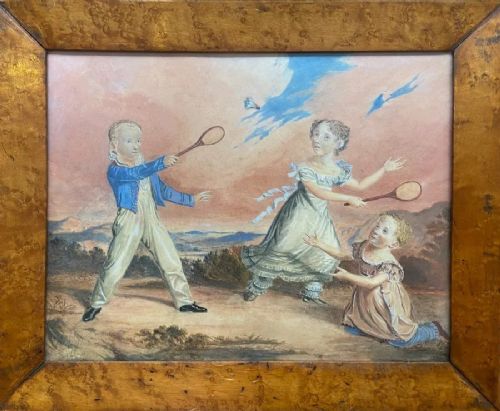
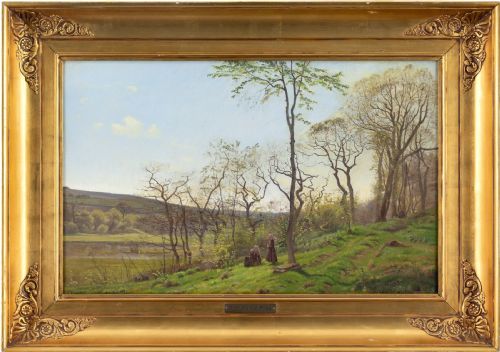



Early 19th Century Picture
An early 19th century picture brings together oil paintings, watercolours, silhouettes and needlework from a period of distinct domestic and artistic observance.
Early 19th Century Picture
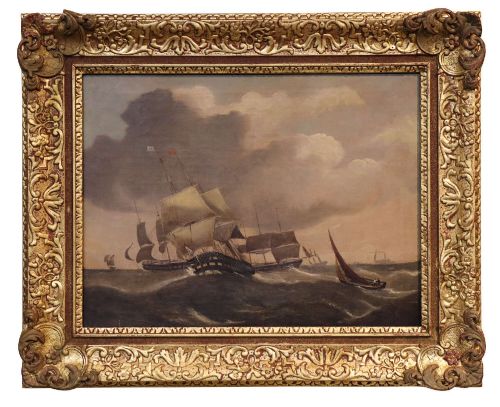
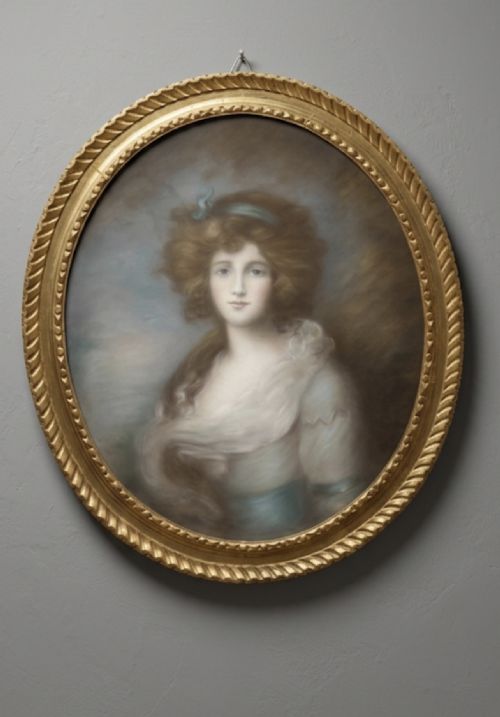
When looking for an early 19th century picture, collectors encounter a diverse range of visual media produced across Regency, Georgian and early Victorian periods. The selection spans oil paintings on canvas and wood panel, delicate watercolours, silhouette portraits and textile artworks.
Framed works in this category frequently record landscapes, maritime scenes, portraits and narrative embroidery. Examples extend from British school oil paintings to Chinese export reverse painted mirror-glass and continental landscapes.
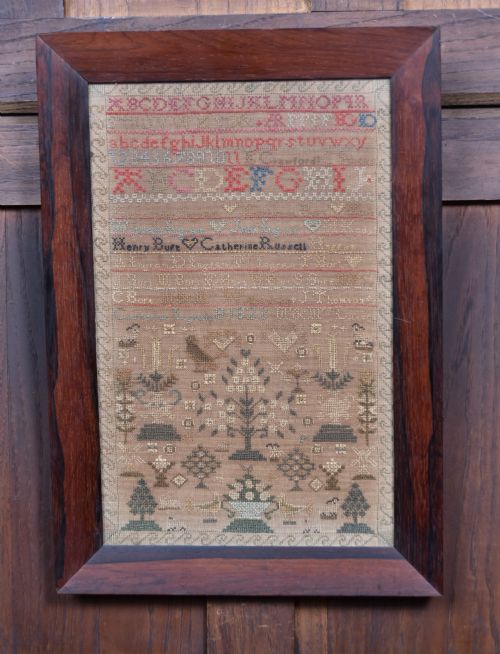
Needlework samplers, silkwork embroideries and tinsel prints also form a significant portion of the available items. These pieces demonstrate the varied domestic and professional output of artists and makers during the early 1800s.
How they were made
Makers utilised traditional oil paints on stretched canvas or prepared wood panels, alongside watercolours and inks applied to paper. Silhouette artists combined cut paper, watercolours and gold leaf highlights within gilded frames.
Textile pictures relied on wool, silk, felt and crewel work, often incorporating detailed embroidery stitches to render narrative scenes and samplers. Reverse painted mirror-glass techniques required meticulous hand-painting directly onto the rear of the glass plate.
Frames were constructed from wood and embellished with gesso and gold leaf to house these diverse mediums securely. Craftspeople shaped boxwood, oak and giltwood to create architectural and decorative borders suited to the art.
Listings feature works spanning the 19th century, Regency, Georgian and Victorian periods, executed in oil on canvas, watercolour, glass, paper and silk.
What varies in quality
The standard of execution in an early 19th century picture depends on the precision of the draughtsmanship and the stability of the materials used. Detailed brushwork in oil paintings and fine needlework stitches indicate higher technical accomplishment.
Preservation of the original surface, whether paper, canvas or silk, influences the overall integrity of the piece. Works retaining their initial gilding, glass and wooden frames offer a more complete historical example.
William James Hubard·Henry Travis·Harald Foss·Thomas Gainsborough·Lewis J Wood·J Deacon
The Early 19th Century Picture Glossary
- Silhouette
- A portrait profile filled in with a solid colour, usually black, often enhanced with gold leaf and cut paper details. These were popular for capturing likenesses before the widespread use of photography.
- Sampler
- A piece of needlework produced to demonstrate proficiency in various embroidery stitches and patterns. They frequently incorporate alphabets, numerals and domestic scenes.
- Giltwood
- Wood that has been coated with a thin layer of gold leaf or gold paint. This finish is commonly found on picture frames from the Regency and Georgian periods.
- Tinsel print
- A type of theatrical print popular in the 19th century, embellished with pieces of tinsel, foil and fabric glued to the paper. They usually depicted actors in popular stage roles.
- Reverse painted mirror-glass
- A technique where an image is painted directly onto the reverse side of a glass panel, creating a reflective surface finish. Chinese export workshops frequently produced these for international trade.
Early 19th Century Picture: Frequently Asked Questions
What is an early 19th century picture?
An early 19th century picture encompasses oil paintings, watercolours, silhouettes, needlework samplers and reverse painted glass created during the Regency, Georgian and early Victorian eras.
These artworks reflect the diverse domestic, landscape and portraiture styles produced by artists and makers across Britain, Europe and international trade centres between 1800 and the mid-19th century.
How were needlework pictures used?
Needlework pictures and samplers served as displays of domestic skill and artistic accomplishment for makers during the early 19th century.
Framed and hung in domestic interiors, they recorded family genealogies, moral stories, or local architectural landmarks like Claremont House using silk, wool and cotton threads.
How do I care for silkwork and paper art?
Works on paper, silk and felt require protection from direct sunlight to prevent the fading of watercolours, inks and textile dyes. Maintaining stable indoor humidity prevents the degradation of organic materials like paper, wood panels and silk threads.
Displaying pieces away from damp environments ensures the preservation of the original pigments, paper supports and stitched textile elements.
How are Regency and Victorian styles told apart?
Regency pieces often display neoclassical restraint, lighter colour palettes and refined elegance reflecting the early decades of the 19th century. Victorian works tend toward more elaborate detail, heavier framing and narrative complexity as industrial and domestic tastes shifted.
Examining the underlying materials, subject matter and framing techniques helps place an artwork within its specific stylistic decade.