




Cream Paper Portrait Sketch
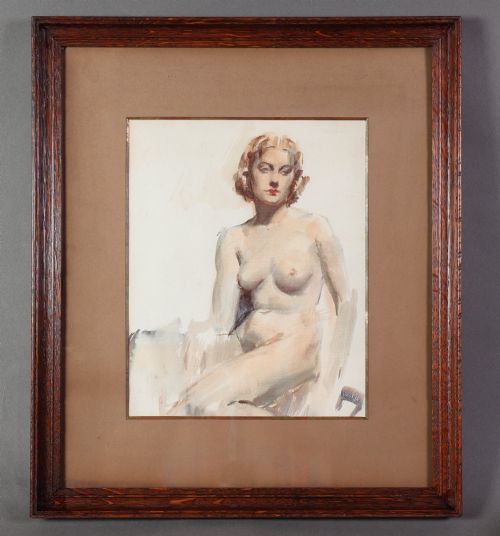
A cream paper portrait sketch captures a likeness through hand-applied pencil, chalk, or watercolour on a pale sheet.
Cream Paper Portrait Sketch
A cream paper portrait sketch provides a direct encounter with a sitter from the nineteenth century, the Edwardian era, or the early twentieth century. These works appear as pencil drawings, watercolours, and mixed media compositions on paper supports.
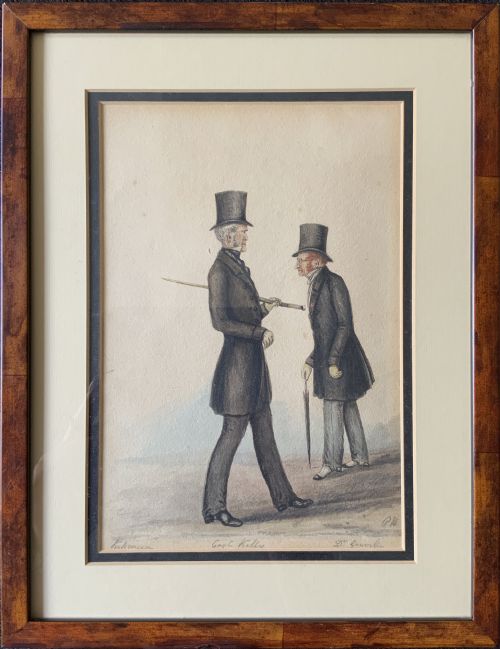
The selections on this page range from Regency academic studies and Victorian caricatures to Modern British works and Orientalist depictions. Buyers encounter framed artwork, wall art, and standalone drawings that record faces from past decades with immediacy.
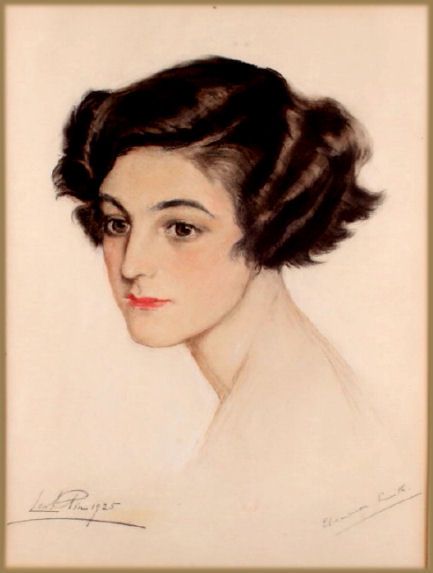
Most pieces show intimate facial studies, female portraits, and character sketches executed by named artists or the British School. The paper tone varies from bright cream to aged warm parchment depending on the age and storage of the piece.
How they were made
Supports consist of various paper stocks, occasionally framed behind glass within wooden surrounds to protect the delicate media from airborne dirt and moisture.
A nineteenth-century caricature sits alongside formal portraits, proving that ancestors enjoyed a bit of gentle mockery just as much as we do.
What varies in quality
The strength of the draftsmanship dictates the visual success of each sketch, separating confident, fluid line work from hesitant or rigid proportions. Expressive handling of the medium allows the personality of the sitter to emerge more vividly.
Condition plays a significant role, as paper reacts to light and humidity over centuries. Intact sheets with minimal fading, stable pigment adhesion, and sympathetic framing retain their original impact far better than heavily foxed examples.
John Duncan Fergusson·Dame Laura Knight·Theobald Chartran·Leo Klin
The Cream Paper Portrait Sketch Glossary
- Gouache
- An opaque water-based paint that provides solid areas of colour and highlights over pencil sketches. It differs from transparent watercolour by containing a white pigment filler.
- Foxing
- Brown spots or patches that develop on older paper due to chemical reactions in the pulp or damp storage conditions. These marks appear frequently on nineteenth-century sheets.
- Support
- The physical material upon which the artwork is created, such as cream paper in these portraits. It provides the foundational surface for all drawn and painted marks.
- Monogram
- A motif made by overlapping or combining two or more letters to form a single symbol used by an artist to sign a work. This appears on several pieces instead of a full signature.
Cream Paper Portrait Sketch: Frequently Asked Questions
How should I frame a paper sketch?
Protect the paper by using conservation-grade mount board that keeps the surface from touching the glass directly. Ultraviolet-filtering glazing helps prevent the cream paper and watercolour pigments from fading under ambient light.
Hang the framed artwork away from direct sunlight and damp environments like kitchens or bathrooms. Stable indoor temperatures preserve both the paper support and the wooden frame.
What periods do these sketches cover?
The available pieces span from the Regency era through the Victorian period, the Edwardian years, and into the 1920s and 1930s. Each period introduces distinct clothing styles, hair designs, and artistic techniques.
Nineteenth-century examples often lean towards academic realism or caricature, while twentieth-century pieces reflect Modern British and Art Deco sensibilities.
Are these drawings signed by the artists?
Some sheets feature clear signatures or artist monograms, while others originate from broader designations such as the British School. Signed works often link directly to known painters and illustrators of the period.
Unsigned sketches rely on stylistic markers, materials, and subject matter to suggest their date and origin within a specific artistic movement.
What media are used on the paper?
Artists utilised graphite, pencil, chalk, and charcoal to build the primary lines and shading of each face. Watercolour and gouache appear frequently as washes or highlights over the pencil work.
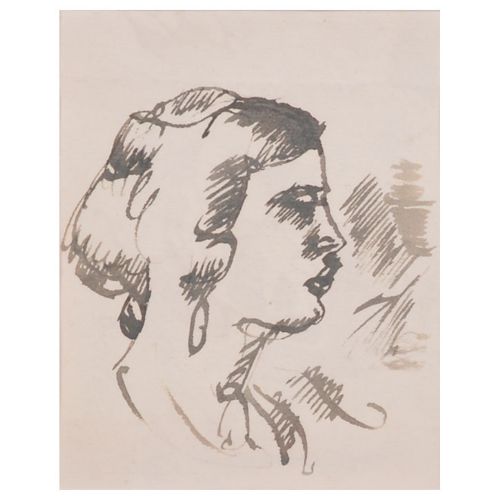
Ink also appears in specific studies, offering sharp contrast against the cream tone of the paper support.