


Dutch Walnut Furniture
Dutch walnut furniture brings together rich cabinetwork and floral marquetry, offering functional statement pieces that anchor a room.
Dutch Walnut Furniture
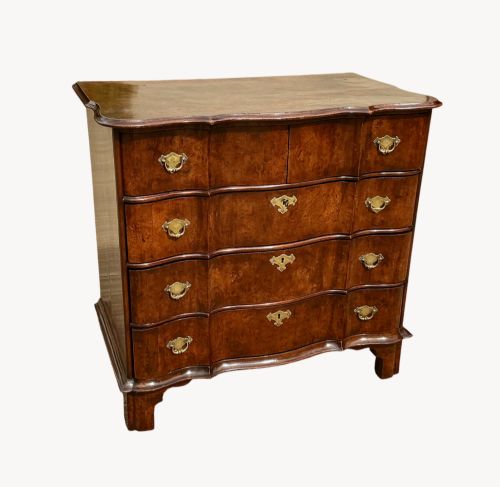
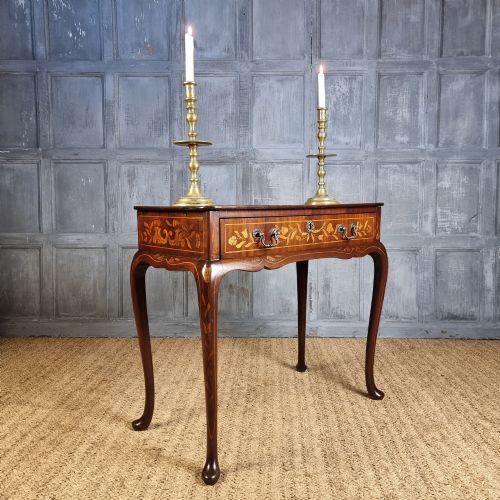
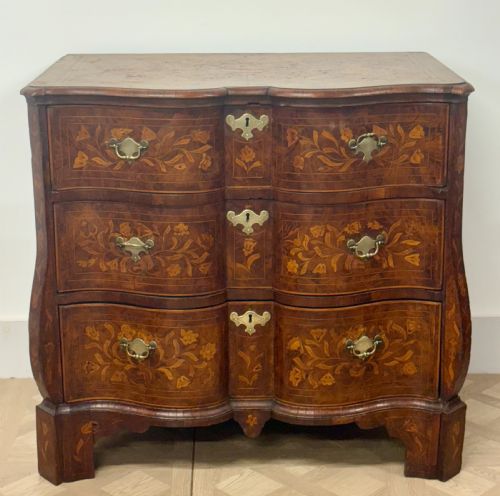
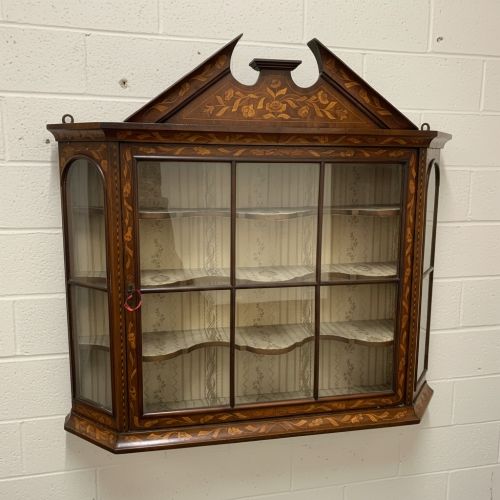
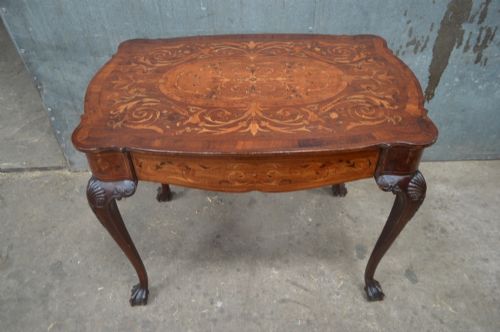
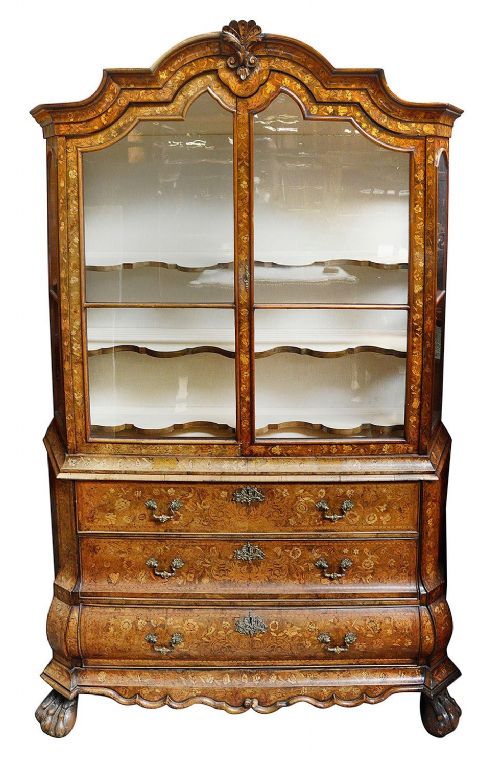
Dutch walnut furniture encompasses a range of domestic objects designed for storage and display, appearing frequently across the eighteenth century alongside nineteenth and twentieth-century revivals. Buyers encounter forms such as chests of drawers, bureaux, display cabinets, side tables, and bureau bookcases.
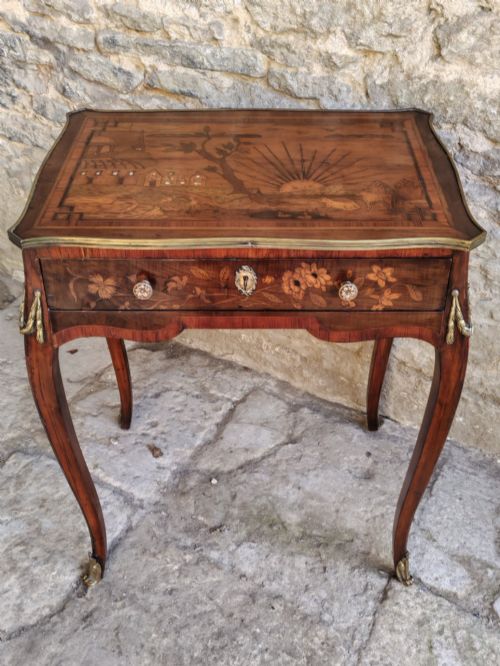
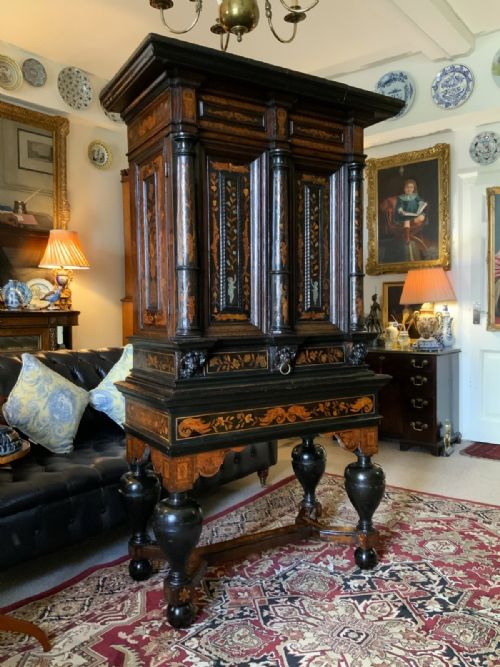
The selection on this page relies heavily on eighteenth-century examples decorated with marquetry, spanning styles from Dutch Baroque to Rococo. Pieces range from large architectural cabinets down to small apprentice miniature cabinet pieces and torcheres.
How they were made
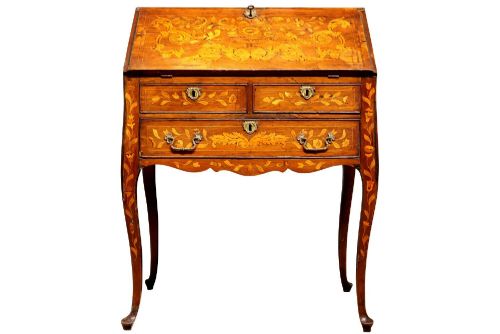
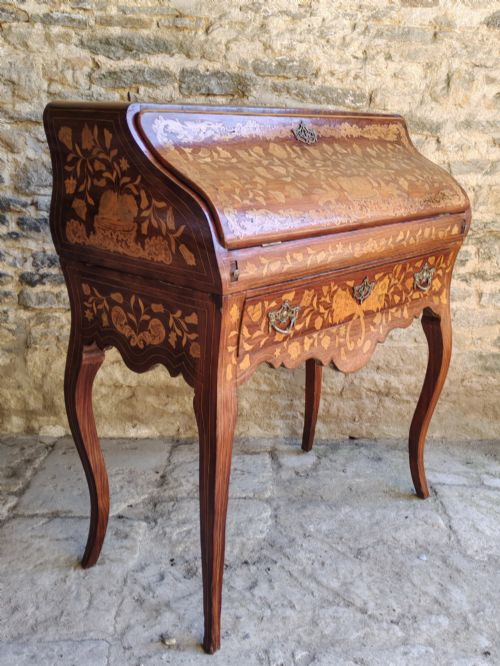
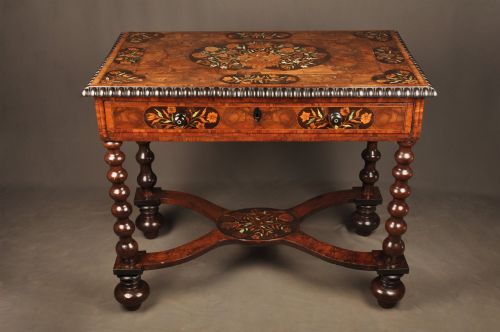
Cabinetmakers utilised walnut and burr walnut as primary timbers, often laying veneers over secondary woods to create figured surfaces. Fruitwood inlay and floral marquetry provide the characteristic decoration, sometimes complemented by pewter inlay or brass mounts.
Dutch Walnut Furniture Retail Price Guide 2026
Typical asking prices for dutch walnut furniture among the pieces listed under this phrase on Sellingantiques today, from the lower quarter to the upper quarter. They describe what is for sale here now, not the wider market.
What varies in quality
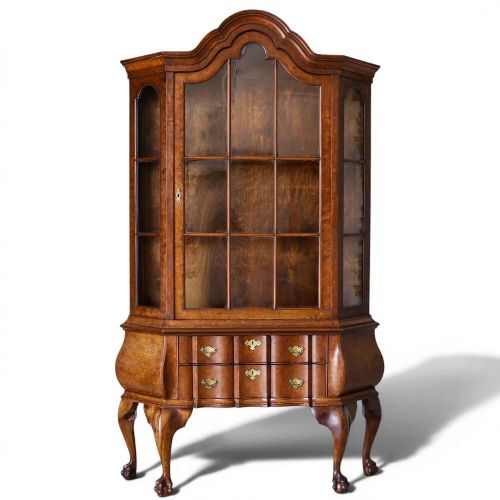
Quality depends upon the precision of the floral marquetry and the choice of burr walnut veneers, where striking grain patterns elevate the overall presence of a piece. The depth and crispness of carved details in styles such as Dutch Baroque and Rococo mark the distinction between standard production and exceptional workshop output.
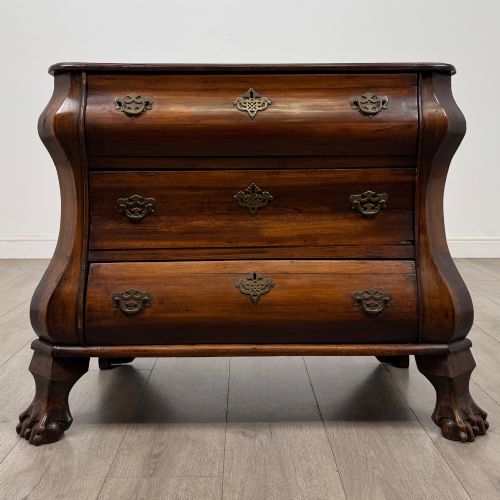
Proportion and architectural integrity also divide the range, particularly in complex forms like bureau bookcases and bombe chests where carcass alignment dictates visual success. Surviving surface patination and the integration of original hardware contribute significantly to the standing of any given item.
The Dutch Walnut Furniture Glossary
- Marquetry
- Decorative veneer work arranged in pictorial patterns. Floral marquetry is particularly prevalent on Dutch walnut furniture.
- Bombe
- A bulging, outward-curving contour found on the front and sides of chests and bureaux. This rounded form requires advanced woodworking skill.
- Torchere
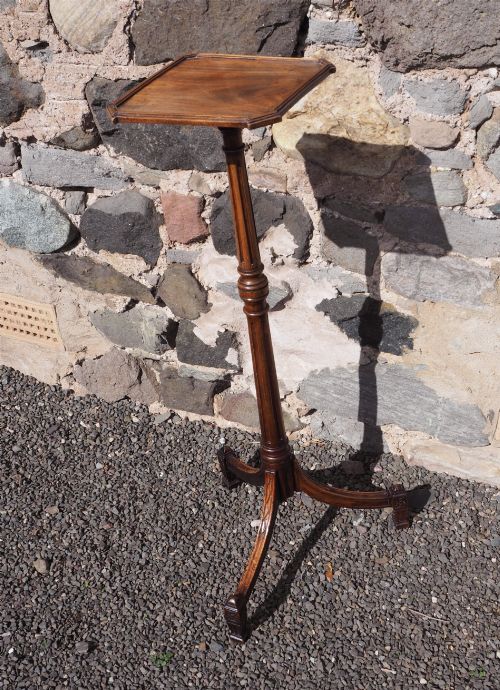
- A tall, slender stand designed to hold a light or decorative object. Pairs of these often appear in walnut and kingwood.
- Bureau bookcase
- A writing desk with a sloping fall-front surmounted by a glazed or panelled cabinet. These monumental pieces combine storage with display.
Dutch Walnut Furniture: Frequently Asked Questions
Where should I place a bureau bookcase?
These tall pieces require a wall with sufficient height and depth to accommodate their proportions safely without overwhelming the room.
Position them away from direct sunlight and heat sources to protect the walnut veneers and delicate marquetry from drying out.
How do I care for walnut veneer?
Dust the surfaces regularly with a soft, dry cloth and avoid commercial polishes containing silicone. Maintain a stable room temperature and humidity to prevent the timber from splitting.
Wax can be applied sparingly to nourish the wood and preserve the patina over time.
What is a bombe front?
A bombe front curves outward in a rounded profile, giving the furniture a substantial and sculptural appearance. This profile is typical of eighteenth-century Dutch chests and bureaux.
Crafting this shape demands precise carpentry to ensure the drawers operate smoothly within the curved carcass.
How do I distinguish eighteenth-century pieces?
Examine the construction methods, timber selection, and secondary woods used inside the drawers and carcase backs. Eighteenth-century examples often display hand-cut joinery and characteristic floral marquetry patterns.
Stylistic markers such as Dutch Baroque or Rococo details also help place an object within its historical period.