






Dutch Walnut Bureau
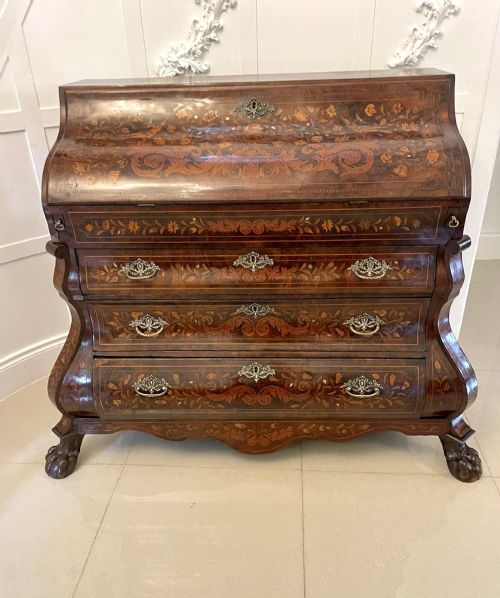
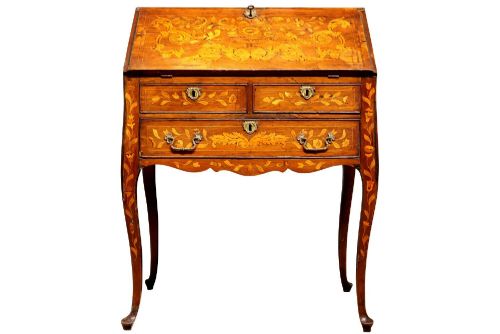
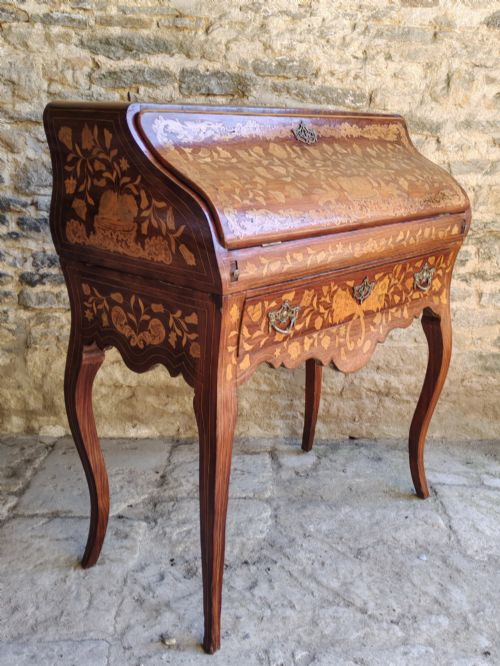
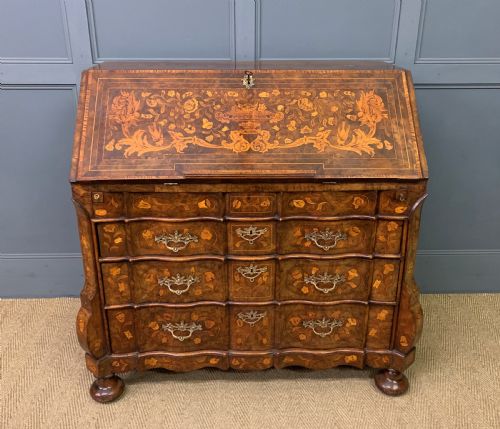
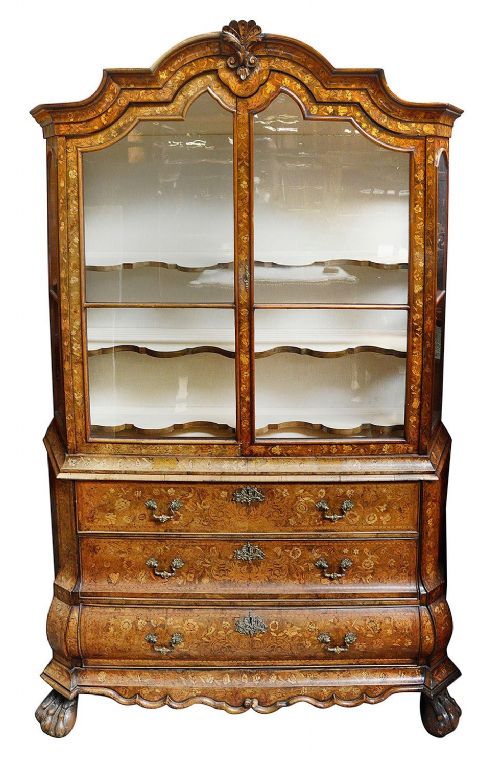
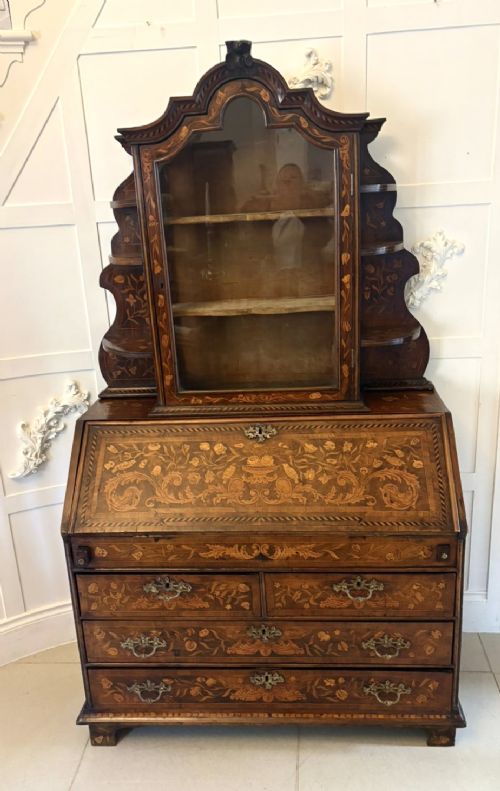
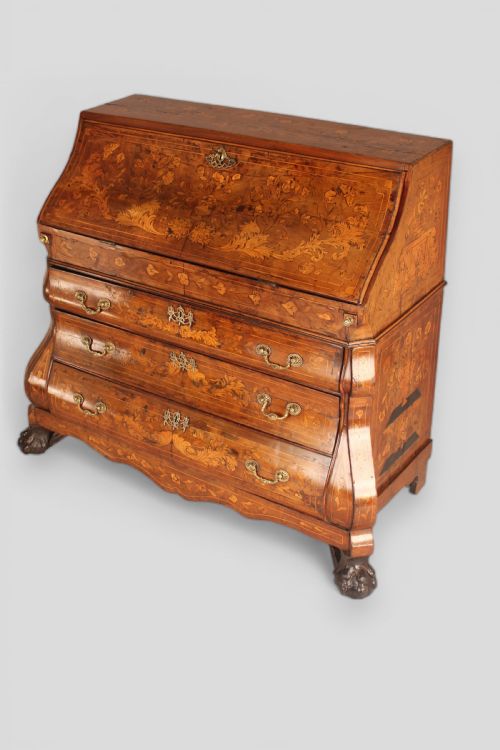
A dutch walnut bureau brings together rich burr timbers and elaborate floral inlay, offering a fitted writing surface and generous storage.
Dutch Walnut Bureau
A dutch walnut bureau is a writing cabinet designed with a sloping fall-front that opens to reveal internal compartments, small drawers, and pigeonholes for correspondence. These items frequently appear alongside larger bureau bookcases, display cabinets, and cylinder desks configured for domestic study or reception rooms.
The pieces on this page span the eighteenth and nineteenth centuries, incorporating revival periods and later interpretations from nineteen twenty. Formats range from straightforward sloping desks to substantial bomb-shaped cabinetry and tall compartmented bookcases.
Originating predominantly from Dutch workshops, these items reflect continental cabinet-making traditions that prioritise expressive silhouettes and complex floral ornament. Buyers encounter varied regional proportions, ranging from straight-fronted carcases to pronounced swelling lower drawers.
How they were made
Construction relies primarily on walnut and burr walnut veneers applied over secondary woods such as oak and fruitwood. Cabinet-makers selected figured timbers for their dramatic grain patterns, often matching veneers symmetrically across large surfaces like the fall-front or drawer fronts.
Decorative surfaces frequently incorporate intricate fruitwood marquetry and fruitwood inlay depicting floral arrangements, urns, and scrolling foliage. Brass hardware, including drop handles and escutcheons, secures the drawers and fall-front while accentuating the dark timber tones.
Listings feature walnut, burr walnut, fruitwood, and oak, alongside brass and glass elements across eighteenth and nineteenth-century periods.
What varies in quality
The standard of a dutch walnut bureau depends heavily on the ambition of its marquetry and the choice of timber figure. Dense, highly figured burr walnut veneers and finely shaded floral marquetry indicate superior workshop output.
Structural harmony also dictates standing power, particularly in bomb-shaped examples where swelling drawer fronts require precise joinery. The complexity of the internal fittings, such as secret compartments and shaped pigeonholes, further separates standard production from exhibition-grade work.
Morison of Edinburgh
The Dutch Walnut Bureau Glossary
- Bombe
- A bulging or swelling contour found on the front and sides of eighteenth-century furniture. This undulating form requires advanced cabinet-making skill to execute in solid timber and veneer.
- Marquetry
- Decorative inlay work where pieces of various coloured woods are fitted together to form pictorial designs. Floral motifs and urns are particularly common on continental European cabinetry.
- Burr walnut
- Timber taken from the abnormal growth of a walnut tree where the grain has grown in a swirling pattern. It creates highly decorative patterns prized for veneering prominent surfaces.
- Bureau bookcase
- A writing bureau combined with an upper shelving section enclosed by doors. These tall hybrid forms served both for correspondence and the display of books or porcelain.
- Fall-front
- The hinged writing flap of a bureau that pulls down into a horizontal position for writing. When closed, it conceals the inner compartments and supports.
Dutch Walnut Bureau: Frequently Asked Questions
What is a dutch walnut bureau?
A dutch walnut bureau is a sloping-front writing cabinet, frequently decorated with floral marquetry and built from figured burr walnut veneers. They provide a concealed writing surface alongside internal document drawers.
Many examples date from the eighteenth century, presenting either straight-fronted profiles or swelling bomb-shaped lower sections designed to make a strong visual statement in a room.
How were these bureaus used?
These pieces served primarily for private correspondence, record-keeping, and the storage of valuable papers within domestic interiors. The sloping flap folded down to create a firm writing desk.
Internal compartments and small drawers kept inkwells, quills, and letters organised, while the lower drawers provided general storage for household textiles or documents.
How do I style a bureau at home?
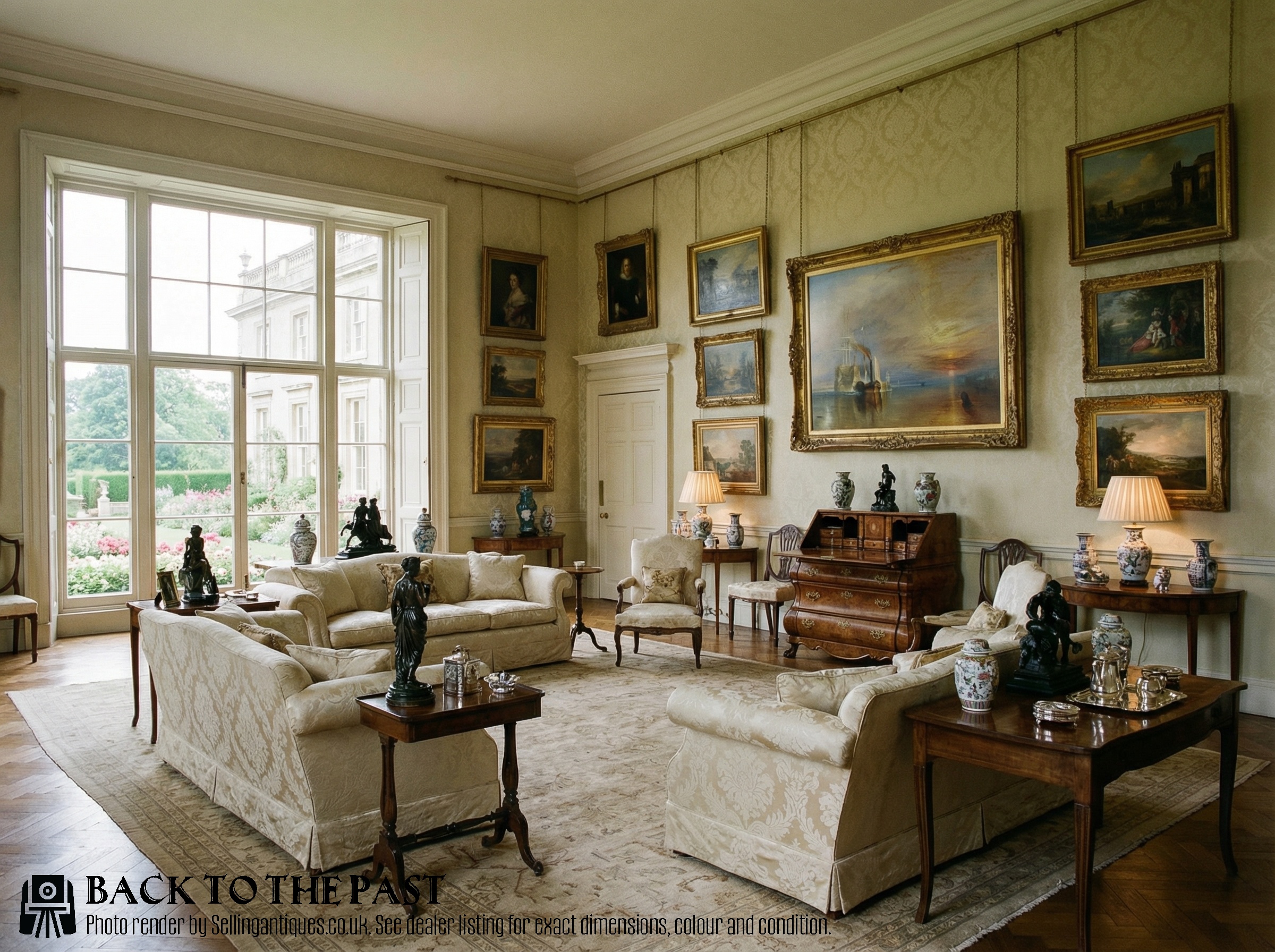
Placing a bureau in a study, drawing room, or living space allows the figured timber and floral marquetry to function as a focal point. Keeping the fall-front closed showcases the decorative veneer work.
Interior compartments can remain open to display vintage writing accessories, while the surface above accommodates table lamps or small decorative objects.
How do I tell periods apart?
Eighteenth-century examples often feature hand-cut dovetails, rich burr walnut patination, and organic floral marquetry reflecting baroque or rococo influences. Nineteenth-century interpretations and later revival pieces sometimes show different timber preparation and machine-sawn components.
Examining the secondary woods inside the drawers and the construction of the internal pigeonholes helps determine whether a piece belongs to the georgian era or later periods.