

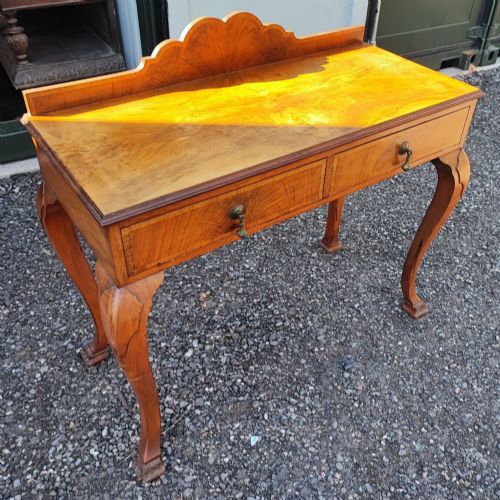
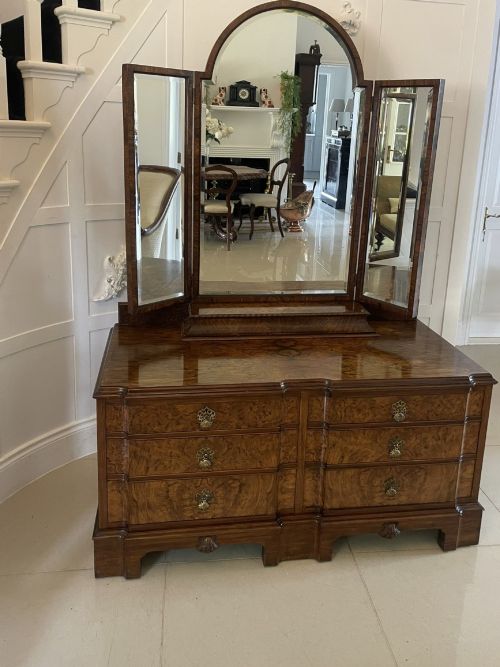
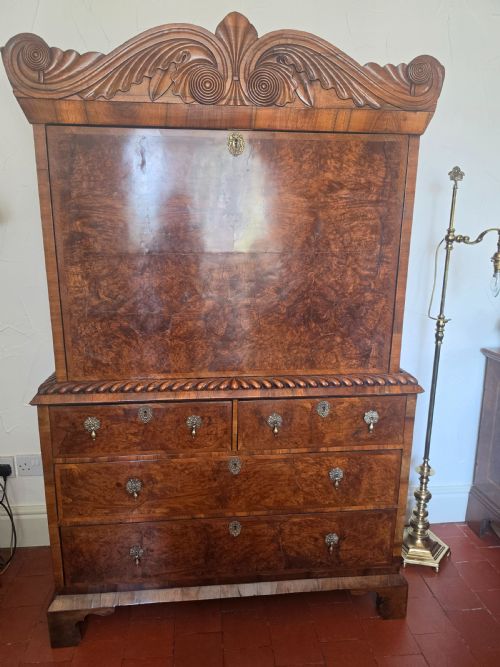
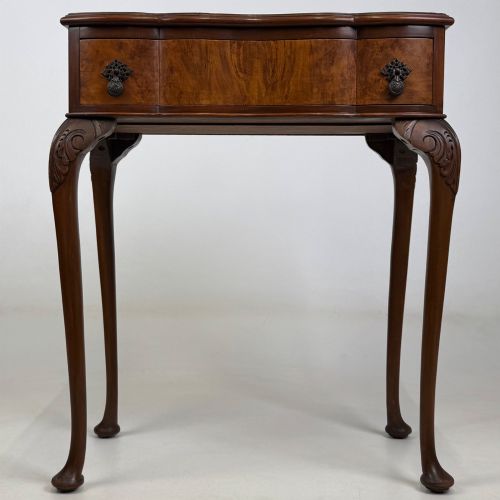

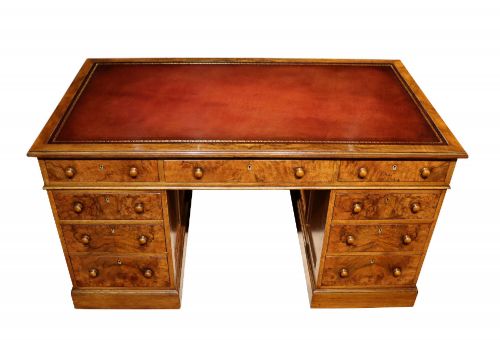

Carved Walnut Desk Drawers
These carved walnut desk drawers bring substantial timber, fine grain and period character straight to your study.
Carved Walnut Desk Drawers
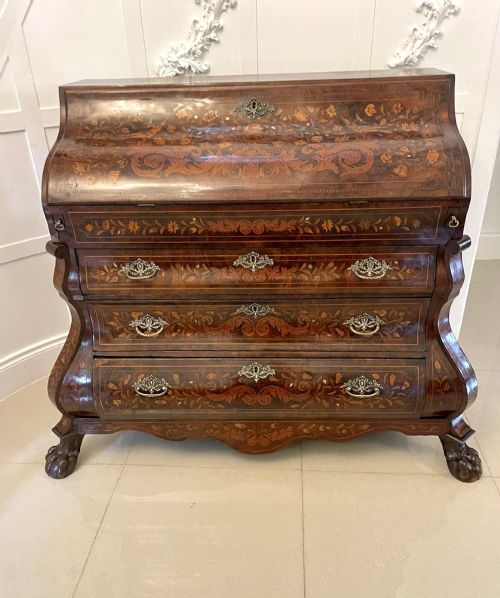
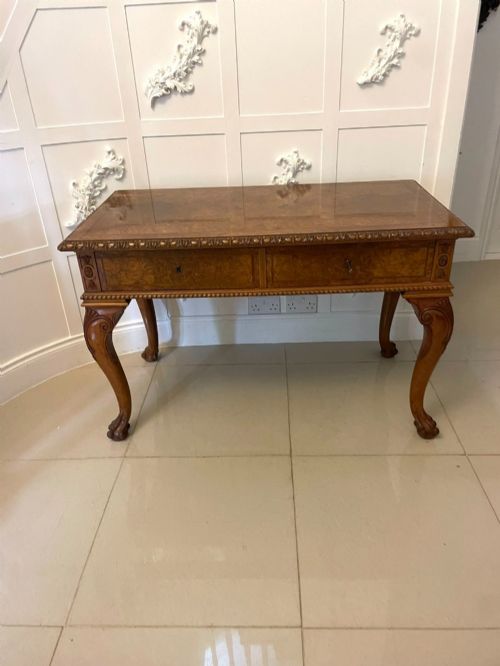
When you search for carved walnut desk drawers, you encounter a selection of writing furniture, bureau cabinets and lowboys incorporating fitted compartments for storage. These pieces span centuries of cabinet making, originating from English, French and general European workshops.
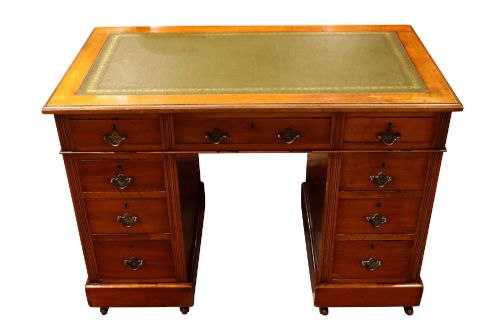
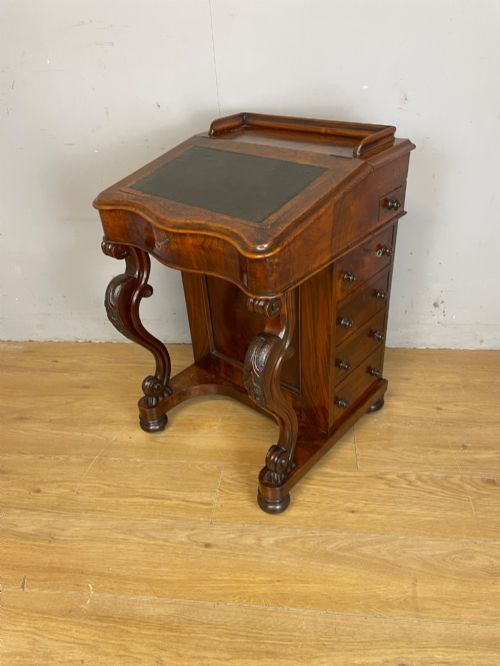
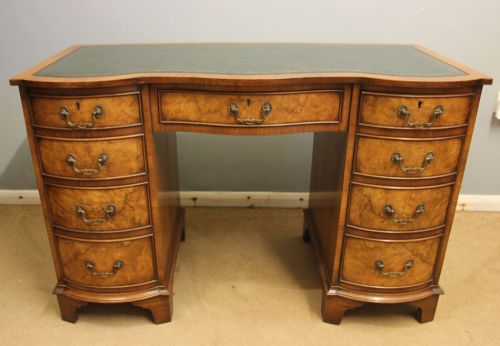
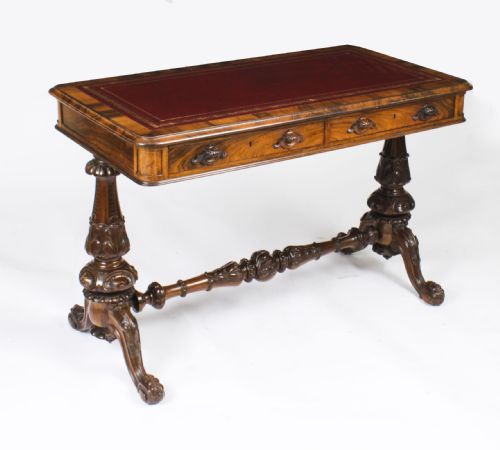
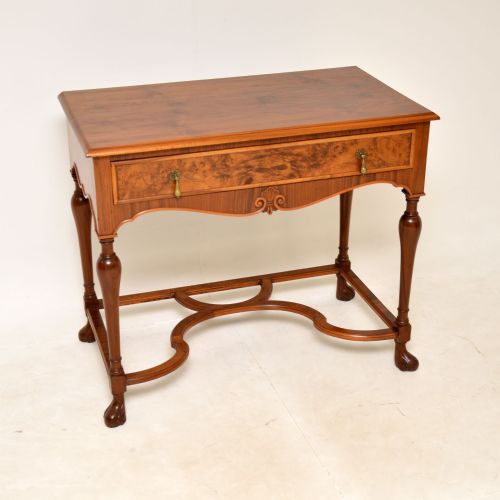
The assortment on this page relies heavily on Victorian and Edwardian examples alongside 18th-century pieces. You are likely to meet pedestal desks, writing tables and Davenport desks constructed with figured timbers and detailed handles.
Distinguishing quality in walnut furniture
The highest grade pieces demonstrate superior selection of burr walnut veneer, where the grain symmetry and rich figuring cover every visible surface deliberately. Lesser pieces rely on plainer timber or less ambitious veneer matching across secondary areas.
Execution of the hand carving separates standard production from exceptional maker output. Crisp, deep relief work on the drawer surrounds and legs indicates a master craftsman rather than routine workshop output.
Secret compartments occasionally lurk inside these antique desks, waiting patiently behind unassuming drawers to hide your modern house keys.
Edwards and Roberts·Shoolbred and Co·Gill and Reigate·Maple and Co·W J Mansell
The Carved Walnut Desk Drawers Glossary
- Burr walnut
- A veneer sliced from the knotty growth of a walnut tree, prized for its swirling, highly decorative grain patterns. It provides the striking visual texture seen on many desk fronts.
- Davenport desk
- A compact writing desk featuring a sloping top and a set of drawers opening to the side rather than the front. It became popular during the Victorian era for boudoir use.
- Lowboy
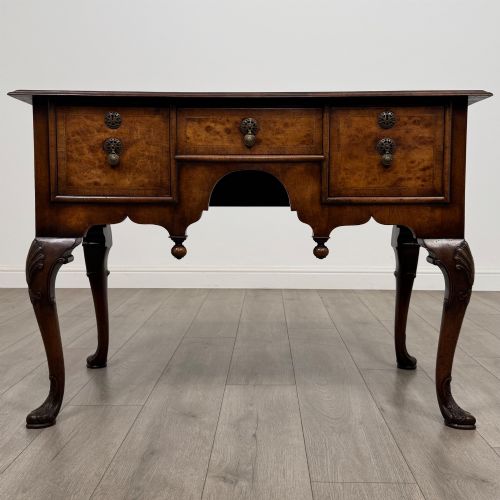
- A small table with one or more rows of drawers, typically raised on cabriole legs. These pieces functioned as dressing tables or writing surfaces in earlier domestic interiors.
- Escritoire
- A tall cabinet or writing desk with a drop-front panel concealing numerous small drawers and pigeonholes. This form offers secure, vertical storage for correspondence.
- Marquetry
- The art of applying pieces of veneer to a structure to form decorative patterns and pictorial designs. It appears on elite surfaces using contrasting woods.
Carved Walnut Desk Drawers: Frequently Asked Questions
How do I care for burr walnut veneer?
Keep walnut furniture away from direct sunlight and steady radiators to prevent the delicate burr veneer from drying out and lifting. Regular dusting with a dry, soft cloth preserves the polished sheen without risking moisture damage.
Apply a quality beeswax polish sparingly every few months to nourish the wood and maintain its deep lustre. Avoid silicone sprays which can penetrate the old finish and harm the timber over time.
What is the difference between a Davenport and a pedestal desk?
A Davenport is a compact, sloping-top writing box mounted over a set of drawers that pull out from the side. It was designed for tight spaces and personal correspondence.
A pedestal desk consists of two supportive banks of drawers with a central desktop spanning the gap between them. This larger configuration offers a proper flat surface for extended administrative work.
How can I tell an 18th-century piece from a Victorian revival?
Examine the secondary woods inside the drawer boxes and the construction methods used for the dovetails. Eighteenth-century pieces typically show hand-cut, irregular dovetails and native secondary timbers like oak or pine.
Victorian revival items often feature machine-prepared uniformity and distinct hardware styles typical of the late nineteenth century. The finish and patination also reflect the age and historical wear of the timber.
Where were lowboys used in a historic home?
Lowboys served versatile roles in the bedroom as dressing tables or in reception rooms as side tables for small items. Their modest scale allowed them to fit neatly against hallway or parlour walls.
The drawer space provided convenient storage for gloves, writing equipment or cosmetics depending on the room they occupied.