






Continental Walnut Desk
A continental walnut desk brings together rich timber and regional craftsmanship, offering a functional workspace with centuries of history.
Continental Walnut Desk
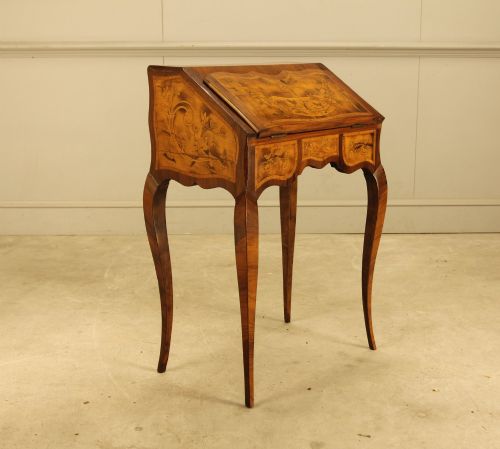
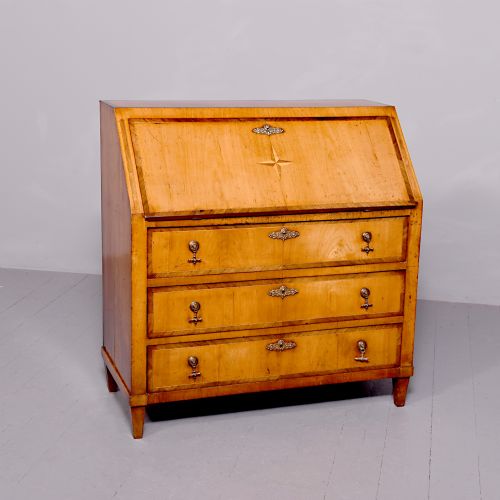
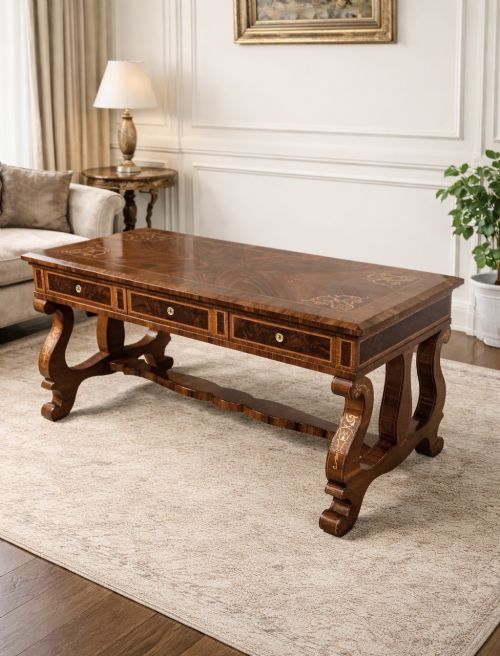
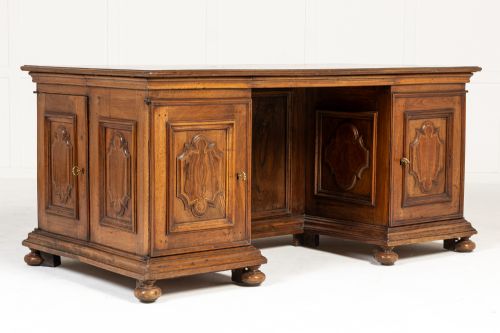
A continental walnut desk encompasses a variety of writing furniture originating from European workshops across the seventeenth, eighteenth, and nineteenth centuries. Buyers searching for a continental walnut desk often encounter bureau bookcases, fall-front secretaires, and freestanding writing tables shaped by regional European styles.
Assessing quality in European desks
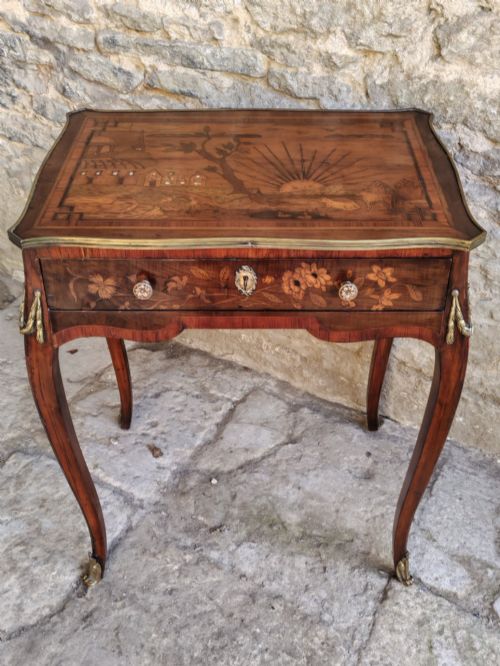
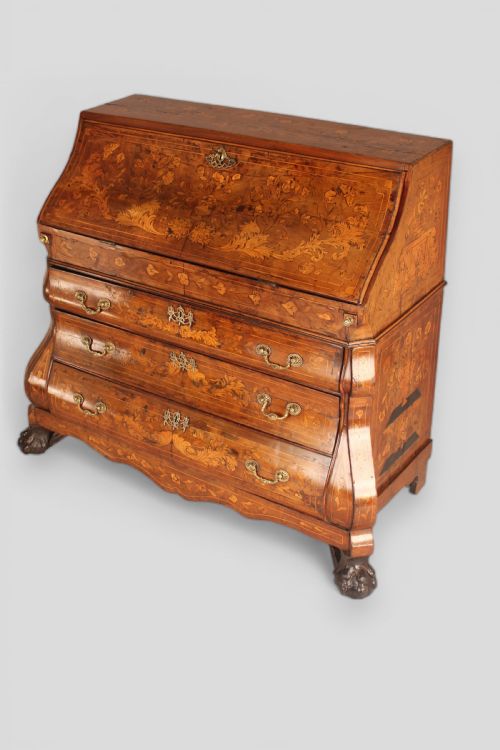
The quality of a continental walnut desk depends on the complexity of its timber selection, particularly the choice of burr walnut and the precision of its marquetry inlay. Pieces featuring detailed floral or geometric wood inlay require advanced skill from the cabinet maker.
Proportion, structural integrity, and the preservation of original brass hardware distinguish finer examples from simpler provincial work. Regional stylistic conviction, seen clearly in South German Baroque or Dutch bombe forms, elevates the character of the piece.
Listings feature continental walnut desks spanning from the 17th century through the 1930s, incorporating materials such as burr walnut, fruitwood, brass, and bone inlay.
The Continental Walnut Desk Glossary
- Bureau
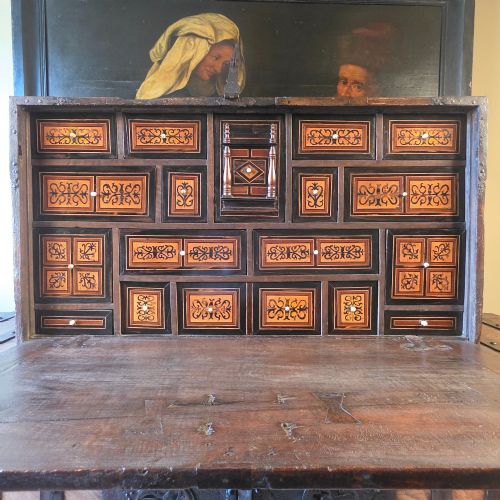
- A writing desk featuring a sloping lid that opens to reveal a fitted interior of pigeonholes and small drawers. This form frequently appears in eighteenth-century Dutch and German variants.
- Marquetry
- Decorative patterns formed by fitting together thin veneers of various woods, bone, or fruitwood onto a solid carcase. This technique defines many Dutch and German writing pieces.
- Secretaire
- A tall writing cabinet or desk containing a folding or dropping flap that conceals a writing surface and internal compartments. Biedermeier and nineteenth-century examples utilise this form.
- Bombe
- A swelling, outward-curved contour found on the front and sides of furniture drawer units. This distinctive shape is particularly associated with eighteenth-century continental pieces.
- Tabernacle
- A central architectural recess or small cupboard set within the upper section of a bureau bookcase. It forms a focal point in elaborate eighteenth-century architectural desks.
Continental Walnut Desk: Frequently Asked Questions
How do I identify an eighteenth century desk?
Eighteenth century desks typically display hand-cut joinery, solid walnut or burl veneers, and traditional regional styles such as Dutch marquetry or South German Baroque.
Examine the secondary woods inside the drawers and the style of the brass hardware to help confirm the period of construction.
How should I care for antique walnut furniture?
Keep antique walnut desks away from direct sunlight and steady heat sources to prevent the veneer from drying out or cracking. Apply natural beeswax periodically to nourish the wood and maintain a soft finish.
Avoid commercial liquid polishes containing silicone.
Are these desks suitable for daily use?
Many continental walnut desks remain entirely practical for writing and laptop use, provided the writing surface is treated with care. Ensure that drop-front desks use their internal support slides correctly to protect the hinges.
Gentle daily use helps preserve the working mechanical parts of these historic pieces.