



Dutch Carved Bureau
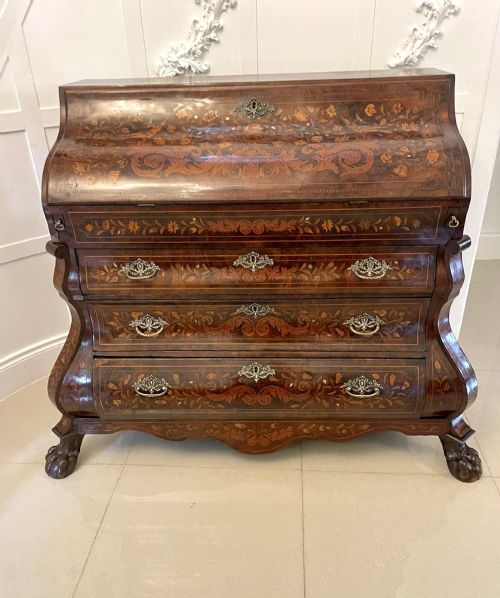
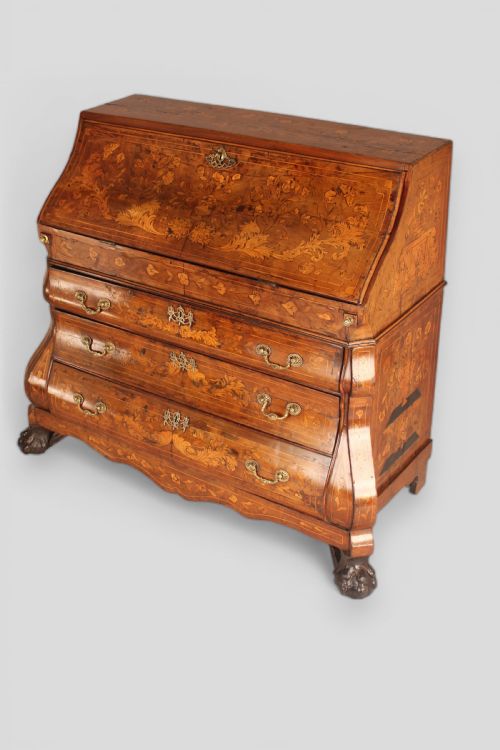
These dutch carved bureau examples combine robust storage with exuberant floral marquetry, offering the classic bombé silhouette every serious collector desires.
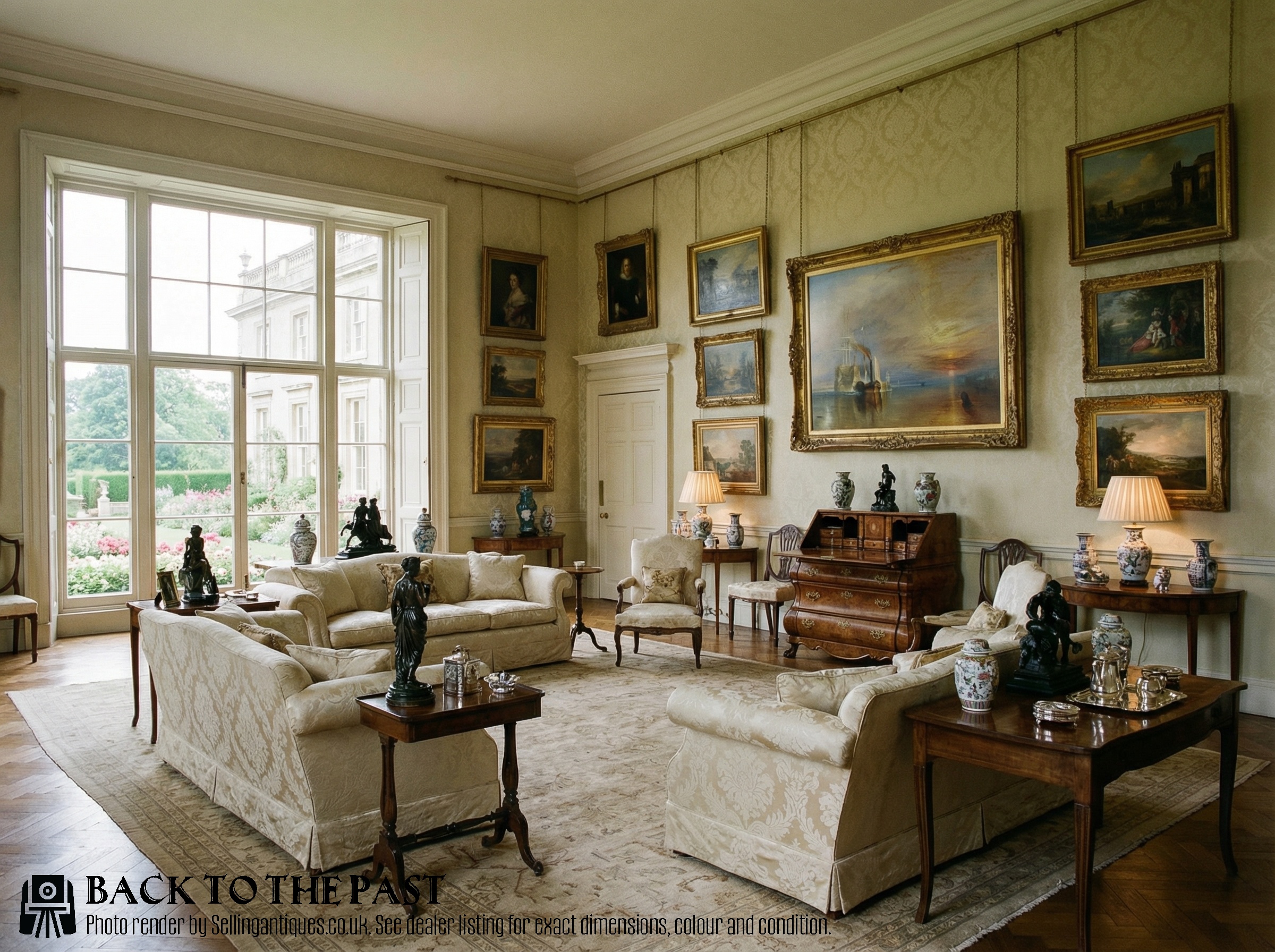
Dutch Carved Bureau
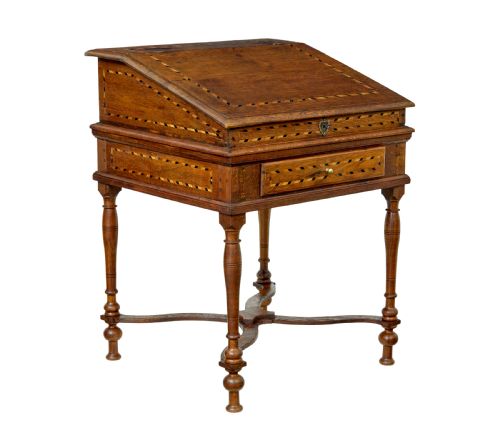
A dutch carved bureau brings together a sloping fall front and internal compartments, often set above multiple storage drawers. The pieces seen here span the eighteenth century and nineteenth century, with later revivals appearing too.
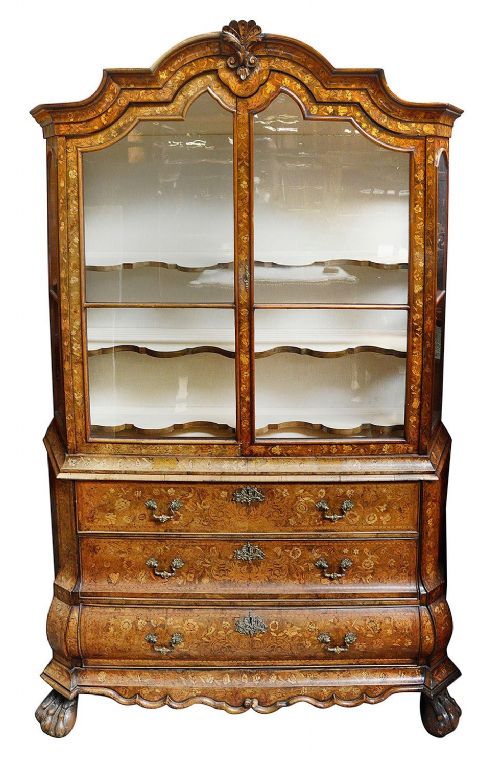
Makers shaped these forms in walnut, burr walnut, mahogany, and oak, frequently employing a distinctive rounded or bulging profile. Many examples also integrate display cabinets or bookcases above the primary writing surface.
The aesthetic leans heavily toward Dutch rococo and baroque expressions, characterised by rich timber grains and elaborate floral marquetry. Whether selecting a compact writing slope or a grand bureau bookcase, buyers encounter varied scales across these periods.
Materials and construction methods
Cabinetmakers constructed carcass frames in sturdy timbers like oak and mahogany, applying veneers of walnut and burr walnut to visible exterior surfaces. These primary woods provided structural stability while allowing for decorative grain patterns.
Marquetry decoration relied on contrasting fruitwood inlay to create intricate floral and botanical motifs across the drawer fronts and fall flaps. Brass hardware, including key escutcheons and handles, completed the structural assembly.
The distinctive bombé contour required skilled shaping of the timber to achieve the characteristic outward sweep towards the base. Joiners coordinated internal pigeonholes and secret compartments with precise dovetail joints on the drawers.
Many of these secretaires conceal tiny hidden drawers behind faux book spines, designed to keep household secrets safe from curious visitors.
Factors that distinguish quality
The complexity and execution of the fruitwood marquetry largely dictate the distinction between standard and superior pieces. Finer examples display meticulously cut floral patterns that flow seamlessly across the bombé curves without misalignment.
The choice of timber grain also separates the tiers, with richly figured burr walnut commanding greater visual depth than plainer walnut or oak surfaces. Original brass mounts and well-preserved interior fittings further elevate the standing of a piece.
Structural integrity, particularly the alignment of the fall front and the smooth action of the drawers, indicates the original standard of craftsmanship. Pieces that retain their original glass panels and fitted upper bookcase sections demonstrate higher overall ambition.
The Dutch Carved Bureau Glossary
- Bombe
- A swelling, outward-curving profile found on the lower sections of these cabinets. This contour requires advanced woodworking skill to maintain structural balance.
- Marquetry
- The decorative application of small pieces of veneer to form pictorial or floral patterns. Fruitwood inlay is frequently used for this detailed surface work.
- Vitrine
- A glass-fronted display cabinet designed to showcase porcelain or curiosities. These often sit atop the bureau base in larger bookcase combinations.
- Escutcheon
- A protective plate surrounding a keyhole, usually cast in brass. These often feature decorative scrolling shapes matching the period style.
- Writing slope
- A portable or desk-mounted slanted surface designed for correspondence. These lack the tall drawer stacks found in full-scale bureaus.
Dutch Carved Bureau: Frequently Asked Questions
What is a bombe front?
A bombe front refers to furniture that swells outward in a convex curve toward the base. This sculptural shape is characteristic of eighteenth-century Dutch design.
Craftsmen achieved this effect by building a robust internal frame and shaping the outer timber layers to create the dramatic profile.
How do I care for burr walnut?
Burr walnut requires stable indoor humidity and protection from direct sunlight to prevent the delicate veneer from drying or cracking. Regular dusting with a soft, dry cloth preserves the polished surface.
Avoid placing these items near direct heat sources or damp areas, as fluctuating conditions stress the ancient wood veneers.
Are these pieces suitable for daily writing?
The sloping fall fronts provide a functional writing surface supported by internal arms or brackets when lowered. Many include fitted compartments for modern stationery items.
Care should be taken not to overload the fold-down flap, as the hinges and support struts are historic components designed for lighter correspondence.
How do I distinguish eighteenth-century pieces?
Eighteenth-century examples typically display hand-cut dovetails, dense oak secondary timbers, and authentic fruitwood marquetry patterns. The timber patination shows deep oxidation developed over generations of use.
Nineteenth-century revivals and later adaptations often use different construction tolerances and mechanical fasteners that reveal their later origins.