


Claw Foot Bureau Desk
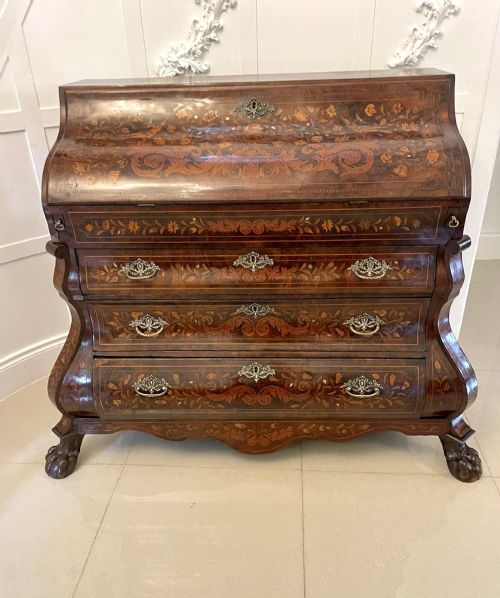
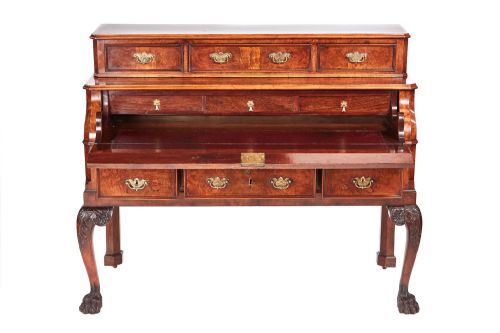
These claw foot bureau desk examples bring substantial presence and historic utility into a room, offering clever writing compartments matched with grand carved supports.
Claw Foot Bureau Desk
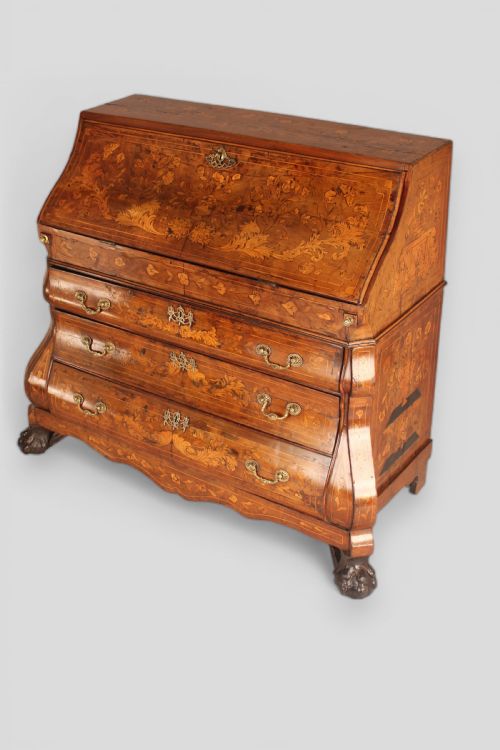
A claw foot bureau desk combines a sloping fall-front writing surface with concealed internal pigeonholes and drawers, supported by distinctive animal paw feet. The selection spans Georgian and 19th-century periods, alongside later revival pieces.
Forms range from compact fall-front writing desks to large bureau bookcases and bombe cabinets. Walnut and mahogany predominate, often enhanced by intricate floral marquetry or fruitwood inlay.
Origin points visible in the inventory stretch across British and Dutch workshops, with Georgian and Victorian iterations leading the selection.
Construction and materials
Cabinetmakers constructed carcasses primarily from solid mahogany and walnut, frequently applying burr walnut veneers to curved surfaces to create rich grain patterns. Drawer linings and internal dividers often utilise secondary timbers like oak.
Marquetry and inlay techniques involve meticulous hand-cutting of fruitwoods to form floral and scroll motifs across the fall-fronts and bombe bodies. Structural support relies on heavy timber framing, with carved paw feet integrated directly into the base design.
Several bureau desks hide secret interior compartments behind sliding panels, designed to guard family letters and hidden coin collections.
Judging quality and finish
Quality rests upon the depth of the timber figuring and the precision of the marquetry work, where finer pieces display seamless integration of fruitwood floral patterns across undulating surfaces. The execution of the carved paw feet dictates much of the sculptural merit.
Internal joinery standards separate standard production from superior examples, visible in the dovetailing of small drawers and the neatness of pigeonhole construction within the bureau interior.
The Claw Foot Bureau Desk Glossary
- Bombe
- A bulging or swelling contour found on the front and sides of furniture bases, typical of Dutch and continental design.
- Fall-front
- A hinged writing flap that drops down to provide a horizontal surface for correspondence.
- Marquetry
- Decorative patterns formed by the insertion of pieces of wood, shell, or ivory into a veneer-coated surface.
- Escritoire
- A writing cabinet equipped with a sloping or folding lid and internal compartments.
- Pigeonhole
- Small, open compartments positioned within a desk interior for sorting letters and papers.
Claw Foot Bureau Desk: Frequently Asked Questions
What is a claw foot bureau desk?
A claw foot bureau desk is a historic writing cabinet featuring a hinged sloping front that opens to reveal compartments, supported by carved animal paw feet.
These pieces combine functional workspace with enclosed storage, making them prominent furniture items in period interiors.
How do I date a bureau desk?
Dating relies on timber selection, construction methods such as dovetailing, and stylistic markers like bombe shaping or marquetry.
Earlier examples from the 18th century often feature walnut and floral inlay, whereas later 19th-century pieces incorporate heavier carvings and distinct revival proportions.
How were these desks used originally?
These desks served as private writing stations for correspondence, ledger management, and document storage within the home.
The fall-front provided a sturdy writing surface, while the internal drawers and pigeonholes kept sensitive papers and ink supplies organised.
Where should I place a bureau desk?
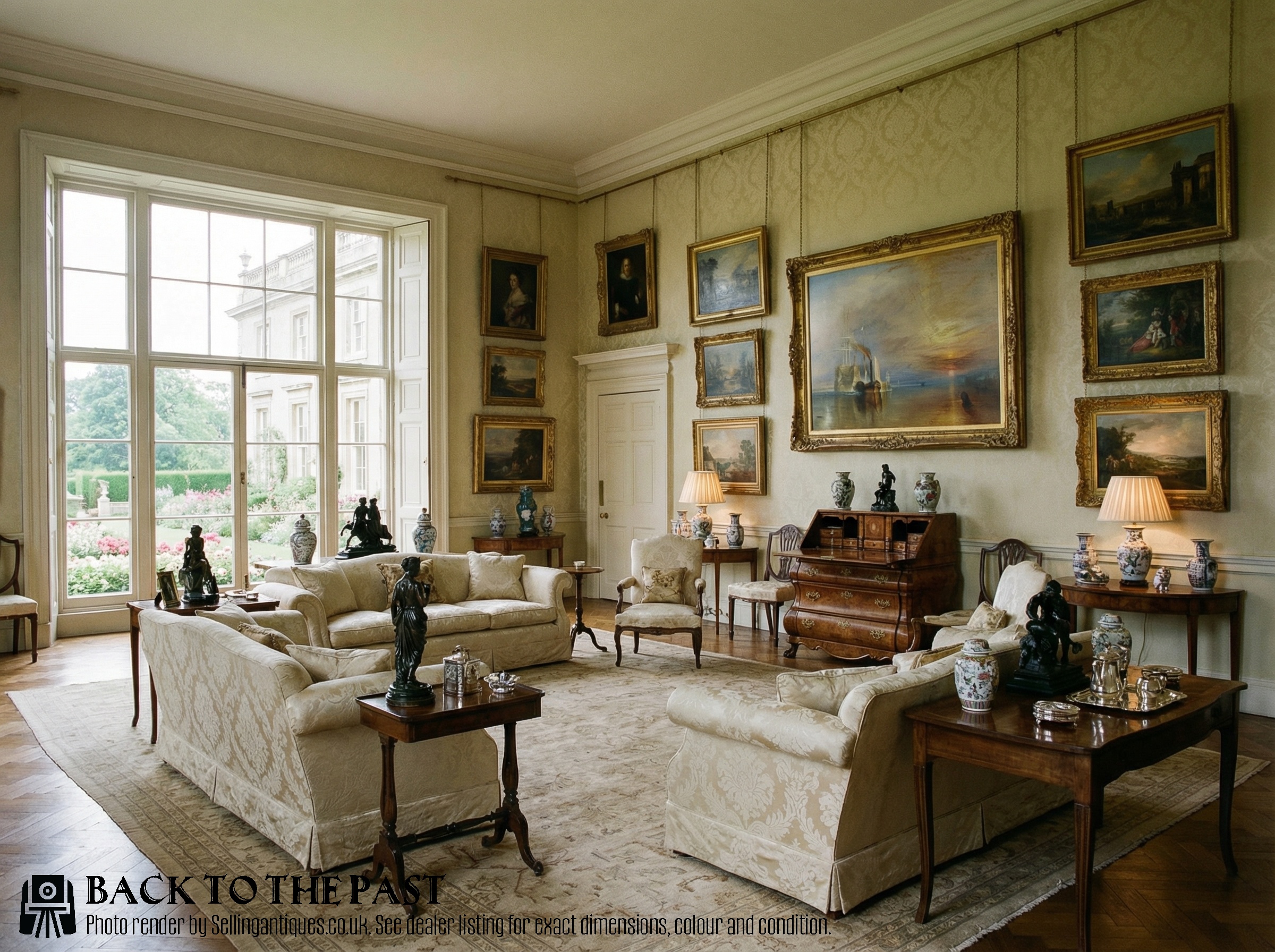
A bureau desk suits studies, living rooms, or large hallways where its decorative fall-front and carved base remain visible.
Sufficient clearance must be allowed in front of the piece for the writing flap to drop down fully during use.