
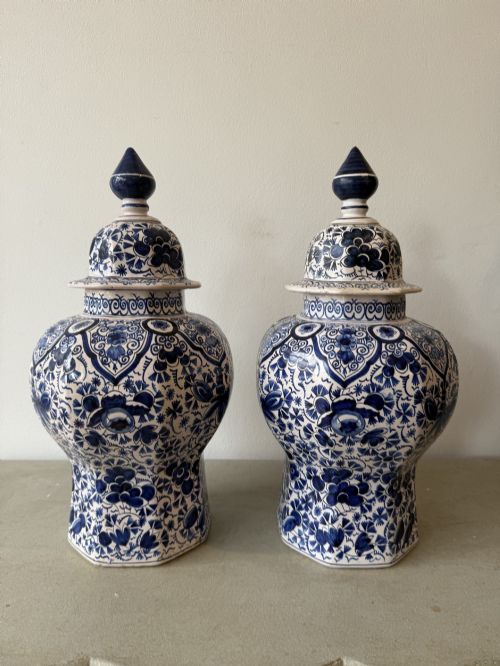


Dutch Pottery Vases
Dutch pottery vases bring centuries of tin-glazed earthenware and hand-painted blue and white decoration directly into a room.
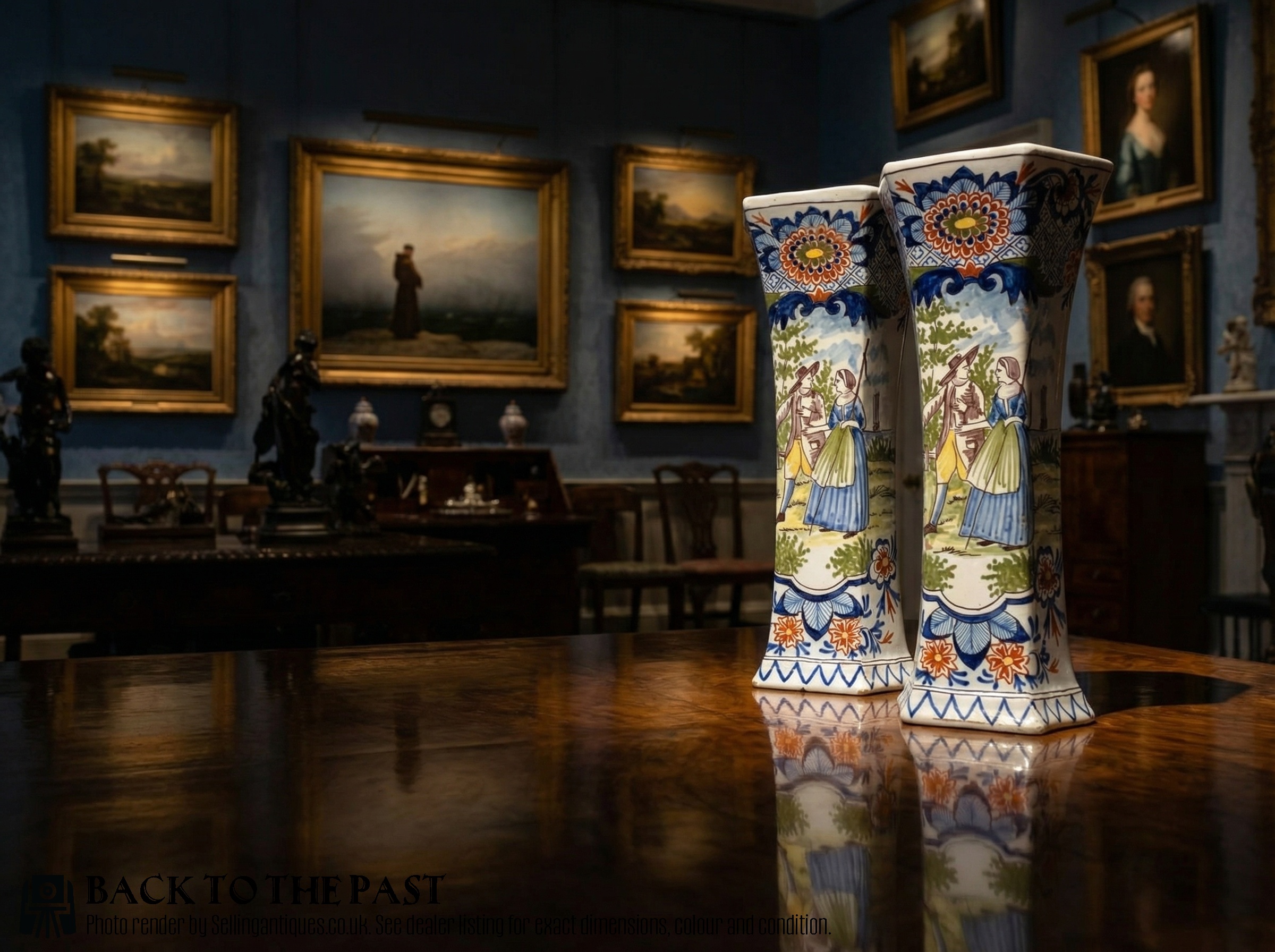
Dutch Pottery Vases
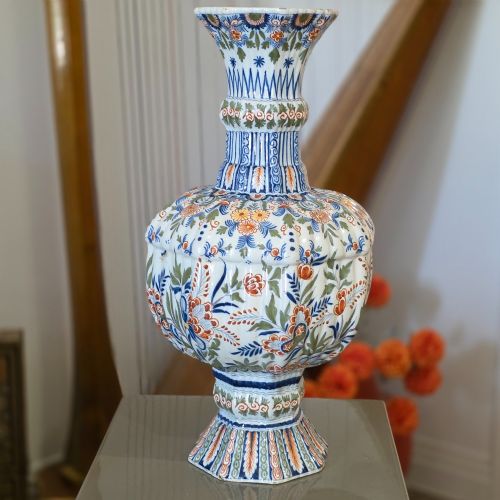
Dutch pottery vases encompass centuries of ceramic production, from seventeenth-century earthenware to later nineteenth-century interpretations. These vessels appear in various forms, including lidded jars, baluster shapes, beaker vases, and occasional table lamps.
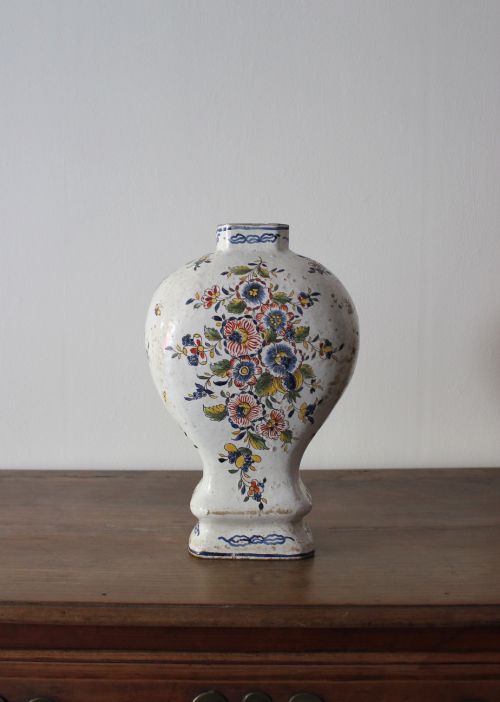
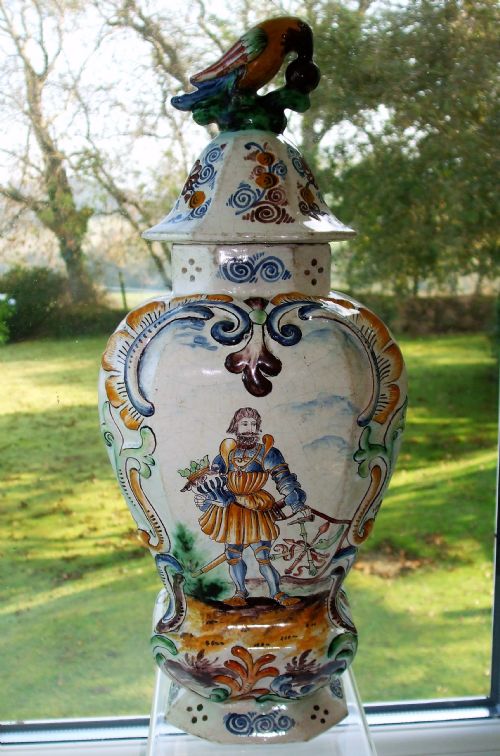
The material record spans seventeenth, eighteenth, and nineteenth-century periods, alongside distinct pieces dated around nineteen-hundred and nineteen-forty. Buyers encounter both blue and white examples and polychrome designs reflecting broader stylistic influences.
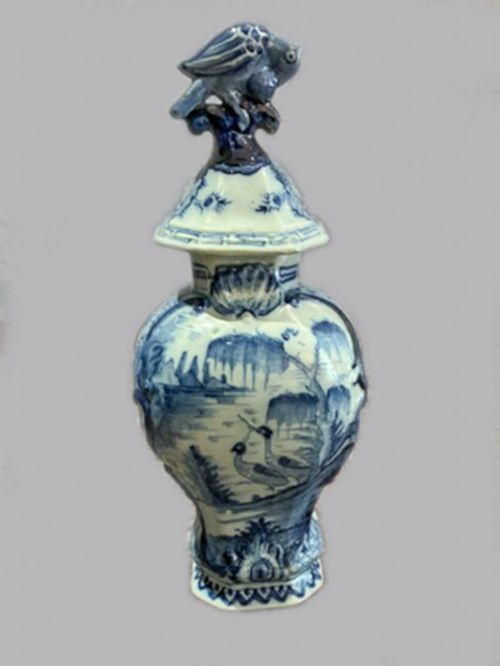
Chinoiserie motifs, floral arrangements, and birds frequently appear across these objects, bridging domestic Dutch production with international trade aesthetics. Many items arrive with covers or lids, while others function as converted lamps.
Materials and construction
Makers shaped these vessels from earthenware or porcelain, applying tin glaze to create a smooth, opaque white surface for subsequent painting. Cobalt pigment provided the deep blue tones characteristic of traditional delftware.
Hand-painted decoration defined the exterior, utilising brushwork for birds, floral patterns, and architectural elements. Potters formed ribbed beaker shapes, baluster profiles, and lidded jars on the wheel before firing and glazing.
Listings feature tin-glazed earthenware, ceramic, and brass across the seventeenth, eighteenth, and nineteenth centuries.
Assessing quality in the collection
Quality separates simple production pieces from works demonstrating superior brushwork, refined potting, and careful glaze application. Finer examples show precise cobalt control in detailed chinoiserie scenes and birds.
The crispness of the tin glaze and the balance of the vessel proportions dictate the visual success of the piece. Intact covers and well-preserved polychrome or manganese palettes elevate specific items within the range.
3 BELLS Drie klokken Factory·Rozenburg Art Nouveau Porcelain·Louis Victor
The Dutch Pottery Vases Glossary
- Tin-Glazed Earthenware
- Ceramic body coated with a lead glaze made opaque by the addition of tin oxide. This surface provided a bright white background for painting.
- Baluster Vase
- A tall vessel characterised by a swelling lower body and a narrower neck. This form frequently appears among eighteenth-century examples.
- Chinoiserie
- European artistic style reflecting Chinese decorative motifs. Painters applied these imagined landscapes and figures to seventeenth and eighteenth-century ceramics.
- Polychrome
- Decoration employing multiple colours rather than a single pigment. These pieces incorporate various pigments alongside standard blue and white designs.
- Beaker Vase
- Straight-sided vessel widening toward the rim, often produced in matching pairs. Potters ribbed the exterior surface for added texture.
Dutch Pottery Vases: Frequently Asked Questions
Are these vases waterproof?
Tin-glazed earthenware is a porous ceramic material that can absorb moisture over extended periods. Most collectors use these historic vessels for display rather than holding water for fresh flowers.
Protective liners can sometimes be fitted inside if modern use is desired, though care must be taken to protect the historic glaze and interior body from damage.
How do I date a delft vase?
Dating relies on stylistic shifts, changes in glaze composition, and recorded factory marks where available. Seventeenth and eighteenth-century pieces often display looser brushwork and specific tin-glaze characteristics.
Later nineteenth-century and twentieth-century examples frequently show different potting techniques and brighter, more uniform pigment application. Comparing foot rims and body weight helps establish the period.
Why are some vases converted to lamps?
Many ceramics from earlier centuries were adapted for domestic lighting during the twentieth century to suit changing interior tastes. This conversion often involved drilling a small hole for wiring or mounting hardware to the top.
While collectors sometimes prefer untouched vessels, these lamp conversions represent a distinct chapter in the domestic history of the pieces.
What is the difference between delft and faience?
Delft specifically refers to tin-glazed earthenware produced in the Netherlands, particularly associated with the city of Delft. Faience is a broader term used for tin-glazed pottery made across Europe.
French or other continental factories produced faience that often mirrored Dutch styles, creating parallel traditions in blue and white or manganese decoration.