


Black Ceramic Vase
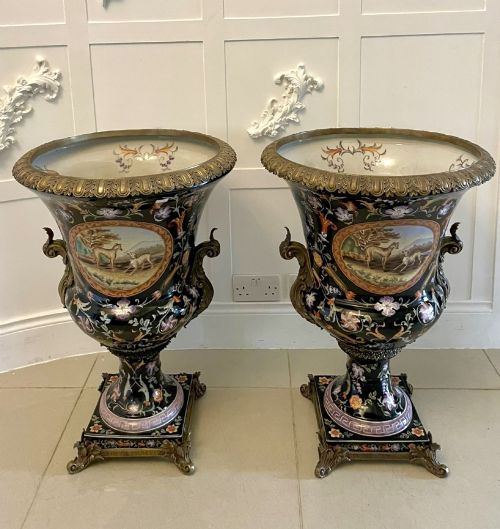
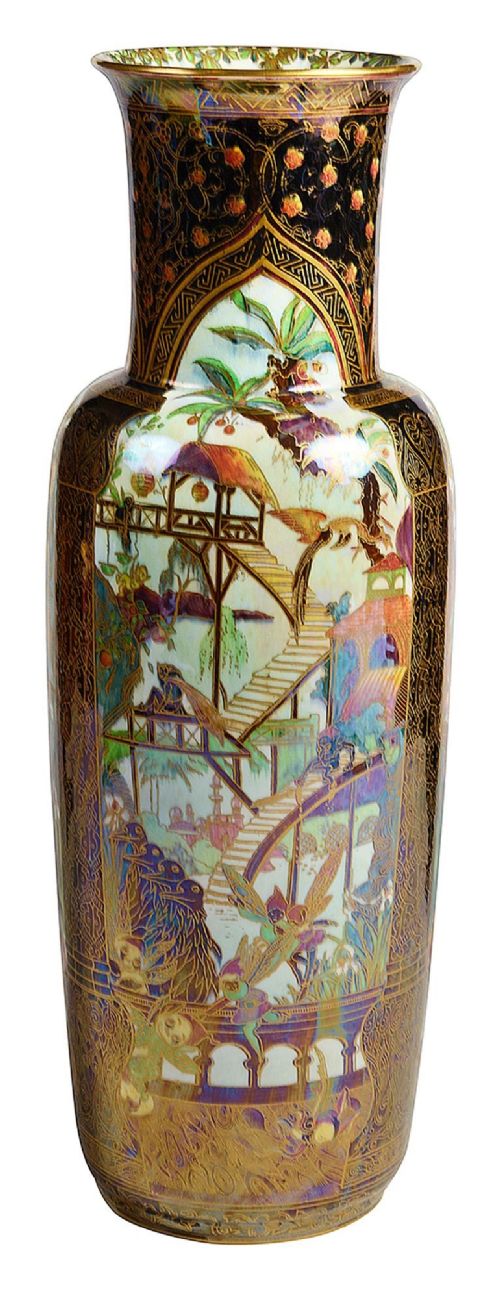
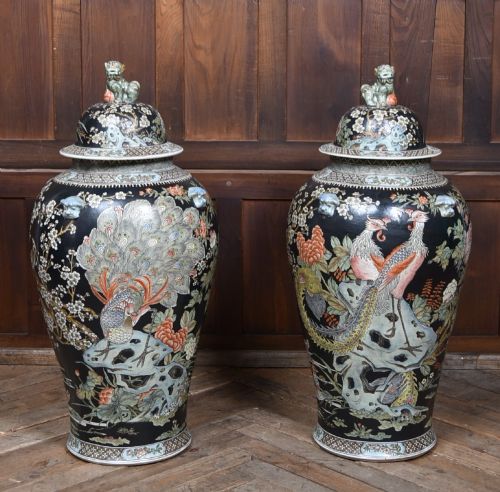
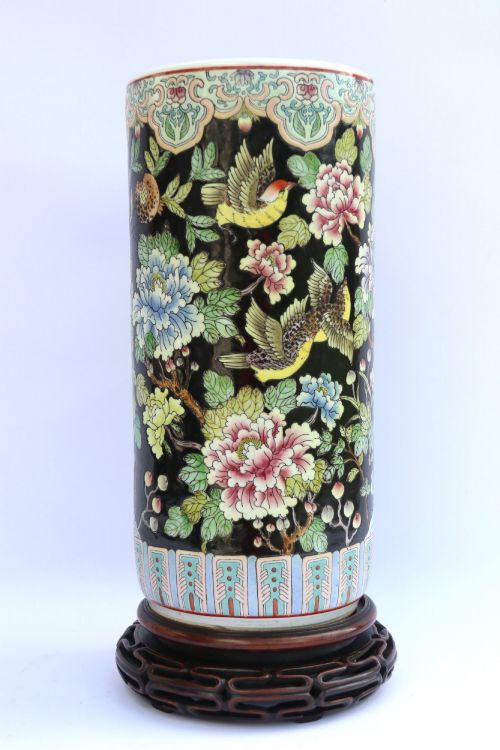
These black ceramic vase pieces span 19th-century Japanese lacquer-over-paint works and European art pottery, bringing striking dark monochrome presence to a room.
Black Ceramic Vase
A black ceramic vase brings together dark monochromatic fields and intricate decorative schemes across various international traditions. You will encounter Japanese Meiji period porcelain with lacquer over black paint alongside European earthenware and porcelain from the Victorian and Art Deco eras.
The selection ranges from large floor jars and jardiniere urns to bulbous table vessels and converted lamps. Japanese pieces frequently incorporate Koi and geometric panels, whilst European works draw on Art Nouveau and Greek Revival vocabularies.
The materials span traditional porcelain and earthenware, often elevated with gold leaf, enamel, and brass mounts. Many examples demonstrate cross-cultural influences, particularly in Chinese Qing style pieces and Japanese Satsuma production.
Materials and technique
The foundation of these pieces relies upon fired ceramic bodies, specifically porcelain and earthenware, shaped into tall vases, floor jars, and urns. Artisans applied specialised glazes, enamel pigments, and black paint layers to create deep monochromatic surfaces.
Surface ornamentation involved intricate hand-painted detailing, often enriched with gold leaf or metallic highlights. Japanese works from the 1880s frequently utilised lacquer over black paint, while European makers employed drip glaze and hand-painted motifs.
Listings feature porcelain, earthenware, and lacquer materials spanning the Victorian era, Art Nouveau period, and 1930s.
Assessing quality and execution
Quality rests upon the precision of the hand-painted execution and the integrity of the underlying ceramic form. Superior examples display crisp detail in figurative panels, such as Rakan or birds, without blurring or misaligned application.
The treatment of secondary materials, including brass mounts, original hardwood stands, and lacquer layers, dictates the overall refinement of the piece. Consistency in glaze coverage and stability in structural forms separate standard production from exceptional studio works.
Daisy Makeig Jones·Gallilleo Chini·Rozenburg·Bernhard Bloch·Mougin·Samuel Alcock
The Black Ceramic Vase Glossary
- Meiji Period
- The era in Japanese history spanning from 1868 to 1912, known for significant artistic export and technical mastery in ceramics and lacquer. Pieces from this time often feature detailed hand-painted figures and elaborate gilding.
- Satsuma
- A type of Japanese earthenware featuring a crackle-glaze ivory body decorated with polychrome enamels and gold. These wares were widely produced for Western export during the late 19th century.
- Jardiniere
- A decorative ceramic pot or urn designed to hold plants or floral arrangements, frequently accompanied by matching stands or brass mounts. They often form large display pairs in interior schemes.
- Famille Noire
- A Chinese porcelain classification defined by a glossy black enamel ground, frequently contrasted with vibrant green, yellow, and aubergine floral or figurative enamel designs. This palette gained immense popularity during the Qing dynasty and later revival periods.
- Art Nouveau
- An international style of art and architecture prevalent between 1890 and 1910, characterised by organic, flowing lines inspired by natural forms. Ceramic applications often feature stylized plant motifs and hand-painted avian subjects.
Black Ceramic Vase: Frequently Asked Questions
How do I date a black ceramic vase?
Dating relies on stylistic markers such as Meiji period motifs, Art Nouveau curves, or Art Deco geometric lines. Examination of the base paste, glaze characteristics, and associated signatures provides further chronological context.
Makers' marks and studio stamps, where present, help pinpoint specific European potteries or Japanese workshops active during the late 19th and early 20th centuries.
Are these vases suitable for holding water?
Many antique porcelain and earthenware pieces function primarily as decorative objects or display items rather than utilitarian vessels. Some examples have been converted into lamps with wiring drilled through the base.
It is advisable to inspect the interior and base of each specific vessel before introducing water, particularly where lacquer over-paint or delicate enamels are present.
What is lacquer over black paint?
This technique involves applying a durable lacquer finish directly over a black painted or glazed porcelain surface to create depth and sheen. It appears frequently on Japanese export pieces from the 1880s.
The method produces a distinctive glossy texture that contrasts with traditional ceramic glazes, often framing painted motifs like Koi fish.