


Eighteenth Century Pottery
Eighteenth century pottery brings tactile domestic history to a room, offering everything from slip-decorated mugs to tin-glazed chargers.
Eighteenth Century Pottery
Eighteenth century pottery spans domestic tableware and decorative vessels created across Britain, continental Europe, and China during an era of significant ceramic development. You will encounter utilitarian forms alongside display pieces, reflecting both everyday use and wealthy interiors.
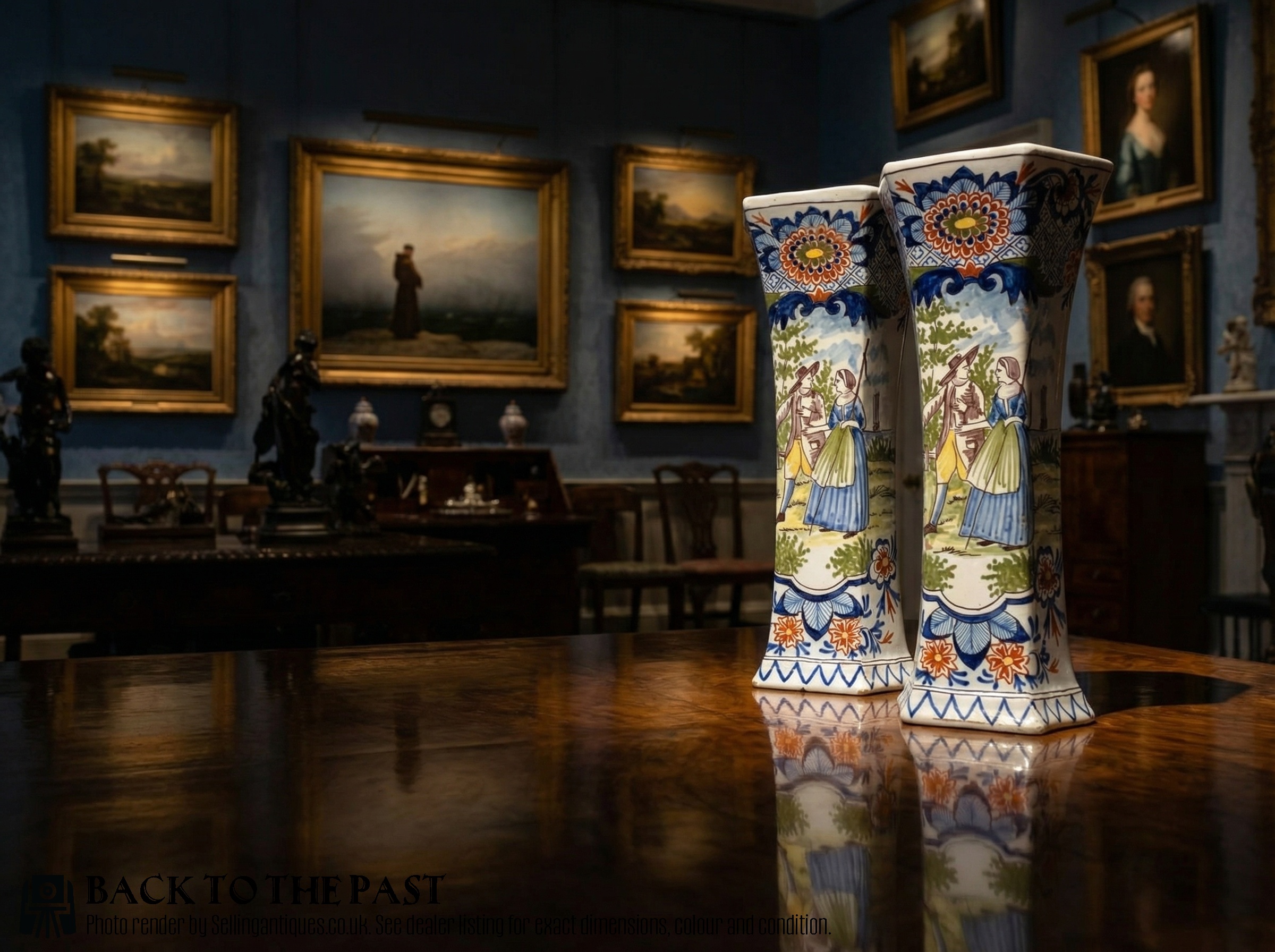
The selection on this page centres on British earthenware, Dutch delftware, and continental faience alongside porcelain and creamware. Chargers, mugs, vases, and wall plaques dominate the groupings, representing the primary decorative and functional outputs of the period.
Makers and factories from English regional potteries to Dutch workshops appear throughout the selection, anchored by Georgian and eighteenth-century periods. These pieces demonstrate the regional styles that collectors target for cabinet display.
Materials and Technique
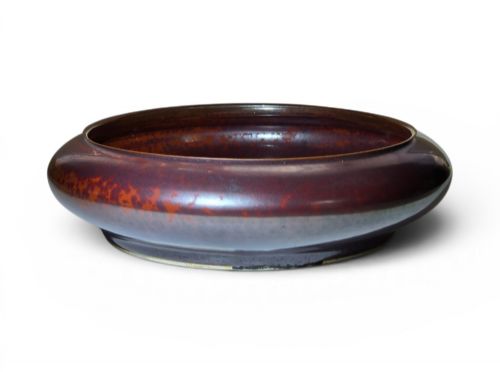
Potters of the period utilised earthenware, creamware, and pearlware bodies, finished with tin glazes, lead glazes, or iron rust finishes. These absorbent clay bodies required opaque tin glazes or clear lead glazes to seal the surface and provide a ground for decoration.
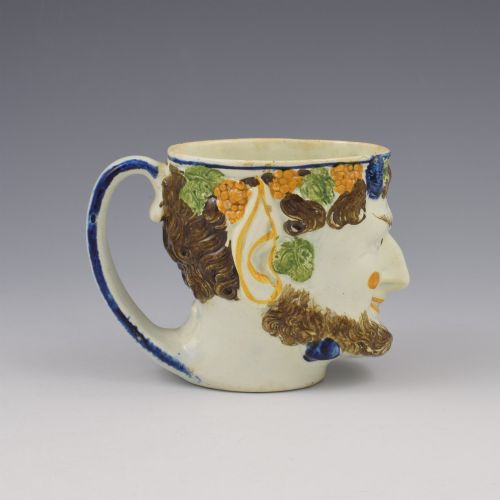
Decoration relied on hand-painting in blue and white or polychrome palettes directly onto the unfired glaze, or relief moulding seen in Staffordshire figures and mugs. Firing took place in wood or coal-fuelled kilns, resulting in the characteristic surface variations and glaze pooling visible on these pieces.
A monkey toby jug by Pieter Verburg proves that eighteenth-century drinkers enjoyed their ale served with a distinct sense of humour.
Judging Quality
Quality rests on the crispness of the moulded relief and the control demonstrated in hand-painted tin-glazed or polychrome brushwork. Superior items exhibit confident lines and balanced compositions that distinguish master workshops from provincial output.
The stability of the glaze and the preservation of the original ceramic body determine the desirability of surviving domestic vessels. Pieces that retain their original glaze lustre and structural integrity without extensive restoration stand at the top of the range.
3 BELLS Drie klokken Factory·Pieter Verburg
The Eighteenth Century Pottery Glossary
- Creamware
- A fine earthenware developed in England with a pale yellowish lead glaze, perfected during the mid-eighteenth century. It became the dominant domestic tableware before the introduction of pearlware.
- Pearlware
- A refined earthenware with a bluish-tinted glaze designed to emulate Chinese export porcelain. It gained popularity towards the end of the eighteenth century.
- Tin-Glaze
- An opaque white glaze containing tin oxide, used as a surface for painted decoration on delftware and faience. It provided a smooth canvas for both blue and white and polychrome designs.
- Faience
- European tin-glazed earthenware produced in France, Italy, and other continental centres. It mirrors the decorative ambitions of porcelain using earthenware bodies.
- Charger
- A large decorative plate or platter intended for display on a sideboard or wall rather than daily dining. These pieces often feature elaborate painted scenes or armorial motifs.
Eighteenth Century Pottery: Frequently Asked Questions
How do I clean antique pottery?
Dust these pieces gently with a soft, dry brush and avoid submerging damaged earthenware in water.
Moisture can penetrate old porous clay bodies through hairline cracks, causing further structural degradation over time.
Are these pots safe for food?
Most eighteenth-century tableware contains lead glazes that are unsuitable for modern acidic foods and daily dining.
Keep these items for display or dry storage to preserve the fragile ceramic body and historical glaze.
What is the difference between delftware and faience?
Delftware specifically describes tin-glazed earthenware made in the Netherlands, whilst faience refers to similar wares produced in France and Italy.
Both utilise a buff earthenware body covered in an opaque white tin glaze, though their painting styles reflect distinct regional traditions.
How do I spot a reproduction?
Examine the weight, glaze pooling, and base wear under magnification to identify authentic period manufacturing marks.
Modern copies often lack the subtle surface irregularities and hand-mixed pigments characteristic of eighteenth-century firing methods.