



Antique Delftware Pair
An antique delftware pair brings balanced symmetry and historic tin-glazed charm to a room, offering matching vessels shaped by centuries of ceramic tradition.
Antique Delftware Pair
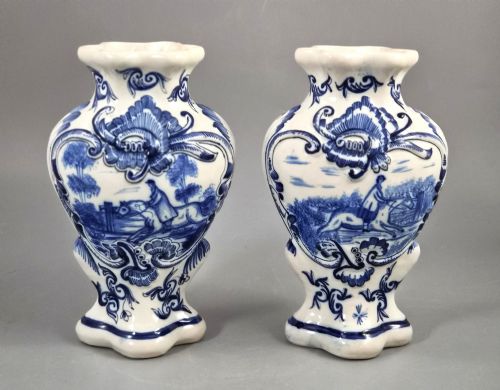
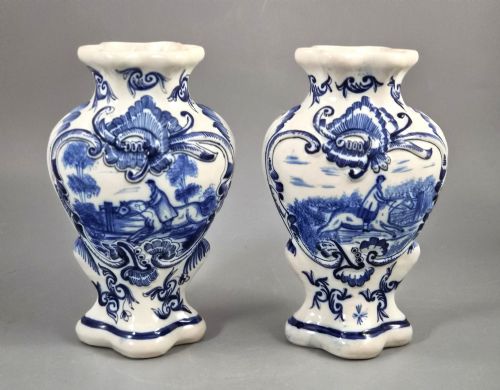
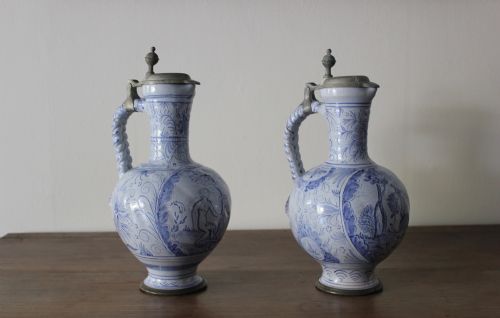
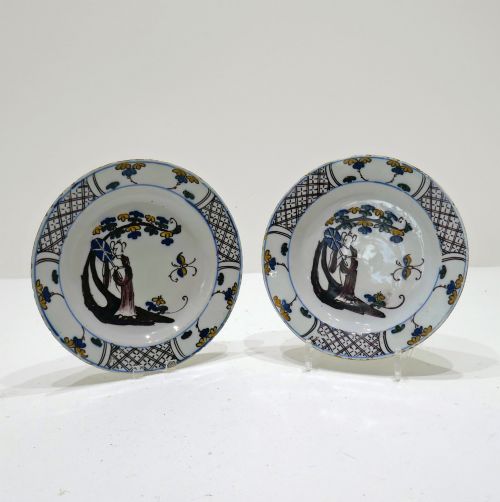
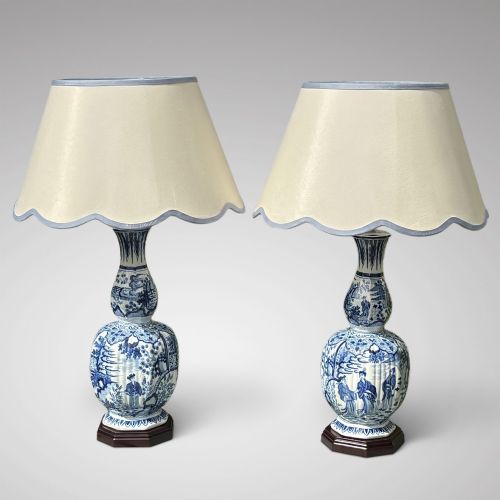
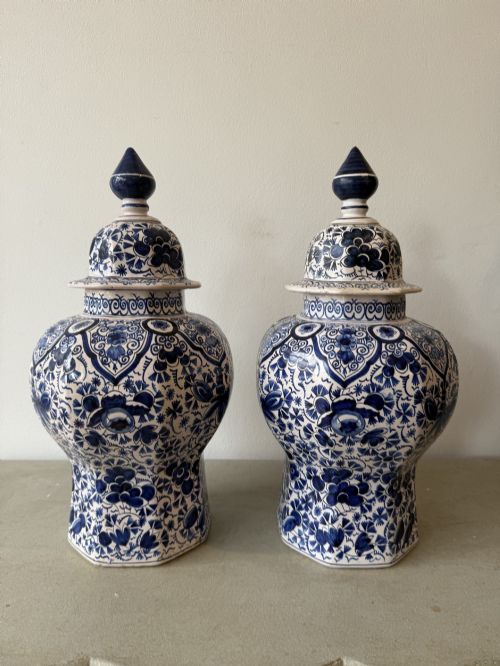
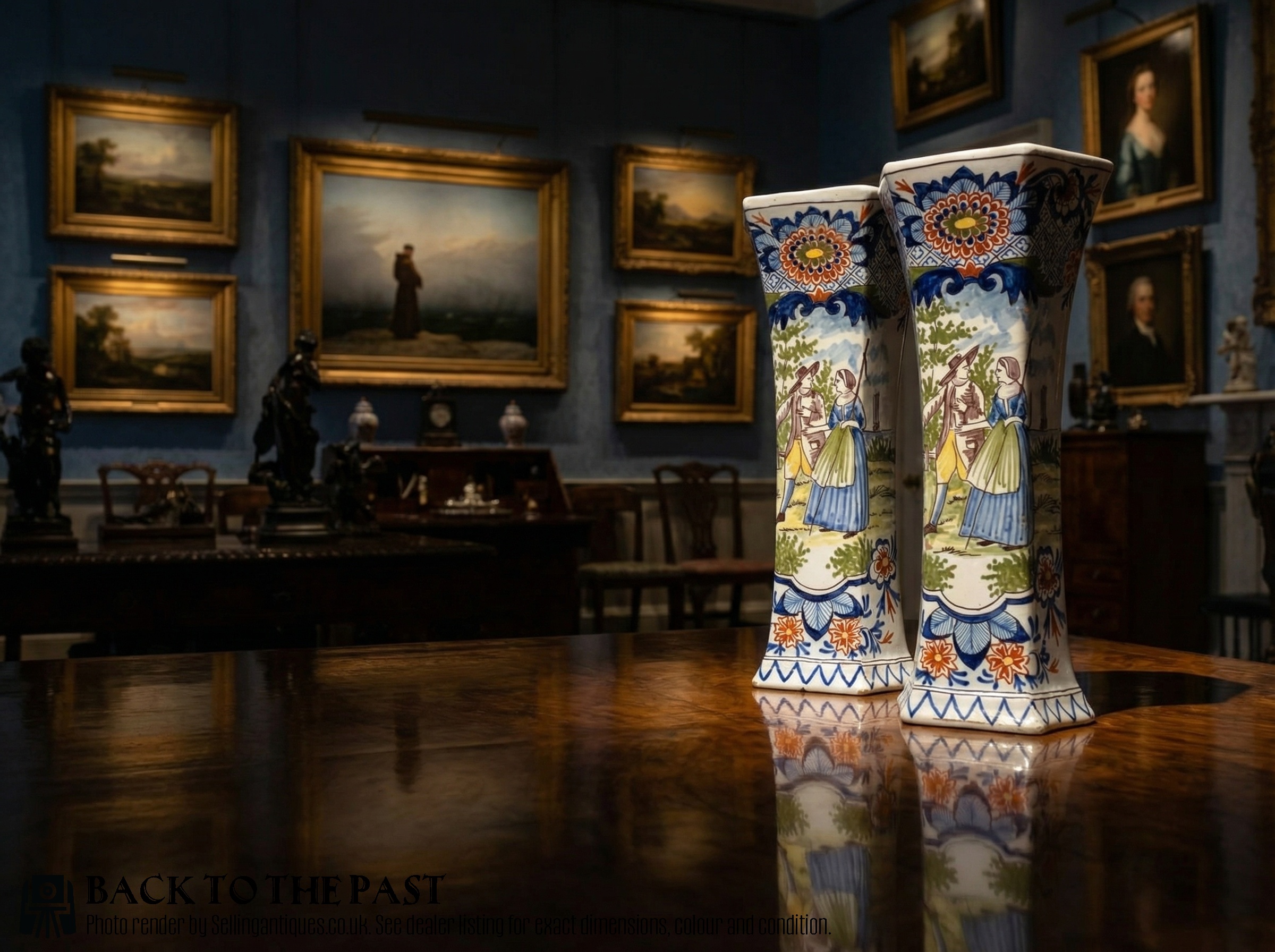
An antique delftware pair consists of matched ceramic objects created as dual items, ranging from decorative plates and dishes to chargers, wall pockets, jars, vases, jugs, and lamps. These twin pieces share matching forms, sizes, and decorative programmes, designed to sit symmetrically on mantelpieces, tables, or walls.
The versions most commonly met on this page belong to the eighteenth century and nineteenth century, originating primarily from English and Dutch workshops. English production from centres such as Bristol and Lambeth sits alongside Dutch output from makers like the Three Bells factory, accompanied by later French faience from Desvres.
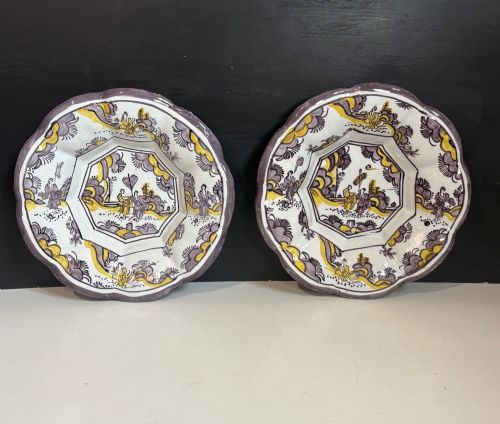
Forms vary from utilitarian apothecary jars and tableware plates to ornamental beaker vases and ceramic cows, finished in either blue and white or polychrome palettes. Buyers encounter both unified original pairs and matched sets brought together later in their history.
How they were made
Makers shaped these objects from earthenware clay, forming plates, jars, and vases on the wheel or in moulds before firing the body to create a porous biscuit base. Artisans then coated the fired clay in an opaque white tin glaze, which provided a smooth canvas for hand-painting.
Decoration was applied directly onto the absorbent tin glaze using cobalt pigment for blue and white designs or a broader palette for polychrome examples. A final high-temperature firing fused the metallic pigments into the glaze, producing the characteristic glossy finish.
Listings feature items spanning the 18th century and 19th century, constructed from earthenware, tin glaze, and brass.
What varies in quality
Quality rests upon the crispness of the hand-painted decoration and the stability of the tin glaze over the earthenware body. Superior examples display confident brushwork and balanced compositions across both items in the pair, whereas lesser pieces show rushed or heavy-handed painting.
The physical condition of the tin glaze dictates the standing of a piece within its period. Surface losses, edge chipping, and glaze flaking commonly affect these fragile ceramic items, so the preservation of the original glaze layer distinguishes finer survivors from heavily restored examples.
Fourmaintraux-Courquin·3 BELLS Drie klokken Factory
The Antique Delftware Pair Glossary
- Tin glaze
- An opaque white ceramic glaze containing tin oxide, applied to earthenware to create a smooth surface for painted decoration. It provides the characteristic milky background seen on delftware.
- Polychrome
- Multi-coloured painted decoration utilising pigments such as green, yellow, red, and blue. This style contrasts with the more common monochrome blue and white pieces.
- Charger
- A large decorative plate intended for display on a wall or dresser rather than for dining. These items frequently feature detailed pictorial scenes.
- Faience
- European tin-glazed earthenware, a term primarily used for French and continental wares similar in technique to English and Dutch delft.
- Biscuit
- Fired but unglazed ceramic pottery that forms the structural body before the application of tin glaze. It provides the porous base necessary for the glaze to adhere.
Antique Delftware Pair: Frequently Asked Questions
How are antique delftware pairs cleaned?
Dust these ceramic objects gently with a soft, dry brush to prevent dirt accumulation. Avoid water and liquid cleaners, as the porous earthenware body and historic tin glaze can absorb moisture and suffer further damage.
Keep them away from direct sunlight and areas prone to sudden temperature shifts. Stable indoor environments protect the fragile glaze from crazing or flaking over time.
Were these pairs used daily?
Plates, dishes, and jugs served practical functions in domestic spaces before becoming decorative display items. Apothecary jars held medicines and dry goods in commercial or household dispensaries.
Larger chargers, wall pockets, and beaker vases were made specifically for visual display. Over the centuries, surviving tableware transitioned from active use into cabinet and wall ornaments.
How do English and Dutch pieces differ?
English output often utilised local clays and distinct glaze mixtures found in workshops around Bristol and Lambeth. Dutch production, particularly from centres associated with the Three Bells factory, frequently displayed distinct regional painting styles.
Both traditions relied on tin-glazing techniques, but subtle variations in body weight and blue pigment shades help separate their origins.
What does polychrome mean on delftware?
Polychrome decoration involves the use of multiple colours painted onto the tin glaze before firing. Artisans incorporated greens, yellows, reds, and manganese purples alongside cobalt blue.
This multi-coloured approach produced vibrant floral and figurative scenes that differ from the standard blue and white palette.