


Dutch Maritime Art
Dutch maritime art captures centuries of seafaring heritage through oil paintings, watercolours and canal scenes.
Dutch Maritime Art
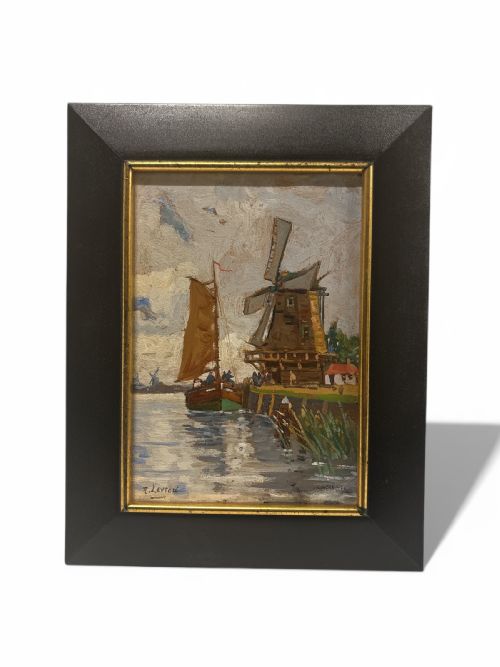
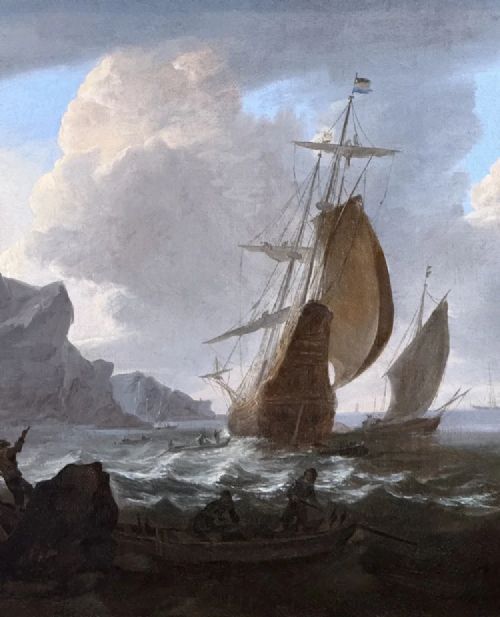
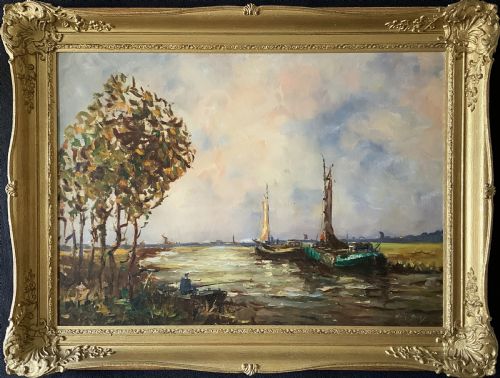
Dutch maritime art centres primarily on oil paintings and watercolours depicting coastal views, fishing boats, and bustling canals. These works span multiple eras, connecting 17th-century masters of the Dutch Golden Age with later 19th-century realists and early 20th-century impressionists. Buyers encounter everything from stormy seascapes featuring gale-bound vessels to serene townscapes along frozen river quays.
The selection ranges from detailed architectural watercolours to expansive oil on canvas compositions framed in giltwood. Many pieces focus on specific geographic locations such as Rotterdam canals, the Maas, and Scheveningen shores, alongside portraits of Dutch fisher girls and coastal workers. Whether viewing a quiet barge or a dramatic sea battle, collectors find a strong emphasis on maritime livelihoods and coastal topography.
How they were made
Artists predominantly utilised oil on canvas or oil on board, applying layers of oil paint to capture the shifting light and turbulent weather of coastal environments. Watercolours on paper also appear frequently, allowing painters to record rapid impressions of harbour scenes and maritime traffic. Wooden panels and canvas supports provide the foundation for these detailed depictions of ships and shorelines.
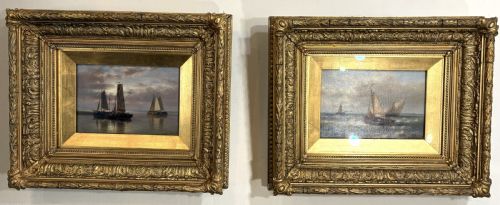
Framing often complements the artwork through the use of giltwood and gold leaf moulding, enhancing the visual depth of the painted scenes. The interplay of pigment and supportive canvas allows surviving pieces to retain their tonal quality across centuries of handling and display.
Several artists clearly spent too much time getting soaked on Dutch quaysides just to paint a remarkably damp-looking fishing boat.
What varies in quality
The distinction between standard works and exceptional examples lies in the precision of brushwork and the artist's ability to render atmospheric conditions like sea spray, wind-filled sails, and fading evening light. Superior compositions demonstrate a confident handling of perspective, particularly in complex arrangements of shipping vessels against distant horizons or busy harbours.
Material preservation also influences the standing of a piece, with well-maintained canvas supports, stable pigment layers, and original giltwood frames commanding greater interest. The specificity of the subject matter and the documented skill of the identified hand contribute significantly to the standing of individual paintings within the wider tradition.
Bonaventura Peeters·Willem Bos·Abraham Hulk I·Pieter Cornelis Dommersen·Thomas Bush Hardy·Adrian Van Porten·Hendrik Willebrord Jansen·Jan van Couver·William Raymond Dommersen·Paul Jean Clays·Fred Mayor·Madeline Hughes·Hendrik Yan Wolter·Ludwig Hermann·Frank Myers Boggs·Charles Martin Powell·Jacob Knyff·Abraham Storck·Alfred Montague
The Dutch Maritime Art Glossary
- Oil on Canvas
- Pigment mixed with drying oil applied to a stretched woven fabric support. This combination provides durability and allows for rich colour blending across maritime scenes.
- Giltwood
- Wood carved and treated with a thin layer of gold leaf or metallic powder. It is commonly found on the ornate frames enclosing 19th-century oil paintings.
- Watercolour Painting
- Artworks created using water-soluble pigments on paper. This medium was frequently utilised for capturing transient coastal weather and light.
- Dutch Golden Age
- A period in Dutch history spanning the 17th century noted for achievements in trade, science, and fine art. Maritime painting flourished during this era to celebrate naval power and commerce.
- Impressionism
- An art movement characterised by relatively small, thin yet visible brush strokes and an emphasis on accurate depiction of light. Artists applied this style to render fleeting atmospheric effects on the water.
Dutch Maritime Art: Frequently Asked Questions
What subjects appear in Dutch maritime art?
These works primarily depict sailing boats, fishing vessels, and bustling harbour scenes along Dutch shores and canals. Artists also recorded coastal townscapes, river quays, and occasionally dramatic sea battles.
Alongside shipping traffic, compositions frequently feature local inhabitants such as fisher girls and coastal workers engaged in daily routines.
How do I date a maritime oil painting?
Dating relies on stylistic evidence, such as the transition from 17th-century Golden Age realism to 19th-century realism and early 20th-century impressionism. Clothing styles on depicted figures and the construction of the canvas or panel also offer chronological clues.
Signatures, dates inscribed by the artist, and framing materials further assist in placing a piece within a specific historical decade.
Where should I hang a maritime painting?
These artworks suit rooms with stable humidity and protection from direct sunlight to preserve oil paint, canvas supports, and giltwood frames. Placing them in living areas or studies allows the detailed brushwork of coastal scenes to be viewed at close range.
Matching the scale of the painting to wall space ensures the composition remains a focal point without overwhelming the room.
What is the difference between an oil painting and a watercolour?
Oil paintings utilise pigment bound in drying oil applied to canvas or board, offering rich colour depth and a textured surface. Watercolours employ water-soluble pigments on paper, resulting in a lighter, more translucent appearance.
Watercolours were often favoured for rapid field studies, whereas oils typically formed finished studio pieces intended for formal display.