




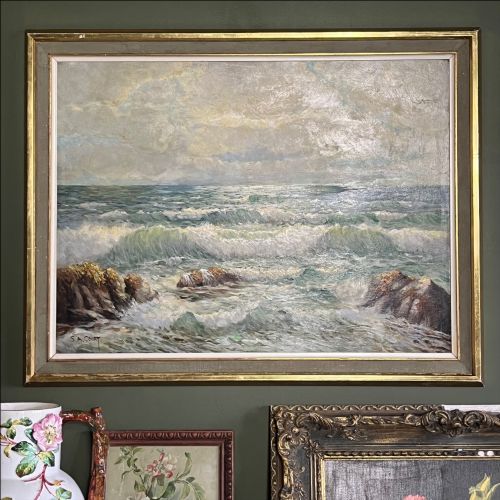

Marine Seascape Painting
A marine seascape painting captures the motion of open water, historic shipping and coastal weather across centuries of British and European art.
Marine Seascape Painting
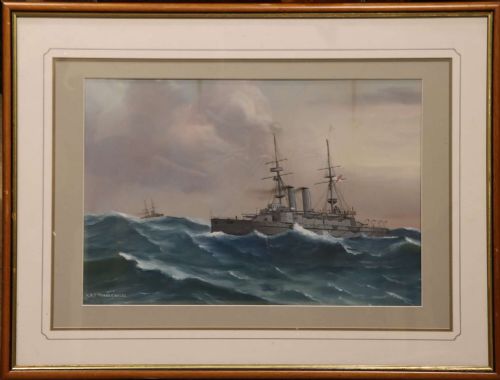
A marine seascape painting encompasses framed works depicting coastal views, harbour scenes, naval battles and deep water vessels under sail or steam. These pieces span the nineteenth century through the mid twentieth century, reflecting shifting maritime industries and coastal leisure.
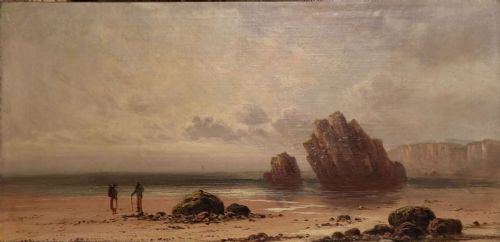
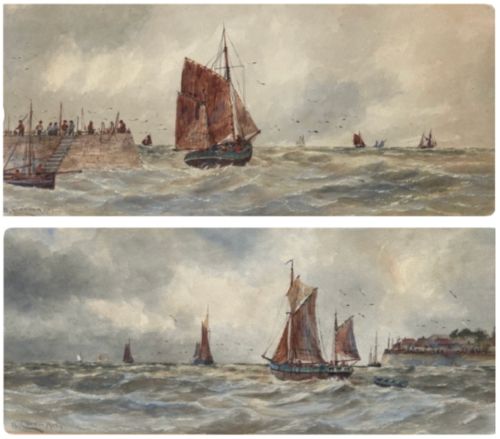
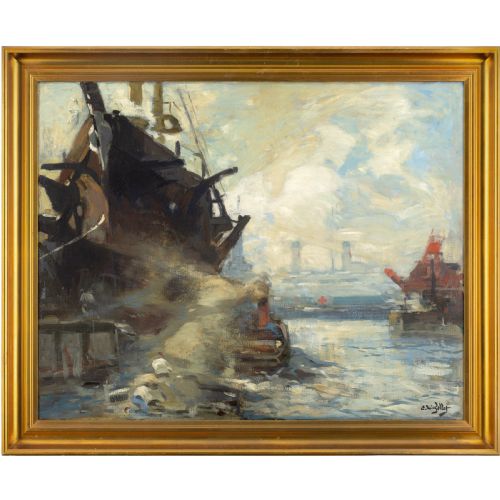
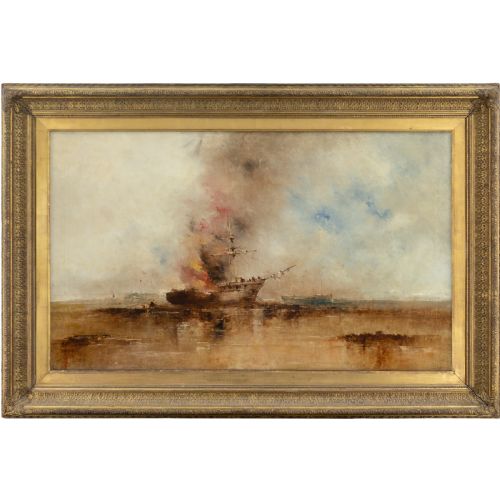
The most common formats on this page are nineteenth century oil paintings on canvas or panel and early twentieth century watercolours on paper. Buyers encounter everything from serene Cornish beach scenes and Thames estuary views to dramatic storm and shipwreck narratives.
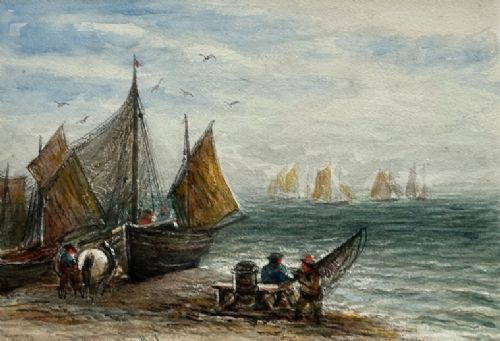
Works frequently originate from British coastal art colonies such as Newlyn and St Ives, alongside continental depictions of Dutch canals and French ports. Subject matter ranges from local fishing boats landing their catch to large three masted schooners and warships.
Materials and Technique
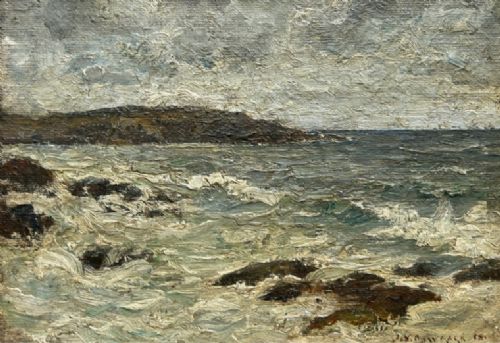
Artists painted primarily with oil paint on canvas, wood panel and board, or applied watercolour and gouache onto paper. Oil works often display thick impasto applications to render churning ocean waves and atmospheric cloud formations.
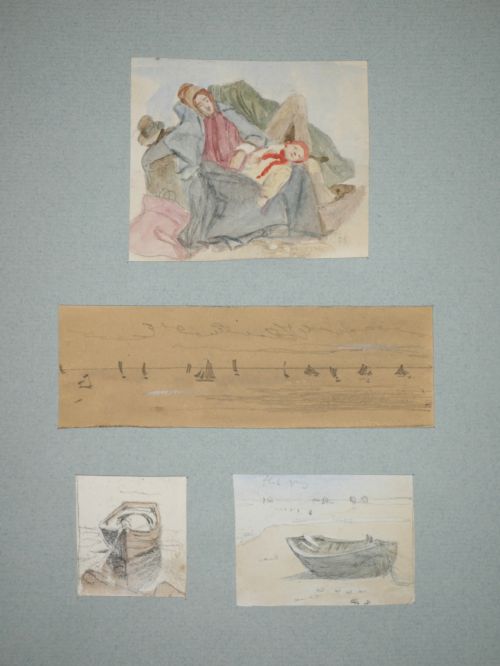
Support materials include traditional stretched canvas, heavy card and wooden panels housed within period gilt frames. Watercolour examples on paper utilise transparent washes combined with gum arabic highlights to capture coastal light and reflections.
The archive includes historical depictions of naval conflicts, merchant sailing ships, Cornish fishing ports and Dutch canal scenes.
Distinctions in Execution
Quality rests upon the artist's command of maritime rigging, vessel perspective and the fluid physics of moving water. Skilled hands convey the heavy weight of ocean swells and the precise structural rigging of historical sailing ships.
Surface preservation and framing also define the standing of a piece, distinguishing direct en plein air studies from later studio reproductions. Original period gilt frames that match the age of the canvas contribute to the integrity of the work.
James Hardy·Kenneth Cozens·James Orrock·William Cannon·James Smetham·Eugène-Louis Gillot·William McAlpine·Sidney A Court·B Nash·Charles Edward Dixon·Eric Tufnell·William Banks Fortescue·John Rose Miles·Frank Watson Wood·William Broome·Bernard Gribble·Bonaventura Peeters·Frank William Scarbrough·F Corpuz·Clive Browne·Peter Brannan·Hector Caffieri·Bernard Benedict Hemy·Thomas Creswick·Willem Bos
The Marine Seascape Painting Glossary
- Impasto
- Paint applied thickly to a canvas or board, leaving visible brush or palette knife marks that create texture. This technique is frequently used to render the crests of waves and rough sea foam.
- En plein air
- Painting outdoors to capture natural light, weather and atmospheric shifts directly from the subject. Artists working in this manner often produced smaller panels depicting coastal Cornwall or the English Channel.
- Panel
- A flat piece of wood or board used as a support for oil painting instead of stretched canvas. These rigid surfaces provide stability for detailed harbour portraits.
- Gouache
- An opaque water-based medium often combined with watercolour on paper or board. It allows for dense highlights on stormy seas and vessel hulls.
- Watercolour
- Pigments suspended in a water-based solution applied to paper supports. Maritime artists utilised this medium for portable coastal sketches and finished harbour views.
Marine Seascape Painting: Frequently Asked Questions
How do I care for antique marine paintings?
Keep oil and watercolour works away from direct sunlight and fluctuating humidity to protect canvas and paper supports. Avoid using chemical cleaners on historic gilt frames.
Dust surfaces gently with a soft dry brush and consult a professional conservator for deeper restoration needs.
What subjects appear in these coastal artworks?
Paintings feature commercial sailing vessels, naval warships, fishing boats at low tide and rescue ships braving storms. Scenes range from tranquil river estuaries to violent maritime gales.
Topographical accuracy often documents specific lighthouses, piers and harbour towns across Britain and Europe.
How can I date a maritime watercolour?
Examine the type of paper stock, framing style and artist signatures recorded in historical exhibition records. Costume details on figures and the rigging of depicted ships provide further chronological clues.
Watercolours from the nineteenth century generally exhibit heavier rag paper and distinct handling compared to twentieth century examples.
What is the difference between oil and watercolour marine art?
Oil paintings utilise thick pigmented paste on canvas or wood panels, allowing for rich textures and deep atmospheric layering. Watercolour works employ transparent washes on paper to capture bright coastal light.
Oils were typically completed in studios or sturdy en plein air boxes, whereas watercolours offered greater portability for coastal sketching.