





Victorian Coastal Watercolour
Victorian coastal watercolour works capture harbour life, fishing boats and cliff views through nineteenth-century pigment on paper.
Victorian Coastal Watercolour
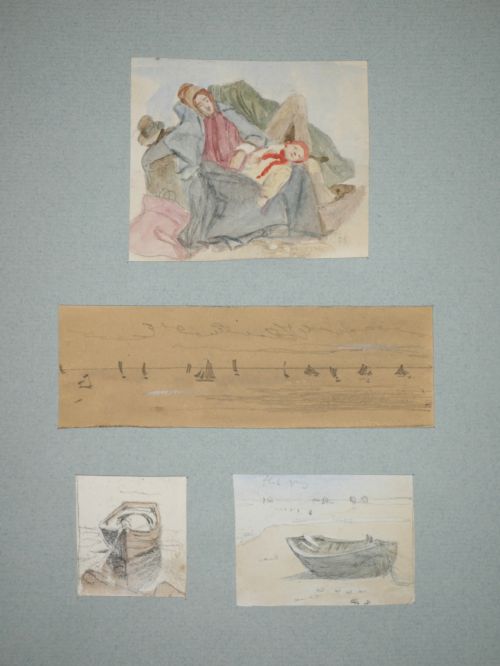
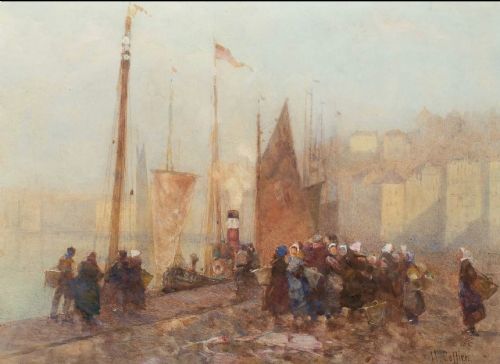
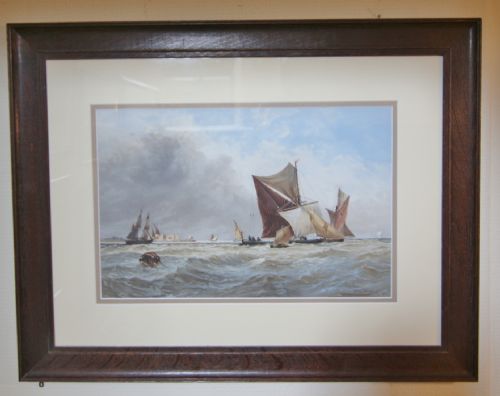
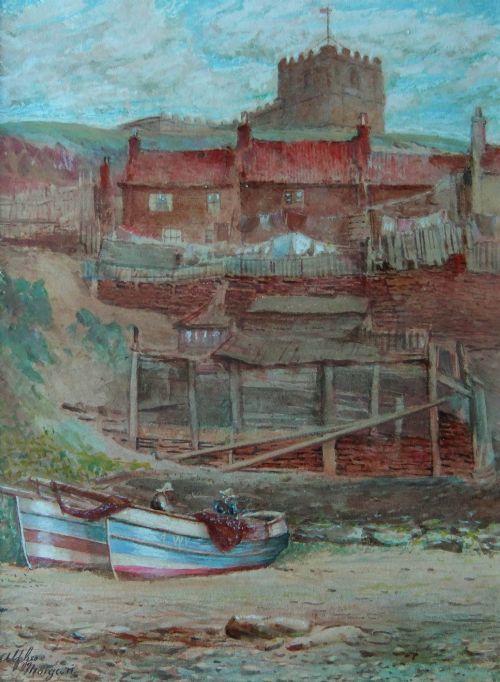
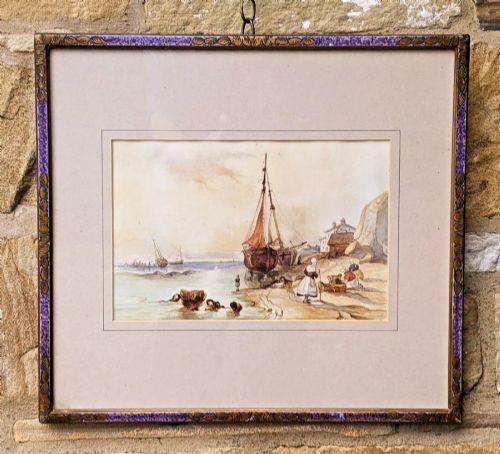
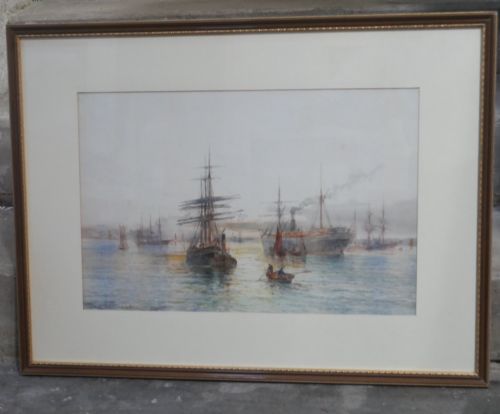
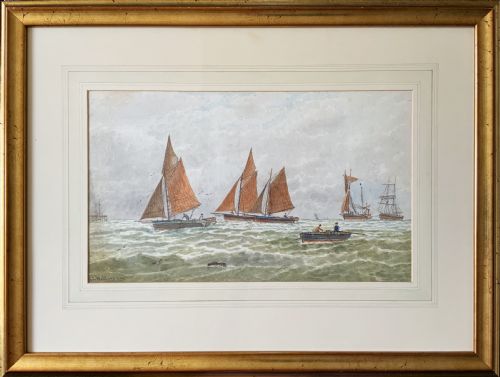
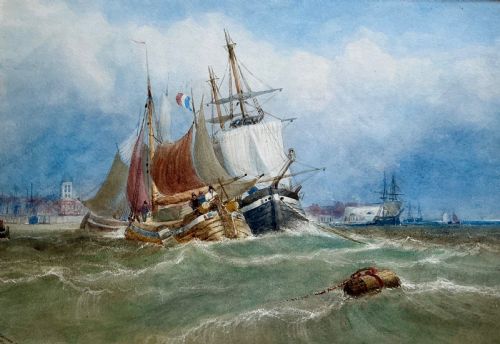
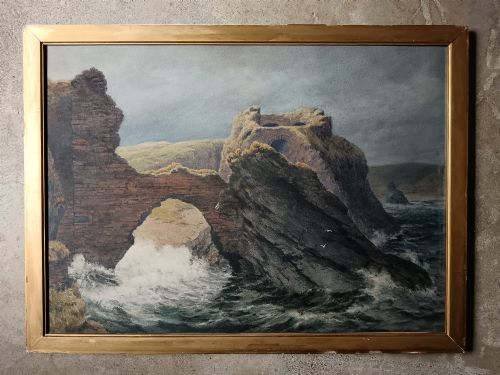
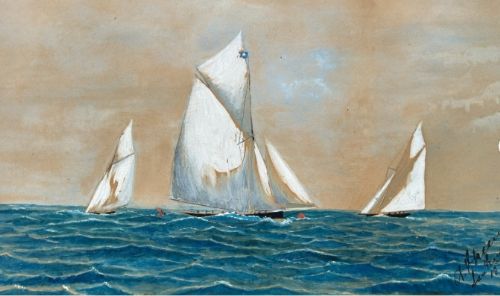
A Victorian coastal watercolour depicts maritime scenes, harbours, and fishing vessels across British and European shores during the nineteenth century. These works on paper record specific coastal locations such as Whitby, St Ives, Scarborough, and the Medway estuary.
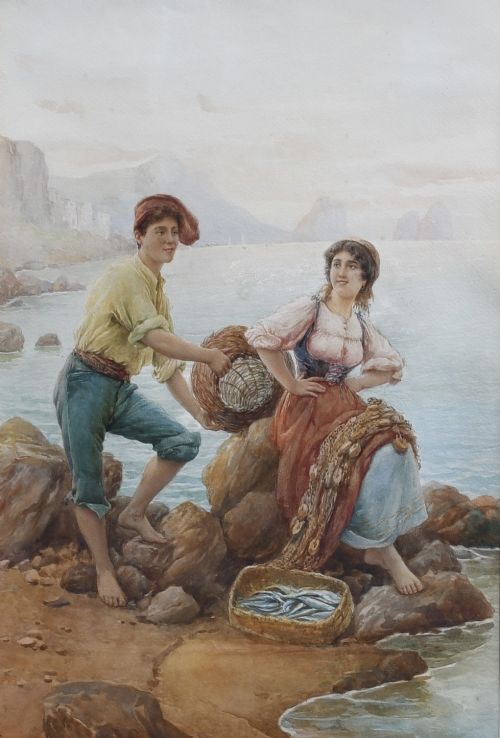
The compositions range from small marine sketches to large framed fine art paintings. Viewers encounter sailing ships at anchor, local fisherfolk landing their catch, and quiet coastal villages.
Most examples originate from the Victorian era and the decades immediately following, carrying signatures or monograms from period marine artists.
Materials and Technique
Artists applied watercolour pigment onto paper support, often building transparent washes alongside opaque bodycolour highlights to describe water and sky. These works were typically protected behind glass within period wood or gilded wood frames.
The physical components rely on traditional watercolour paint combined with skilled brushwork on paper. Framed presentations frequently utilise timber mouldings finished in gilt.
Artists occasionally braved freezing North Sea gales to paint harbours, returning home with salt-crusted paper and frozen fingers.
Judging Quality
Quality rests upon the handling of light, atmosphere, and movement in maritime conditions, distinguishing works that convincingly render sea and sky from stiff topographical records. Hand execution, tonal control, and compositional balance define the stronger paintings.
The preservation of the paper support and the clarity of the pigment contribute significantly to the visual success of a coastal scene. Original period frames appropriate to the date also influence the integrity of the piece.
James Orrock·James Smetham·William Banks Fortescue·Hector Caffieri·Thomas Bush Hardy·Alfred G Morgan·Carlo Ferranti·George Stanfield Walters·Henry Barlow Carter·John Moxon·William Frederick Settle·John Bedloe Goddard·Charles William Adderton·Sir Thomas Newenham Dean·Ernest Dade·Arthur Tucker·Colin H Greenwood·John McDougal·Robert Buchan Nisbet·Frederick William Hattersley·James Thomas Watts·John Mitchell·Frederick William Booty·Kate E Booth·Stephen John Batchelder
The Victorian Coastal Watercolour Glossary
- Watercolour pigment
- Finely ground colour particles mixed with a binder for painting on paper. This medium allows transparent washes that mimic the movement of light on water.
- Bodycolour
- Watercolour mixed with white pigment to create opaque passages. Artists applied this technique to catch highlights on waves and sails.
- Gilt wood
- Timber framing coated with gold leaf or metallic finish. These frames protect the works on paper and reflect Victorian framing traditions.
- Marine art
- Depictions of ships, harbours, and the sea. This genre forms the core subject matter for coastal watercolours.
- Works on paper
- A classification encompassing drawings and watercolours executed on a paper support. Such items require protection under glass.
Victorian Coastal Watercolour: Frequently Asked Questions
What is a Victorian coastal watercolour?
A Victorian coastal watercolour is an original painting on paper depicting maritime scenes, harbours, and shipping from the nineteenth century. These works document specific shores and fishing communities across Britain and Europe.
Artists of the period captured changing weather, tidal conditions, and maritime trade using traditional watercolour pigments. Each piece reflects the nineteenth-century fascination with marine subjects and coastal topography.
How should I frame and hang these watercolours?
These watercolours require protection behind glass to prevent atmospheric damage to the paper and pigment. UV-filtering glazing helps preserve the delicate colours from fading over time.
Keep the paintings away from direct sunlight and damp environments. Many retain their period wooden or gilded frames, which complement the traditional character of the artwork.
How do I identify the date of a coastal watercolour?
Dates often appear alongside the artist signature or monogram on the face of the painting. Stylistic clues, such as the rigging of the vessels and the clothing of figures on the shore, also point to the correct period.
Framing styles and backboard materials can provide additional chronological evidence. Nineteenth-century watercolours typically exhibit specific paper watermarks and handling characteristics unique to the era.
Where were these coastal scenes painted?
Painters travelled extensively along British and European coasts to record working harbours, estuaries, and fishing villages. Locations range from Yorkshire ports like Whitby and St Ives in Cornwall to continental spots in Holland and Italy.
Artists frequently set up their positions on cliffs, piers, or beaches to capture authentic maritime activity. These watercolours serve as visual records of nineteenth-century coastal trade and topography.