


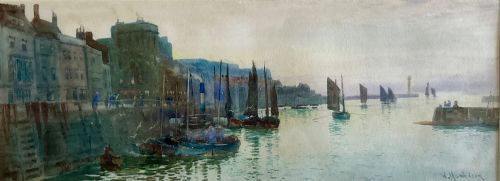
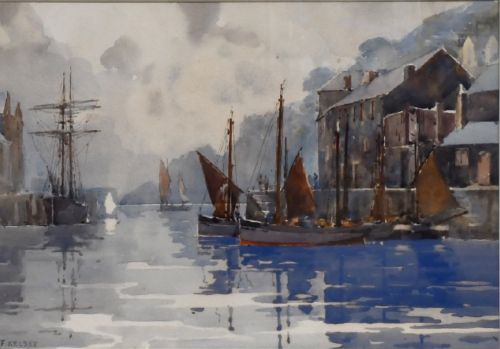


Blue Grey Coastal Painting
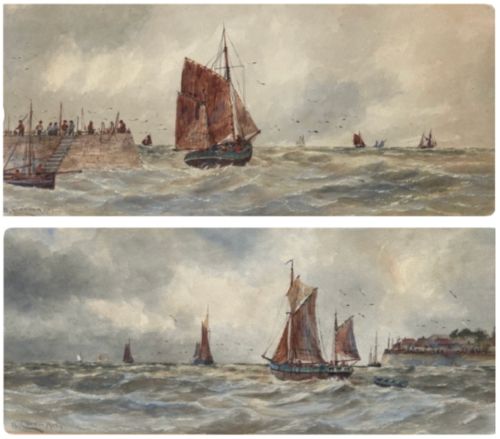
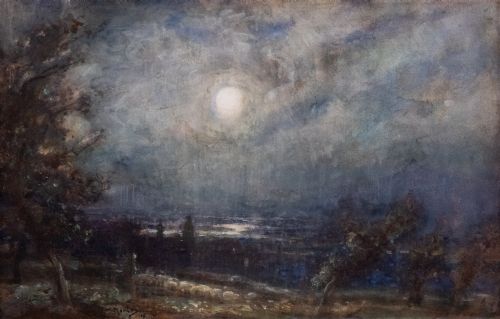
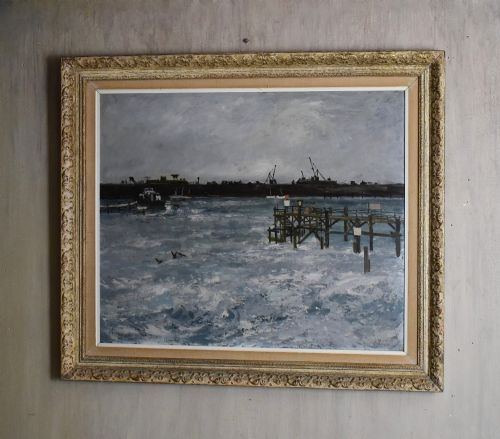
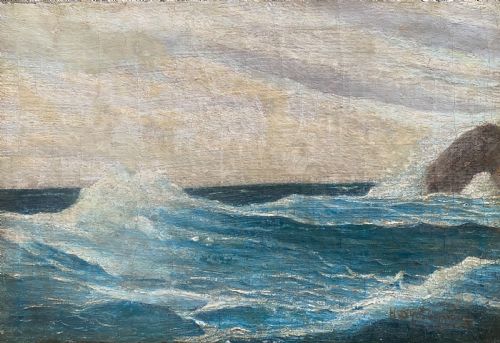
These works capture shores and harbours in muted palettes of slate and azure.
Blue Grey Coastal Painting
A blue grey coastal painting brings together maritime scenes and shores rendered in cool, atmospheric tones. These works typically depict harbours, fishing vessels, and open seas under overcast or evening skies.
Buyers browsing this selection encounter pieces stretching from the Victorian era through the mid twentieth century. Watercolours on paper and oil paintings on canvas dominate the selection, often framed under glass or in traditional wood moulding.
The aesthetic leans heavily toward British Impressionism, Modern British, and regional marine art schools. Harbours in Yorkshire, Cornwall, and Scottish coasts recur frequently across the works.
Materials and Technique
Artists relied primarily on watercolour pigment applied to paper or oil paint laid onto canvas or wood panels. Watercolour washes created the translucent effects of sea mist and damp air, while oils built heavier textures for crashing waves and moody clouds.
Framing often involved traditional gilt or painted wood surrounds to protect the paper and canvas mediums. Pigment handling relied on direct observation of light along the shoreline rather than studio invention.
Listings span from the Victorian era into the nineteen-sixties, utilising paper, canvas, oil, and watercolour.
Evaluating Quality in Marine Art
Quality rests upon the artist's command of atmospheric perspective and tonal restraint. Stronger pieces convey the chill of the North Sea or the damp weight of coastal air through subtle colour shifts rather than heavy pigments.
Compositional balance distinguishes competent regional recording from masterly execution. The placement of a single vessel or a distant headlock anchors the entire expanse of sea and sky.
William Cannon·John E Aitken·Thomas William Morley·Peter Brannan·Paul Bret·William Matthison·Frank Kelsey·Charles William Adderton·Ernest Dade·Edward Seago·Robert Leslie Howey·Herbert Royle·Tom Clough·James Watson·George Hamilton Constantine·John Mitchell·Samuel Owen·Ernest F Hill·George Gregory·Frederick Stuart Richardson·Percy Brooke·William Kay Blacklock·Arthur Wilde Parsons·Frank Wasley·Hirst Walker
The Blue Grey Coastal Painting Glossary
- Watercolour
- A painting method where fine pigment is suspended in a water-soluble binder and applied to paper. It allows for delicate washes and luminous skies.
- Marine Art
- Artwork that focuses on or is heavily inspired by the sea, including ships, shores, and harbours. This genre spans detailed ship portraits to moody coastal landscapes.
- Impressionism
- A style of painting emphasising light and its changing qualities rather than precise detail. Artists in this tradition prioritized quick brushstrokes to capture atmospheric conditions.
- Canvas
- A heavy woven fabric stretched across a wooden frame to serve as a foundation for oil painting. It provides a textured surface that holds thick applications of paint.
Blue Grey Coastal Painting: Frequently Asked Questions
What periods do these paintings span?
The works stretch from the nineteenth century through the mid twentieth century. Victorian marine pieces sit alongside later Edwardian and twentieth century modernist interpretations.
Most items date from the early decades of the 1900s, reflecting a strong period of British regional seascape painting.
Where were most of these scenes painted?
Many subjects focus on British fishing ports and coastal towns, particularly in Yorkshire, Cornwall, and Scotland. Locations such as Whitby, Scarborough, and various Cornish harbours appear regularly.
European coastal spots in France, Italy, and Portugal also feature among the selection.
How should I care for a watercolour painting?
Watercolours on paper require protection from direct sunlight to prevent fading of the pigments. Hanging them away from damp walls and humid environments preserves both the paper support and the mounting.
Displaying them under glass with appropriate matting keeps dust and atmospheric pollutants away from the delicate painted surface.
Are these paintings signed by the artists?
Many pieces carry original signatures or studio attributions from the artists who painted them. Monograms and dated inscriptions also appear on several works.
Documentation on the reverse or archival framing often helps confirm the provenance of these coastal scenes.