




Victorian Beach Painting
A victorian beach painting brings the nineteenth-century shore indoors, capturing salt air, fishing boats and coastal figures on canvas or paper.
Victorian Beach Painting
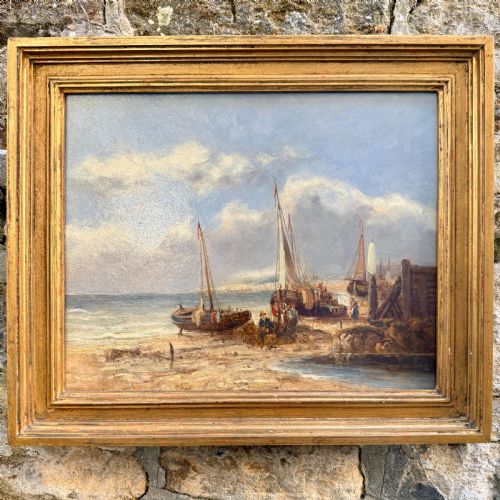
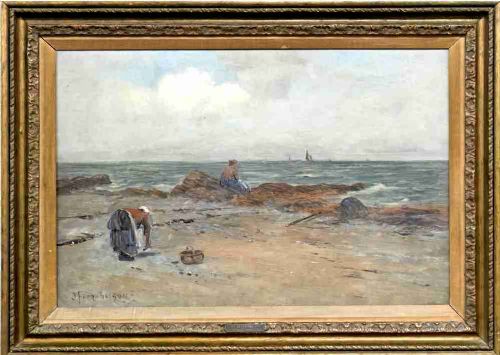
A victorian beach painting places the viewer directly on the nineteenth-century shore, often populated by fisher folk, children playing or beached boats. You will most frequently encounter works dating from the nineteenth century depicting recognizable British and European coastal locations.
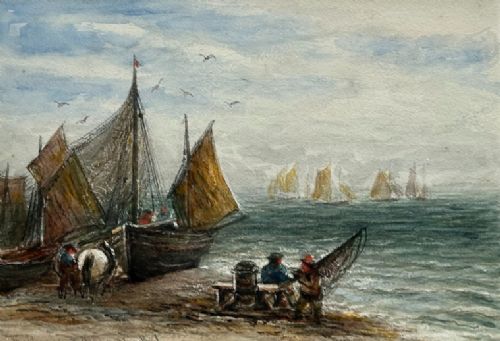
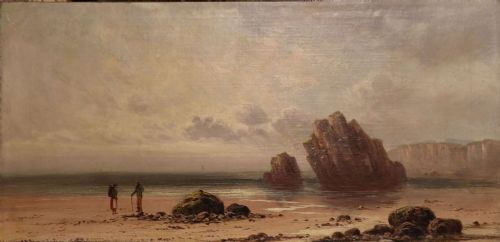
The subjects range from tranquil depictions of gathering kelp and spreading nets to dramatic scenes involving shipwrecks and sea stacks. These pieces appear in various formats, predominantly as oil paintings or watercolours framed in wood and gilt.
Materials and methods
Artists relied primarily on oil on canvas or delicate watercolour applied to paper, capturing the variable light of the coast. Canvases are frequently housed in traditional gesso and gilt wood frames, sometimes protected behind glass.
Techniques span detailed 19th-century realism to looser impressionistic strokes, reflecting the shifting artistic styles of the period. Pigments were worked to render the heavy atmosphere of low tide, wet sand and dramatic skies.
Victorian Beach Painting Retail Price Guide 2026
Typical asking prices for victorian beach painting among the pieces listed under this phrase on Sellingantiques today, from the lower quarter to the upper quarter. They describe what is for sale here now, not the wider market.
Fisherfolk share the sand with donkeys and children.
Evaluating the standard
Quality rests upon the artist's ability to render light, movement and atmosphere rather than mere scale or subject matter. Superior works demonstrate a confident handling of water, sky and human figures that brings the coastal scene to life.
The integrity of the original support, whether canvas or paper, combined with the condition of the period frame, contributes significantly to the standing of an individual piece.
James Orrock·William Banks Fortescue·Joseph Farquharson·James Webb·Frederick William Hattersley·John Mitchell·Kate E Booth·Sir David Murray·William Shayer·Julian Drummond·Daniel Sherrin·Thomas Bush Hardy·George Marks·John Duvall
The Victorian Beach Painting Glossary
- Gesso
- A plaster-like mixture applied to wood frames as a base for gilding. It provides a smooth surface for intricate moulded decorative details.
- Seascape
- A work of art depicting the sea, coastal views or marine subjects. These compositions frequently feature shipping vessels, cliffs and shorelines.
- Realism
- An artistic movement focusing on everyday subjects and scenes in a naturalistic manner. This approach avoids theatrical embellishment in favour of observed detail.
- Impressionism
- A style characterised by relatively small, thin yet visible brush strokes and an emphasis on accurate depiction of light. It prioritizes the overall visual effect over fine finish.
Victorian Beach Painting: Frequently Asked Questions
What subjects appear in these coastal scenes?
The compositions typically portray everyday coastal life, including fishermen with nets, children playing on the sand, and boats at low tide. Artists also recorded specific landmarks, harbours and dramatic shipwrecks along various shores.
Such subjects offer a direct window into nineteenth-century maritime communities and leisure habits by the sea.
Are these works executed in oil or watercolour?
Both mediums are common, with artists choosing oil on canvas for depth and durability, or watercolour on paper for luminosity and immediacy. Each medium was handled to capture the specific atmospheric conditions of the coast.
Watercolours are generally displayed under glass, while oil paintings often feature substantial gilt wooden frames.
How do I date a nineteenth-century coastal painting?
Dating relies on artist signatures, exhibition dates, costume details of the figures, and occasionally inscriptions on the reverse of the canvas or frame. Stylistic shifts from meticulous realism to looser impressionistic brushwork also provide chronological clues.
Examining the materials, stretcher bars and framing techniques further helps confirm the period of creation.
How should I display a vintage maritime artwork?
Hang the piece away from direct sunlight and excessive humidity to protect both the paint surface and the delicate gilt wood or gesso frame. Adequate wall space allows the atmospheric light of the coastal scene to project into the room.
Ensuring stable indoor temperatures preserves the physical integrity of the canvas or paper support for years to come.