


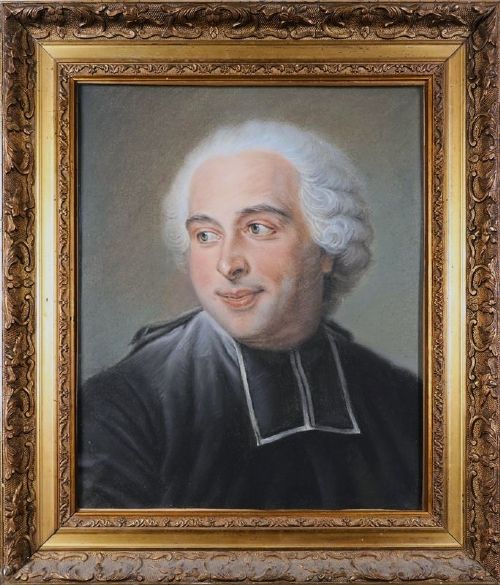
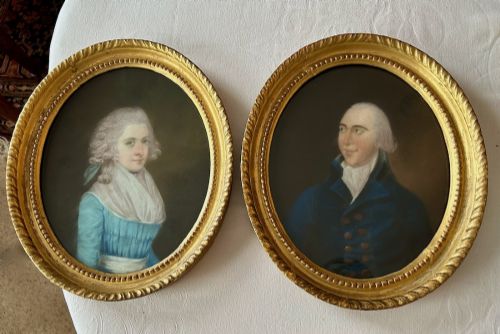
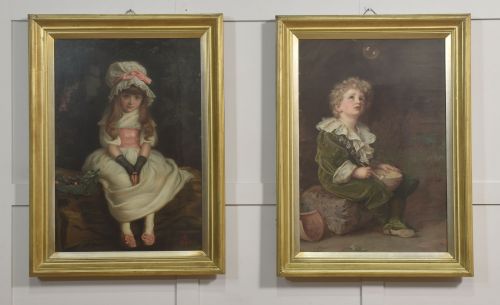
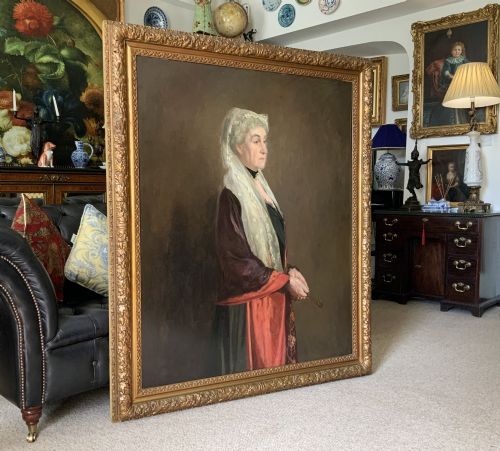


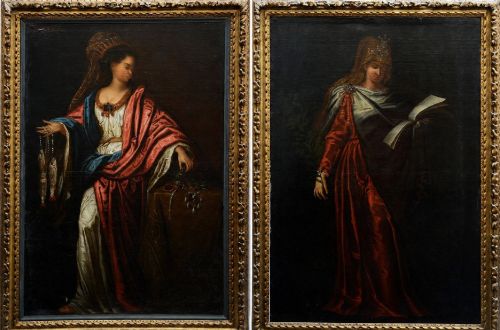
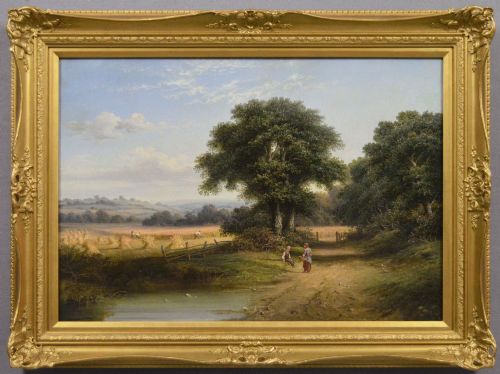
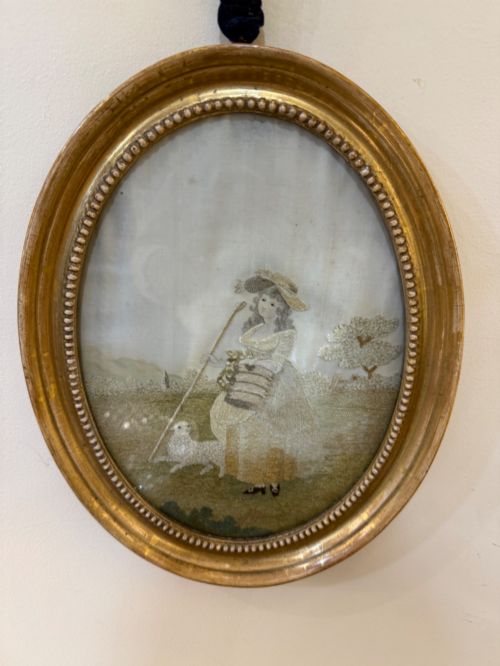
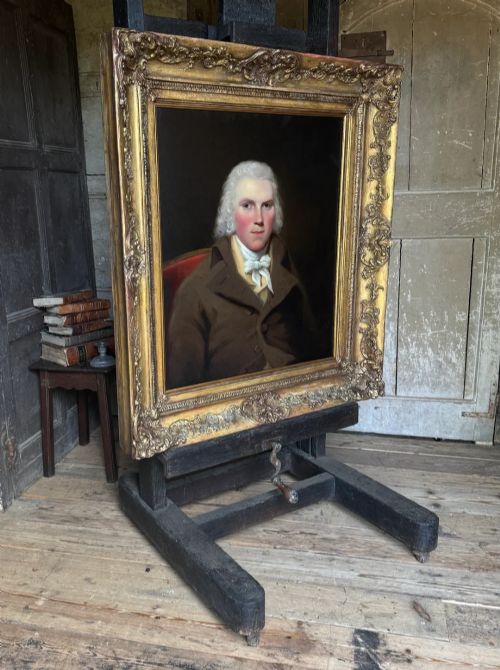
Giltwood Framed Artwork
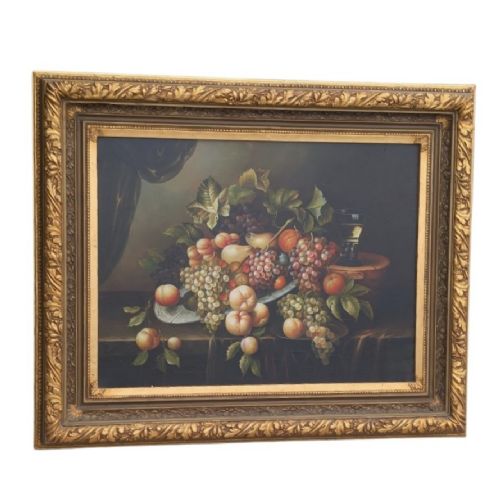
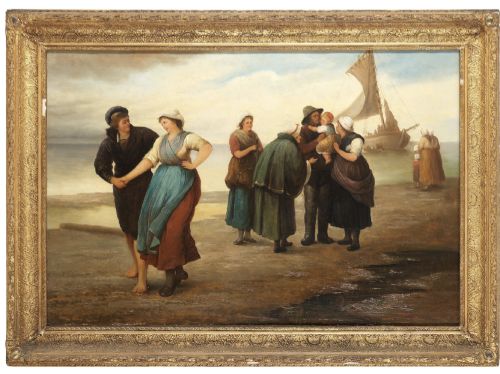
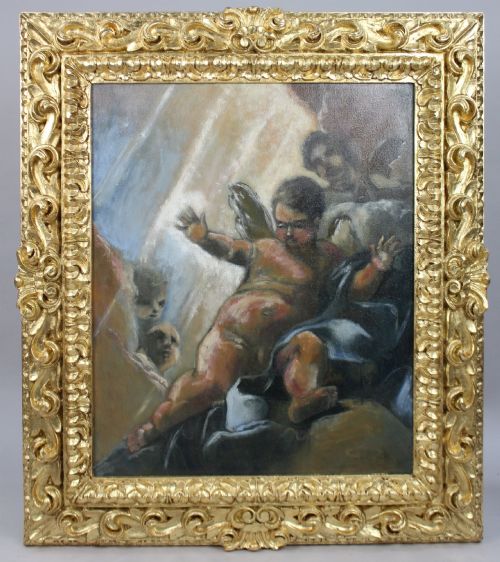
These giltwood framed artwork pieces bring centuries of oil paintings, pastels and prints enclosed in carved gold leaf moulding into the room.
Giltwood Framed Artwork
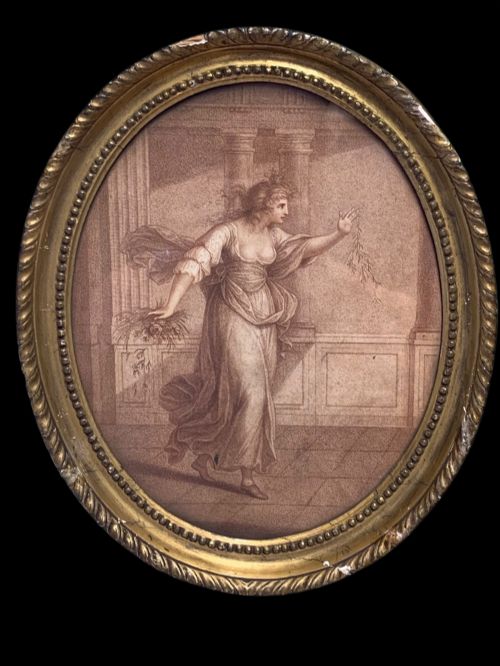
When searching for giltwood framed artwork, buyers encounter historical paintings, portraits and prints housed in ornate decorative borders. The items span the Georgian, Regency and Victorian eras, alongside 18th-century French and British school compositions.
Oil paintings on canvas and board dominate the selection, accompanied by pastel portraits, stipple engravings and glazed prints. Many combine period canvases with contemporaneous or later carved wooden surrounds.
Subjects range from mountainous landscapes and coastal shipping scenes to formal portraiture and pastoral genre paintings. The selection represents diverse European schools operating from the seventeenth century through to the early twentieth century.
Materials and construction
Makers formed the frames using timber carcasses built from wood, applying layers of gesso to sculpt intricate relief ornamentation before finishing the surfaces with gold leaf. This traditional method created the characteristic reflective brilliance of genuine giltwood.
The artworks themselves utilise oil paint on canvas or wooden boards, alongside pastel on paper, silk thread, and printed ink on paper or glass. Supports varied according to the medium, with heavy linen canvas stretched across wooden frames for major oil paintings.
Giltwood Framed Artwork Retail Price Guide 2026
Typical asking prices for giltwood framed artwork among the pieces listed under this phrase on Sellingantiques today, from the lower quarter to the upper quarter. They describe what is for sale here now, not the wider market.
Materials recorded across current items include gesso, gold leaf, canvas, wood, paper, and glass.
What separates examples
Quality rests upon the depth and precision of the hand-carved gesso work on the frame and the artistic merit of the enclosed painting. Original matching frames designed specifically for the canvas command greater interest than later married combinations.
The preservation of the original gold leaf surface dictates visual impact, as extensive restoration or re-gilding alters the historical patina. Brushwork execution, anatomical accuracy in portraiture, and compositional balance separate standard decorative items from fine works by named artists.
Eugène Verboeckhoven·Jean-Baptiste van Loo·Benjamin Barker of Bath·Thomas Sidney Cooper·Edgar Hunt·Robert Cleminson
The Giltwood Framed Artwork Glossary
- Giltwood
- Wood decorated with gold leaf or gold paint applied over a prepared gesso ground. This finish provides a luminous, metallic boundary that enhances the artwork within.
- Gesso
- A plaster mix applied to a wooden frame to create a smooth surface for carving and gilding. Artisans model intricate relief patterns directly into this pliable layer.
- Stipple engraving
- A printmaking technique using dots to create tonal gradations and subtle shadows. It produces delicate portraits and illustrative scenes popular in past centuries.
- Reverse glass print
- An image painted or transferred onto the underside of a glass sheet for display. This method creates a glossy, preserved finish without traditional surface varnish.
- Berlin silk
- Embroidered needlework utilising wool on canvas canvaswork grounds. These pieces reflect domestic craft traditions from the Georgian period.
Giltwood Framed Artwork: Frequently Asked Questions
How do I date a giltwood frame?
Dating relies on inspecting the construction joints of the wooden carcass, the composition of the gesso layer, and the style of the carved ornamentation. Georgian and Regency frames typically feature heavier wooden mouldings and distinct floral or classical motifs compared to later Victorian iterations.
Closer examination of the gold leaf application and underlying bole colours also reveals the period of manufacture. Original matching pairs often retain builder's marks or stamps on the reverse timber.
Are the frames original to the paintings?
Many historical artworks retain their original surrounds, whilst others were paired with complementary frames during later centuries. Examining the rebate at the back of the frame helps determine whether the canvas has resided there historically.
Matching dimensions, accumulation of matching dust and oxidisation, and corresponding period nail types provide reliable indicators of a correct pairing.
What distinguishes oil paintings from prints?
Oil paintings feature textured brushstrokes, visible canvas weave, and layered pigment applied by hand. Under magnification, the raised paint surface contrasts sharply with the flat, uniform ink dots found on prints and engravings.
Glazed portrait prints often sit behind protective glass to mimic the presentation of miniature oil works, though the underlying medium remains paper.