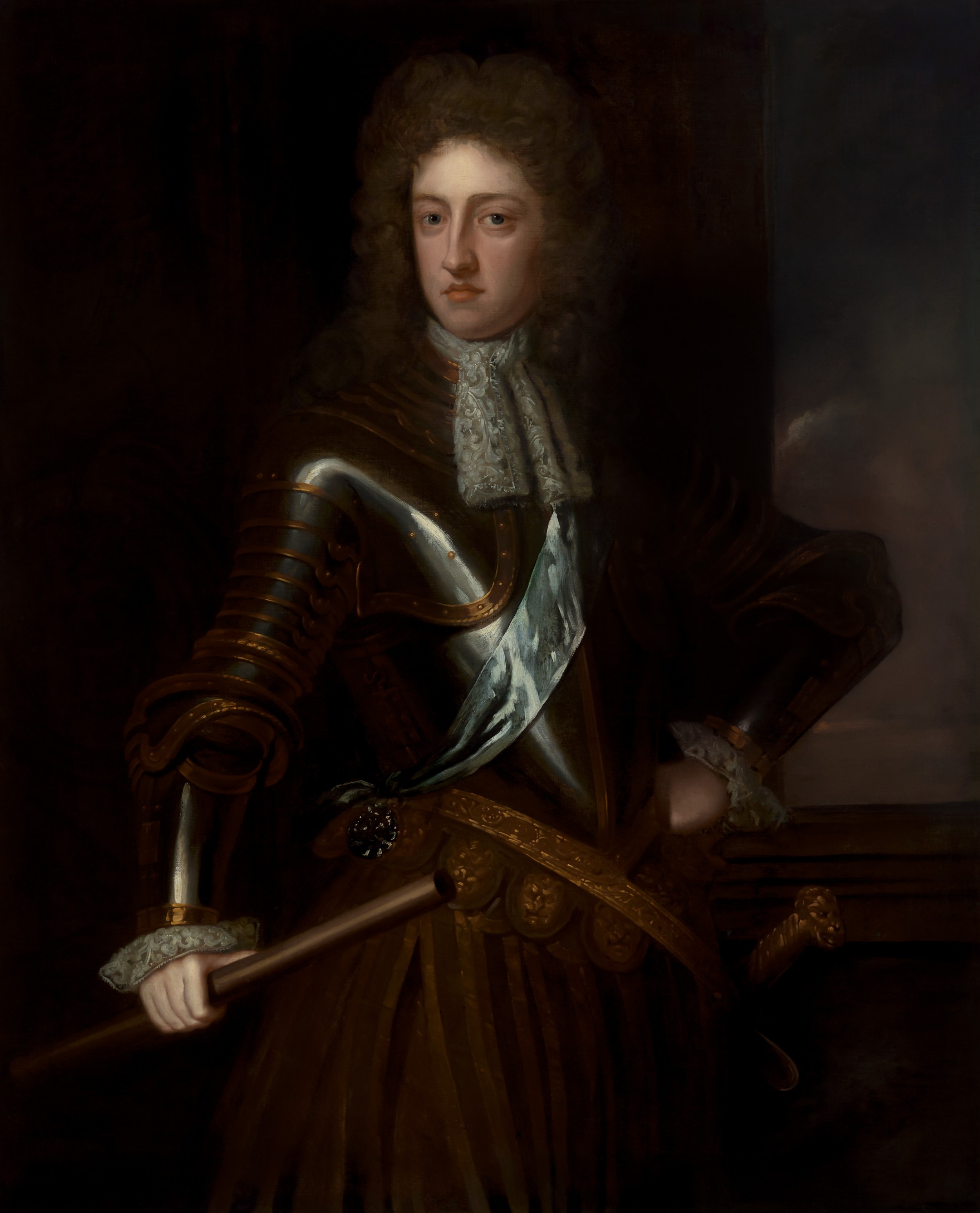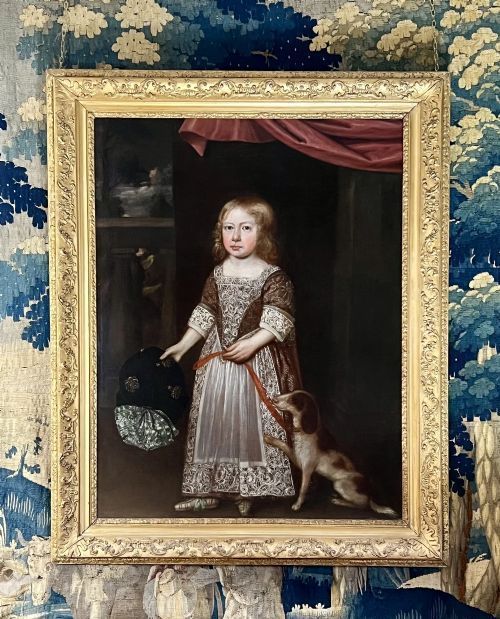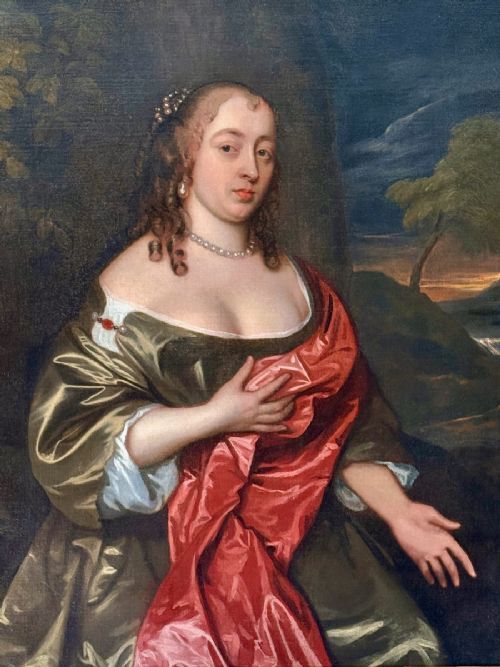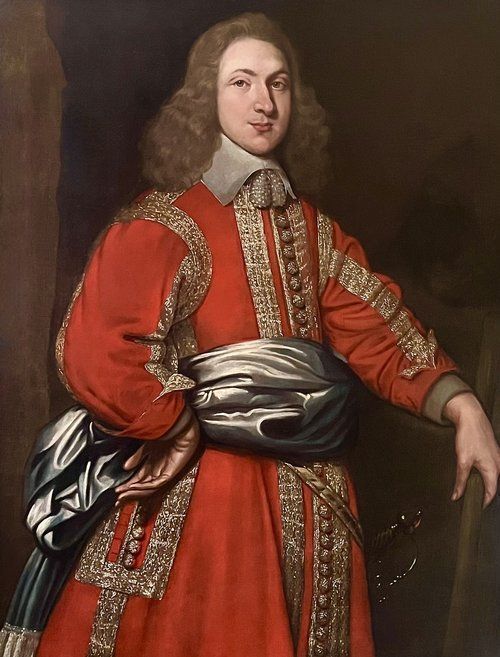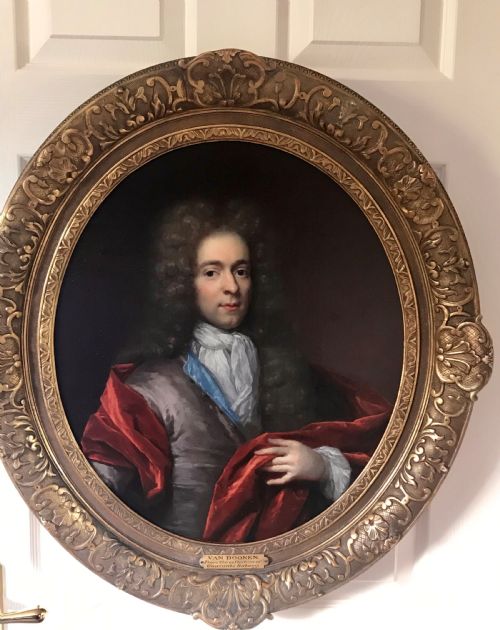
Titan Fine Art has dated this 17th Century Oil Portrait to the 17th Century.
In 1683 he married Princess Anne, daughter of the future James II. Their marriage proved unusually affectionate by the standards of European dynastic unions, and George remained a loyal and supportive husband throughout the extraordinary political upheavals of their lives.
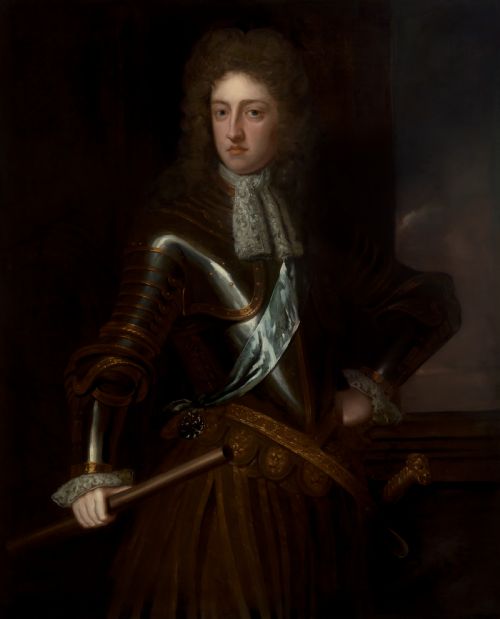
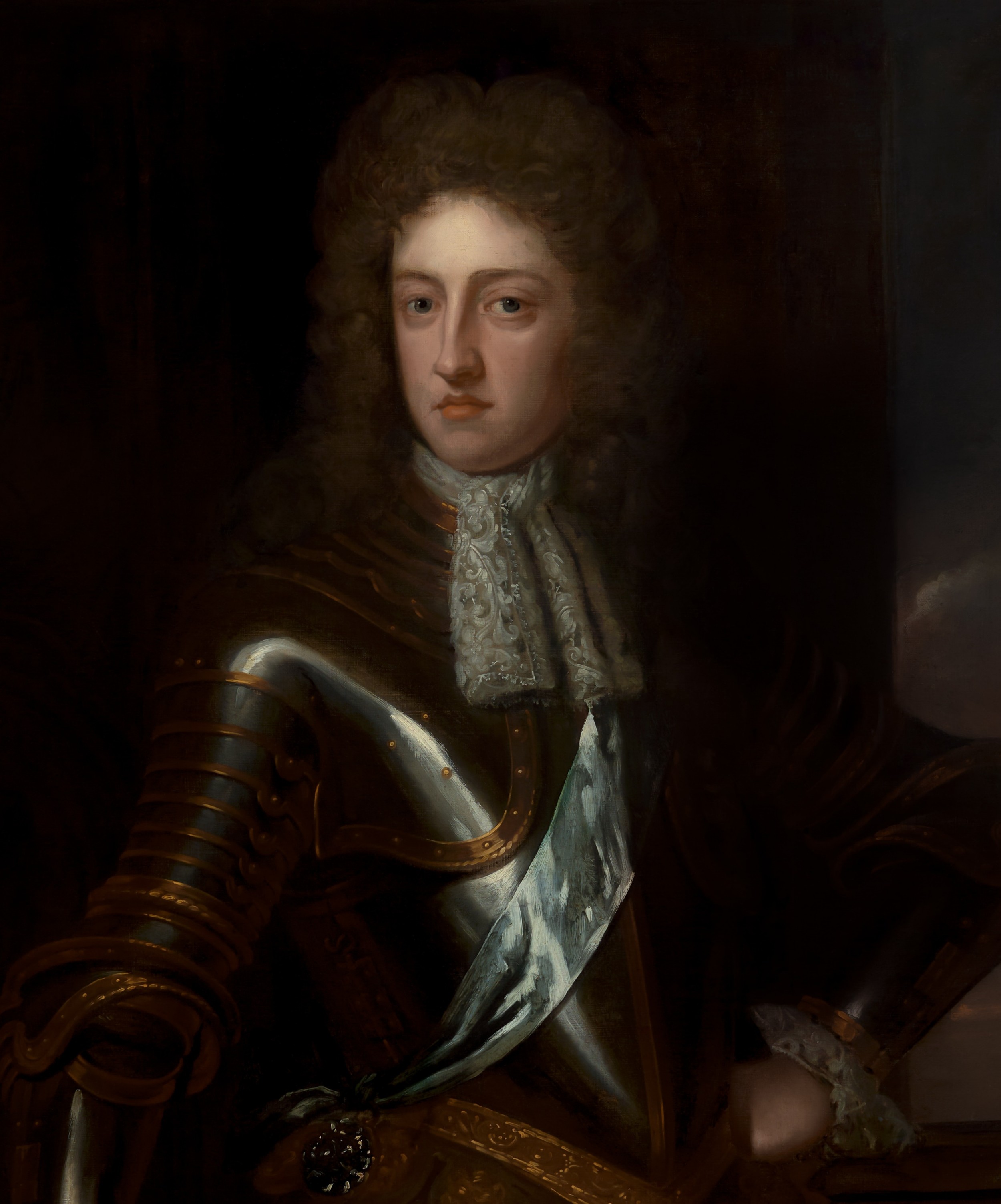
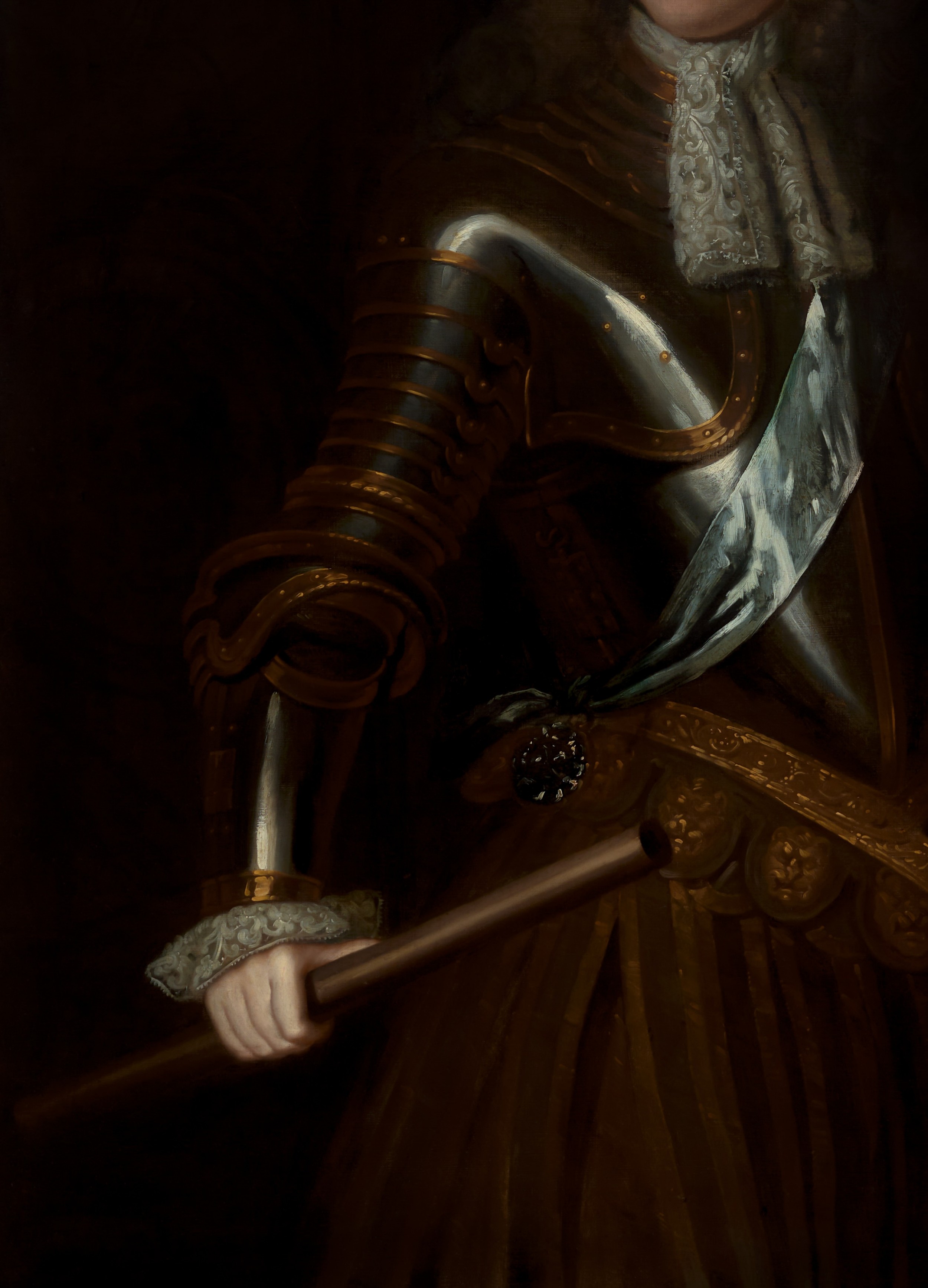
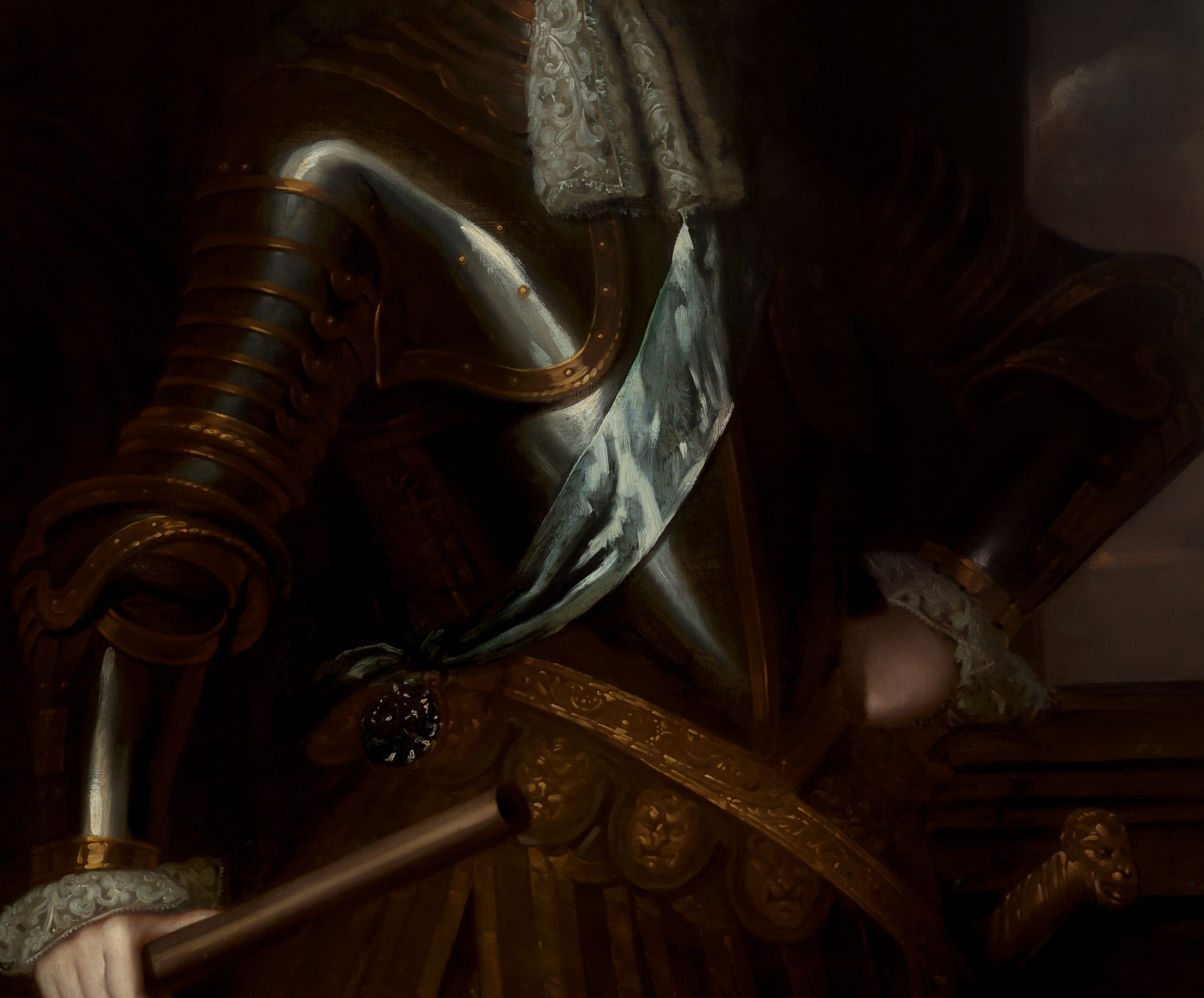
Following the Glorious Revolution of 1688, which deposed Anne's father and brought William III and Mary II to the throne, George was created Duke of Cumberland in 1689. He had already been appointed a Knight of the Order of the Garter, whose broad blue ribbon is prominently displayed across his armour in the present portrait. When Anne succeeded to the throne in 1702, George became consort to the Queen and was appointed Lord High Admiral. Their marriage was overshadowed by personal tragedy: despite Anne's numerous pregnancies, only their son William, Duke of Gloucester, survived infancy, and he died aged eleven in 1700. The resulting succession crisis ultimately helped bring about the Act of Settlement and the later Hanoverian succession.
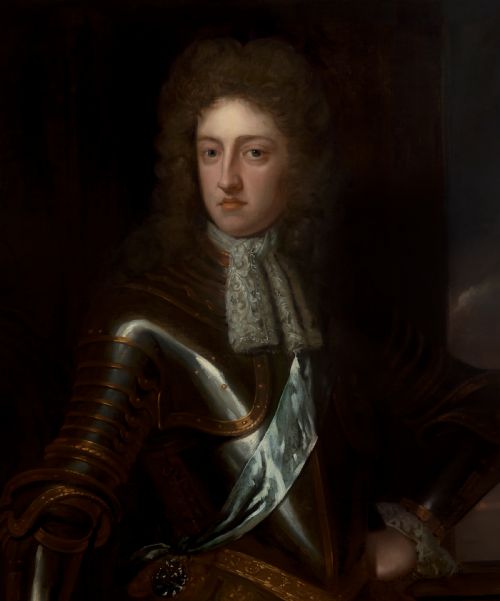
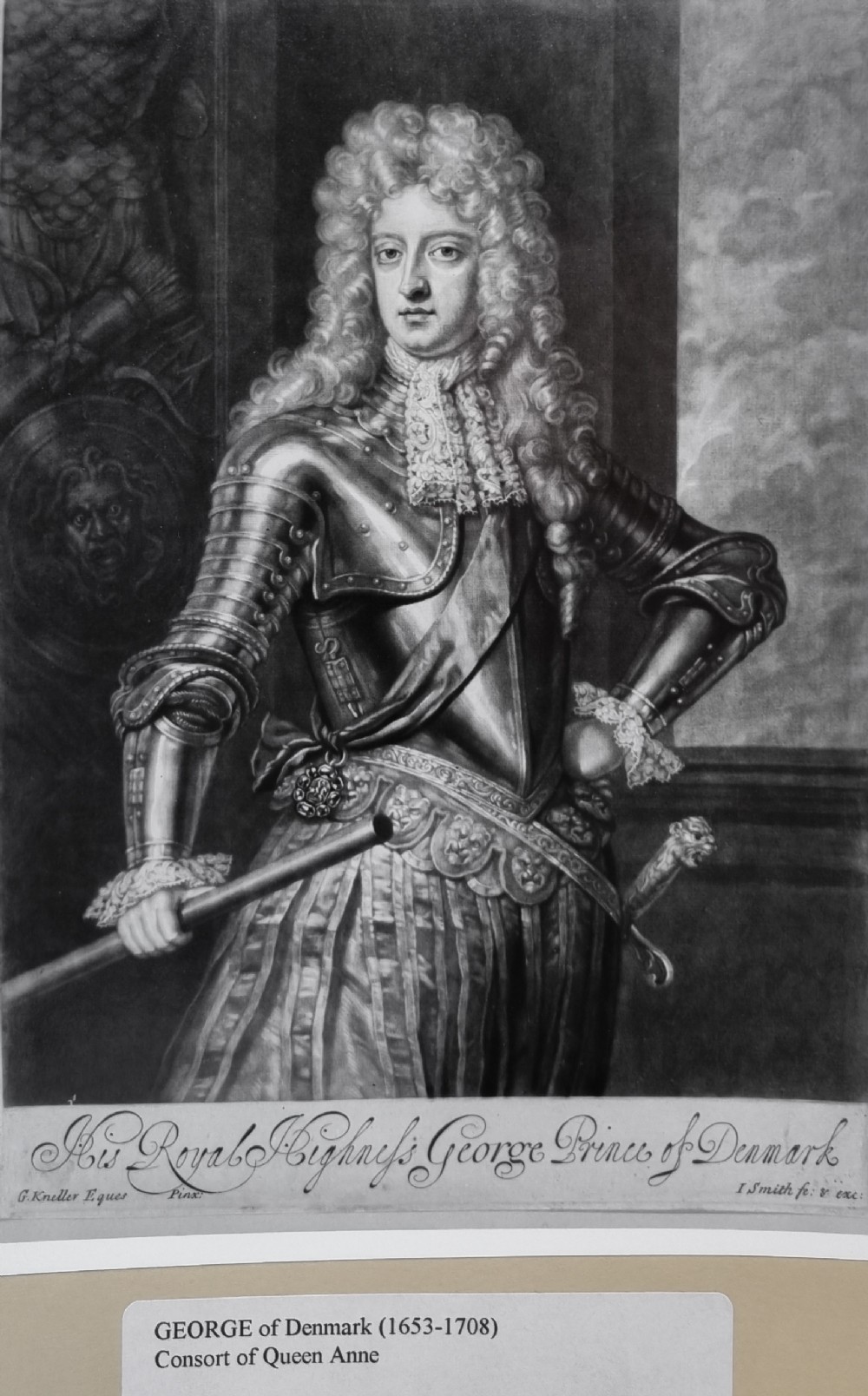
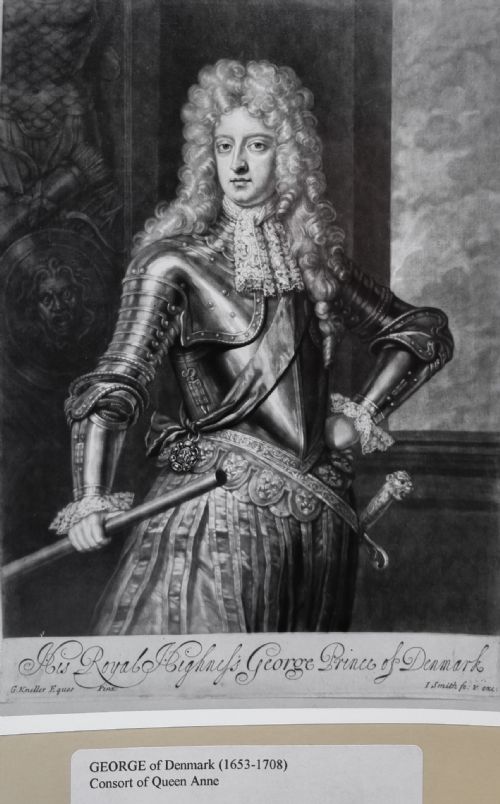
Particularly compelling evidence for the identification and attribution of the present painting is provided by a mezzotint made and published by John Smith in 1692 after Kneller's portrait of Prince George. The print identifies the sitter as "His Royal Highness George Prince of Denmark" and bears the inscription "G. Kneller ... Pinx.", explicitly recording Kneller as painter of the prototype. The location of Kneller's original painting is now unknown.
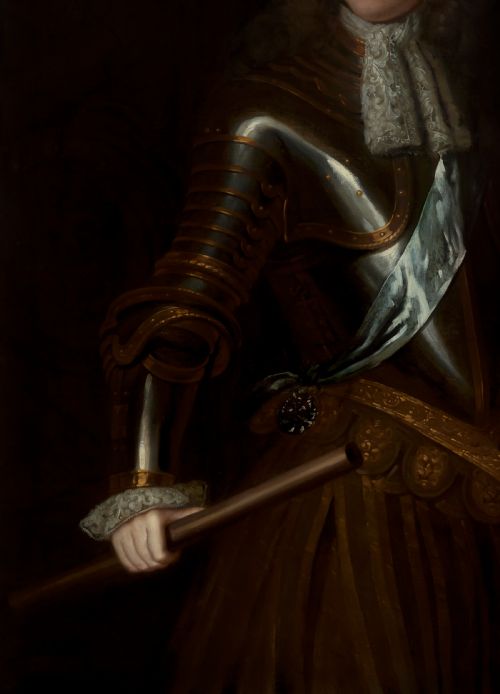
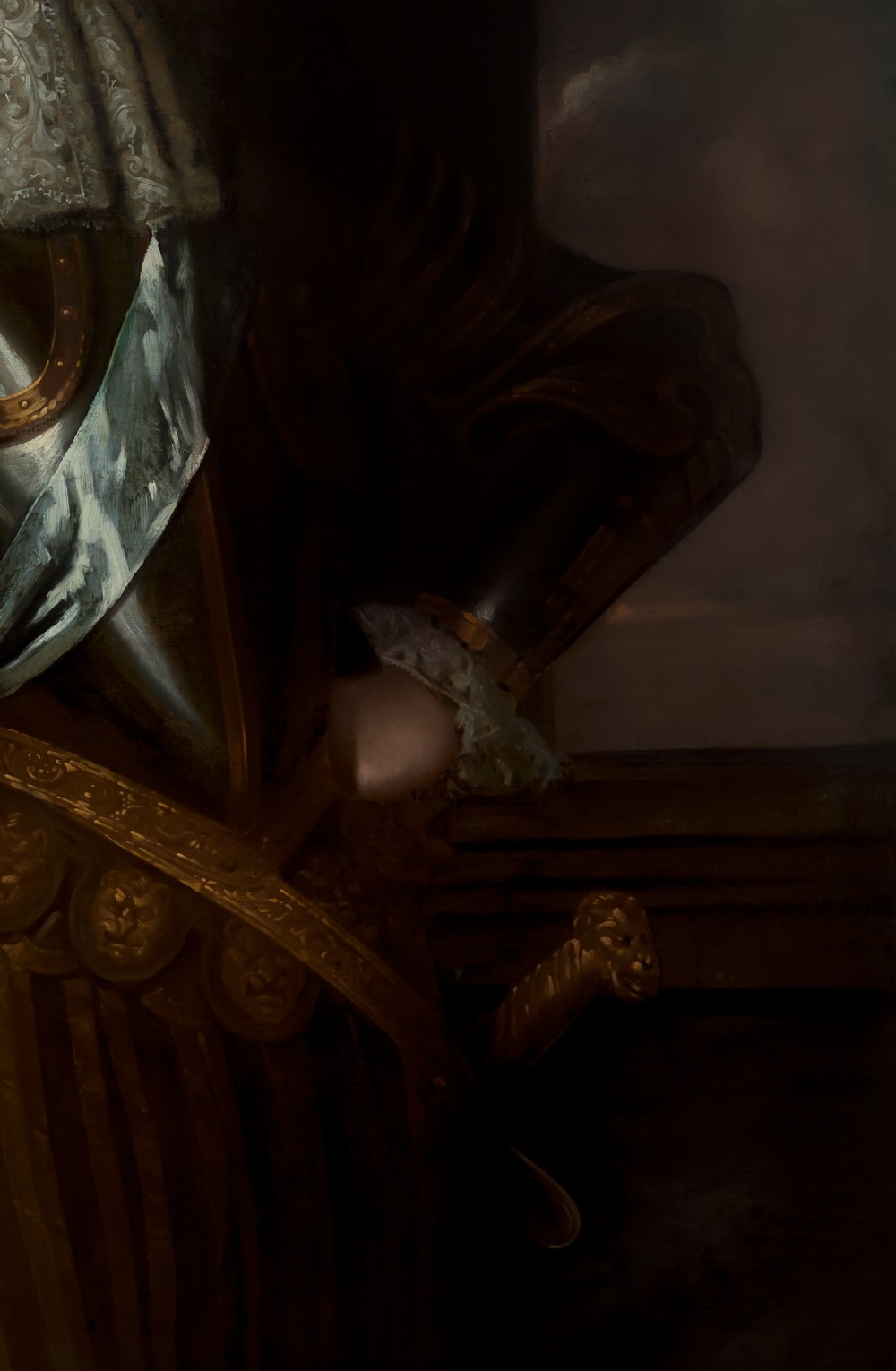
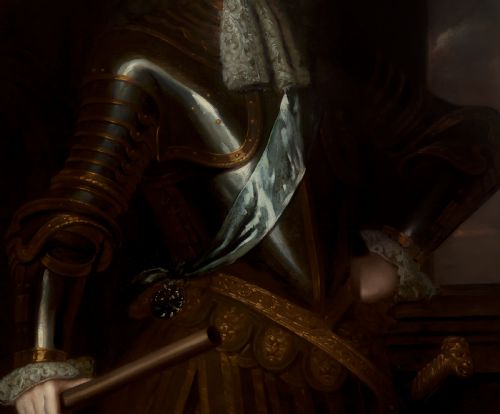
The present painting corresponds remarkably closely with this documented image: the pose, ceremonial armour, Garter ribbon, baton, sword, architectural setting and drapery follow the same composition. Its approximately 50 x 40 inch canvas format is also characteristic of the large three-quarter-length portraits produced by Kneller's highly organised studio for royal and aristocratic patrons.
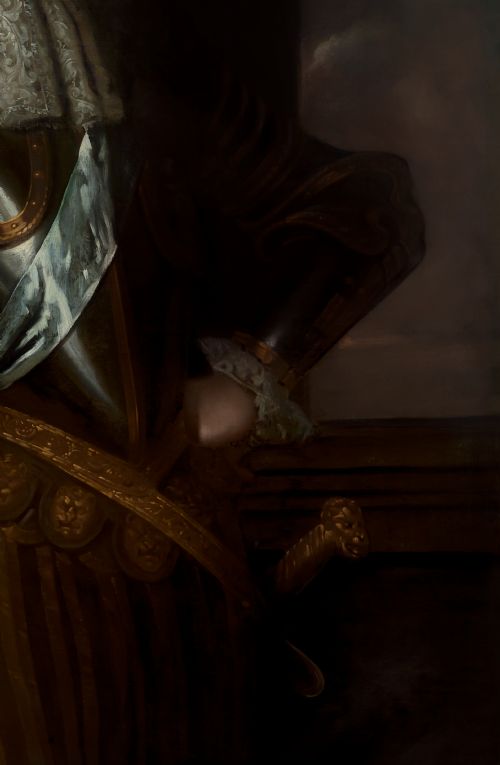
The sitter's polished armour, elaborate lace cravat and cuffs and luxuriant periwig are characteristic of elite court fashion around 1690. Armour in portraits of this period was principally emblematic, associating its wearer with princely authority, martial virtue and command rather than functioning simply as contemporary battlefield dress.
The portrait is presented in a handsome carved and gilded eighteenth-century frame, its rich ornament providing an appropriately grand setting for the royal sitter.
The reverse retains evidence of the painting's later history, including the stamp of W. Morrell, a London picture liner, and a label for Monte Cristo Galleries, Old Master Paintings, Armadale, Victoria, Australia.
A particularly appealing example of late Stuart court portraiture, the painting combines an identifiable royal sitter, an exact period engraved comparison documenting Kneller's prototype, imposing scale, richly painted armour and an attractive historic gilded frame. It offers both considerable decorative impact and a tangible connection with Queen Anne's court and one of the most consequential periods in British dynastic history.
Oil on canvas
Framed: 142 x 120 cm (56 x 47.25 in.)
Complete description at: www.titanfineart.com
Titan Fine Art has dated this 17th Century Oil Portrait to the 17th Century.
Specialist in 17th & 18thc portraits. Highly curated selection, museum-level research & pro conservation. Exceptional art, expertly vetted.
You can view the stock and full dealer information on the Titan Fine Art Profile Page
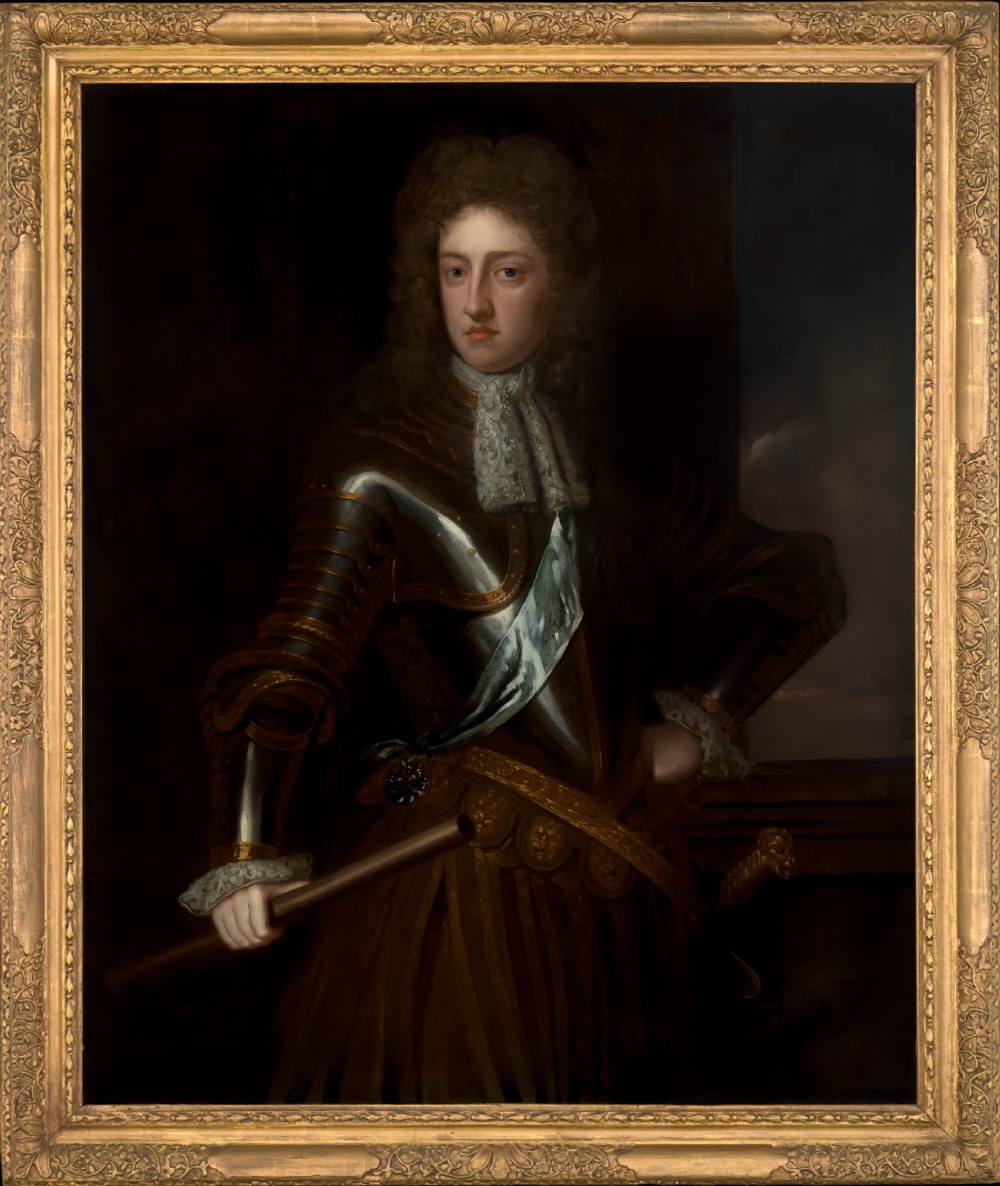
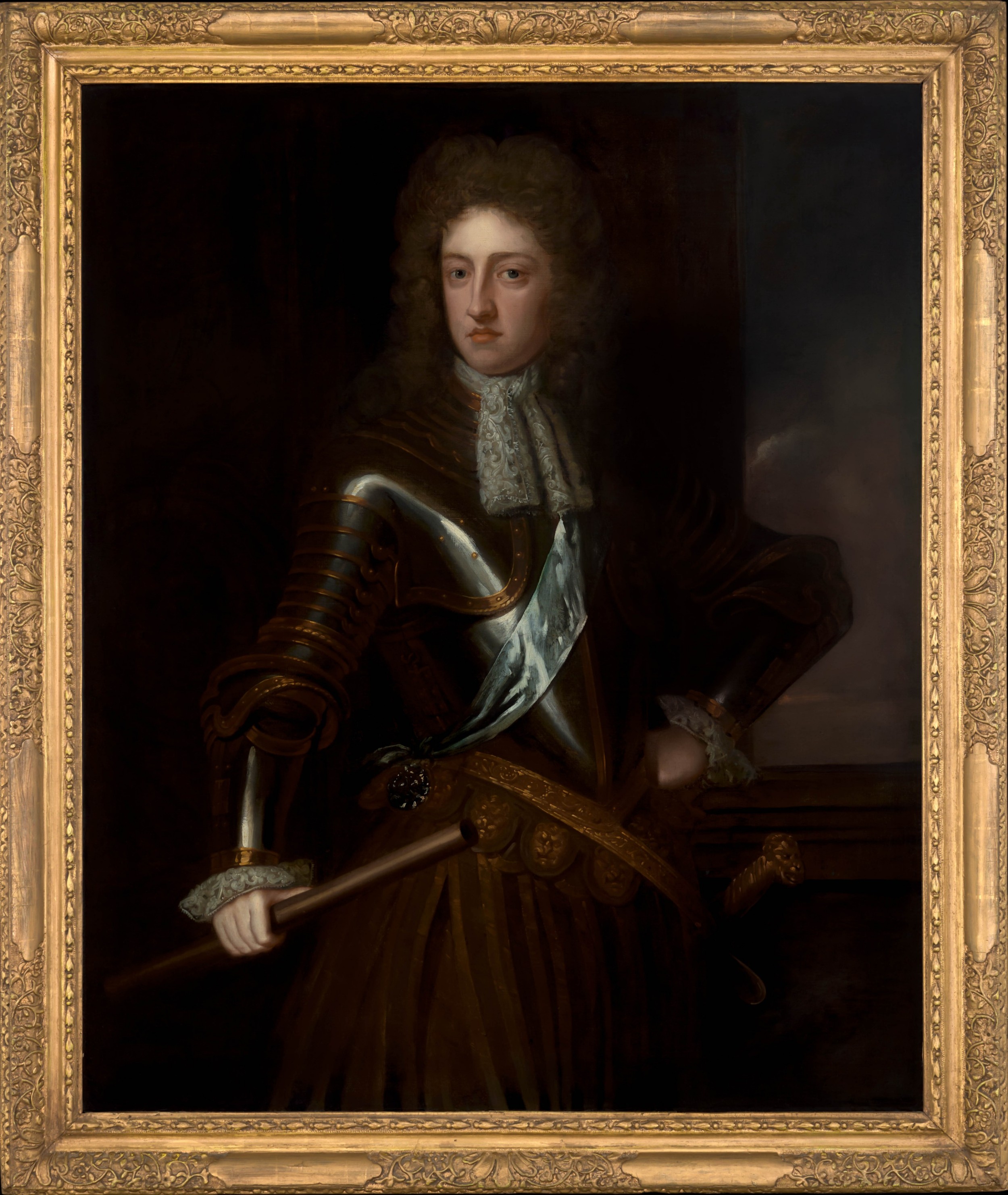
Portrait of Prince George of Denmark, Duke of Cumberland (1653–1708), C.1690; Studio of Sir Godfrey Kneller (1646–1723) Oil on Canvas Painting