



Dutch Floral Marquetry Chest
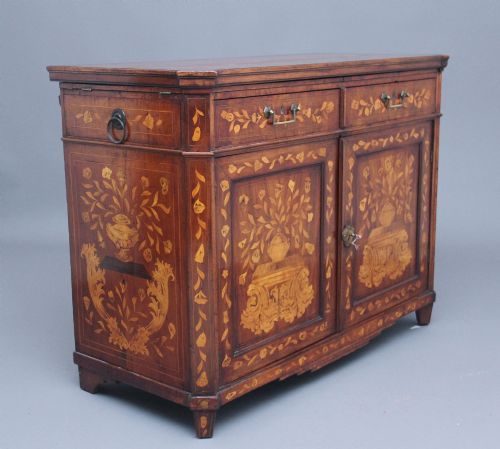
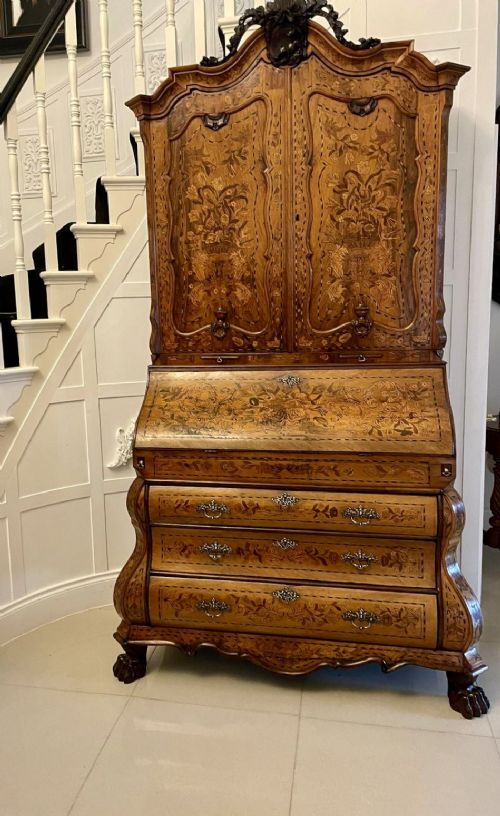
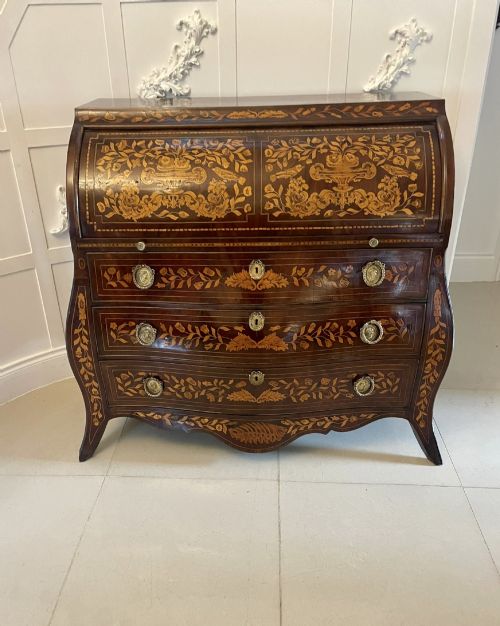
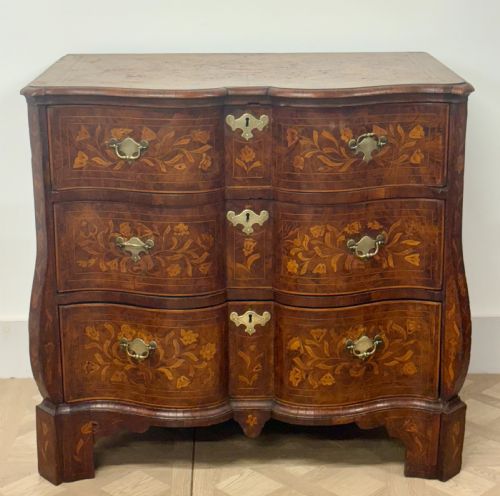
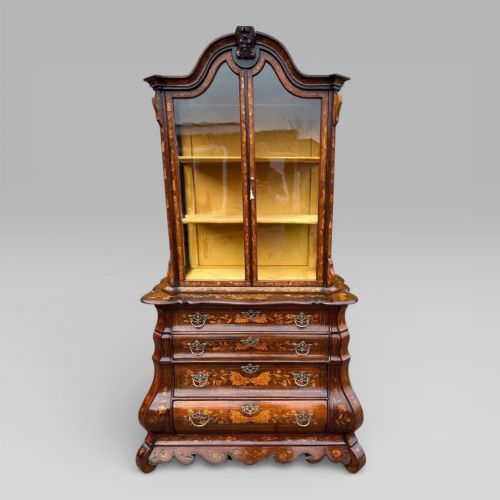
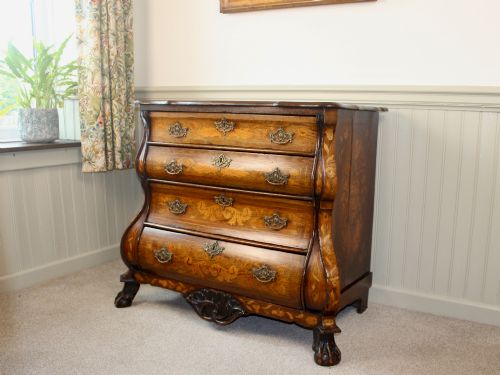
A dutch floral marquetry chest brings together intricate wood inlay and curvaceous forms that define a distinct continental tradition.
Dutch Floral Marquetry Chest
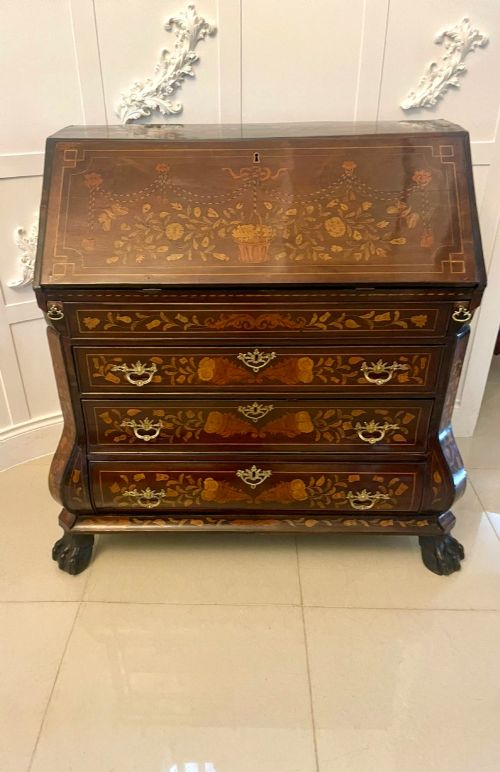
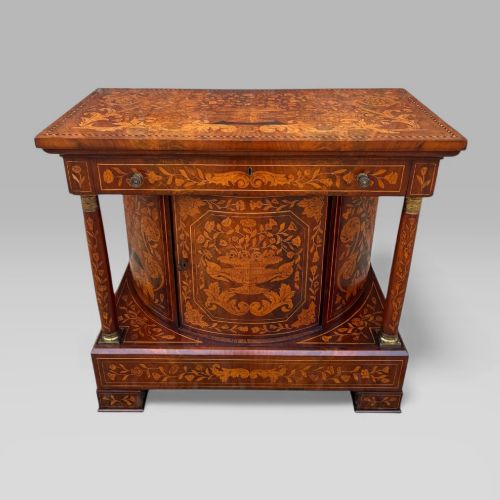
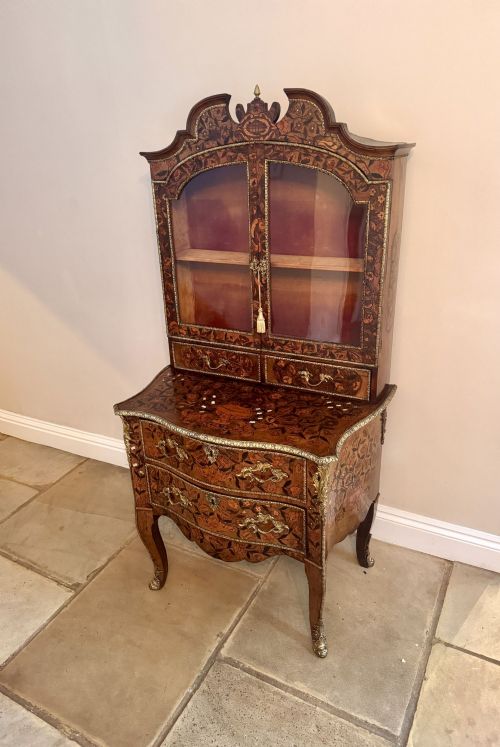
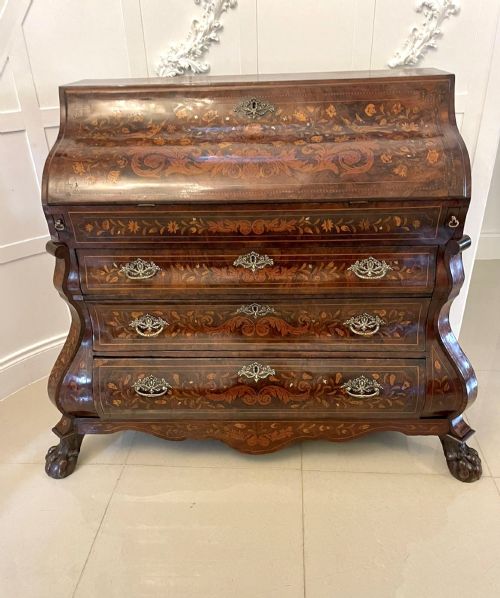
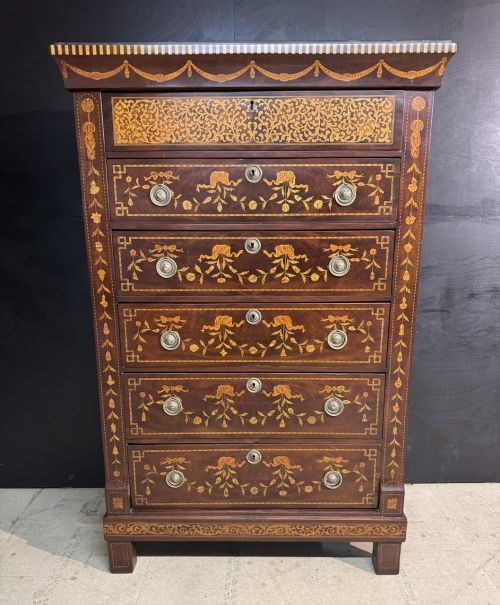
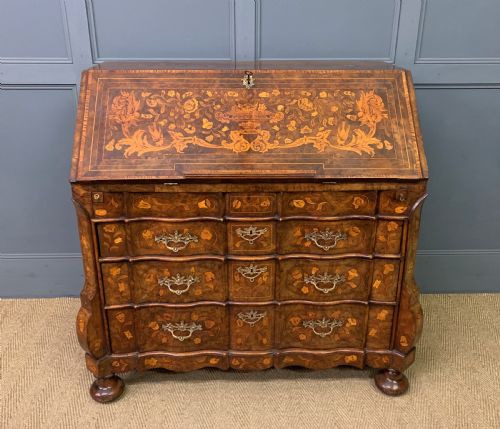
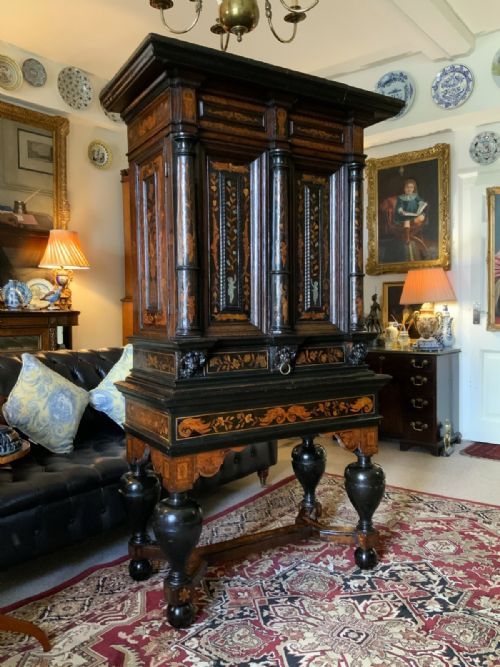
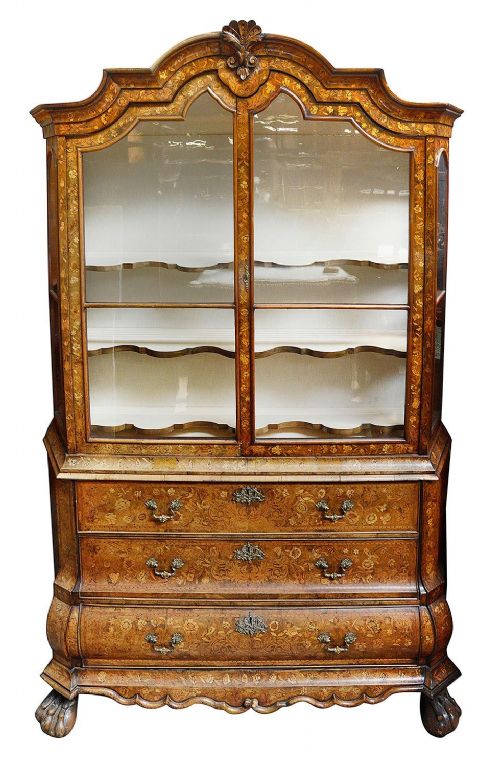
When you search for a dutch floral marquetry chest, you encounter case furniture decorated with elaborate floral and foliage patterns worked in contrasting timbers. These pieces range from substantial bombé chests of drawers to tallboys, cabinets on chests, and bureau bookcases built with serpentine or swelling facades.
The version you are most likely to meet on this page belongs to the eighteenth century, though examples span from the seventeenth century through to later revival periods in the nineteenth and twentieth centuries.
Makers utilised walnut, mahogany, and oak as carcase timbers, applying fruitwood veneers and fruitwood inlay to create vibrant garden motifs across drawers, fall fronts, and cabinet doors.
Materials and Construction Techniques
Cabinet makers constructed the primary carcase using sturdy native timbers like oak or walnut before applying thin veneers of figured walnut or mahogany to the exterior surfaces.
The characteristic floral decoration relies on marquetry, where various coloured fruitwoods and sometimes pewter inlay are painstakingly cut and fitted together into a paper-thin sheet before being glued down to the carcase.
Bombe profiles required specialist woodworking skills, as timber had to be shaped and bent to create the swelling, bulging fronts and sides typical of Dutch baroque and rococo design.
Dutch Floral Marquetry Chest Retail Price Guide 2026
Typical asking prices for dutch floral marquetry chest among the pieces listed under this phrase on Sellingantiques today, from the lower quarter to the upper quarter. They describe what is for sale here now, not the wider market.
Object types range from tall chests of drawers and dressing tables to bureau bookcases and display cabinets on chests.
Assessing Quality and Execution
The standard of a dutch floral marquetry chest depends heavily on the precision of the veneer work and the natural shading achieved within the fruitwood flowers and leaves. Finer pieces display meticulous control of tonal gradation, making petals and stems appear three-dimensional without relying on heavy ink-burning or excessive engraving.
Structural harmony also separates standard examples from exceptional ones, particularly in bombé forms where the sweep of the drawers must align flush with the curving contours of the carcase stiles. The choice of underlying primary timber, such as dense figured walnut rather than simpler secondary woods, dictates the overall weight and substance of the piece.
Edwards and Roberts
The Dutch Floral Marquetry Chest Glossary
- Marquetry
- A decorative technique of applying veneers of different woods to a structure to form pictorial patterns and floral designs. This differs from inlay, where pieces are sunk into a solid solid wood base rather than laid across the whole surface.
- Bombe
- A swelling, outward-curving contour found on the front and sides of furniture chests and cabinets. This baroque shape demands advanced carpentry to ensure drawers operate smoothly within a rounded frame.
- Bureau Bookcase
- A dual-purpose piece combining a sloping writing flap desk at the bottom with glazed or panelled shelving doors above. Many continental iterations incorporate fitted interior compartments alongside extensive exterior marquetry.
- Vitrine
- A glass-fronted display cabinet designed for showcasing porcelain, glass, or small collectibles. These pieces often sit upon a commode base or chest of drawers.
- Tallboy
- A tall chest of drawers constructed in two stacking sections to maximise vertical storage capacity while occupying a compact floor footprint.
Dutch Floral Marquetry Chest: Frequently Asked Questions
What periods do these pieces cover?
The listings span from the seventeenth century through the eighteenth and nineteenth centuries, with later revival pieces appearing from the twentieth century.
Craftsmen across these eras maintained floral marquetry traditions while adapting carcase shapes to suit shifting tastes from baroque to neoclassical styles.
Where were these cabinets used in a home?
These pieces served primary storage and display functions in principal rooms such as parlours, drawing rooms, and studies.
Cabinets with glass doors or sloping writing flaps also doubled as display spaces for valuable possessions and private writing desks.
How do I distinguish walnut from mahogany pieces?
Walnut carcases typically display rich, swirling grain patterns with warm brown tones that became popular during earlier baroque periods.
Mahogany alternatives often exhibit a tighter, reddish-brown grain structure that gained prevalence toward the end of the eighteenth century.