


Dutch Floral Inlay
Dutch floral inlay brings elaborate botanical marquetry to walnut and mahogany furniture from the seventeenth to nineteenth centuries.
Dutch Floral Inlay
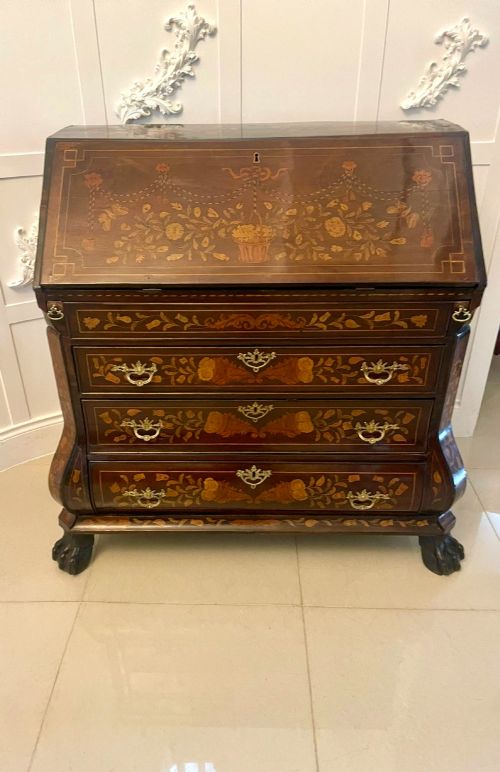
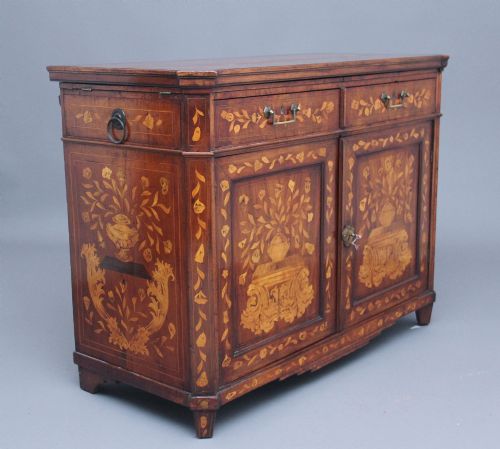
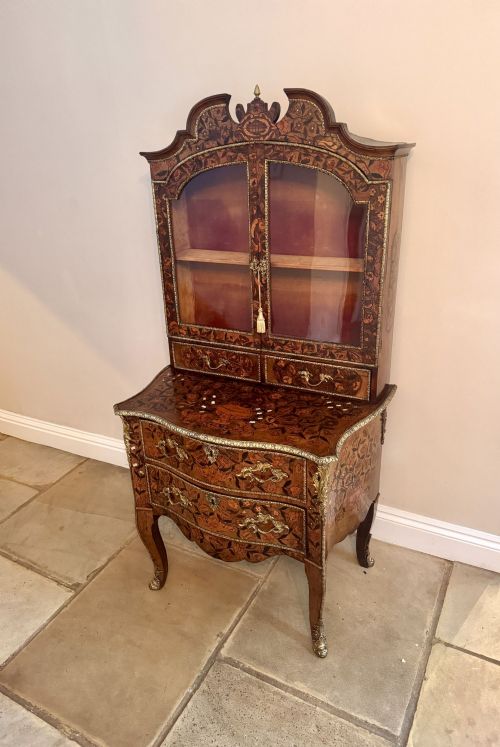
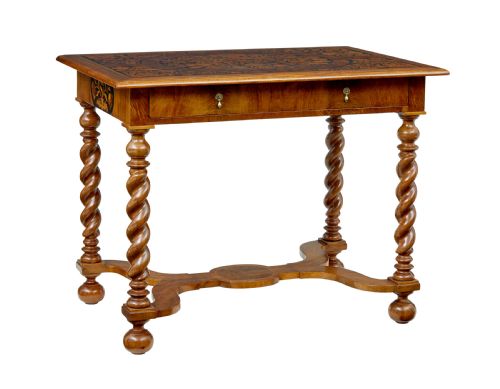
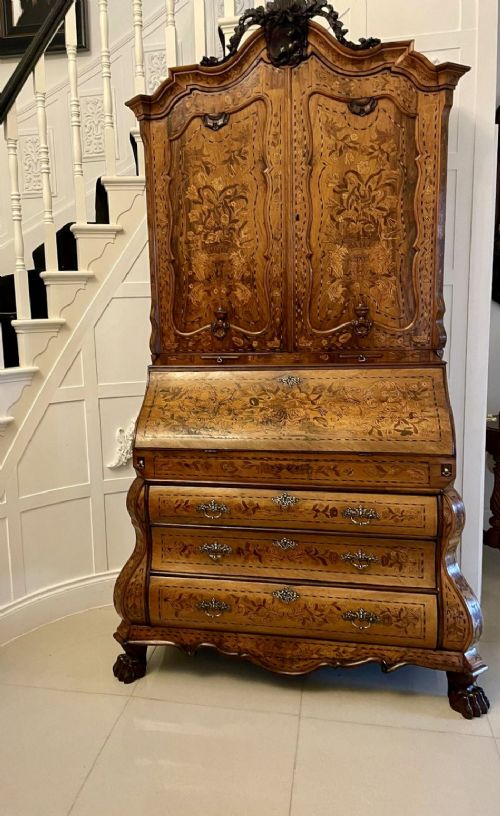
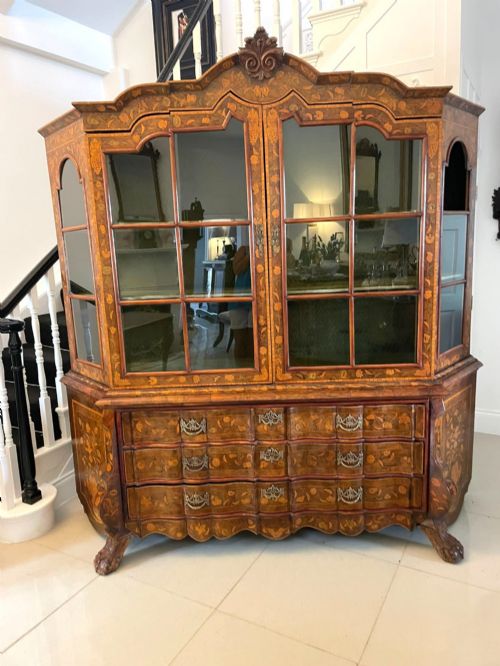
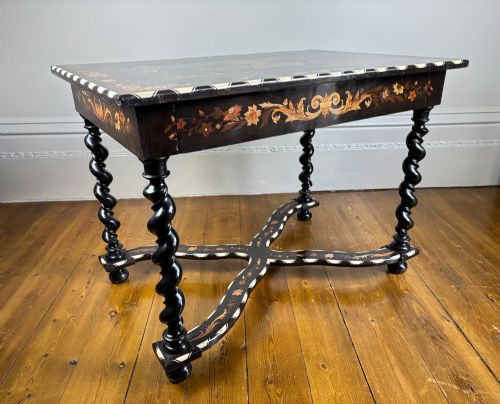
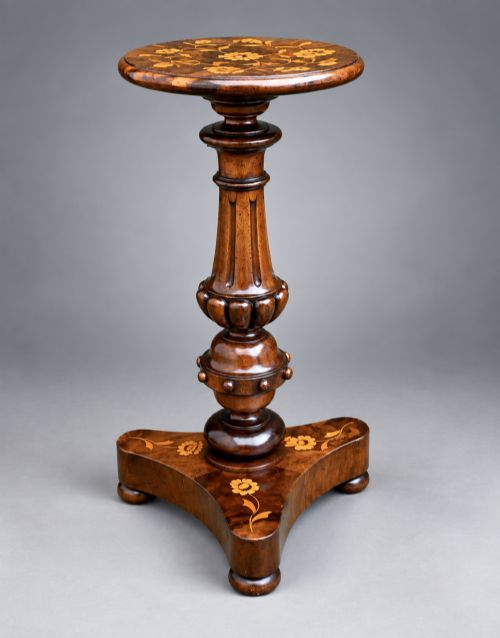
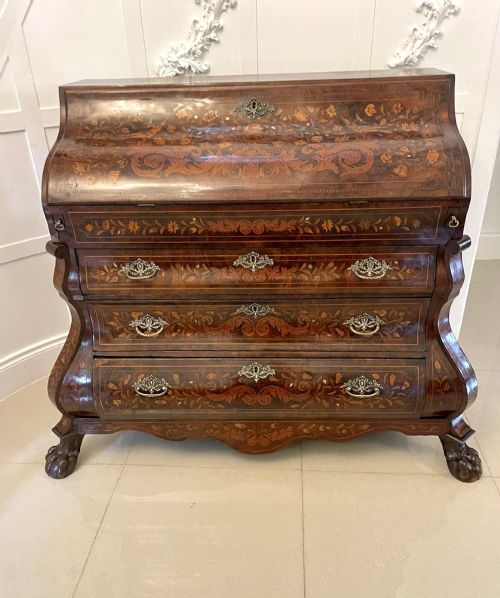
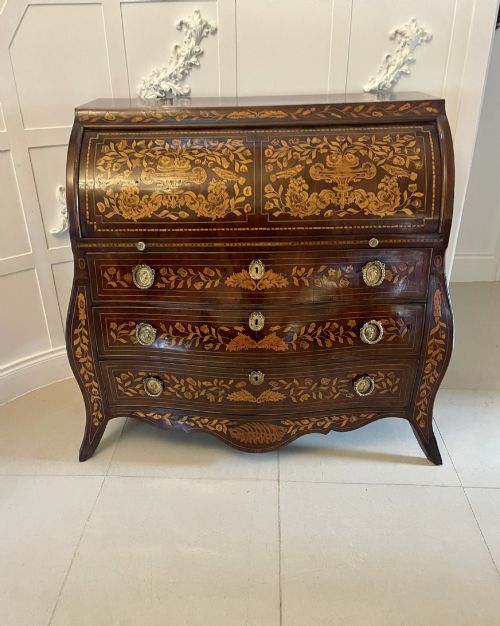
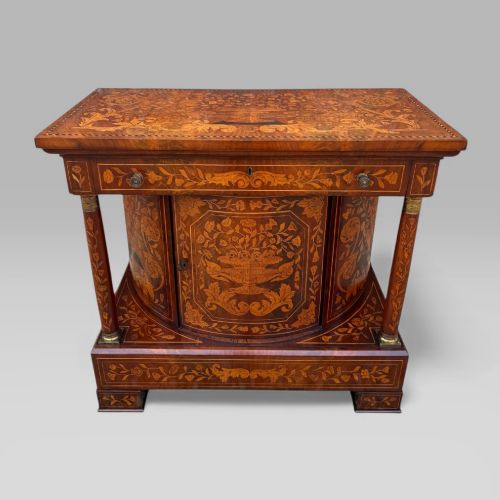
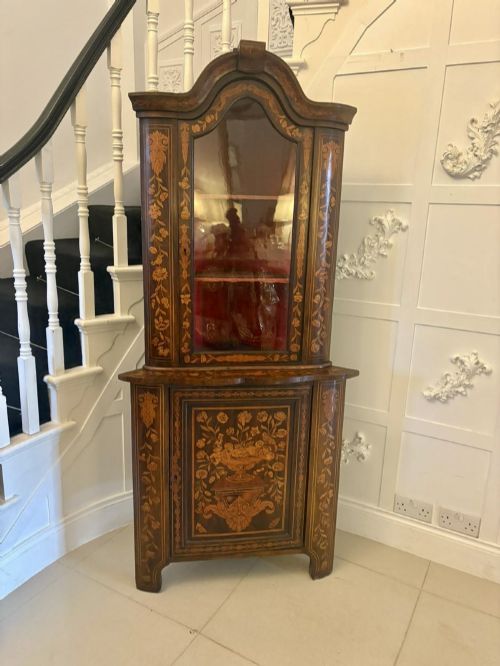
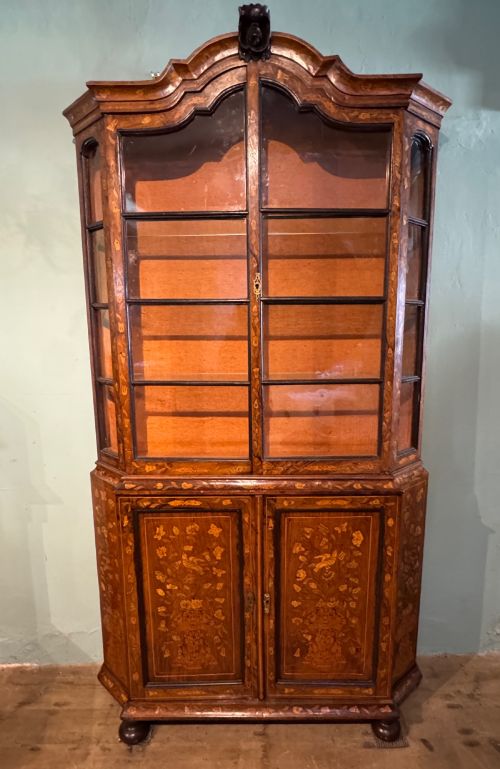
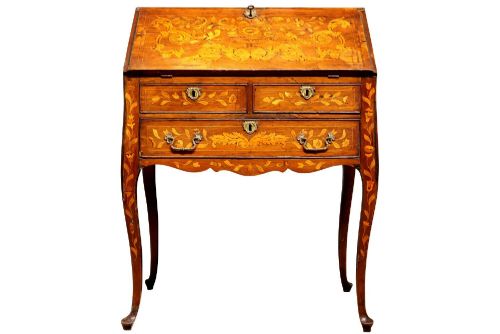
Dutch floral inlay furniture comprises large case pieces and small tables decorated with intricate botanical imagery. Bureau bookcases, bombé chests of drawers, and display cabinets dominate the forms, alongside side tables, centre tables, and corner cabinets. These items originate primarily from the seventeenth, eighteenth, and nineteenth centuries, reflecting styles from Dutch Baroque to Regency.
Bureau bookcases and cabinets serve as the primary statement pieces, often featuring sloping desks and glazed upper doors. Chests of drawers, including tallboys and commodes, provide substantial storage surfaces for floral compositions. Smaller items such as dressing table mirrors and side chairs offer more modest examples of the same botanical tradition.
How they were made
Craftsmen built structural carcases from walnut, mahogany, oak, and fruitwood, providing a stable foundation for decorative surfaces. Walnut and burr walnut supply rich, figured backgrounds, while mahogany and oak offer structural integrity for larger case furniture.
Marquetry cutters shaped delicate veneers of fruitwood, bone, and pewter into floral and bird motifs, embedding them flush into the primary wood. This pictorial inlay covers drawer fronts, tabletops, and fall-front desks with contrasting tones and fine botanical detail.
Intricate flower baskets hide meticulously inlaid beetles and butterflies among the wooden petals.
What varies in quality
The refinement of the marquetry design sets the standard for quality across these pieces. Examples with detailed shading in the fruitwood depict petals and stems with naturalistic depth, whereas simpler versions rely on flat, repetitive leaf patterns.
Timber selection dictates the distinction between standard and exceptional pieces. Burr walnut and figured mahogany provide superior natural grain, while meticulous alignment of the inlay across opening drawers demonstrates advanced cabinetmaking skill.
Edwards and Roberts
The Dutch Floral Inlay Glossary
- Marquetry
- The art of forming decorative patterns by fitting together thin slices of wood, bone, or metal onto a structural carcase. This technique allows for elaborate pictorial scenes such as urns, flowers, and birds across furniture surfaces.
- Bombe
- A swelling, outward-curved contour characteristic of furniture fronts and sides, particularly on eighteenth-century chests of drawers and bureaux. This rounded profile provides a dynamic canvas for continuous floral inlay.
- Vitrine
- A glass-fronted cabinet designed for the display of porcelain, silver, or curiosities. These display pieces showcase delicate woodwork alongside interior shelving.
- Tallboy
- A tall chest of drawers consisting of one chest stacked upon another, creating significant vertical storage. They provide expansive drawer fronts for large botanical compositions.
- Cylinder bureau
- A writing desk featuring a curved, rotating wooden cylinder that conceals the fitted writing interior and pigeonholes. The rolling shutter offers an uninterrupted surface for marquetry decoration when closed.
Dutch Floral Inlay: Frequently Asked Questions
What is Dutch floral inlay?
Dutch floral inlay refers to decorative marquetry featuring botanical motifs such as flowers, leaves, and urns upon European furniture. Craftsmen utilised contrasting fruitwoods and veneers to build intricate garden scenes across walnut and mahogany surfaces.
This decorative tradition flourished across the seventeenth, eighteenth, and nineteenth centuries. The resulting furniture pieces range from grand bureau bookcases to compact bedside cupboards and wall mirrors.
How do I date a piece?
Dating relies on examining the underlying furniture form, construction timbers, and prevailing stylistic influences. Eighteenth-century examples often display Baroque or Rococo curves, whilst nineteenth-century revivals adopt earlier motifs with different internal secondary woods.
Changes in hardware fixings, dovetailing techniques, and veneer thickness further assist in establishing the period of manufacture. Comparing the carcase wood against known stylistic timelines clarifies the likely decade of creation.
Where should I place these pieces?
These decorative items suit principal reception rooms, studies, or hallways where their detailed marquetry remains visible. Wall mirrors and console tables function well in entrance spaces, drawing attention to the inlaid floral borders.
Placement should avoid direct sunlight and extreme temperature fluctuations to protect fragile wood veneers and natural glues. Maintaining stable indoor humidity preserves the integrity of the delicate fruitwood and bone inlays.
How do I care for the surface?
Routine maintenance requires gentle dusting with a soft, dry cloth to prevent grit accumulation on the veneer. Avoid applying modern silicone polishes, as they can penetrate dry historical finishes and attract dust.
Occasional applications of traditional beeswax nourish the underlying walnut or mahogany. This natural wax treatment protects the wood without altering the subtle tonal variations of the floral marquetry.