
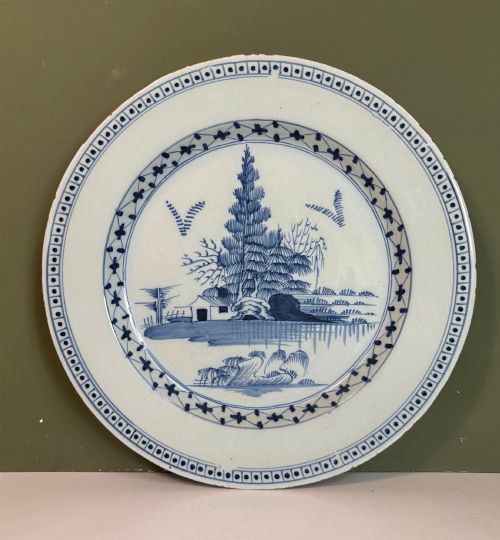

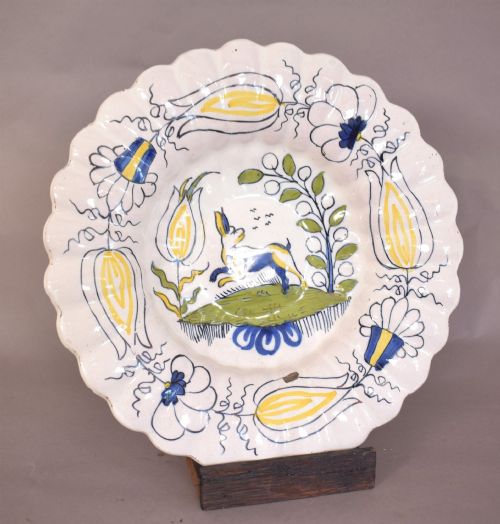
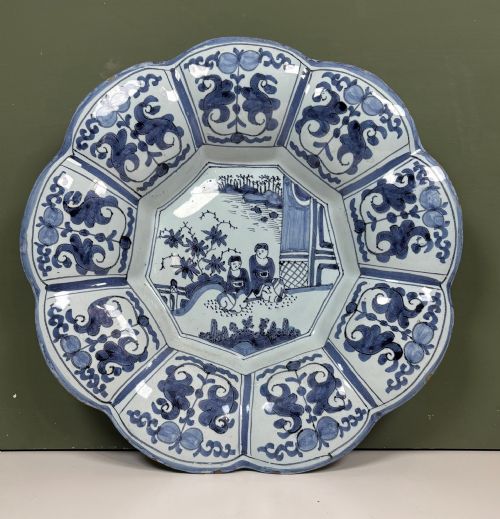
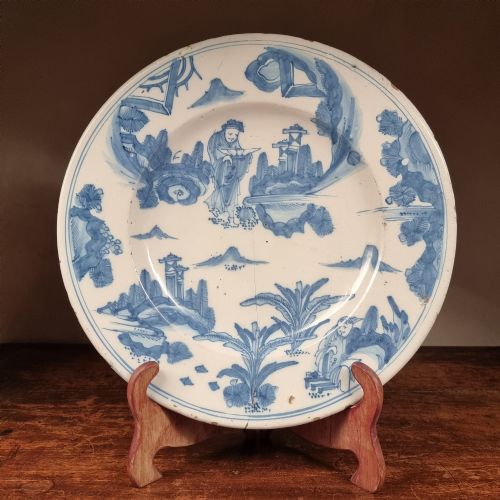
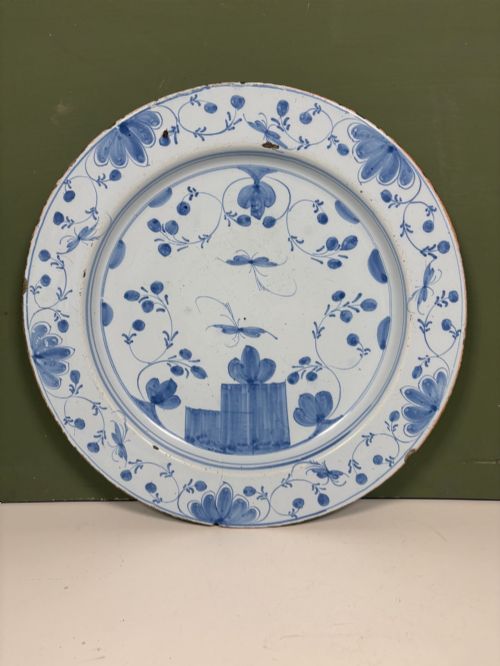


Dutch Earthenware Charger Plate
These dutch earthenware charger plate selections bring the bold tin-glazed artistry of the seventeenth and eighteenth centuries straight to your walls and tables.
Dutch Earthenware Charger Plate
A dutch earthenware charger plate stands as a broad, shallow dish designed primarily for display rather than dining during the Dutch Golden Age and subsequent Georgian periods. You will frequently encounter large circular vessels measuring well beyond standard tableware sizes, often featuring significant decorative surface area.
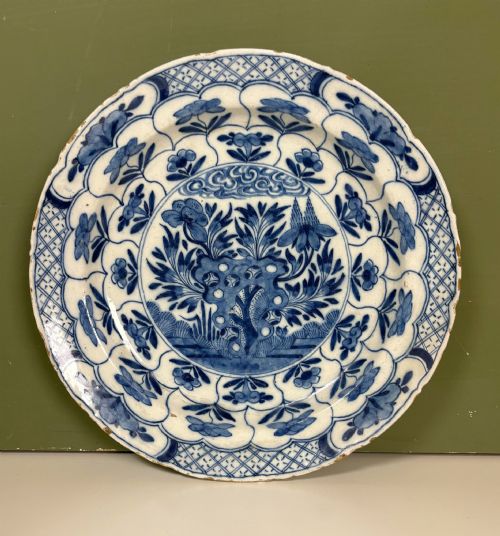
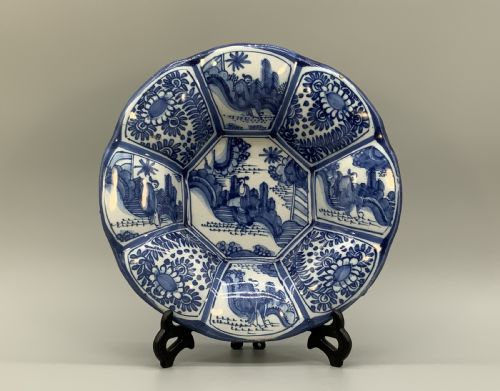
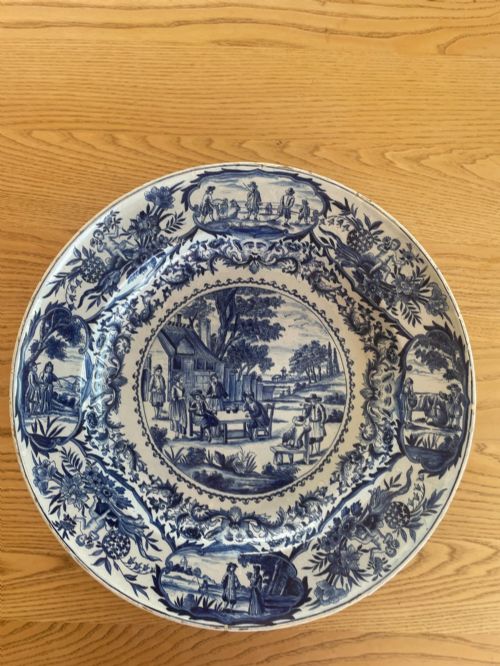
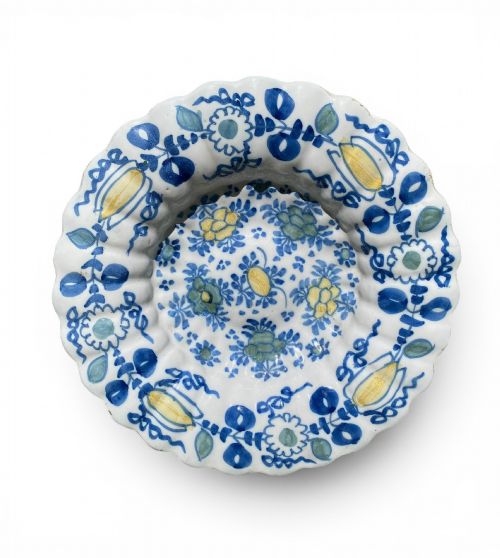
The pieces on this page span from the seventeenth century through to the nineteenth century, capturing shifts in workshop output from bold blues to rich polychrome palettes. These historic items include lobed dishes, marriage plates, and geometric floral plates originating from Dutch potting traditions.
Many examples reveal strong stylistic influences from imported Chinese porcelain, particularly Kraak designs adapted by local makers. Collectors seek these substantial earthenware dishes to anchor a room with centuries of European ceramic heritage.
How they were made
Potters shaped local clays into broad discs before applying an opaque white tin glaze that provided a smooth canvas for subsequent painting. This absorbent surface required swift brushwork, as the unfired glaze soaked up pigments instantly.
Painters utilised cobalt pigment for classic blue and white schemes, alongside manganese and additional mineral oxides for polychrome compositions. Grand feu techniques allowed certain pigments to fuse directly with the glaze during high-temperature firing.
Available listings feature pieces spanning the 17th century through the 19th century, utilising tin-glazed earthenware and cobalt pigment.
What varies in quality
Quality rests in the crispness of the hand-painted brushwork and the complexity of the chosen motif, ranging from simple floral borders to intricate Chinoiserie scenes. Superior pieces display confident, fluid lines that demonstrate a master painter's hand rather than hurried workshop production.
The consistency and brilliance of the tin glaze also define the hierarchy of these objects, with smoother, whiter surfaces providing better contrast for cobalt and manganese pigments. Furthermore, the overall preservation of the delicate earthenware body and edges distinguishes fine display chargers from heavily worn domestic vessels.
The Dutch Earthenware Charger Plate Glossary
- Tin-Glazed Earthenware
- Earthenware coated with a glaze containing tin oxide to yield an opaque white surface suitable for painted decoration. This technique forms the foundation of traditional Dutch Delftware production.
- Charger
- A large decorative plate intended for display on a sideboard or wall rather than for individual dining use. These substantial dishes command visual attention in any historic interior.
- Kraak Style
- A decorative scheme inspired by late Ming dynasty Chinese porcelain, featuring panels of radiating motifs around a central landscape. Dutch potters frequently adapted this aesthetic for local earthenware plates.
- Polychrome
- Decoration employing multiple colours, typically involving greens, yellows, oranges, and manganese alongside standard blues. This palette distinguishes more elaborate historic chargers from monochrome blue and white examples.
- Grand Feu
- A high-temperature firing method that fuses pigments directly into the tin glaze before final glazing. This process creates a durable, glossy finish characteristic of select eighteenth-century output.
- Chinoiserie
- European artistic interpretations of Chinese and East Asian motifs popular during the seventeenth and eighteenth centuries. Painters applied these fanciful scenes directly onto tin-glazed earthenware bodies.
Dutch Earthenware Charger Plate: Frequently Asked Questions
How were dutch earthenware charger plates used?
Historic households utilised these large dishes primarily for visual display on sideboards, dressers, or walls to demonstrate wealth and taste. Their generous proportions made them central decorative elements in domestic interiors.
While constructed from standard earthenware, their primary function remained ornamental rather than functional dining service due to their size and the delicate nature of the tin glaze.
How do I tell seventeenth century pieces apart?
Seventeenth century examples often exhibit heavier potting, deeper cobalt tones, and distinct stylistic connections to Dutch Baroque or early Kraak imports. Artisans during this period focused heavily on robust forms and direct blue and white painting.
Examining the foot ring, glaze pooling, and pigment behaviour under magnification helps differentiate these earlier outputs from eighteenth-century reinterpretations.
What is the difference between blue and white and polychrome?
Blue and white pieces rely exclusively on cobalt pigment beneath or within the tin glaze, producing crisp monochrome imagery inspired by Asian porcelain imports. This style remained popular across multiple centuries of production.
Polychrome chargers incorporate additional metallic oxides like manganese, yellow, and green to create multi-coloured floral or geometric compositions that require more complex firing procedures.
How should I display a antique charger plate?
Secure wall mountings designed specifically for heavy plates provide safe vertical display without damaging the historic earthenware body. Ensure the weight is evenly distributed across specialised brass or coated wire hangers.
Alternatively, stable plate stands placed within secure cabinets or on deep sideboards allow the piece to rest safely at a slight angle for optimal viewing.