


Drop Leaf Writing Desk
A drop leaf writing desk offers flexible surface space and compact proportions, combining practical fold-down flaps with dedicated writing arrangements for versatile domestic use.
Drop Leaf Writing Desk
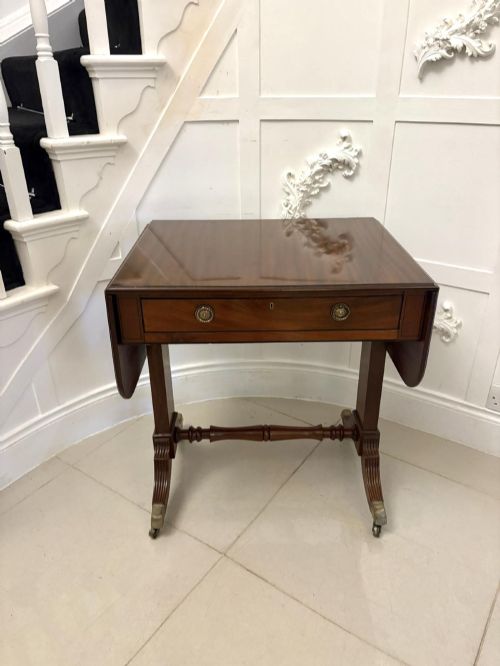
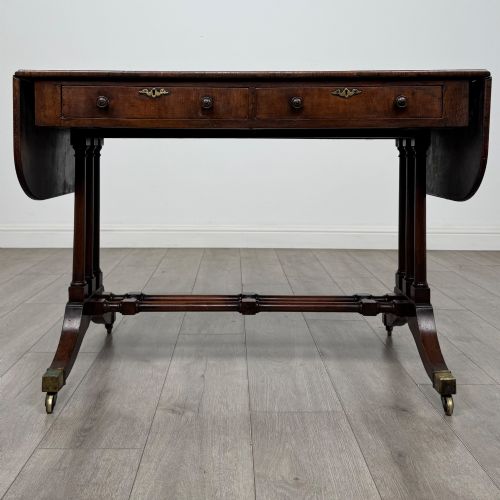
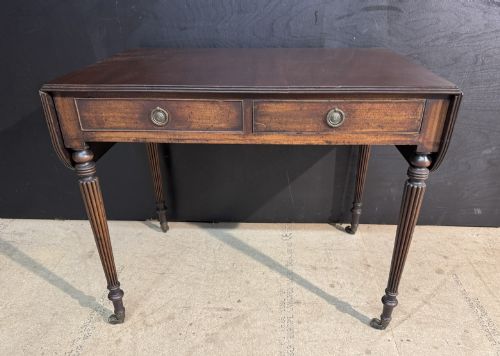
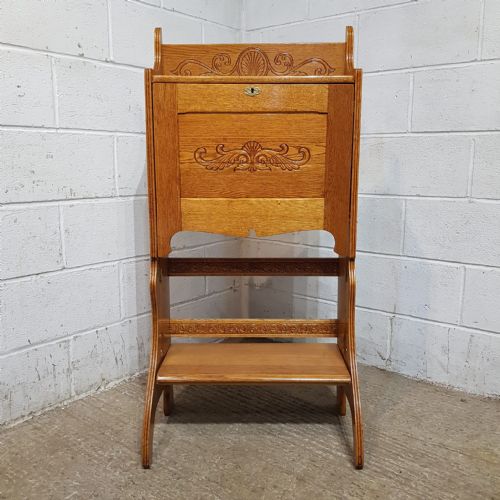
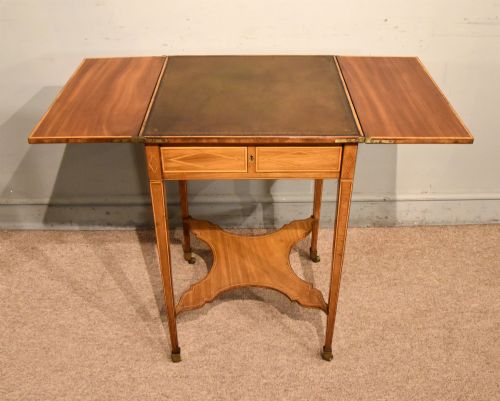
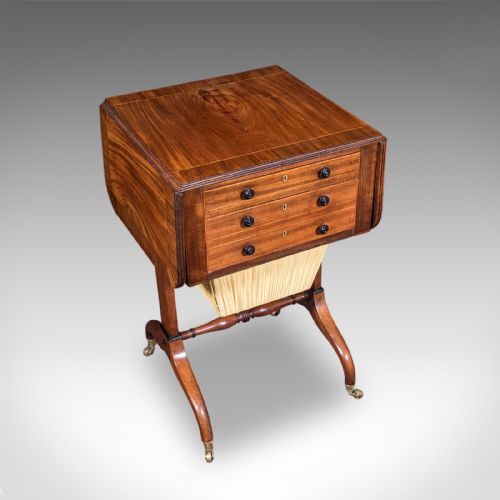
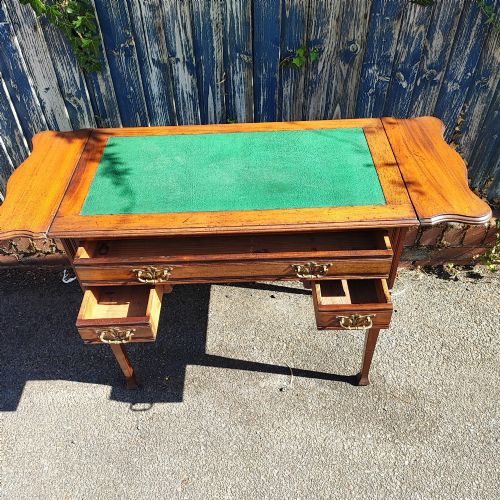
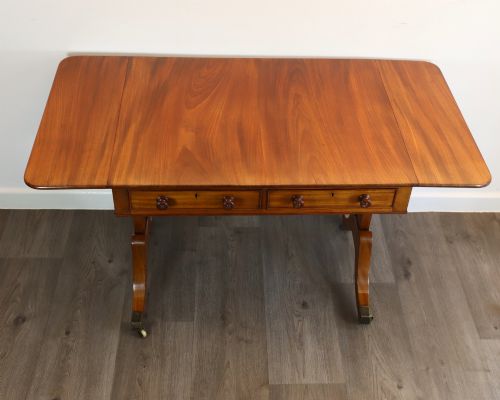
A drop leaf writing desk encompasses forms such as sofa tables, Pembroke tables, and side tables fitted with hinged flaps that extend the surface when needed. These pieces emerge predominantly from the Georgian and Regency periods, alongside later Victorian and Edwardian examples.
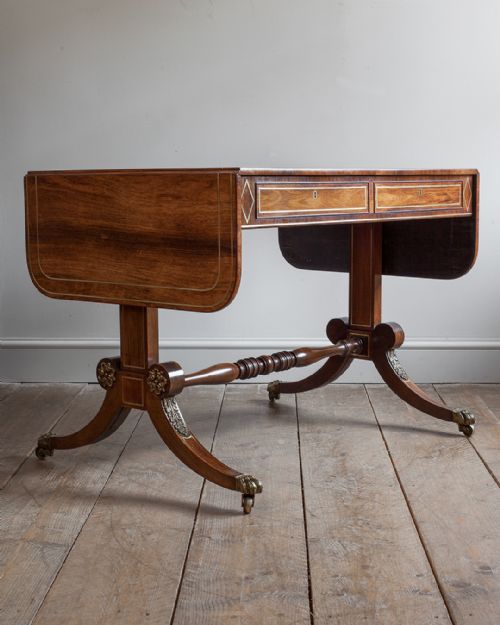
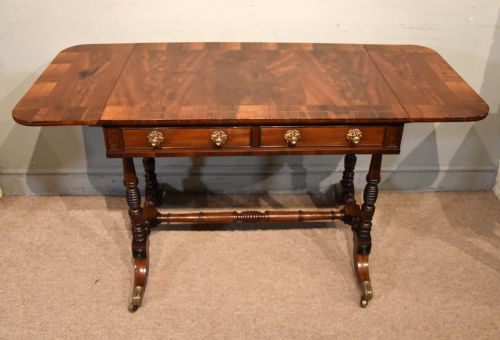
The most common versions met on this page are mahogany and rosewood sofa tables, often featuring trestle or lyre ends and fitted drawers. Makers adapted these designs for multi-purpose rooms, allowing the desk to function as a writing surface or a freestanding centre table.
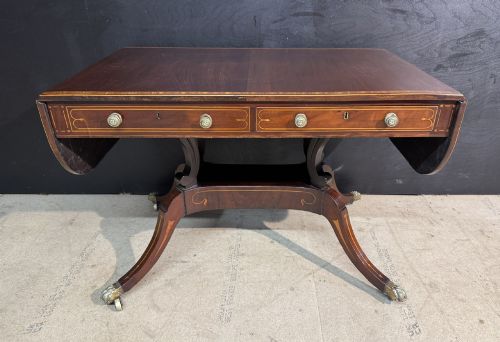
Examples span the eighteenth and nineteenth centuries, including inlaid Sheraton styles and later adaptations. The presence of drop flaps or drop sides defines the utility of each piece, transforming compact tables into functional writing desks.
Materials and construction
Cabinet makers utilised dense hardwoods such as mahogany, rosewood, and walnut, frequently selected for striking figures like flame mahogany and burr walnut. Secondary timbers and decorative elements incorporated boxwood inlay, oak, and elm to accent structural framing.
Brass mounts, stringing, and hardware provided structural reinforcement and decorative contrast, particularly on Regency and French pieces. Joints relied on traditional cabinet-making techniques to support the moveable drop leaves and internal drawer compartments.
Secret drawers tucked away inside writing compartments remind us that ancestors loved hiding their diary keys just as much as we do.
Craftsmanship and distinction
Quality rests in the selection of timber veneers and the precision of the wood inlay, where symmetrical grain patterns elevate the visual impact of the top surface. Superior examples demonstrate refined proportions in the turned or carved supports, such as lyre ends or pillar columns.
The integration of functional elements like secret drawers, fitted writing interiors, and original brass castors separates standard production from exceptional pieces. Attention to detail in the secondary woods and the retention of a deep, warm patina indicate higher workshop standards.
Jean-Joseph Chapuis·Gillows
The Drop Leaf Writing Desk Glossary
- Drop leaf
- A table with a fixed centre section and hinged flaps on either side that fold down to save space. Raising the leaves extends the usable surface area for writing or serving.
- Sofa table
- A type of Pembroke table originally designed to stand in front of a sofa, featuring drop leaves and usually two small drawers. These tables often incorporate double pedestal or lyre-shaped end supports.
- Pembroke table
- A small, versatile table characterised by two hinged drop leaves on opposing sides and one or more drawers. It gained popularity during the eighteenth century for light domestic tasks.
- Inlay
- A decorative technique where pieces of contrasting wood, such as boxwood, are inserted into recessed cavities of a base timber to create patterns. This method adds geometric or floral detail to tabletops and drawer fronts.
- Patina
- The surface sheen and mellowing developed by antique wood over decades of handling and polishing. A deep patina reflects age and continuous care.
Drop Leaf Writing Desk: Frequently Asked Questions
What is a drop leaf writing desk?
A drop leaf writing desk is a versatile table featuring hinged flaps that can be lowered to save space or raised to provide an expanded surface for correspondence and reading. These pieces typically include integrated drawers for storing writing materials.
Originating largely in the Georgian and nineteenth-century periods, they were designed to occupy minimal floor space while adapting easily to changing functional needs within a room.
How do I identify a Regency period desk?
Regency desks are distinguished by architectural restraint, classical proportions, and the use of exotic timbers like rosewood and flame mahogany. Details often include brass inlay, lyre-shaped pedestals, and sabre legs.
Cabinet makers of this era favoured clean lines accented by fine brass mounts and symmetrical veneer patterns, separating them from heavier Victorian or lighter Edwardian styles.
Where should I place a sofa table?
A sofa table is traditionally positioned behind a sofa, though its freestanding nature allows it to serve as a centre table or a compact writing desk against a wall. The drop leaves make it adaptable for smaller rooms where surface area needs to expand temporarily.
When placed centrally, the finished back and detailed pedestals ensure the piece looks complete from every angle in the room.
What is the difference between a Pembroke and a sofa table?
Pembroke tables generally feature smaller, squarer proportions with drop leaves on the long sides and were originally intended for casual dining or writing. Sofa tables are typically longer and narrower, designed specifically to accompany the back of a sofa.
Both utilise drop leaves, but sofa tables frequently showcase more elaborate underframes, such as trestle bases or stretcher rails.