




Doulton Pottery Vases
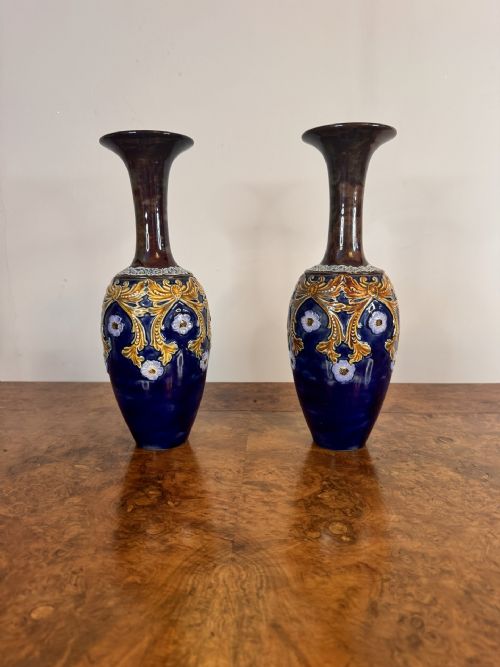
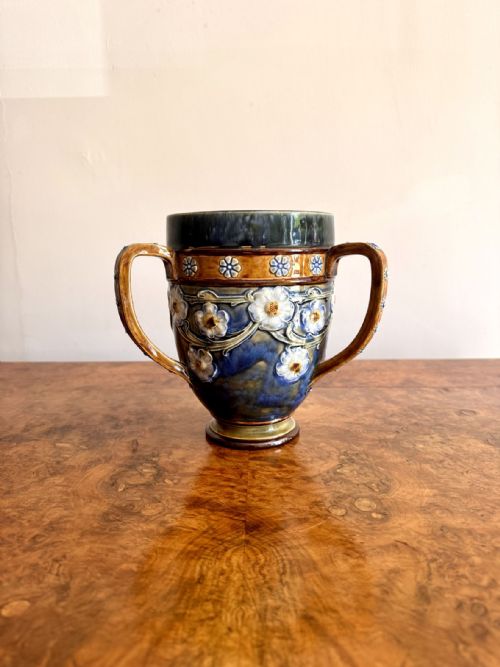
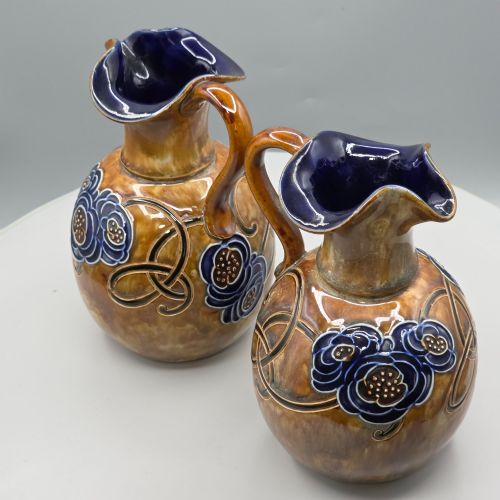
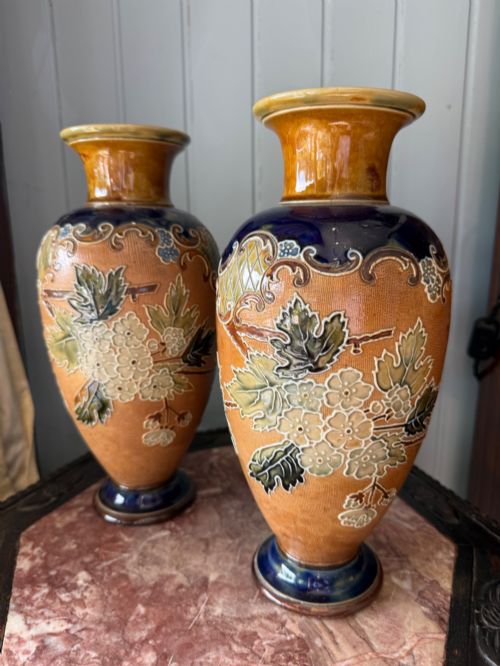
These doulton pottery vases bring late nineteenth and early twentieth-century studio artistry directly to your mantelpiece.
Doulton Pottery Vases
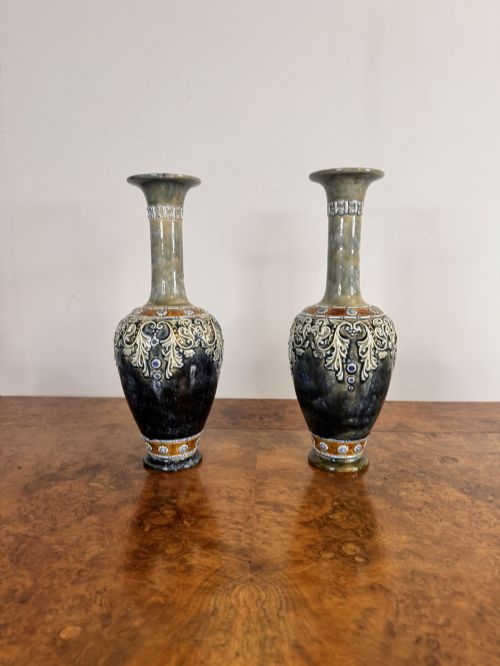
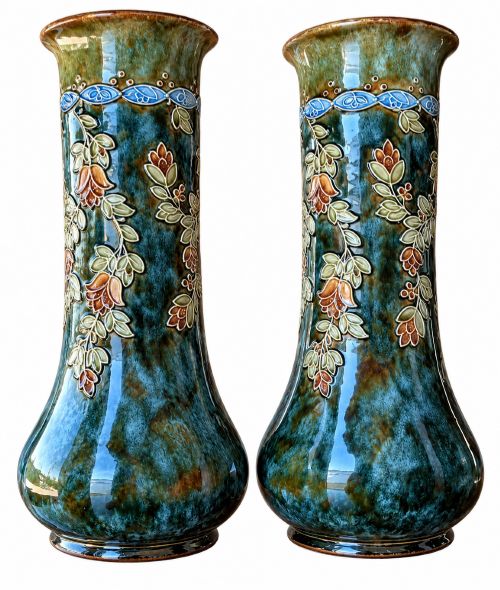
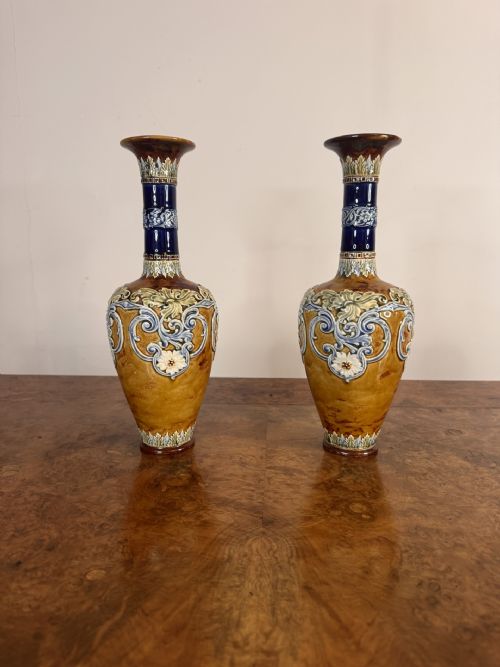
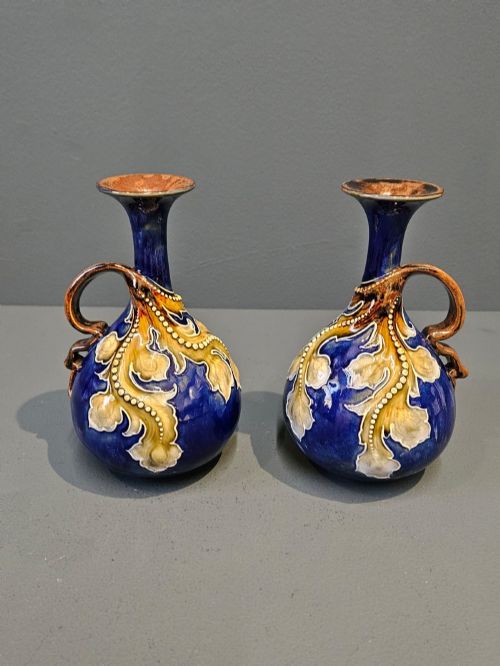
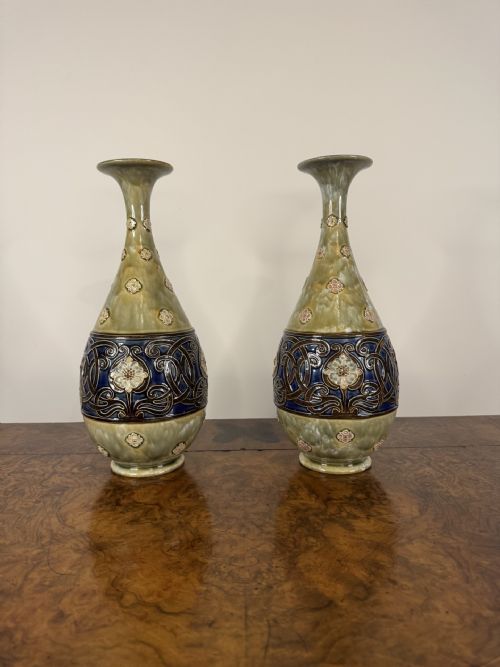
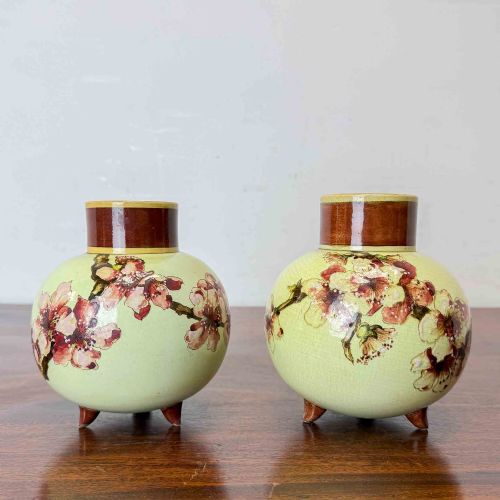
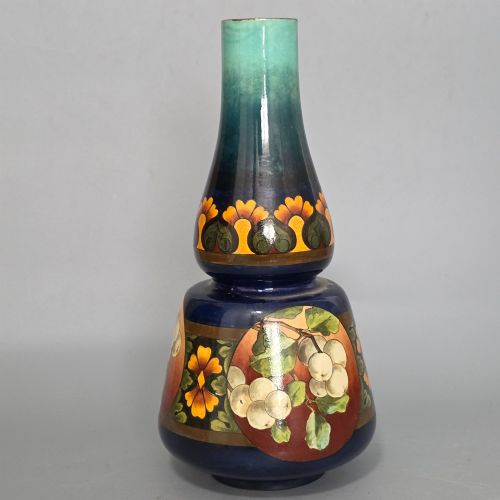
Doulton pottery vases encompass a rich variety of studio and commercial ceramics originating primarily from the late nineteenth and early twentieth centuries. When searching for doulton pottery vases, collectors most frequently encounter stoneware and faience productions emerging from the Lambeth and Burslem potteries. These pieces range from substantial baluster forms and ewers to miniature cabinet vessels.
The aesthetic vocabulary spans Victorian Revival, Art Nouveau, Arts and Crafts, and Aesthetic Movement designs. Many examples appear in pairs, demonstrating the balanced decorative schemes favoured by period makers. Forms often incorporate applied patterns, incised motifs, and hand-painted floral or figural panels.
How they were made
Makers utilised durable stoneware and porous earthenware bodies, shaped by throwing on the wheel or forming in moulds. Artisans applied specialised glazes, enamel colours, and occasional touches of gold leaf or gilt to highlight textural details.
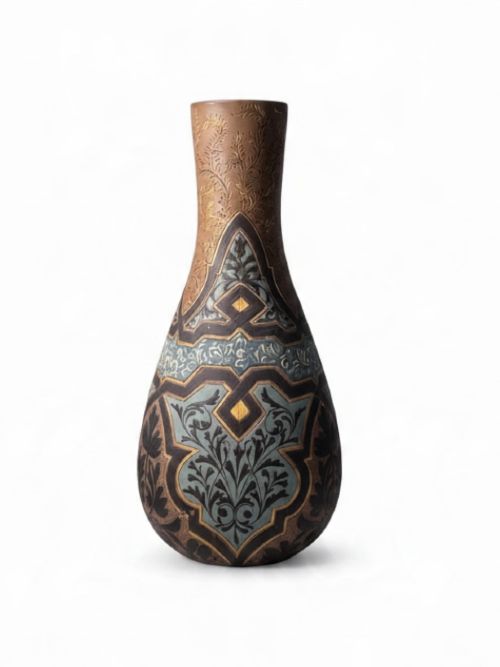
Specialised techniques such as Silicon ware, Slater's Patent lace-impressed texturing, and Intarsio faience define the manufacturing repertoire. Hand painting by notable studio artists completed the surface before high-temperature kiln firing set the vitreous finishes.
Doulton Pottery Vases Retail Price Guide 2026
Typical asking prices for doulton pottery vases among the pieces listed under this phrase on Sellingantiques today, from the lower quarter to the upper quarter. They describe what is for sale here now, not the wider market.
Listings feature Victorian, Edwardian, and Art Nouveau periods, using stoneware, earthenware, and glazed ceramic materials.
What varies in quality
The distinction between standard commercial output and exceptional work lies in the dexterity of the hand-painted decoration and the crispness of incised or applied ornament. Pieces bearing the distinct signature or monogram of renowned studio artists command greater attention.
Complexity of form and ambition of glaze effects dictate the upper tier of the range. Balanced pairs with intricate floral motifs or distinct stylistic influences like Moorish or Persian design demonstrate superior workshop execution.
Emily Partington·Alice Euphemia Thatcher·Louisa Wakely·Eliza Simmance·Emma Shute·John H Plant·Emily Edwards·Emily Stormer·Ethel Beard·Florence Barlow·R Allen
The Doulton Pottery Vases Glossary
- Stoneware
- A dense, vitreous ceramic fired at high temperatures until non-porous. This material forms the durable body for much of the Lambeth output.
- Faience
- Tin-glazed earthenware offering a smooth white surface for detailed painting. It allowed artists to execute complex pictorial scenes.
- Silicon ware
- A distinctive Doulton body type featuring unglazed stoneware contrasted with coloured clays and geometric impressing. It originated in the Lambeth studios during the late nineteenth century.
- Slater's Patent
- A decorative technique utilising pressed lace or textiles into damp clay to create textured surfaces. Artisans then highlighted these patterns with coloured enamels and gilt.
- Baluster
- A tall vase form characterised by a rounded lower body tapering to a narrow neck. This shape provides a generous canvas for painted floral decoration.
Doulton Pottery Vases: Frequently Asked Questions
How do I identify Doulton stoneware?
Examine the body for dense, vitrified clay that resists scratching and absorbs no moisture. Look for impressed factory marks alongside individual artist monograms, which typically appear on the unglazed or glazed base.
Many pieces combine textured, unglazed surfaces with rich coloured glazes and hand-raised ornamentation. The presence of specific patented techniques like Slater's lace-impressed patterns further confirms the origin.
What is Doulton Lambeth?
Doulton Lambeth refers to the company's London studio where artist-potters produced unique art pottery alongside utilitarian wares. This studio fostered individual creativity, allowing decorators to sign their finished vessels.
Production here emphasised hand-craftsmanship, resulting in textured stoneware, pate-sur-pate decoration, and distinct Aesthetic Movement styles. These London-made pieces contrast with the more commercial tableware produced at the Burslem works.
How were these vases used?
Victorian and Edwardian households displayed these vessels prominently on mantelpieces, drawing room tables, and pedestals. They served primarily as decorative ornaments for cut flowers or architectural focal points in domestic interiors.
Larger ewers and handled jugs functioned as decorative display pieces rather than functional tableware. Their intricate surface designs reflected the owner's sophisticated taste in contemporary art pottery.
How do I care for antique pottery?
Dust these ceramic and stoneware vessels gently with a soft, dry cloth to prevent particulate accumulation. Avoid submerging pieces with delicate enamel work or gilt highlights in water.
Keep the pottery away from direct, prolonged sunlight to protect painted enamel colours from fading. Display them on stable, level surfaces away from heavy household traffic.