
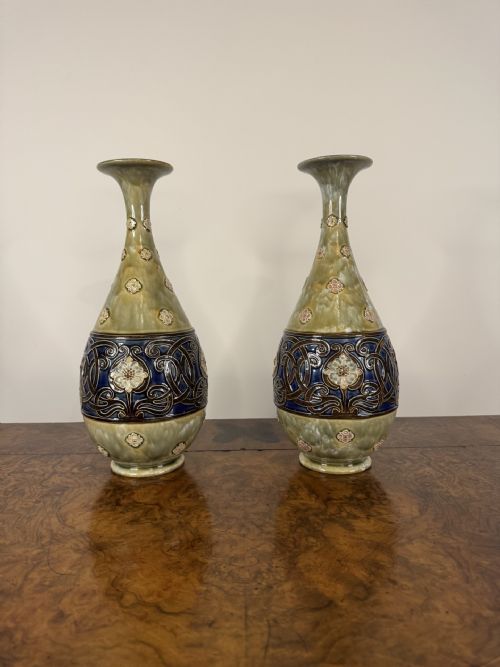


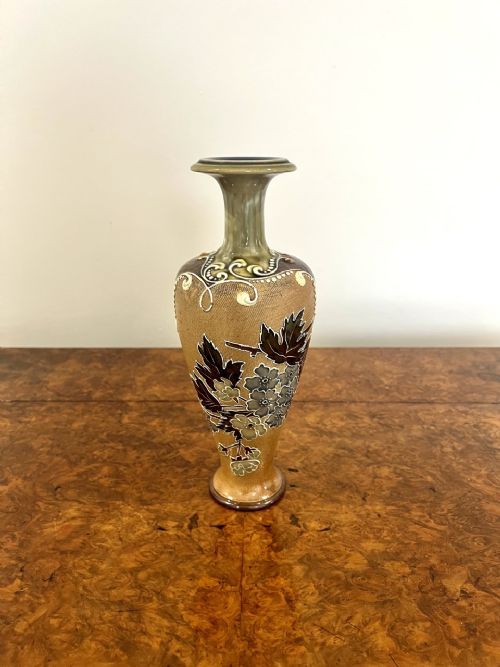

Art Nouveau Stoneware Vases
These art nouveau stoneware vases capture the fluid organic forms and tactile glazes of the late nineteenth and early twentieth centuries.
Art Nouveau Stoneware Vases
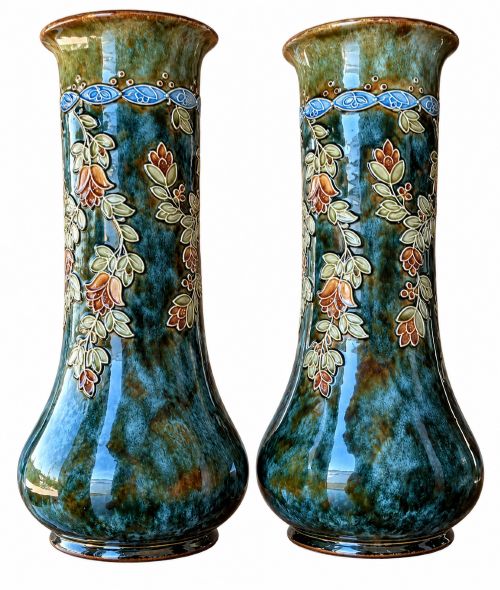
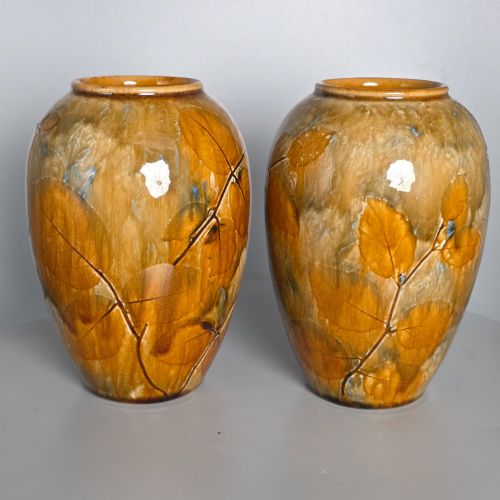
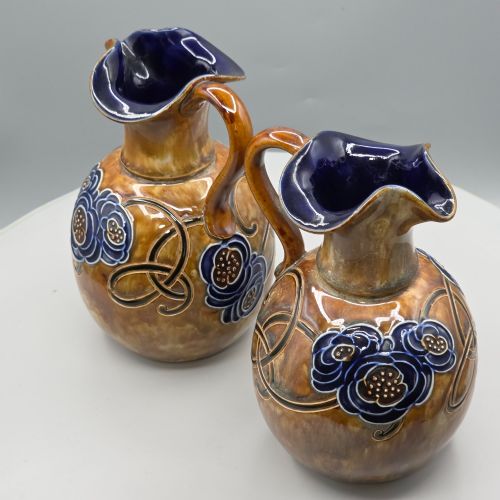
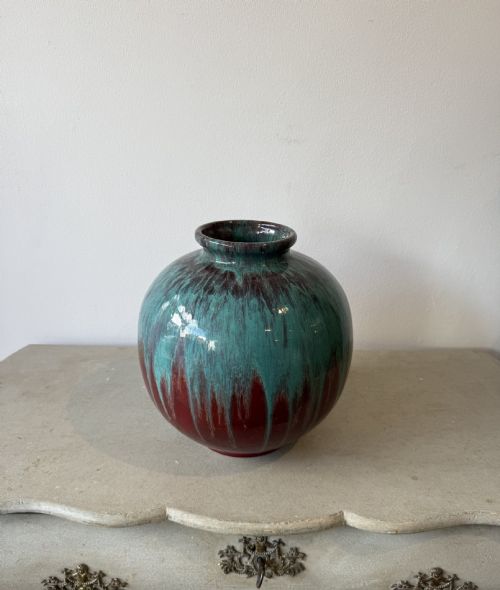
When you search for art nouveau stoneware vases, you encounter robust vessels produced primarily during the late nineteenth and early twentieth centuries, spanning periods from eighteen eighty to nineteen twenty. These pieces take various forms including standard vases, decorative vases, baluster vases, and jugs.
The versions you are most likely to meet on this page originate from makers like Royal Doulton in Lambeth alongside French studio pottery traditions. They combine Victorian arts and crafts sensibilities with the characteristic flowing lines of the international style.
Materials and Making
Potters shaped these heavy bodies from stoneware and glazed ceramic, often finishing the surfaces with specialised glazes that interact during firing to create varied textural effects. Some examples incorporate enamel highlights and gold leaf to emphasise relief decoration and botanical motifs.
Makers utilised durable salt-glazed and glazed stoneware techniques, allowing artisans to carve intricate patterns directly into the clay body before firing at high temperatures. This process produced impermeable vessels capable of holding liquid while displaying deep surface coloration.
Eliza Simmance signed her early Doulton pieces with a monogram resembling a tiny beetle, hiding her identity in plain sight among the leaves.
Assessing Quality and Execution
The distinction between ordinary production and top tier pieces rests on the crispness of the modelled decoration and the ambition of the hand-applied glaze. Named decorator pieces demonstrate superior control over slip-trailing and incised foliage compared to standard factory output.
Proportion and scale also dictate distinction, with large baluster forms and matched pairs commanding greater presence. The complexity of the leaf patterns and the success of the kiln reactions determine the visual depth of each glazed surface.
Royal Doulton Lambeth·Louisa Wakely·Eliza Simmance
The Art Nouveau Stoneware Vases Glossary
- Stoneware
- A type of pottery fired at high temperatures until vitrified and waterproof. It provides a dense, durable body that resists scratching and holds complex glazes.
- Baluster
- A tall vase form with a rounded lower body that tapers towards a narrow neck. This shape supports sweeping organic decoration.
- Slip-trailing
- A decorating technique where liquid clay is squeezed through a nozzle onto the vessel surface. It creates raised linear patterns that catch decorative glazes.
- Lambeth
- A district in London associated with prominent ceramic production. Kilns in this area produced distinctive salt-glazed art pottery.
Art Nouveau Stoneware Vases: Frequently Asked Questions
How do I clean my vase?
Wash stoneware gently using warm water and a mild detergent with a soft cloth. Avoid abrasive pads that might damage the glazed surface or any delicate enamel details.
Ensure the vessel dries thoroughly after washing, particularly around unglazed bases where moisture might otherwise linger and affect the ceramic body.
Are these pieces waterproof?
Most glazed stoneware vessels hold water securely because the high firing temperature vitrifies the clay body. You can safely use them for fresh flowers without risking seepage.
Inspect the interior for any hairline drying cracks before filling, as older ceramics can occasionally develop internal stress fractures over decades of use.
How do I date an antique vase?
Examine the base for impressed factory marks, decorator ciphers, and model numbers that correspond to known production ledgers. Stylistic cues such as strict Victorian symmetry versus flowing art nouveau asymmetry also help narrow the timeframe.
Compare the glaze palette and manufacturing marks against documented examples from the same pottery to confirm the likely decade of manufacture.