


Blue Brown Ceramic Vases
These blue brown ceramic vases bring together rich earthen glazes and distinctive Victorian and Arts and Crafts forms for the modern interior.
Blue Brown Ceramic Vases
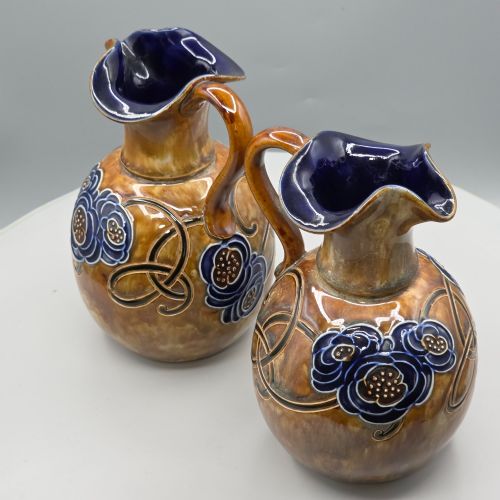
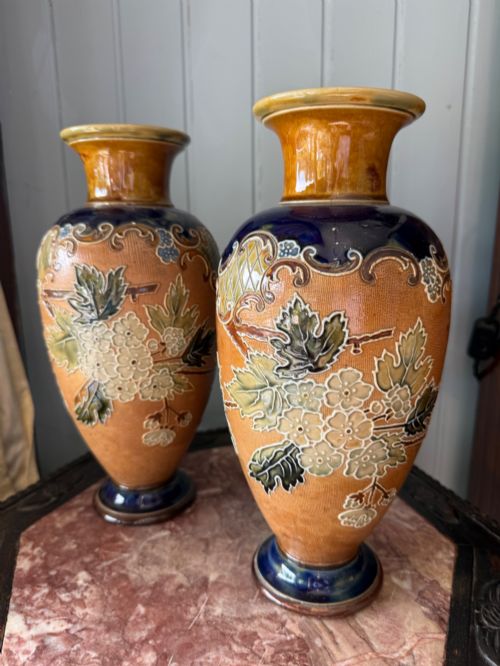
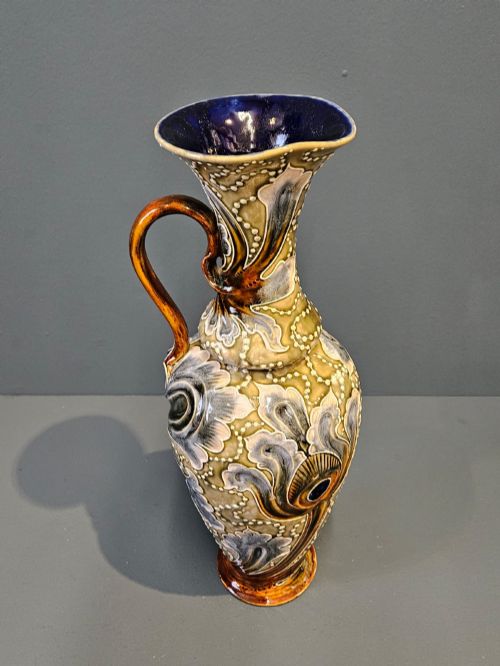
When you search for blue brown ceramic vases, you encounter remarkable examples of late nineteenth and early twentieth century studio pottery and utilitarian wares. The selection here leans heavily towards substantial jugs, decorative ewers, and cabinet vases produced by major British potteries during the Victorian and Edwardian eras. These pieces combine robust ceramic bodies with striking dual-tone glazes that highlight the natural texture of the clay.
The dominant aesthetic draws directly from the Arts and Crafts and Art Nouveau movements, where surface decoration and glaze effects take precedence over traditional symmetry. You will find items ranging from small cabinet pieces to large display ewers, often bearing the characteristic deep cobalt blues and earthy browns typical of salt-glazed and slip-decorated Stoneware. Each piece reflects the hand of the maker, whether through incised floral patterns or applied enamel details.
The origins of these vessels trace back to prolific workshops active from the middle of the nineteenth century through to the early decades of the twentieth. Earthenware and glazed stoneware dominate the offerings, providing a tangible link to a period when British ceramic design shifted toward artistic expression. Collectors frequently encounter pairs and matched sets, which survive in remarkable condition given their age and domestic utility.
How they were made
The makers of these vessels utilised durable stoneware, earthenware, and terracotta bodies as the foundation for complex glaze effects. Potters threw the forms on a wheel or cast them in moulds before applying fluid salt glazes or liquid slips that naturally pooled into striking blue and brown variations during firing.
Surface ornamentation involved intricate hand-incising, pate-sur-pate techniques, and painted enamel designs directly onto the unfired clay body. Skilled decorators like Florence Barlow and Emma Shute added texture through specialised slip work, ensuring that each vessel possessed a distinct tactile quality.
Certain nineteenth-century jars are so precisely date-marked to a single afternoon that you can almost smell the drying clay.
What varies in quality
The distinction between standard production wares and exceptional pieces rests upon the crispness of the incised decoration and the control of the kiln atmosphere. Superior examples display deeply saturated blue and brown glazes that run evenly across the surface without obscuring the underlying botanical or geometric motifs.
Attribution to named artists and specific workshops elevates the standing of individual pieces, transforming utilitarian jugs into documented works of art. The precision of the hand-painted elements and the balance of the overall silhouette ultimately determine the desirability of any given vessel.
Royal Doulton·Doulton Lambeth·Wileman Intarsio·Shelley·Emma Shute·Emily Stormer·Florence Barlow·Pratt Ware
The Blue Brown Ceramic Vases Glossary
- Stoneware
- A robust type of pottery fired at high temperatures until vitrified and rendered completely impermeable to water. It forms the durable body of many nineteenth-century jugs and vases.
- Earthenware
- Porous pottery fired at lower temperatures, commonly coated in an opaque or transparent glaze to seal the surface. This material underpins much of the decorative Victorian output.
- Arts and Crafts
- A design movement spanning the late nineteenth century that championed traditional craftsmanship, simple forms, and natural materials. It heavily influenced the ceramic output of the period.
- Art Nouveau
- An international style characterised by organic, flowing lines and botanical motifs popular around the turn of the twentieth century. It appears in the sweeping floral patterns of the era's vases.
- Ewer
- A large jug with a wide spout and a looped handle, originally designed for holding water but frequently produced as a purely decorative object in Victorian households.
Blue Brown Ceramic Vases: Frequently Asked Questions
What are these blue brown ceramic vases made from?
These vessels are constructed primarily from durable stoneware, terracotta, and earthenware bodies. Potters shaped these materials on the wheel before applying specialised liquid glazes and enamels.
The resulting surfaces showcase the natural interaction between the clay and the kiln heat, producing the characteristic deep blue and brown colourways seen across the collection.
How do I date a Victorian or Arts and Crafts vase?
Dating relies on identifying factory stamps, incised artist monograms, and stylistic indicators such as Art Nouveau floral motifs or Victorian forms. Many pieces carry impressed pottery marks from the late nineteenth century.
Examining the glazing technique and the style of the hand-incised decoration also helps narrow down the production period between eighteen-eighty and nineteen-ten.
Were these pieces used daily or displayed?
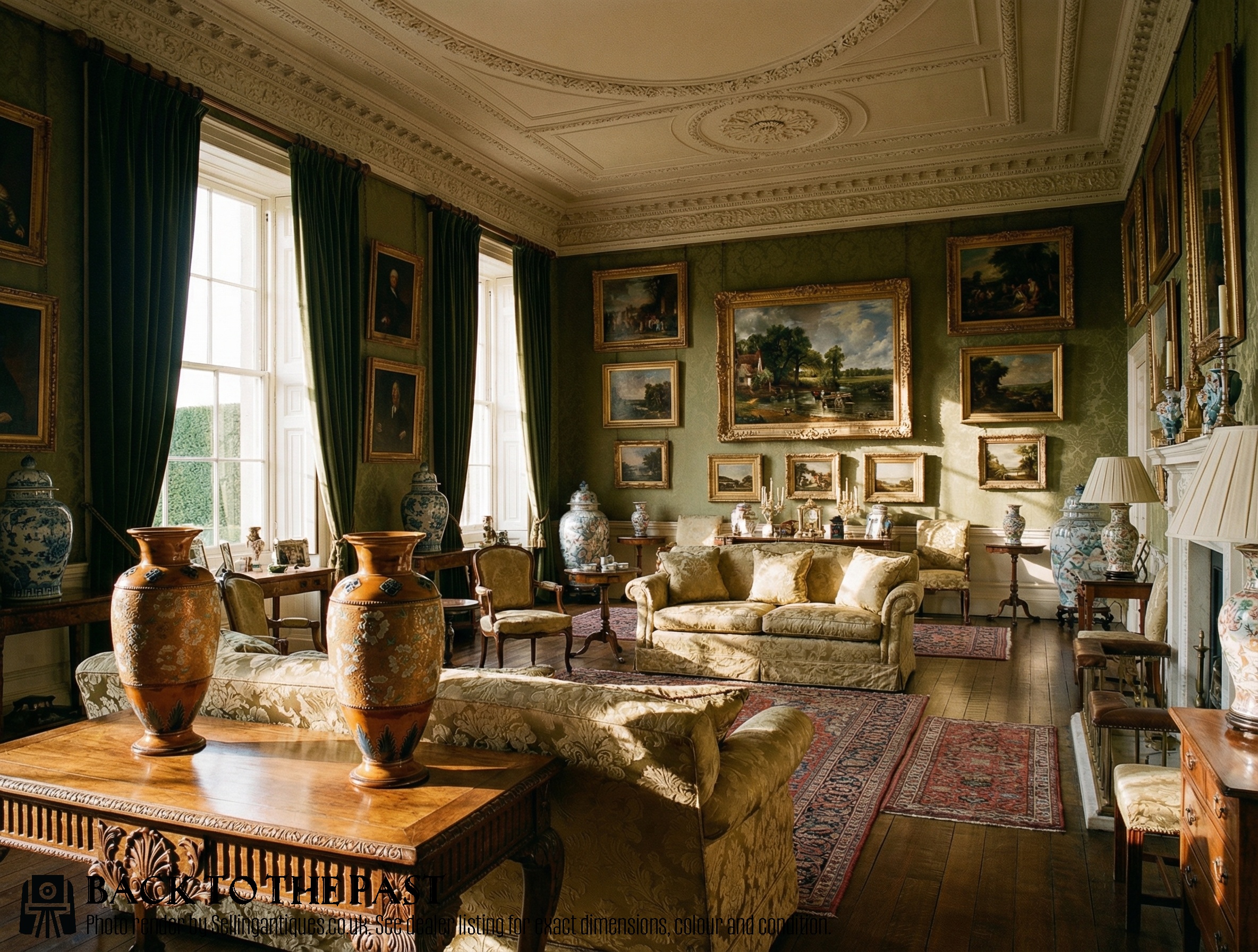
While many items started as functional jugs and ewers, the larger decorative pieces and cabinet vases were intended primarily for display in Victorian homes. Their artistic glazes and intricate surface patterns made them suitable for drawing rooms.
Over time, even utilitarian vessels transitioned into purely decorative objects collected for their craftsmanship and design history.
What is the significance of named artists on these ceramics?
Named decorators like Florence Barlow and Emma Shute brought individual artistic vision to factory production, elevating standard pottery to unique works of art. Their specific techniques, such as pate-sur-pate, mark the highest tier of Victorian ceramic manufacture.
Finding a signed piece confirms the specific hand behind the decoration and adds considerable historical interest to the item.