


Edwardian Stoneware Urn
These edwardian stoneware urn pieces bring robust form and rich glaze to a room, offering a durable centrepiece for interior display.
Edwardian Stoneware Urn
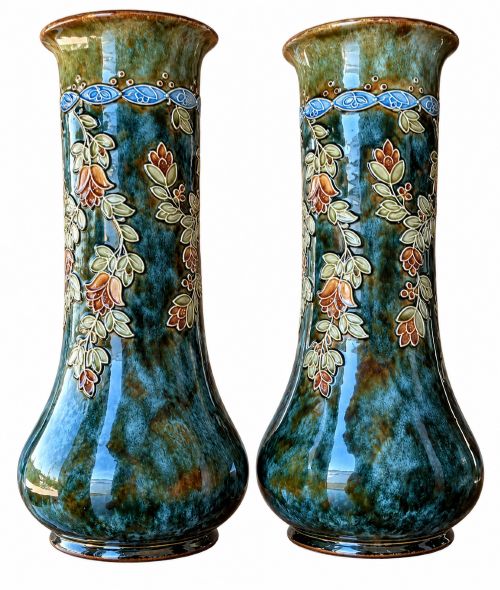
When you search for edwardian stoneware urn items, you encounter sturdy vessels designed for display, originating primarily from the late nineteenth and early twentieth centuries. These forms span from baluster shapes to decorative vases and loving cups reflecting prominent design movements of the era.
The pieces you are most likely to meet on this page hail from the Edwardian period and the surrounding decades, often showing the influence of Art Nouveau and Arts and Crafts aesthetics. Makers decorate these robust ceramic bodies with floral motifs, enamel details, and patterned glazes.
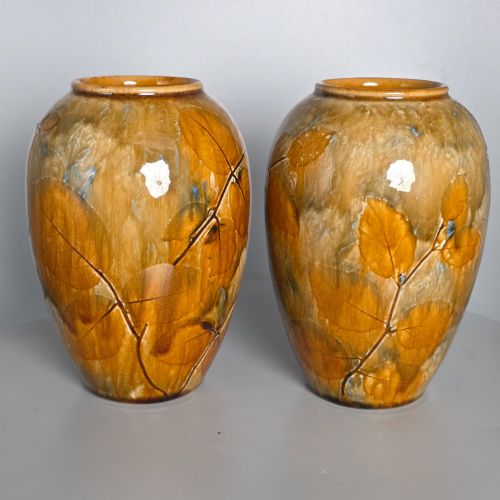
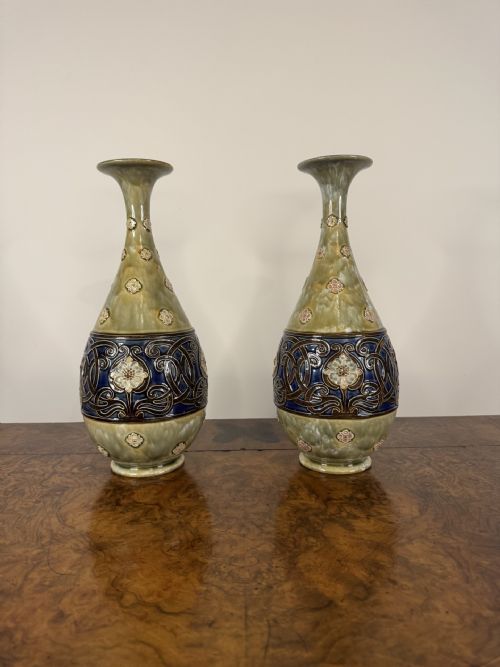
Object types on offer range from pairs of tall baluster vases to smaller cabinet vessels and specialised lustre designs. Each piece demonstrates the heavy, vitrified qualities characteristic of utilitarian clay fired at high temperatures for decorative interiors.
How they were made
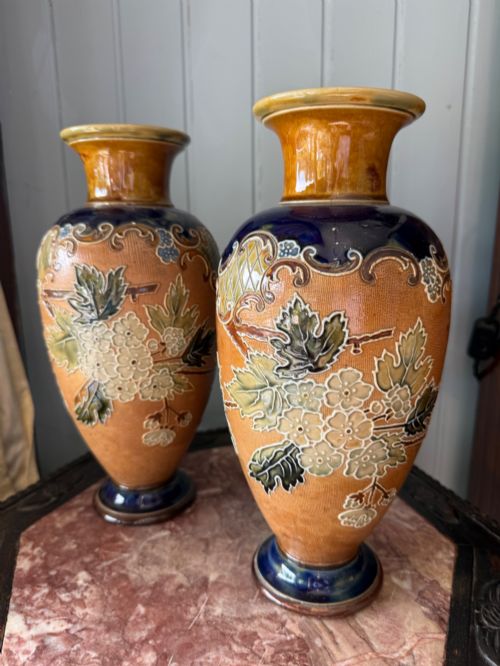
Potters shaped these vessels from dense stoneware and earthenware bodies, throwing them on the wheel or casting them before applying intricate surface decoration. Artisans then added raised patterns, such as Slater's Patent textured grounds, into the damp clay prior to firing.
Coloured glazes, enamel floral decor, and occasional gilt highlights were applied by hand to the fired surfaces before a final kiln run fixed the colours. Named artists painted specific foliage and animal motifs, sealing them beneath glossy or matte finishes.
Early twentieth-century ceramicists occasionally pressed actual lace doilies into damp clay to create intricate background textures.
What varies in quality
Quality reveals itself in the crispness of the modelled decoration and the precision of the hand-painted enamel work across the body. Pieces carrying attribution to specific known artists or bearing distinct factory patents demonstrate superior execution.
The depth and complexity of the glaze interaction also determine the standing of a piece, with balanced autumnal tones and even lustre finishes marking out the better examples.
Royal Doulton·Royal Lancastrian·Louisa Wakely·Ethel Beard·Richard Joyce
The Edwardian Stoneware Urn Glossary
- Stoneware
- A robust ceramic pottery fired at high temperatures until vitrified and impermeable to liquids. This dense material forms the heavy foundation for the majority of these vessels.
- Baluster
- A vertical architectural form shaped with a rounded lower body tapering to a narrower neck. Many tall vases on this page follow this classic curving silhouette.
- Enamel
- Opaque glass-coloured decoration painted onto the fired ceramic surface and fixed by low-heat firing. This technique produces vibrant floral details that sit raised above the main glaze.
- Lustre
- A type of ceramic glaze containing metallic salts that produce an iridescent sheen when fired in a reduced oxygen atmosphere. This finish creates shifting reflections across the body.
- Slater's Patent
- A decorative technique involving pressing lace or textured materials into damp clay to create patterned backgrounds. Doulton utilised this method extensively on stoneware bodies.
Edwardian Stoneware Urn: Frequently Asked Questions
What is edwardian stoneware?
Edwardian stoneware is a dense, high-fired ceramic produced during the early twentieth century for decorative and utilitarian household use.
Potters used durable clay bodies that could accept complex glazes and hand-painted enamel decoration without losing structural integrity.
How were these vases used?
These vessels served primarily as decorative ornaments for mantelpieces, entrance halls, and drawing rooms during the Edwardian era.
While robust enough to hold water for floral displays, many were valued simply for their sculptural form and artistic surface finish.
How do I date these pieces?
Dating relies on factory backstamps, registered design numbers, and stylistic markers associated with specific periods like Art Nouveau and Arts and Crafts.
Makers often altered their impressed marks over time, allowing collectors to narrow down the decade of production.
What is lustre ware?
Lustre ware is pottery featuring a metallic glaze that reflects light with an iridescent, rainbow-like sheen.
Craftsmen achieved this effect by introducing metallic elements into the kiln during a specialised firing process.