


Double Drop Leaf Table
A double drop leaf table brings clever folding leaves and solid timber warmth to any room, offering versatile surface space when you need it.
Double Drop Leaf Table
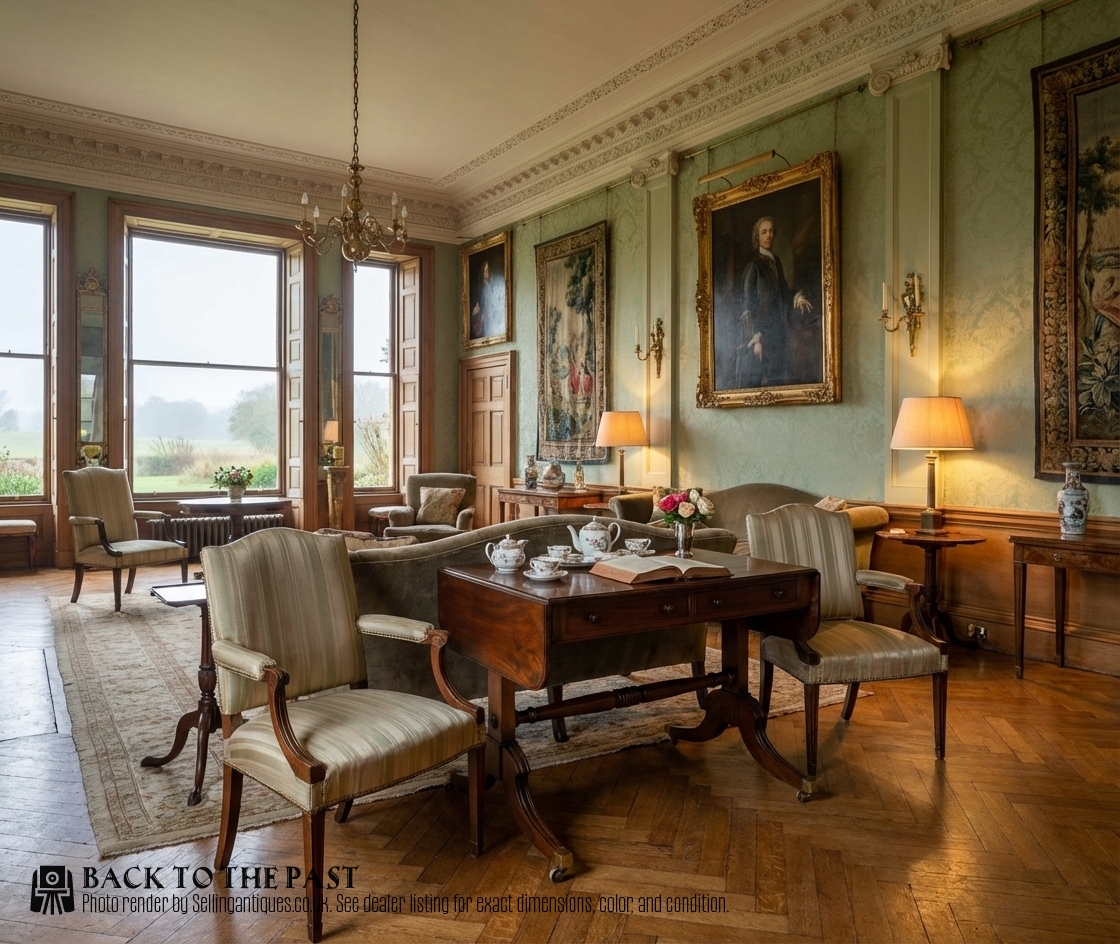
A double drop leaf table provides hinged flaps on opposing sides that lift to expand the top surface and drop down for compact storage. These designs serve diverse functions across the home, appearing as dining tables, coffee tables, tea tables, and sofa tables.
The selections available here span multiple historical eras, most notably the nineteenth century, the Edwardian period, and the eighteenth century. Timber choices run from rich mahogany and walnut to oak, satinwood, and kingwood, often featuring brass castors or mounts.
Materials and construction
Cabinetmakers constructed these pieces primarily using solid hardwoods such as mahogany, oak, and walnut, frequently applying figured veneers or burr walnut to prominent surfaces. Table leaves hinged smoothly to the fixed central top, supported by swing legs, gatelegs, or pillar mechanisms.
Makers utilised brass for hinges, castors, and decorative details, particularly on sophisticated sofa and tea tables. Secondary timbers were chosen for structural stability, while finishing techniques brought out the natural grain and colour of the primary wood.
Listings feature woods including mahogany, walnut, oak, satinwood, burr walnut, and kingwood across periods from the eighteenth century to the Edwardian era.
Assessing quality
Quality rests upon the selection of timber figures, such as highly figured mahogany or burr walnut, and the precision of the joinery where the leaves meet the central top. Superior examples maintain stability and smooth movement in their folding mechanisms over centuries of use.
Design sophistication also distinguishes better pieces, from simple rustic oak gatelegs to grand Regency sofa tables with elaborate underframes, tiered shelves, and fine brass hardware.
Morison of Edinburgh
The Double Drop Leaf Table Glossary
- Sofa table
- A rectangular occasional table traditionally designed to stand in front of a sofa, usually fitted with two drop leaves and small drawers.
- Gateleg table
- A table with hinged legs that swing out like a gate to support the drop leaves when raised.
- Sutherland table
- A narrow-profile drop leaf table featuring exceptionally slender leaves and a gateleg action that allows the top to fold almost entirely flat.
- Figured mahogany
- Mahogany timber displaying decorative patterns in the grain, such as flame or fiddleback, achieved through specific cutting methods.
Double Drop Leaf Table: Frequently Asked Questions
How do gateleg tables work?
Gateleg tables use hinged legs that pivot outward from the frame to support the dropped leaves when raised. This mechanical support provides sturdy weight distribution across the extended top.
When not in use, the legs swing back inward and the leaves drop down, allowing the furniture to tuck neatly against a wall.
Where were sofa tables placed?
Sofa tables were originally designed to stand directly behind the back of a sofa in Regency and Victorian drawing rooms. Their narrow proportions and drop leaves made them practical for writing or serving tea.
Today, these versatile items work equally well as freestanding console tables or compact desks in smaller living spaces.
How do I care for antique timber?
Antique timber benefits from consistent indoor humidity and protection from direct sunlight, which can fade rich mahogany and walnut finishes. Regular dusting with a soft, dry cloth preserves the polished surface.
Avoid applying modern silicone sprays, relying instead on traditional natural waxes sparingly when the wood appears dry.