
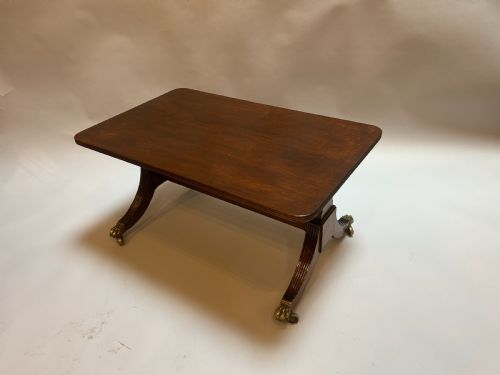
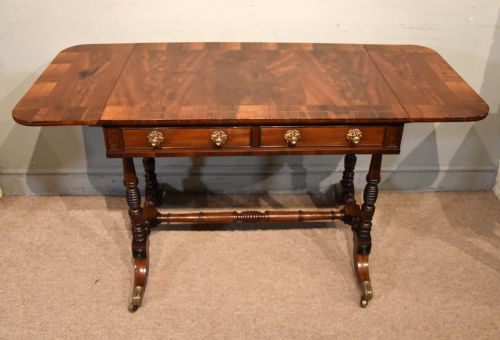
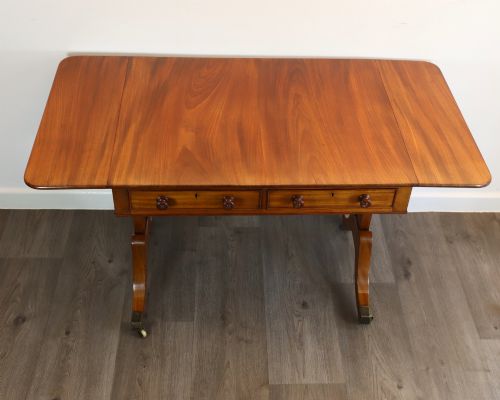
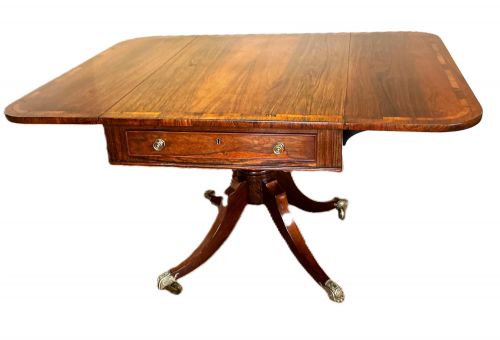


Brass Castored Sofa Table
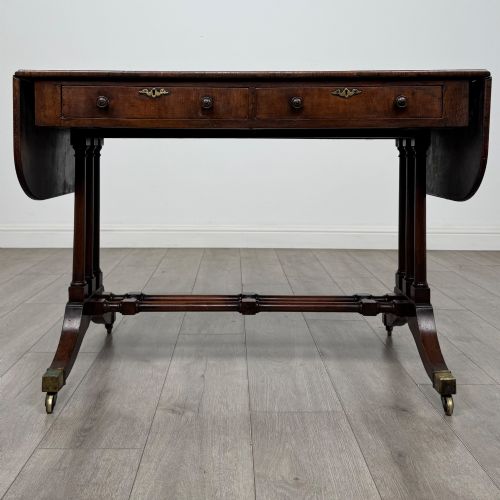
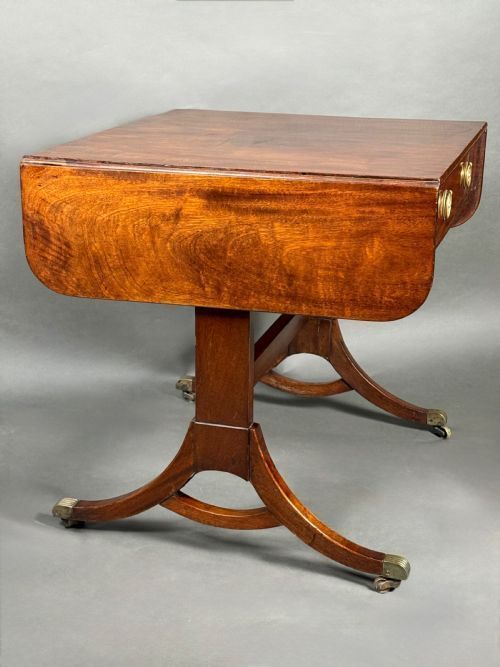
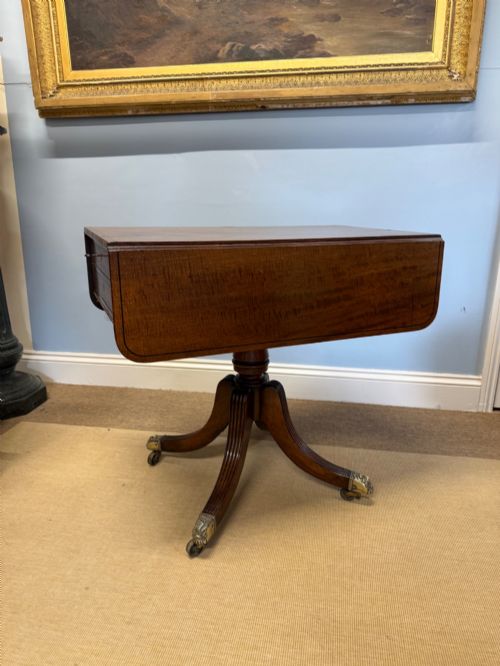
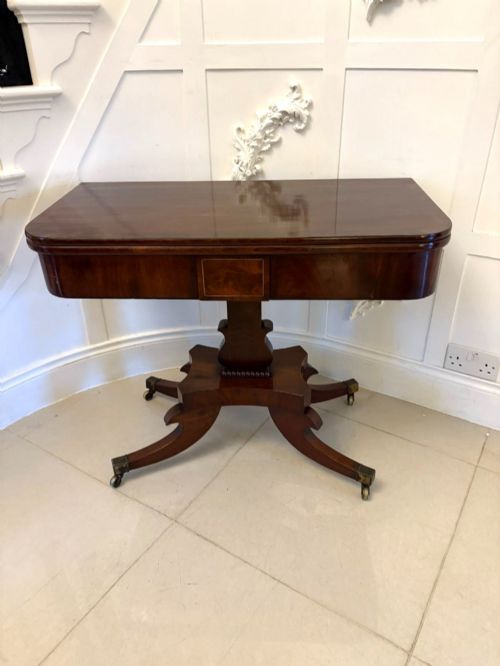
A brass castored sofa table brings period elegance and versatile drop-leaf charm to a room, anchored on traditional rolling supports.
Brass Castored Sofa Table
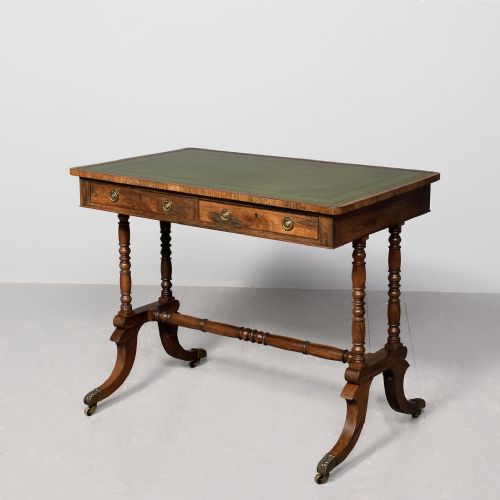
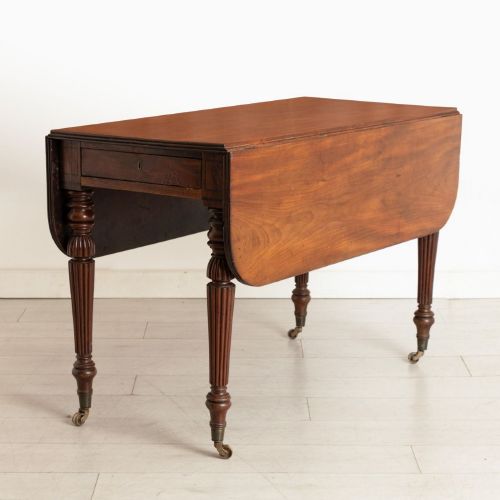
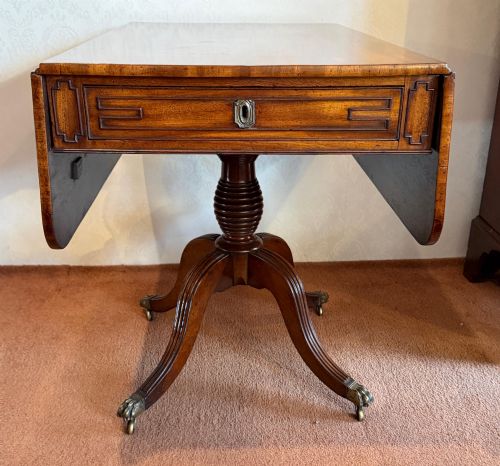
When you search for a brass castored sofa table, you look at pieces designed with drop leaves and rolling feet to sit comfortably behind a sofa or stand freely in a room. The items you meet most often on this page date from the Regency and 19th Century periods, constructed in mahogany, flame mahogany, or rosewood.
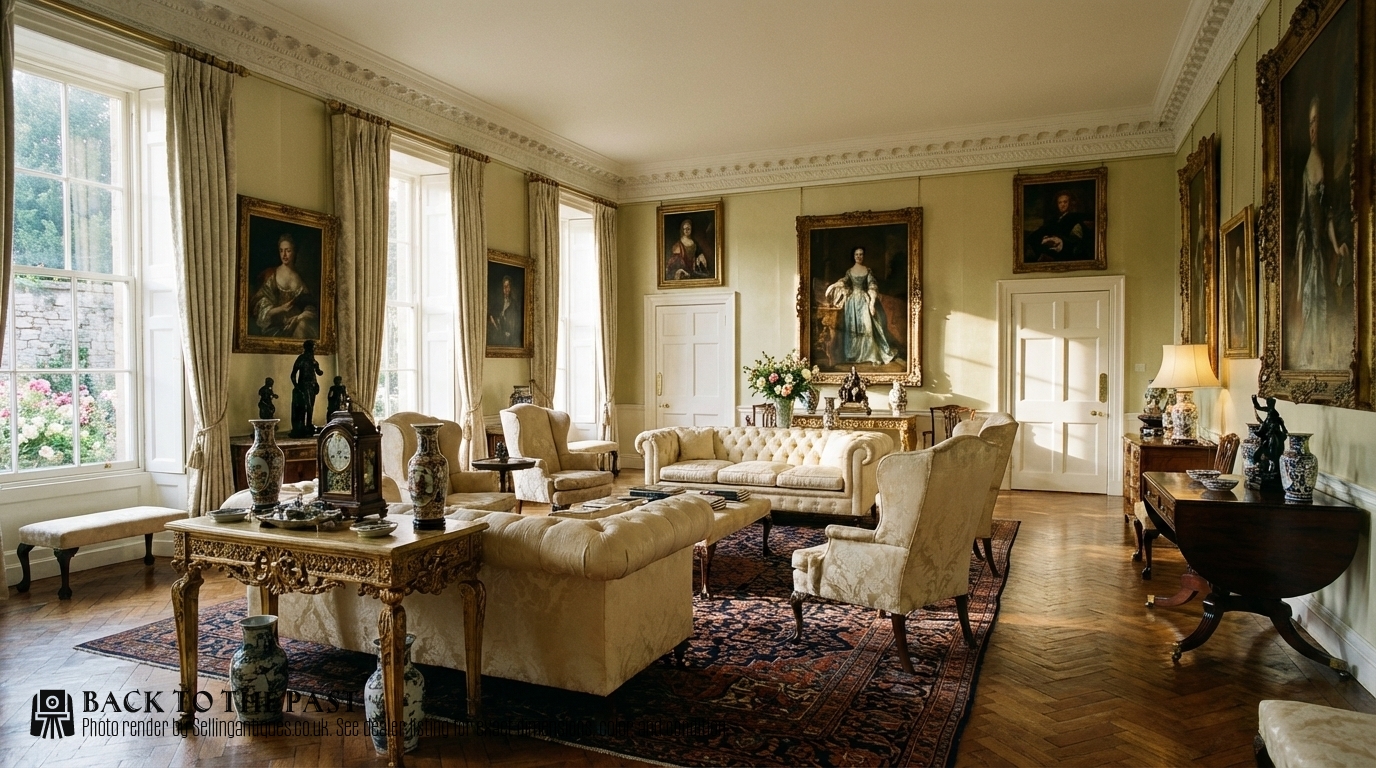
Makers and cabinet makers of the Georgian, Regency, and William IV eras built these tables to serve multiple functions, including writing, reading, and tea service. Their freestanding nature means finished timber is visible on all sides, allowing them to anchor the centre of a reception room rather than simply hugging a wall.
Materials and construction methods
Cabinet makers utilised dense native and imported timbers, notably solid and veneered mahogany, rosewood, and satinwood, often accentuating the grain with flame mahogany or delicate wood inlay. These surfaces were polished to a rich sheen that highlights the natural figuring of the wood.
Functional hardware defines the genre, with cast brass castors fitted to the base of legs or pedestals to permit smooth movement across carpets and wooden floors. Drop leaves are supported by hinged flaps or pivoting wooden arms, demonstrating precise joinery that kept the extended leaves level.
Several tables retain their tiny original brass wheels, ready to roll across your floor just as they did in Regency parlours.
Distinctions in craftsmanship
The division between standard examples and the finest pieces lies in the selection of timber veneers and the crispness of any inlay or carved detail. Superior tables display book-matched flame mahogany or richly figured rosewood across the top and leaves, whereas lesser pieces rely on plain timber.
Structural integrity and the originality of the brass castors and fittings dictate the standing of a piece. Finer examples maintain their original turning, stable drop-leaf hinges, and uncompromised underframes that speak to skilled period workshop construction.
Andrew Thomson & Sons
The Brass Castored Sofa Table Glossary
- Sofa table
- A long, narrow table traditionally placed behind a sofa, featuring drop leaves on either side and usually fitted with drawers.
- Drop leaf
- A hinged section of table top that can be folded down to save space or raised and supported to extend the surface area.
- Castor
- A small wheel mounted on a swivel assembly at the base of a leg, allowing the furniture to be moved easily across the floor.
- Flame mahogany
- A highly decorative veneer cut from where a branch joins the main trunk, showing a distinctive flickering flame pattern.
- Pembroke table
- A small form of side table with hinged drop leaves on two opposing sides, often sharing similar proportions to a sofa table.
Brass Castored Sofa Table: Frequently Asked Questions
What is a brass castored sofa table used for?
These tables were originally designed to stand behind a sofa for writing or holding lamps, with drop leaves that could be raised when extra surface space was needed.
Today, they function well as central room pieces, compact writing desks, or console tables in hallways and living spaces.
How do I identify a Regency period table?
Regency pieces often display rich mahogany or rosewood timbers, elegant pedestal bases, and classical brass mounts or castors dating from the early nineteenth century.
Look for refined proportions, finely figured veneers, and subtle inlay work rather than heavy Victorian carving.
Are the brass castors original?
Original castors show appropriate wear, patination, and construction methods matching the period of the timber frame.
Replacements are common due to heavy floor use, so checking the seating of the brass sockets against the wood helps determine authenticity.
How do I care for a rosewood or mahogany surface?
Protect the timber from direct sunlight and excessive heat fluctuations to prevent the fine veneers from drying out or splitting.
Regular dusting with a soft, dry cloth and occasional application of appropriate wax keeps the polished finish nourished.