


Regency Pedestal Sofa Table
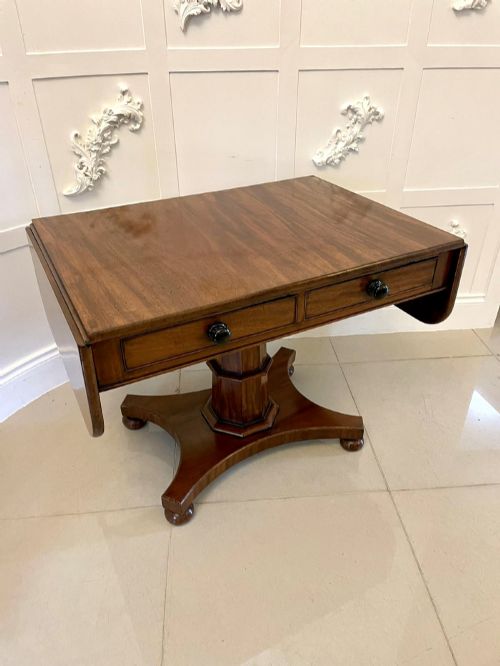
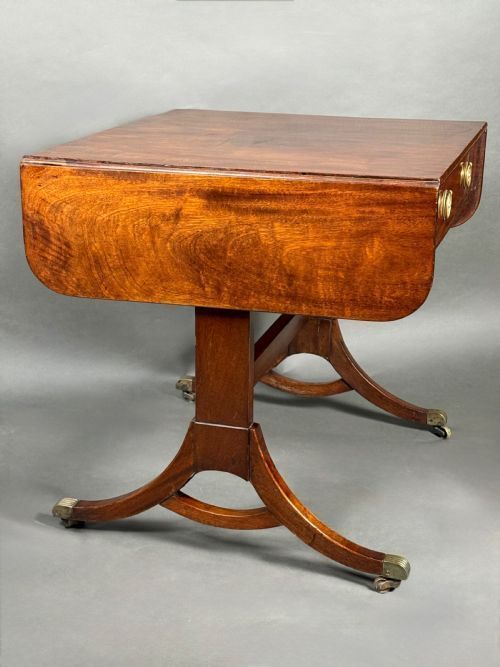
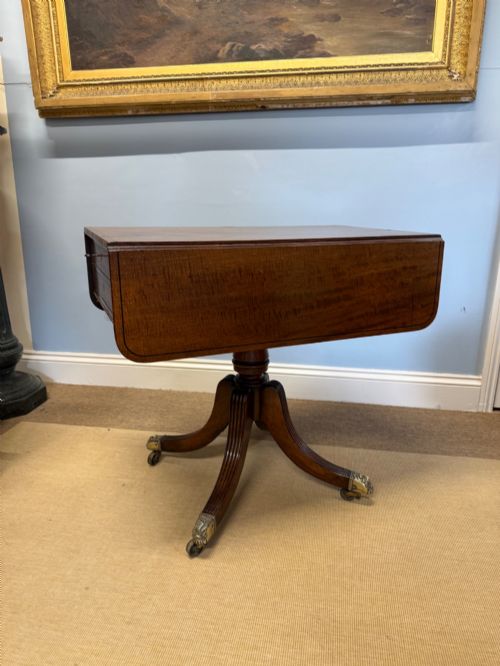
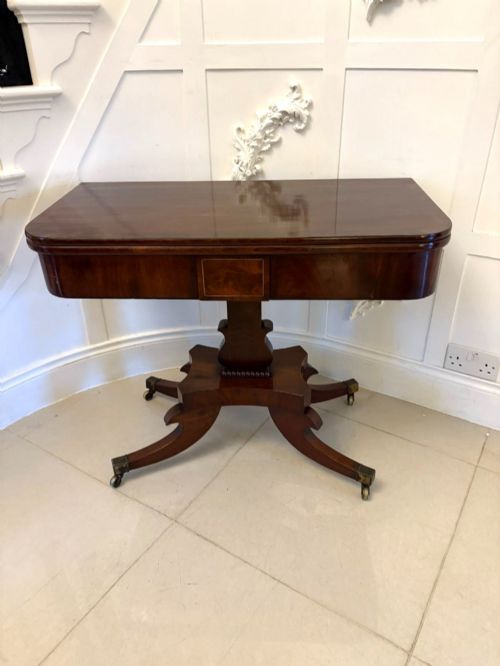
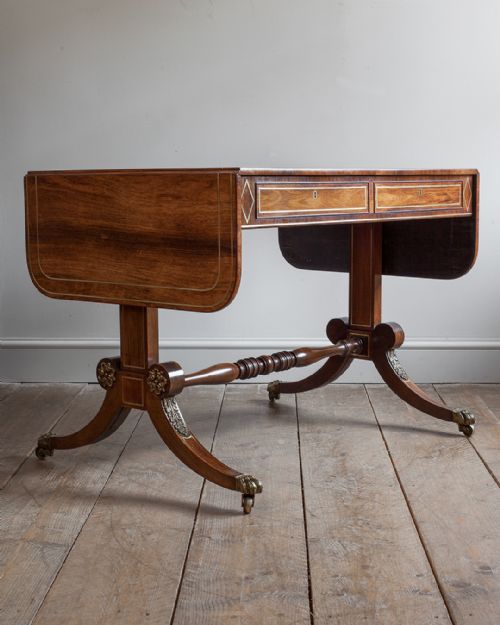
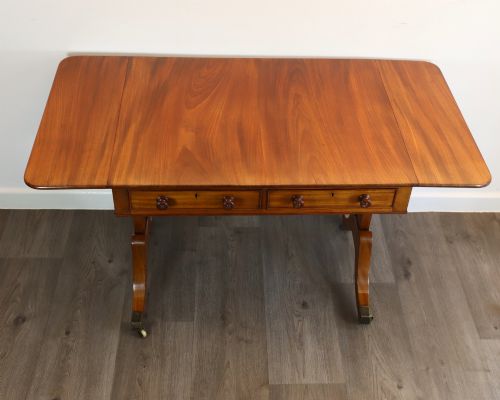
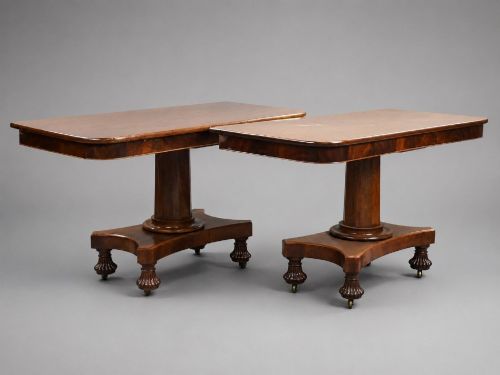
These pieces of regency pedestal sofa table furniture unite drop-leaf utility with central column support, designed for the drawing room.
Regency Pedestal Sofa Table
A regency pedestal sofa table brings together drop leaves and a central pillar support, commonly emerging from the nineteenth century in mahogany and rosewood. These forms include freestanding library tables, occasional tables, and console tables designed to sit before a sofa or within the centre of a room.
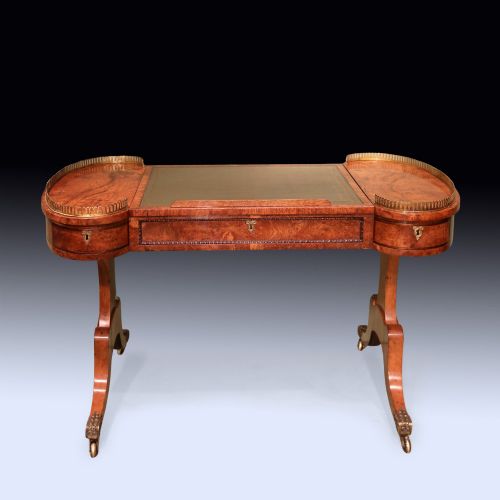
The pieces seen here span periods such as the Regency, George IV, and William IV eras, along with later Regency revival styles. Makers of the period utilised figured timbers like flame mahogany, burr oak, and rosewood to accentuate the top surfaces and drop leaves.
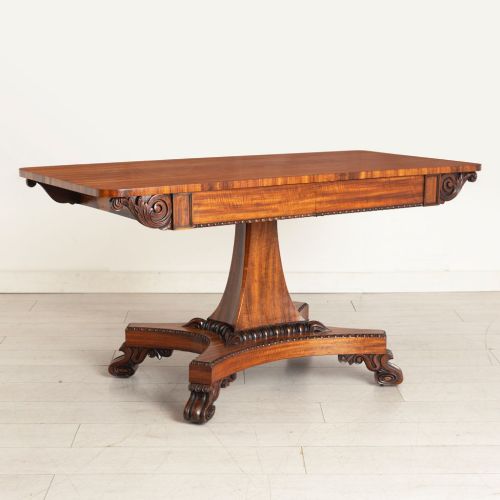
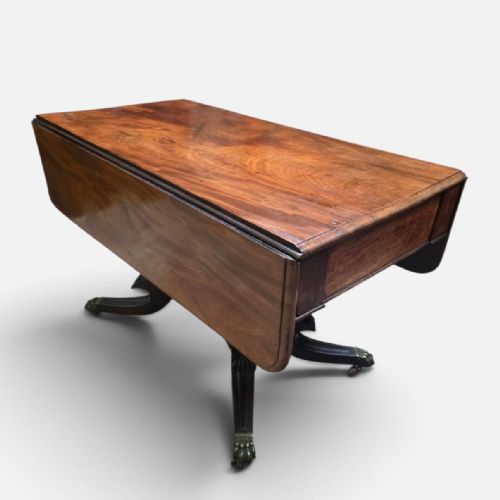
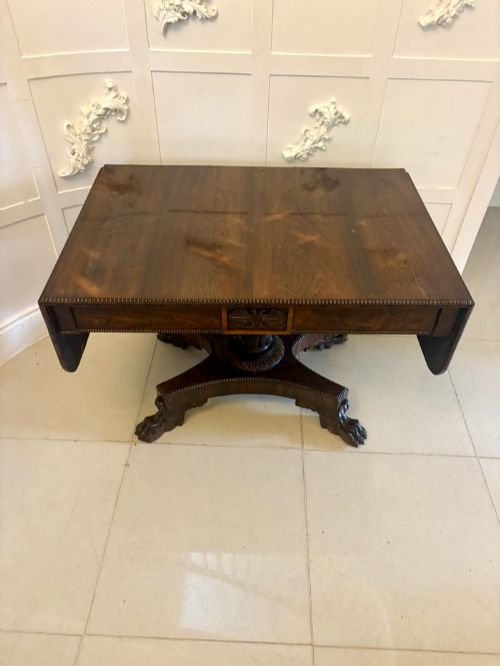
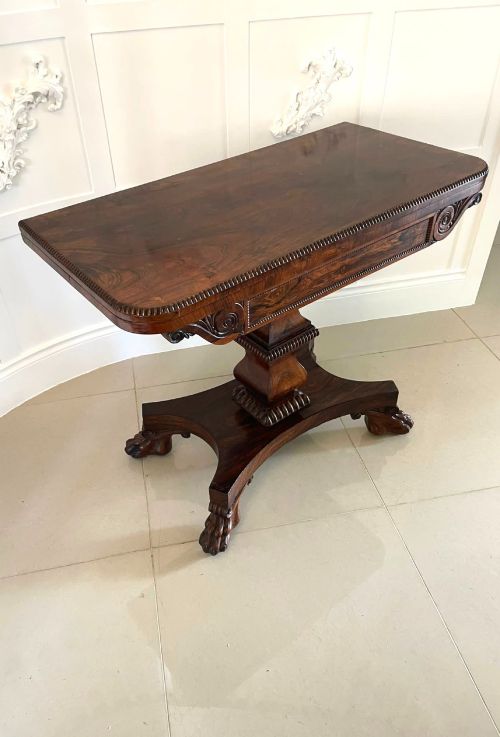
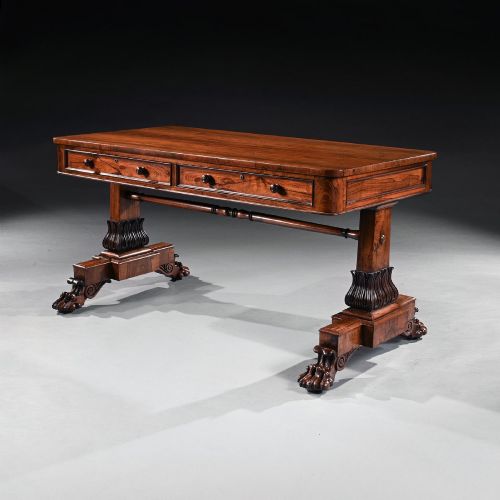
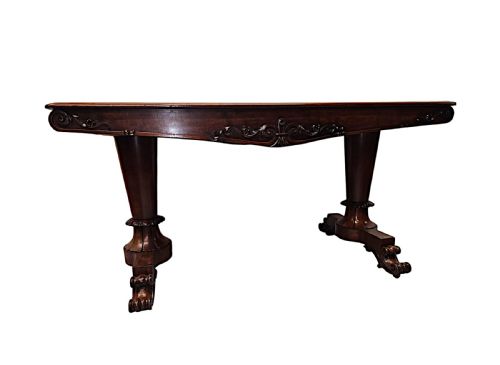
Buyers will encounter variations incorporating brass mounts, leather inserts, and inlaid stringing in ebony. The foundational form rests upon a central column, frequently supported by carved lion paws, dolphins, or lyre ends.
How They Were Made
Cabinet makers constructed these tables using solid and veneered timbers, selecting figured mahogany, flame mahogany, and rosewood for their rich grain patterns. Timber selection dictated the visual weight of the central pedestal and the expanse of the drop leaves.
Decoration relied on precision inlays of ebony stringing, gilded brass mounts, and carved wooden details such as lion paw feet or dolphins. Structural stability depended on the joinery connecting the central column to the platform base and the pivoting mechanisms of the drop leaves.
Tables balance upon carved wooden dolphins and fierce lion paws.
What Varies in Quality
The distinction between tiers rests upon the choice of timber figure, such as highly figured flame mahogany or dense rosewood, and the crispness of carved elements like lion paws or lyre ends. Superior examples display meticulous grain matching across the drop leaves and the central pedestal.
Refinement in secondary details, including gilded brass mounts, ebony stringing, and integrated leather writing surfaces, elevates an ordinary piece into a high-status object. The integrity of the pedestal construction and the weight of the base ensure stability when the leaves are extended.
Williams and Gibton
The Regency Pedestal Sofa Table Glossary
- Sofa Table
- A long, narrow table traditionally placed in front of a sofa, fitted with drop leaves on either end. These pieces function as writing desks or occasional tables.
- Pedestal
- A central column or pillar supporting the main body of the table, often rising from a platform base with feet. This design replaced traditional four-legged frames to allow greater legroom.
- Flame Mahogany
- A veneer cut from the fork of the mahogany tree, producing a distinctive fire-like ripple pattern. Cabinet makers prized this timber for prominent surfaces.
- Stringing
- Thin inlaid lines of contrasting wood or material, such as ebony, used to outline table tops and drawers. This technique adds linear definition to the piece.
- Drop Leaf
- A hinged flap on either side of a table top that can be raised to extend the surface area or lowered when space is restricted.
Regency Pedestal Sofa Table: Frequently Asked Questions
Where were sofa tables placed?
These tables traditionally stood directly in front of a sofa or occupied the centre of a principal room. Their freestanding nature allowed them to be moved easily as domestic needs shifted.
When the leaves were dropped, they functioned as side or console tables against a wall. When raised, they provided ample surface for reading, writing, or taking tea.
How do I identify a Regency period table?
Regency tables rely on architectural proportions, central pedestal supports, and classical motifs such as lyres, dolphins, and carved animal feet. Cabinet makers favoured dark, dense timbers like mahogany and rosewood.
Inspect the secondary woods used in the drawers and framing underneath. Construction methods and joinery from the early nineteenth century differ significantly from later revival pieces.
What is the purpose of drop leaves?
Drop leaves offered adjustable surface space in nineteenth-century drawing rooms where furniture arrangement changed frequently throughout the day. Lowering the flaps minimised the footprint of the table.
Supporting brackets or hinged wooden arms swung outward from beneath the top to hold the leaves firm when raised. This mechanism required precise carpentry to ensure the extended surface remained level.
How do I care for rosewood and mahogany?
Maintain these antique timbers by keeping them away from direct sunlight and sudden changes in room temperature. Natural oils and waxes help preserve the depth of the grain without building up a heavy film.
Avoid placing damp items directly onto the polished wood or leather inserts. Gentle dusting with a dry, soft cloth is sufficient for daily maintenance.