
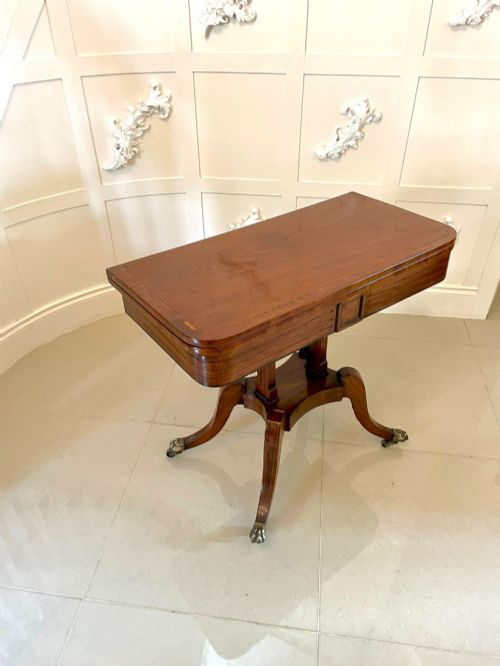
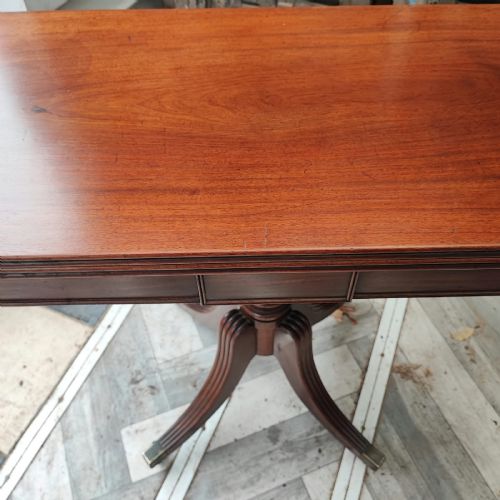
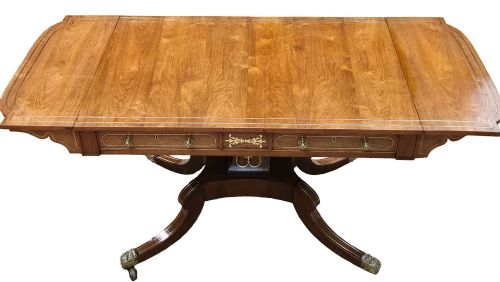

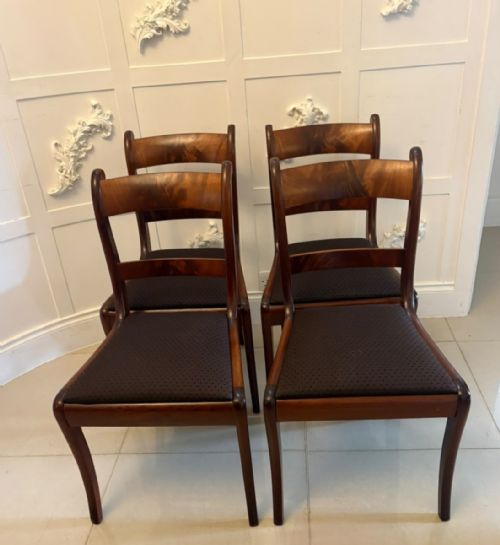
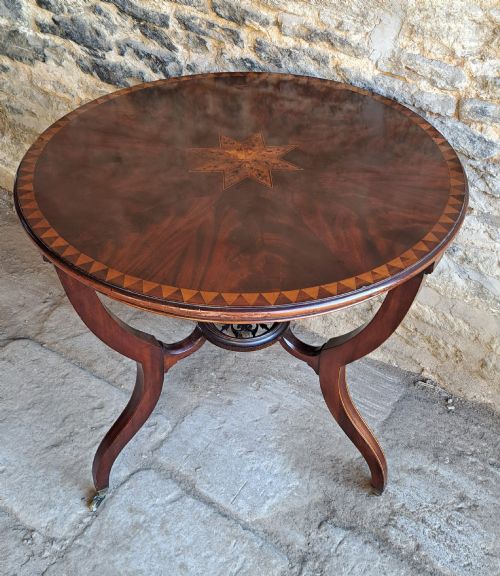


Sabre Leg Side Table
These sabre leg side table examples bring sculptural Regency and Art Deco lines into a room, offering both practical surface space and distinct period character.
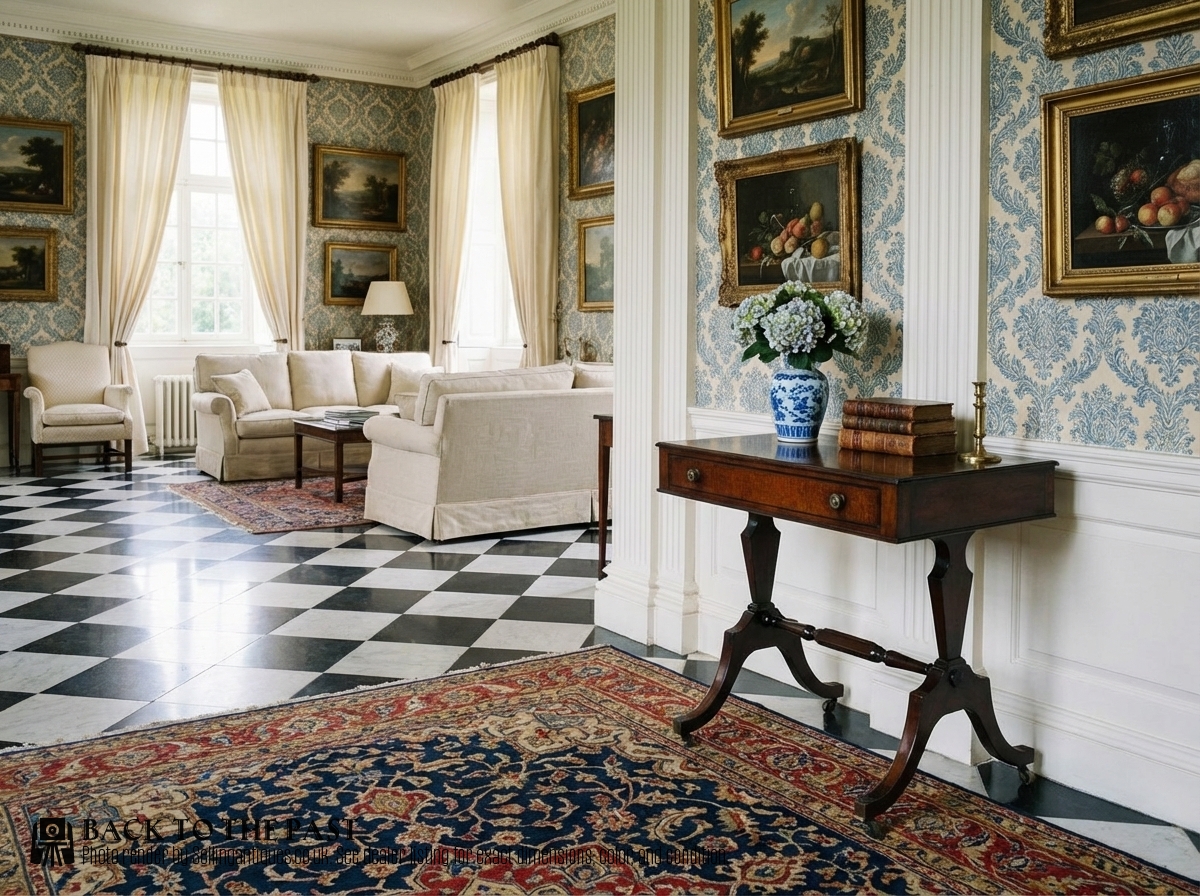
What these tables are
When you search for a sabre leg side table, you encounter practical small furniture forms including occasional tables, tea tables, and lamp tables. The selection spans the Regency and Georgian eras, alongside a later 1920 Art Deco example in Karelian birch.
Most pieces date from the Regency period, demonstrating the enduring appeal of native and exotic timbers shaped with curved supports. Forms range from simple occasional tables to folding tea tables designed for parlour use.
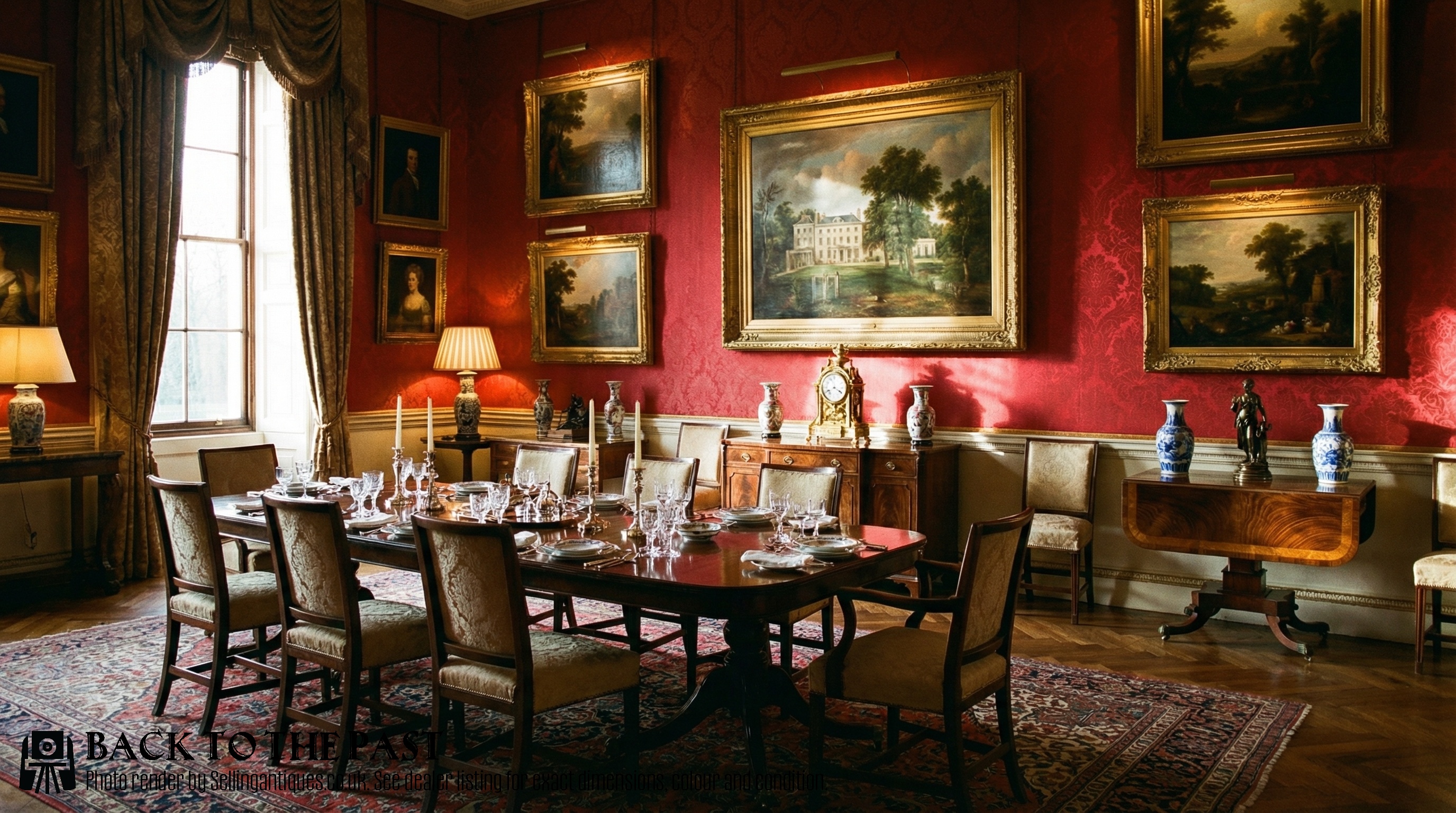
How they were made
Cabinetmakers utilised dense hardwoods such as mahogany, rosewood, and birch, frequently selecting figured veneers to create striking surface patterns. Some pieces incorporate contrasting brass inlay to accentuate the structural lines.
The defining feature is the outwardly curved leg profile, which requires precise woodworking joints where the support meets the frieze to ensure stability.
Retail Price Guide 2026
Typical UK retail prices for sabre leg side table, calculated from the Sellingantiques database of over a million retail prices indexed since 2003. This retail price guide relies exclusively on Sellingantiques data; no external sources or auction records are used, so the figures do not describe the wider market.
The tables feature legs that curve outward just like a galloping horse's ankles.
What varies in quality
The distinction between standard examples and superior pieces lies in the choice of timber and the sophistication of surface enrichment, such as brass inlay work. Finer items display carefully matched grain patterns across the top and well-proportioned curved legs.
Construction methods also separate workshop output, with better tables showing refined joinery in the underframe and crisp execution of the sweeping leg profiles.
The Sabre Leg Side Table Glossary
- Sabre leg
- A support curving outwards in a concave sweep reminiscent of a cavalry sabre, typical of Regency furniture design.
- Tea table
- A small folding table designed to hold tea service equipment, which often swings open to reveal a larger surface.
- Occasional table
- A versatile small table intended for movable use around a sitting room or parlour.
- Karelian birch
- A decorative timber featuring distinctive swirling knot formations, utilised notably in later Art Deco pieces.
Frequently Asked Questions
What is a sabre leg side table?
A sabre leg side table is a small piece of furniture supported by distinctive outwardly curved legs.
These tables primarily date from the Regency period and include various forms such as tea tables and lamp tables.
How were these tables used?
Period tables served functional domestic purposes in reception rooms, holding lamps, decorative objects, or tea equipment.
Folding versions provided expandable surfaces for social gatherings in the evening.
What woods were used for these tables?
Cabinetmakers employed a variety of timbers including mahogany, rosewood, and birch.
Some examples also feature exotic veneers and contrasting brass inlay.
How do Regency and Art Deco examples differ?
Regency tables typically feature classical timber choices like mahogany and rosewood with brass details.
The 1920 Art Deco piece utilises Karelian birch to achieve a different modernist aesthetic.