


Distressed White Commode
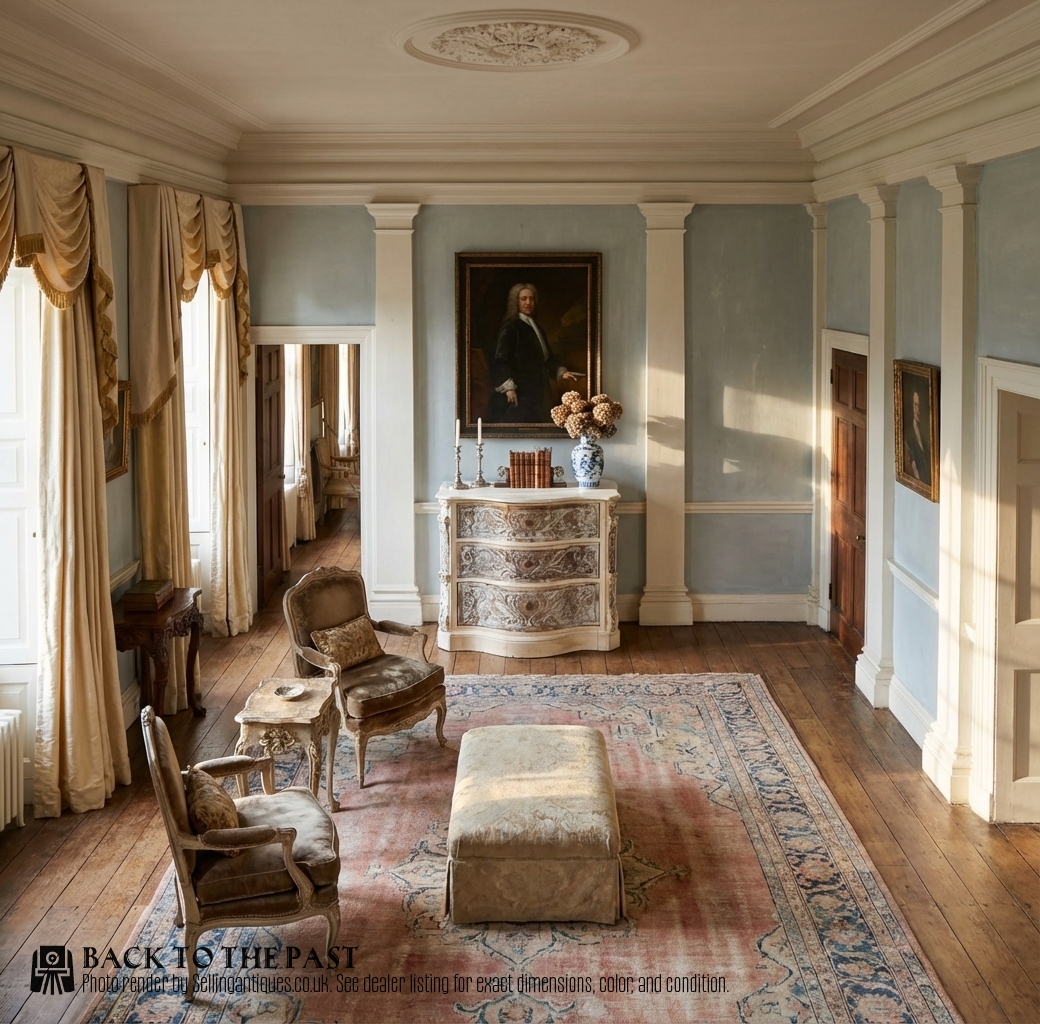
A distressed white commode brings provincial elegance and generous storage to a room through weathered painted surfaces and serpentine silhouettes.
Identifying the commode
A distressed white commode is a drawer chest rooted in continental European cabinet-making traditions, most frequently appearing in French, Italian, Dutch, and Scandinavian provincial styles. These pieces combine practical storage with decorative painted finishes that have aged over decades or centuries.
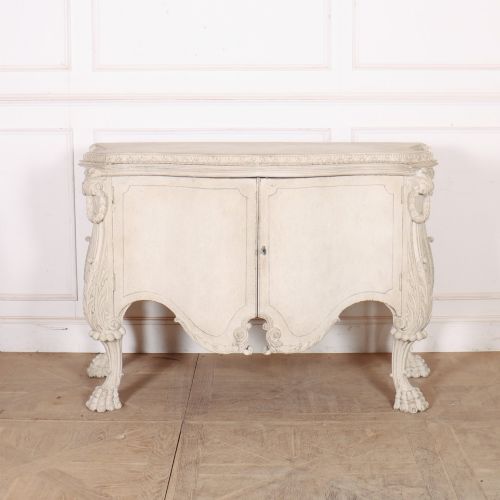
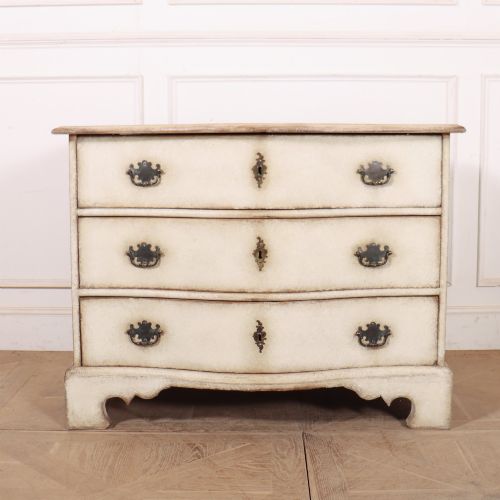
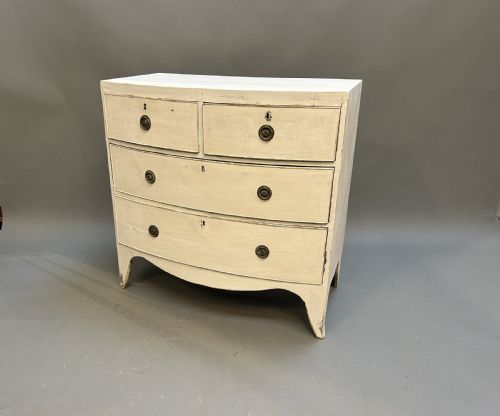
The versions met most often on this page span the eighteenth and nineteenth centuries, alongside later twentieth-century interpretations, taking the form of serpentine fronts, bombé profiles, and straightforward chests of drawers. Origins range from Italian and French workshops to Danish and Swedish provincial makers, each bringing distinct regional proportions to the form.
Buyers choose a distressed white commode to anchor a bedroom or living space with period character and a softer, painted aesthetic rather than dark polished wood. The form functions primarily as a chest of drawers, offering deep storage capacity while serving as a strong decorative focal point.
Materials and construction
Construction relies on traditional timbers such as oak, pine, and general wood carcasses, often built with hand-cut joinery typical of eighteenth- and nineteenth-century cabinet work. Gesso and paint layers are applied directly to the wooden substrate, creating the foundational white or off-white surface that distresses naturally over time.
Decorative elements involve carved wooden details, serpentine shaping, and bombé curves formed from solid timber or applied veneers. Hardware elements such as brass and iron handles and escutcheons accent the painted wooden bodies, secured with period fastening methods.
Retail Price Guide 2026
Typical UK retail prices for distressed white commode, calculated from the Sellingantiques database of over a million retail prices indexed since 2003. This retail price guide relies exclusively on Sellingantiques data; no external sources or auction records are used, so the figures do not describe the wider market.
The inventory encompasses regional European traditions, including French provincial, Italian Rococo Revival, Dutch Baroque, and Scandinavian country styles.
Judging quality
The distinction between standard examples and superior pieces rests on the fluidity of the carved serpentine or bombé silhouette and the authenticity of the painted surface. Master cabinet-makers achieved harmonious proportions where the drawers and curved carcasses interact seamlessly.
Surface integrity separates fine examples from lesser ones, specifically where original paint and gesso have aged naturally rather than through aggressive modern manipulation. The crispness of carved details on Italian Rococo Revival or French provincial models indicates the underlying skill of the workshop.
The Distressed White Commode Glossary
- Commode
- A low chest of drawers or cabinet originating in France, designed for domestic storage and introduced in the seventeenth century. The term covers various continental European drawer chests.
- Serpentine
- A front contour characterised by a convex central section flanked by two concave curves, creating a gentle wave effect. This shape requires advanced woodworking skill.
- Bombe
- A swelling, outwardly curved chest profile that bulges outward on the front and sides, characteristic of eighteenth-century Dutch and French furniture. It demands sophisticated shaping of solid timber or thick veneers.
- Gesso
- A traditional white paint mixture consisting of a binder mixed with chalk, gypsum, or pigment, applied to wood as a base for subsequent painting. It provides the chalky texture seen on antique painted furniture.
- Provincial
- Describing furniture made in regional areas outside metropolitan design centres, often showing charming local interpretations of grander court styles. These pieces emphasise practical utility alongside regional decorative motifs.
Frequently Asked Questions
Where should I place a commode?
A distressed white commode fits naturally in a bedroom as a primary storage chest for clothing and linens. It also serves effectively in a hallway or living room as a surface for lamps and decorative objects while providing concealed storage.
The scale of serpentine and bombé models requires careful placement to allow the curved silhouette to be viewed properly without obstruction from surrounding furniture.
How do I care for painted wood?
Dust the painted and gessoed surfaces regularly with a soft, dry cloth to prevent dirt buildup in the crevices of carved details. Avoid commercial cleaning sprays or excessive moisture, which can destabilise fragile historic paint layers.
Maintain stable room humidity and keep the piece away from direct heat sources to prevent the underlying wood from expanding and cracking the historic finish.
How do I distinguish regional styles?
Continental regional styles are identified by their characteristic silhouettes and surface ornamentation. Dutch pieces often display pronounced bombé curves, while Italian examples frequently incorporate elaborate carved Rococo Revival details and serpentine lines.
Scandinavian country pieces tend toward simpler, restrained painted finishes on pine or oak carcasses, reflecting local domestic traditions.