
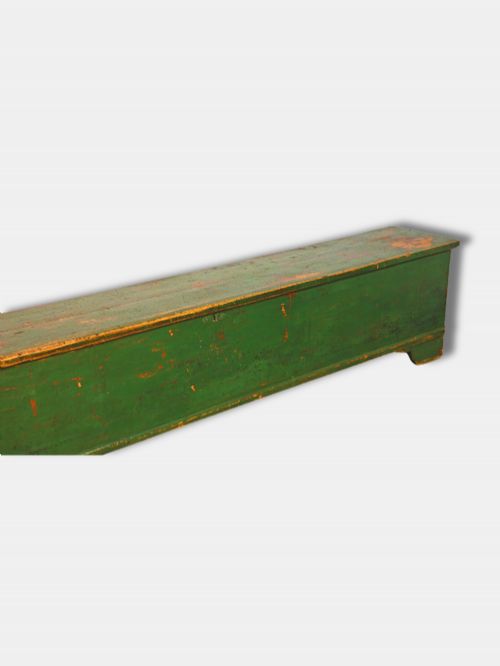
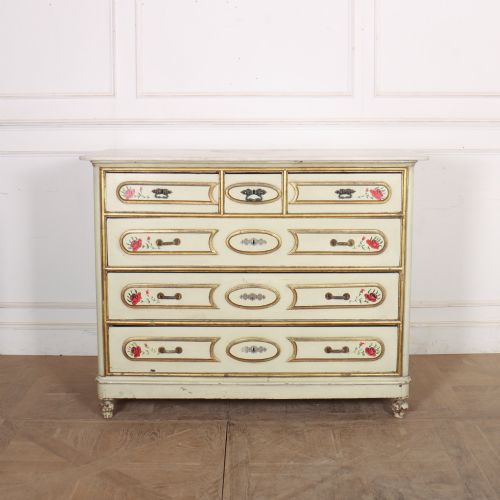


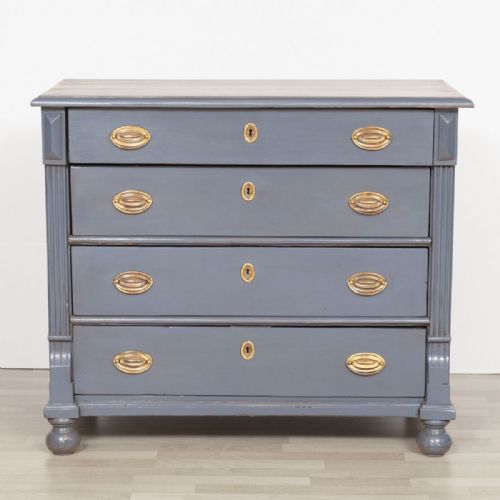


Continental Painted Chest
A continental painted chest brings rich regional character and functional storage into a room.
What a continental painted chest is
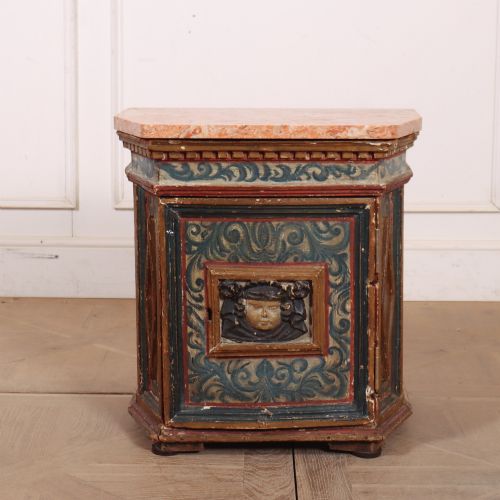
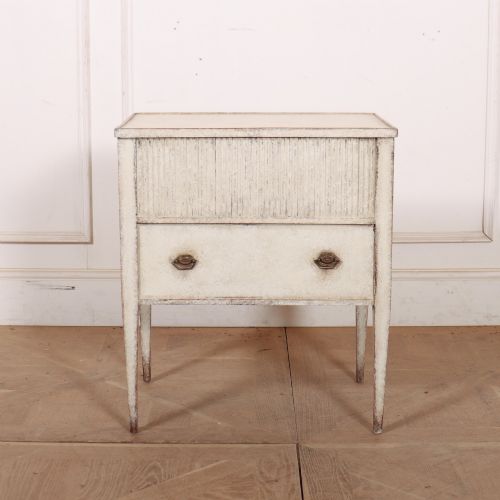
A continental painted chest provides substantial storage while displaying the distinct decorative traditions of European regions. These pieces take the form of chests of drawers and commodes, created across various periods including the eighteenth and nineteenth centuries. You encounter diverse regional styles such as Dutch provincial, French chateau, Portuguese rococo, Scandinavian country, and German rococo.
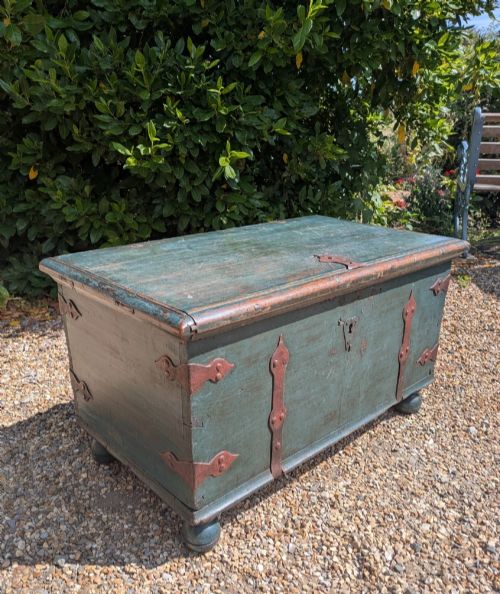
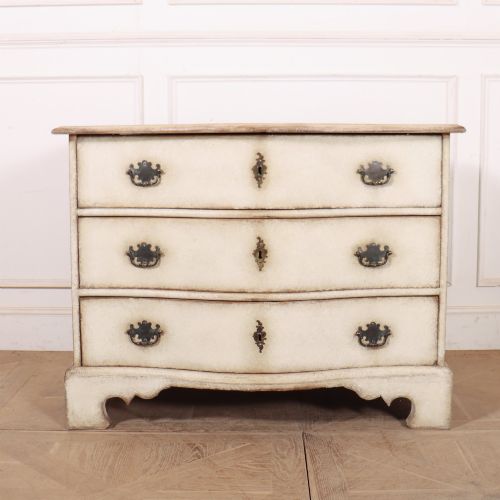
The most common examples on this page are nineteenth century pieces, alongside notable eighteenth century serpentine models and marriage chests. Forms range from small commodes to large carved items with masked bombe profiles. Painted timber forms the core of these items, shaped into practical drawer configurations.
How they were made
Makers constructed these chests using wood and painted timber as the primary structural materials. Artisans applied paint and gesso surfaces to finish the exterior of the timber carcase. Metal and brass hardware such as drawer pulls and mounts completed the construction.
Carved wood details appear on elaborate forms, while gesso provided a smooth ground for decorative paint layers. The combination of timber joinery and surface paint defines the physical build of each piece.
Retail Price Guide 2026
Typical UK retail prices for continental painted chest, calculated from the Sellingantiques database of over a million retail prices indexed since 2003. This retail price guide relies exclusively on Sellingantiques data; no external sources or auction records are used, so the figures do not describe the wider market.
Listings feature eighteenth and nineteenth century pieces alongside items dated to nineteen twenty, constructed from painted timber, wood, and gesso.
What varies in quality
The sophistication of the timber work and the complexity of the form set pieces apart. Serpentine fronts and bombe profiles demand advanced woodworking skill compared to straight fronts. Carved ornamentation and applied gesso detail elevate the ambition of the construction.
Surface decoration dictates visual success, from simple country painted finishes to elaborate gilt grotto work. The integration of period brass or metal hardware complements the overall execution of the chest.
The Continental Painted Chest Glossary
- Commode
- A low chest of drawers or cabinet originating in France. This term frequently applies to ornamental continental drawer units.
- Serpentine
- A furniture front shape that curves outward at the centre and inward at the sides. This contour requires precise carpentry.
- Bombe
- A swelling, bulging outward profile seen on the sides and fronts of advanced case furniture. German and Dutch pieces often utilise this shape.
- Gesso
- A plaster mixture applied to wood as a base for paint or gilding. It allows for crisp surface carving and smooth decoration.
Frequently Asked Questions
Where should I place a painted chest?
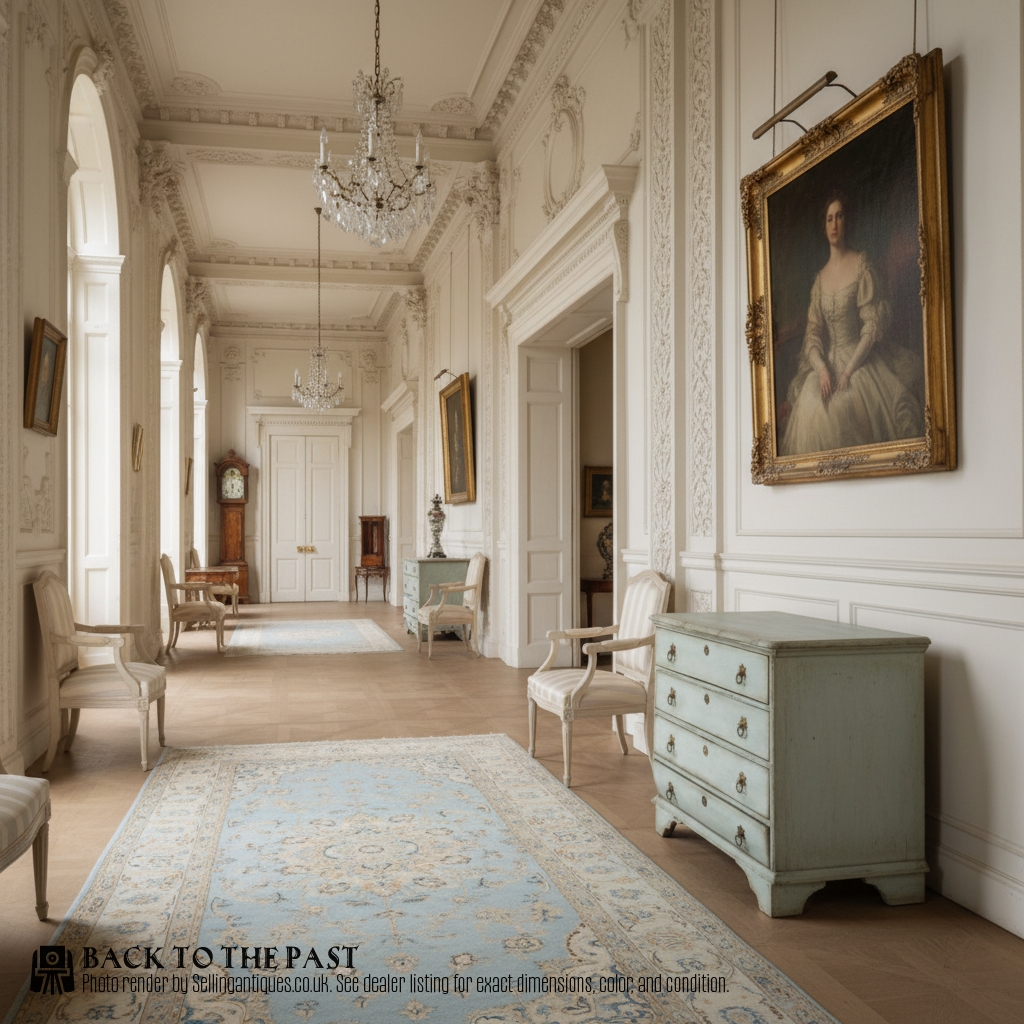
These chests suit bedrooms, hallways, and living spaces where surface colour and storage are required. Their painted finishes work well against neutral walls.
Ensure the dimensions suit your floor space, particularly with larger commodes and bombe shapes.
How do I clean painted wood?
Dust gently with a soft, dry cloth to protect the painted and gesso surfaces. Avoid harsh chemical cleaners that can damage historic paint.
Wax or polish should only be used if the specific finish allows it safely.
What is a marriage chest?
A marriage chest was traditionally commissioned or given to mark a wedding, often featuring personalised painted details. These pieces served to hold household linens and dowry items.
They represent a specific subset of decorated regional storage.
How do I identify a serpentine front?
Look at the front elevation of the chest to see if the wood curves in a continuous wave. A true serpentine moves outward in the middle and inward towards the edges.
This contour distinguishes more elaborate commodes from flat fronted examples.