





Dutch Painted Commode
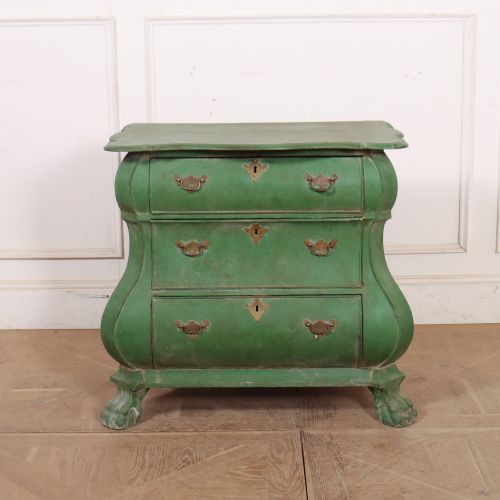
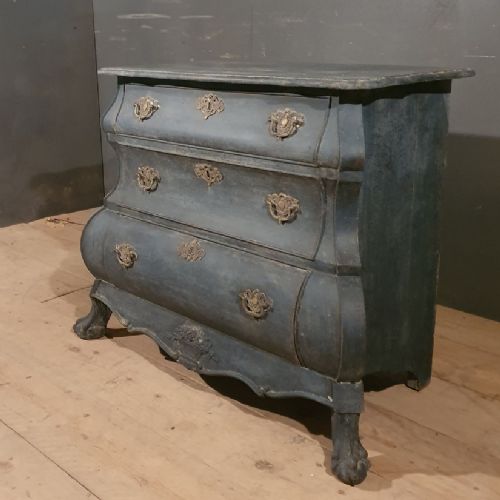
A Dutch painted commode brings substantial continental presence to a room, offering deep drawers and striking surface decoration.

Dutch Painted Commode
When you search for a dutch painted commode, you encounter substantial storage furniture originating from the Netherlands, primarily taking the form of chests of drawers and commodes. These pieces span the eighteenth and nineteenth centuries, taking shape through periods defined by Dutch Rococo, Baroque, and Neoclassical design principles.
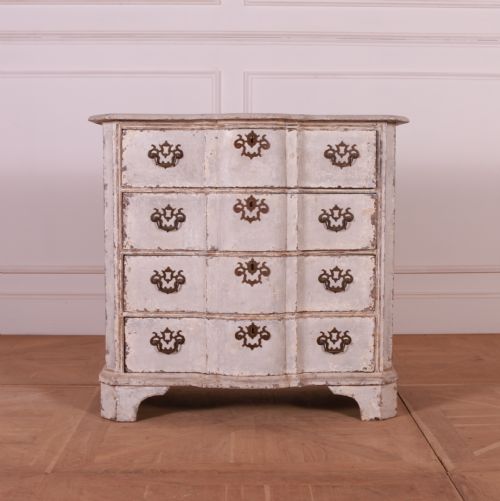
The versions most frequently met on this page include serpentine fronts, breakfronts, and pronounced bombe profiles constructed in timber. Alongside standard chests of drawers, related cupboard forms occasionally appear in painted pine and other woods.
Makers and craftsmen utilised regional aesthetic shifts, moving from ornate Baroque curves toward restrained Neoclassical lines while maintaining heavy proportions and distinctive painted surface finishes.
How they were made
Carpenters constructed these carcasses from sturdy timbers such as oak and pine, forming the foundational framework for the drawers and curved bodies. Artisans then applied layers of paint to the wooden surfaces, sometimes incorporating decorative schemes that mimic more expensive materials like marble.
Metal hardware including brass and iron handles, escutcheons, and pulls completed the assembly, fastened securely to the drawer fronts. The fabrication process required specialist joinery to achieve the sweeping contours seen in bombe and serpentine commodes.
Dutch Painted Commode Retail Price Guide 2026
Typical asking prices for dutch painted commode among the pieces listed under this phrase on Sellingantiques today, from the lower quarter to the upper quarter. They describe what is for sale here now, not the wider market.
Listings for this phrase include pieces from the eighteenth and nineteenth centuries, built from oak, pine, and painted timber with brass and iron hardware.
What varies in quality
The standard of execution in the painted decoration dictates much of the distinction between individual pieces, with finer examples displaying sophisticated brushwork and well-preserved motifs. Structural sophistication also separates simple regional chests from ambitious bombe or breakfront forms requiring advanced timber shaping.
Originality of surface finish and hardware plays a major role in the overall integrity of the piece, as later repainting alters the historic character. The treatment of timber joints and the weight of the underlying oak or pine define the underlying build quality.
The Dutch Painted Commode Glossary
- Bombe
- A bulging or swelling contour found on the front and sides of furniture, particularly popular in eighteenth-century Dutch design. This undulating profile requires skilled timber shaping.
- Serpentine
- A curved line curving outward at the ends and inward in the centre, creating a gentle wave effect along the front of the chest. It adds movement to case pieces.
- Breakfront
- A piece of furniture whose central section projects forward from the flanking sections. This architectural arrangement creates depth and shadow across the facade.
- Commode
- A low chest of drawers designed for domestic storage, often standing on short legs or feet. The form developed significantly in continental Europe during the eighteenth century.
- Neoclassical
- A style reflecting classical antiquity characterised by straight lines, symmetry, and restrained ornament. It succeeded the more exuberant Rococo and Baroque periods.
Dutch Painted Commode: Frequently Asked Questions
What is a dutch painted commode?
A dutch painted commode is a continental chest of drawers featuring a painted wooden surface, often shaped with a bombe or serpentine profile.
These pieces date primarily from the eighteenth and nineteenth centuries and reflect various regional styles including Rococo and Neoclassical.
How were they used historically?
These chests served primarily for storing clothing, linens, and personal valuables within domestic bedchambers and formal reception rooms.
Their substantial storage capacity made them central furniture items in European homes during the eighteenth and nineteenth centuries.
How do I live with a painted commode?
Integrating one into a modern interior involves placing it against a substantial wall where its painted finish and curved silhouette can be appreciated.
Keep the piece away from direct sunlight and excessive humidity to protect the historic timber and painted decoration.
How do I tell periods apart?
Earlier eighteenth-century pieces often exhibit exuberant Rococo or Baroque curves, while nineteenth-century examples may display tighter proportions or later stylistic revivals.
Examining the underlying timber construction and the character of the paint layers helps clarify the age of the piece.