

Delftware Ceramic Charger
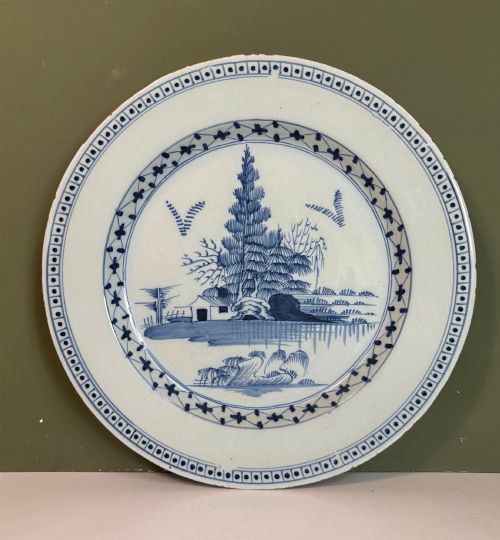
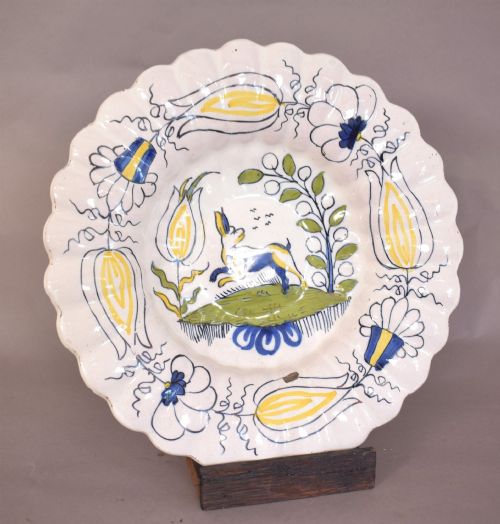
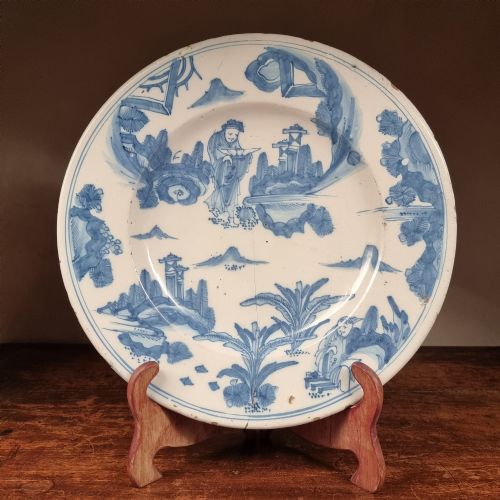
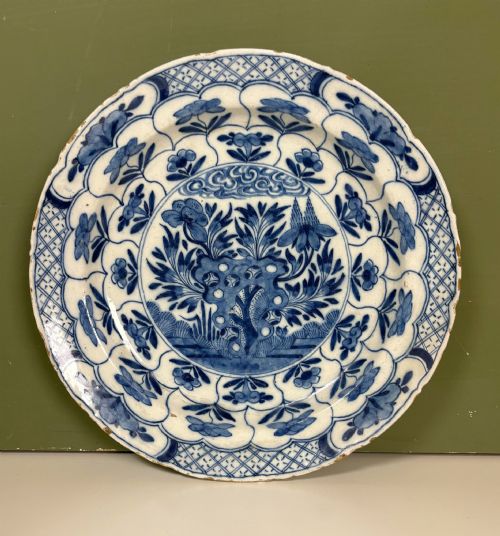
A delftware ceramic charger offers a wide tin-glazed surface of hand-painted blue and white or polychrome ornament from past centuries.
Delftware Ceramic Charger
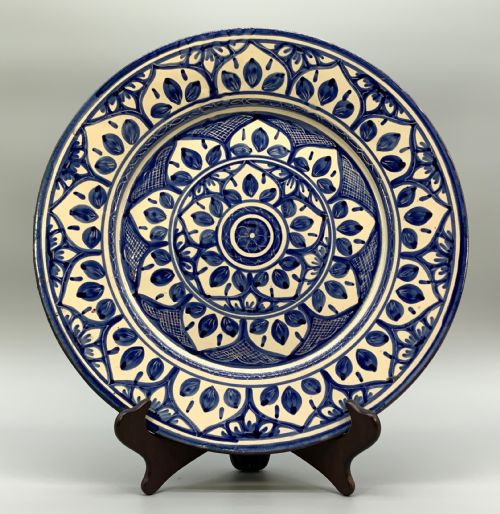
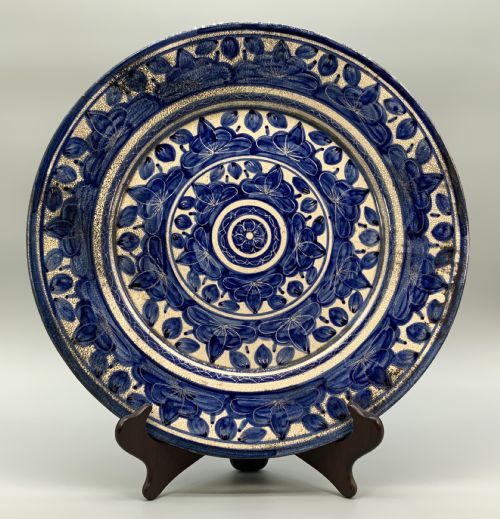
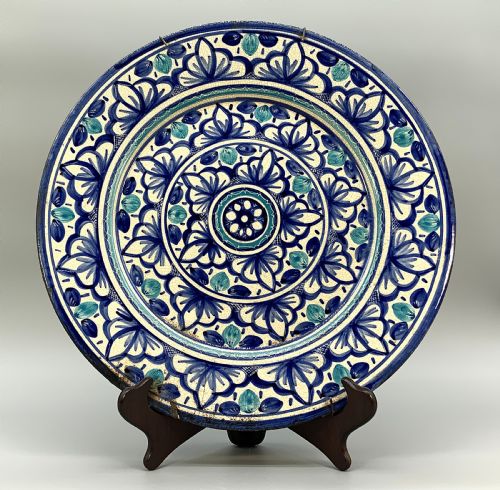
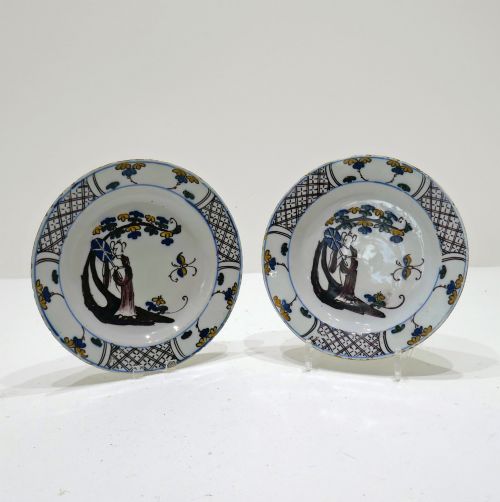
A delftware ceramic charger is a large decorative plate or dish intended for display on walls or sideboards rather than everyday table use. The examples found here span the seventeenth and eighteenth centuries, alongside continental interpretations and later twentieth-century pieces.
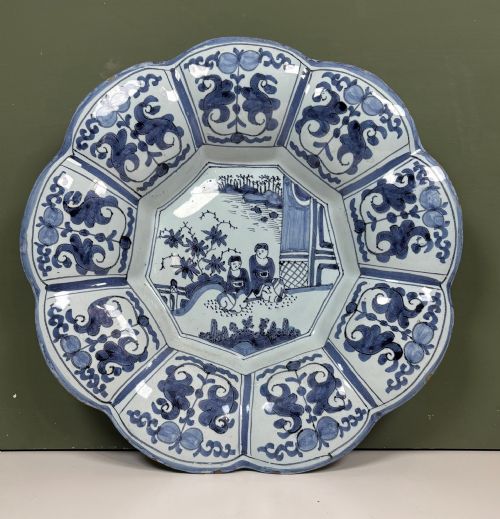
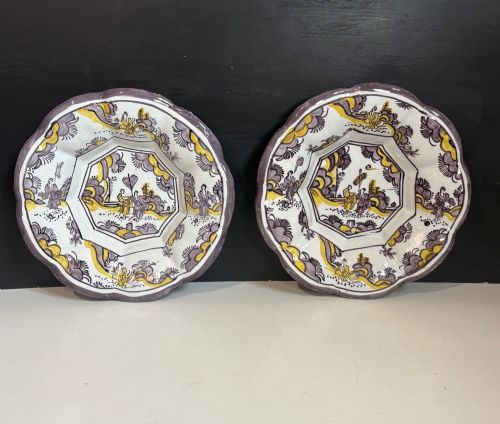
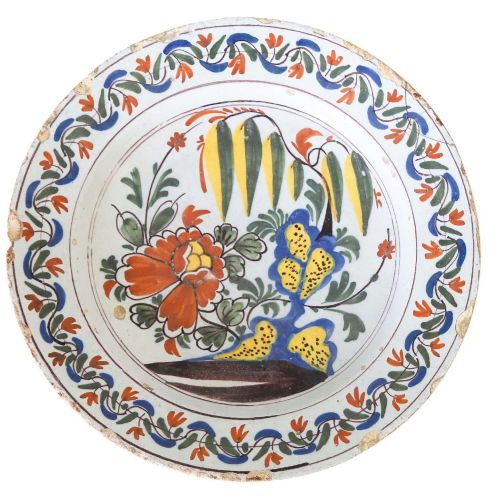
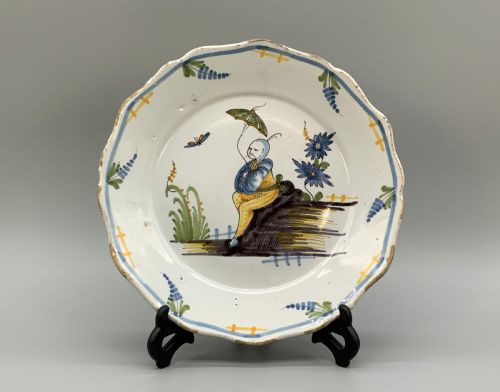
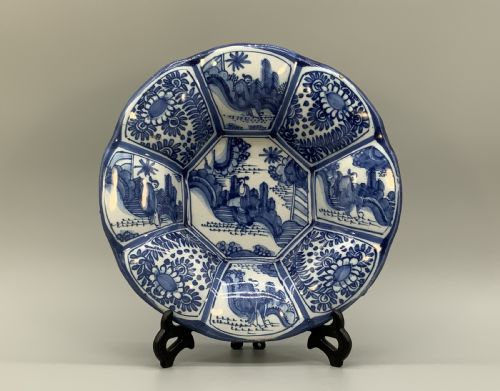
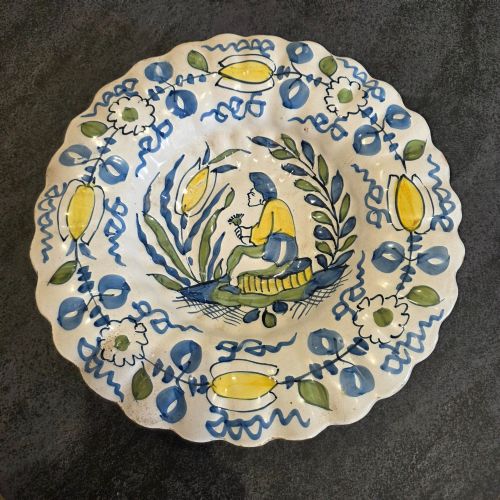
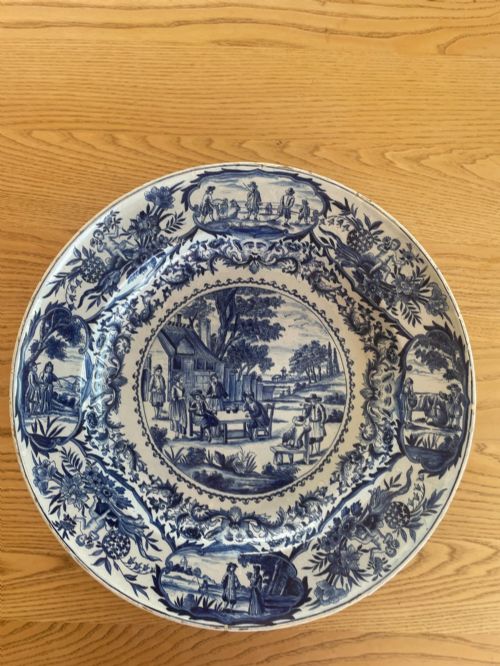
Dutch and English workshops dominate the selections, producing broad circular vessels adorned with floral motifs, geometric patterns, and figural scenes. Pieces range from simple blue and white interpretations to vibrant polychrome and manganese compositions.
The larger formats often display deep wells and wide rims, providing a substantial canvas for the painter. Collectors frequently encounter bowls, lobed dishes, and marriage plates alongside standard flat chargers.
Materials and Construction
Potters shaped earthenware bodies on the wheel or pressed them into moulds before applying an opaque tin glaze that fused into a smooth white surface during firing. This tin-glazed ground provided an absorbent base for cobalt pigment, manganese, and other metallic oxides applied by hand.
Painters executed designs directly onto the raw glaze, requiring immense skill because the porous surface absorbed the pigment instantly without allowing for correction. Finished pieces underwent a high-temperature kiln firing that set the mineral colours into the glassy coating.
Some seventeenth-century marriage plates recorded nuptial unions with permanent blue strokes, predating modern certificate framing by centuries.
Judging Quality in Delftware
Quality rests upon the crispness of the brushwork and the complexity of the painted composition, where confident, fluid lines distinguish superior artisan output from rigid execution. The brilliance and evenness of the tin glaze also determine visual success, free from excessive pitting or dull patches.
The sophistication of the palette plays a major role, whether evaluating the depth of cobalt blue or the careful balance of multi-colour polychrome and manganese tones. Structural integrity matters equally, as survival across centuries without extensive restoration marks the better-preserved specimens.
The Delftware Ceramic Charger Glossary
- Tin-Glazed Earthenware
- Pottery covered in a white lead glaze rendered opaque by the addition of tin oxide. This coating forms the characteristic milky background for painted decoration.
- Polychrome
- Decoration employing multiple colours rather than a single pigment. On these dishes, palette combinations frequently include green, yellow, orange, and blue.
- Kraak Style
- A decorative layout originating from Chinese porcelain exports, characterised by segmented panels radiating around a central motif. Dutch potters adopted this compartmentalised arrangement extensively.
- Manganese
- A metallic oxide utilised in ceramics to produce rich purple, brown, or plum tones. It appears often in seventeenth and eighteenth-century palettes.
- Grand Feu
- A high-temperature kiln firing technique that fuses pigments directly into the raw glaze. This method creates a glossy finish where colours melt softly into the white ground.
Delftware Ceramic Charger: Frequently Asked Questions
How were delftware chargers used originally?
These large dishes served primarily as decorative wall hangings or display pieces on sideboards rather than functional tableware. Wealthy households used them to showcase fashionable designs and colourful imported styles.
Over time, their fragile tin-glazed surfaces made them increasingly unsuited for heavy dining use, shifting their purpose entirely toward interior ornamentation.
How can I tell English delft from Dutch delft?
Distinguishing between English and Dutch production often relies on subtle variations in clay bodies, glaze consistency, and regional painting styles. English workshops frequently utilised a softer, chalkier earthenware body.
Dutch pieces often display crisper cobalt painting influenced closely by Chinese porcelain imports, though considerable overlap exists due to migrating artisans.
How do I care for an antique charger?
Displaying these ceramic pieces requires secure wall mountings or stable plate stands designed to support their considerable weight. Keeping them away from direct sunlight protects the painted mineral pigments from fading.
Cleaning should involve only a soft, dry cloth, avoiding water or chemical detergents that might penetrate old glaze cracks.