


Deep Buttoned Leather Stool
A deep buttoned leather stool brings rich texture and traditional seating to a room, offering both practical comfort and enduring character.
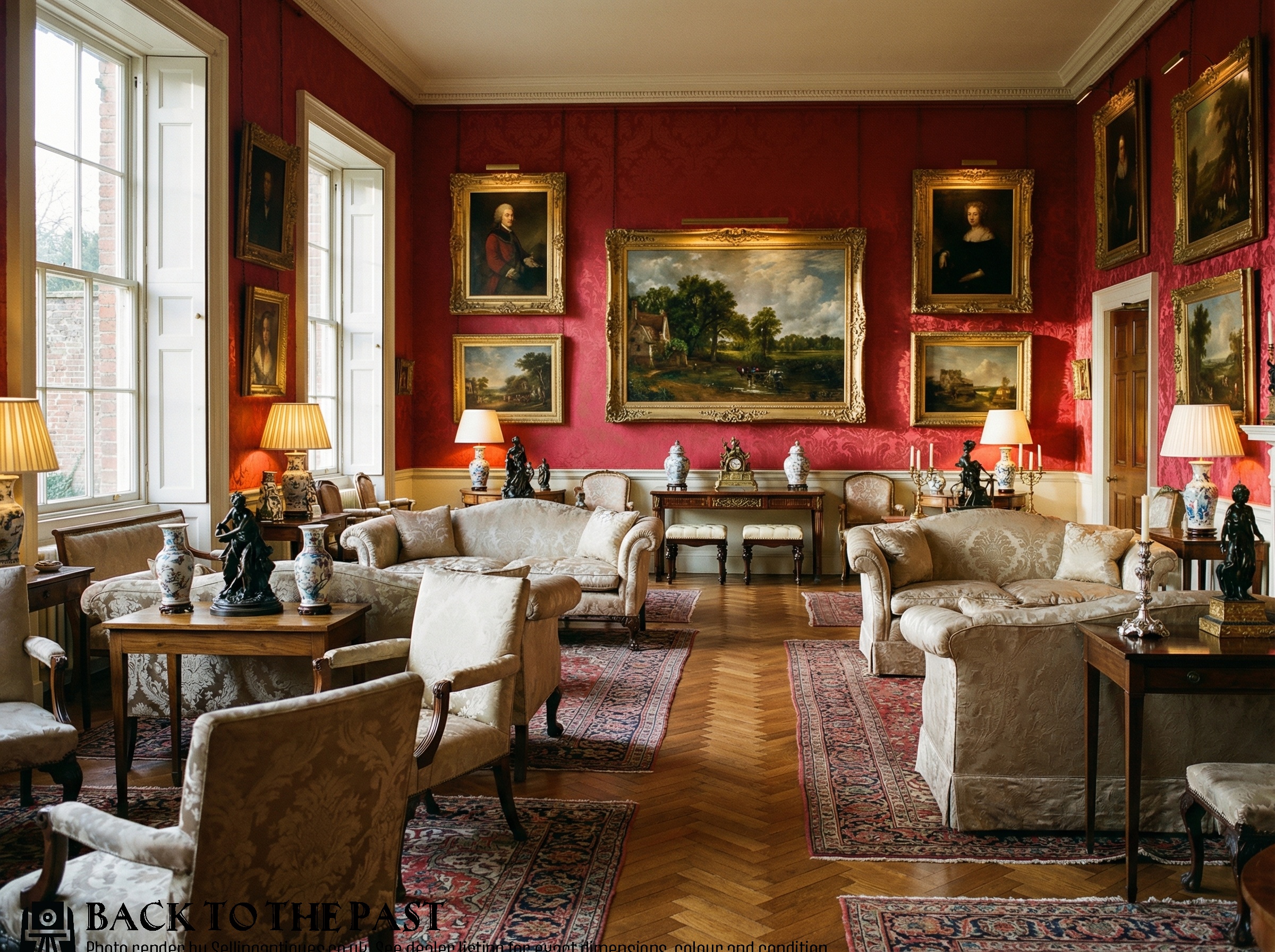
Deep Buttoned Leather Stool
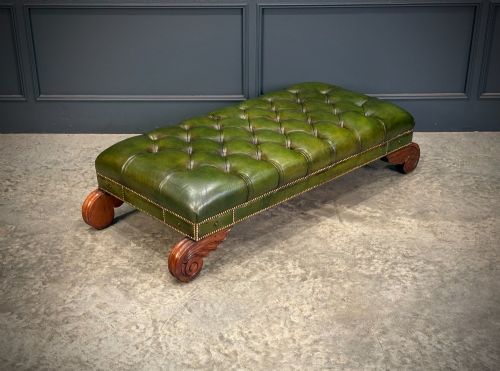
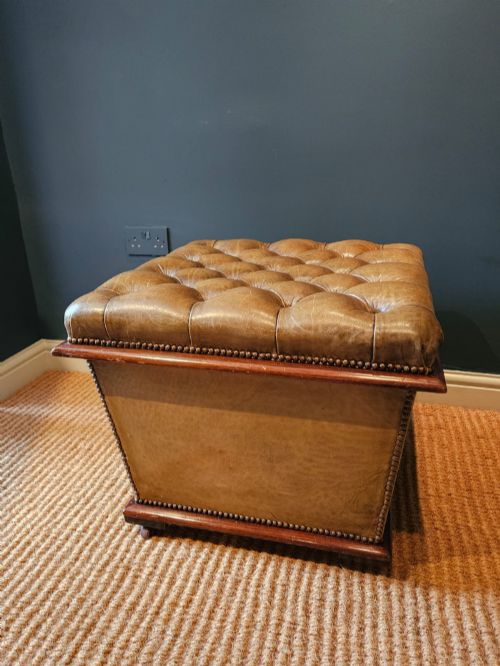
A deep buttoned leather stool is a sturdy and practical form of traditional seating, appearing primarily as footstools, ottomans, and library window seats across this selection. These pieces date predominantly from the Victorian period and the nineteenth century, alongside Edwardian examples and pieces referencing Regency and George III styles.
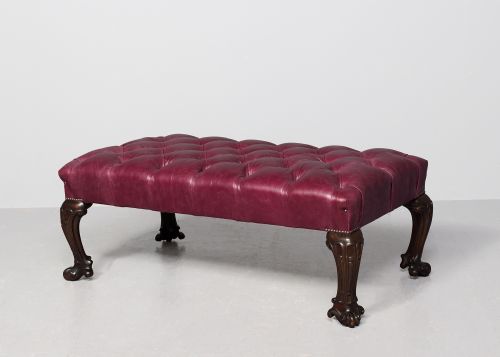
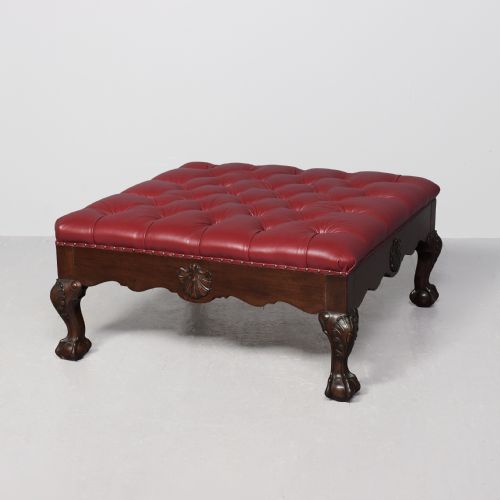
The common form combines a padded top with recessed tufting and a low wooden base, designed either for resting feet or for use as a centre stool in a country house library. Larger proportions and low profiles dominate the inventory, frequently paired with mahogany, walnut, or oak frames.
How they were made
Makers constructed the frames using traditional timbers such as mahogany, walnut, oak, and general hardwoods, often shaping them with cabriole legs or straight supports in the style of earlier periods. These structural elements provide the sturdy foundation necessary to support heavy upholstery and daily use.
The top surface relies on skilled upholstery techniques, securing hide over deep padding with tight buttoning to create the characteristic indented pattern. Brass studs frequently finish the edges, anchoring the leather firmly to the wooden framework.
Several generous nineteenth-century examples arrive ready for library service, complete with enough buttoned hide to accommodate tired feet and heavy volumes alike.
What varies in quality
Quality rests significantly on the depth and execution of the tufting, where tighter, more precise folds create a sharper diamond pattern across the hide. The choice of timber also dictates the tier, with finely grained mahogany and walnut frames sitting above simpler oak or mixed wood structures.
The condition and grade of the leather itself define the upper end of the range, particularly where hand-dyed hides show rich patination rather than flat surface colour. Proportion matters too, as exceptionally large country house pieces and matched pairs command greater presence than standard single footstools.
James Shoolbred
The Deep Buttoned Leather Stool Glossary
- Cabriole leg
- A furniture leg that curves outward at the knee and tapers inward toward the ankle, ending in a pad or foot. This shape became popular during the eighteenth century and saw frequent revival in Victorian cabinet making.
- Centre stool
- A large, freestanding stool designed to sit in the middle of a room rather than against a wall. These pieces often function as low tables or generous footrests in traditional libraries and drawing rooms.
- Hide
- The natural untanned or tanned skin of a large animal used for upholstery. In these pieces, leather hide provides a durable surface that develops a rich sheen over decades of use.
- Ottoman
- A low, upholstered seat or footstool without a back or arms. Nineteenth-century examples often feature deep buttoning across a broad top surface.
- Tufting
- A method of upholstery where buttons or stitches are pulled deep through the padding and secured to the frame. This technique creates geometric indentations that hold the filling firmly in place.
Deep Buttoned Leather Stool: Frequently Asked Questions
How do I clean the leather?
Dust the surface regularly with a soft, dry cloth to prevent grit from settling into the creases of the buttoning. Apply a specialised leather conditioner periodically to keep the hide supple and prevent cracking.
Avoid using harsh chemical detergents or excess water, as these can strip the natural oils and damage the antique finish. Professional restoration is recommended if the leather shows deep dryness or structural tearing.
Can I use a stool as a coffee table?
Many large nineteenth-century examples function well as coffee tables when paired with a sturdy tray to hold drinks and books. The flat, firm surface provided by deep buttoning supports everyday living room items securely.
Ensure the height matches your surrounding seating and protect the leather from direct heat or moisture. Adapted pieces often serve this exact dual purpose in modern interiors.
How do I spot a Victorian piece?
Victorian examples often feature dark hardwoods like mahogany or walnut, paired with characteristic details such as cabriole legs or substantial turned supports. The upholstery generally employs deep buttoning with heavy leather hides.
Compare the timber colour and construction methods against documented nineteenth-century cabinet making standards. Subtle wear patterns on the feet and underside help confirm genuine age.
What is a window seat?
A window seat is a long, low stool or bench designed specifically to fit within the architectural recess of a bay or sash window. These pieces provide comfortable seating without obstructing natural light or views.
Nineteenth-century versions frequently incorporated buttoned leather upholstery and sturdy wooden frames to match library and drawing room furnishings.