

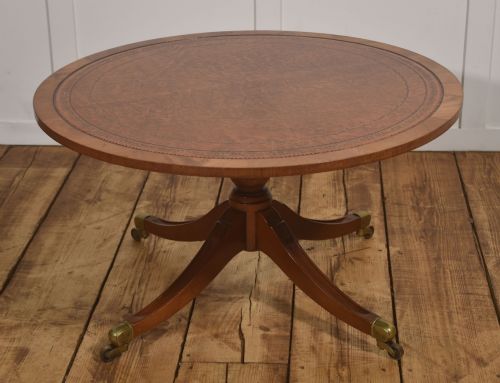
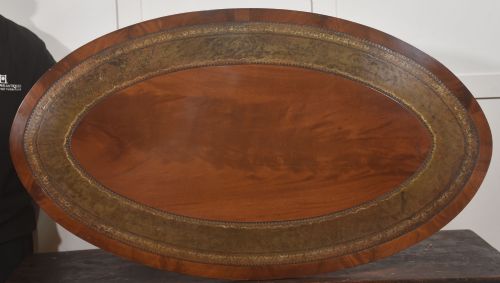
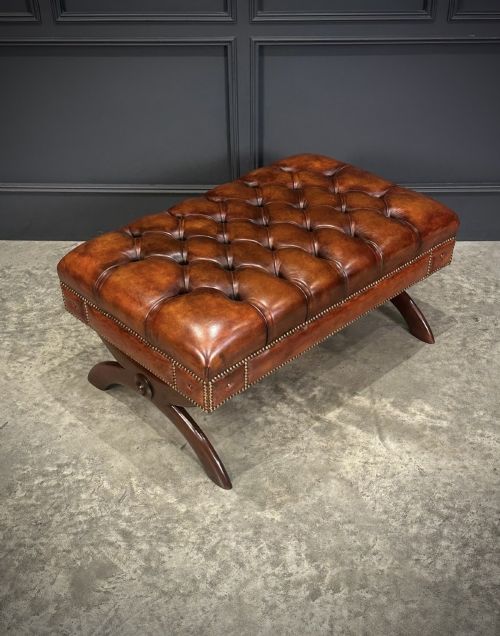
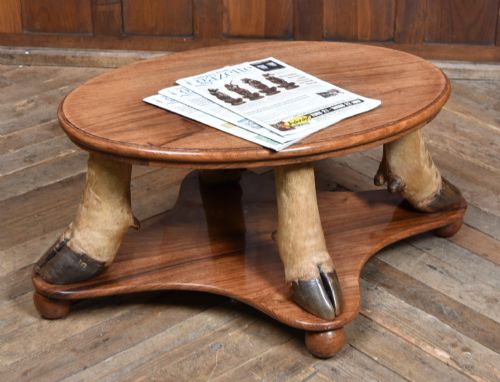


Leather Low Coffee Table
These leather low coffee table pieces combine sturdy timber frames with durable hides, offering practical surfaces for daily use.
Leather Low Coffee Table
A leather low coffee table brings together traditional timber frames and bound or upholstered surfaces designed for everyday use in a reception room. These items often originate from periods spanning the Georgian era through the Victorian years and into the early twentieth century.
The selections on this page include mahogany, oak, and walnut structures alongside footstools, ottomans, and low centre tables adapted for modern living. Many examples draw on military campaign designs, featuring compact proportions and robust hardware.
Buyers frequently encounter round, oval, and rectangular formats finished with tooled or hand-dyed hides. Each iteration provides a low profile surface suited to traditional and period interiors.
How they were made
Construction relies on dense hardwoods such as mahogany, oak, and walnut, providing stable foundations for heavy use. Carpenters joined these timbers using traditional framing methods to ensure longevity across decades.
Surfaces feature leather upholstery or tooled hides, frequently secured with brass tacks or studs. Some pieces incorporate taxidermy elements and iron fixtures to achieve specific military or campaign aesthetic qualities.
Leather Low Coffee Table Retail Price Guide 2026
Typical asking prices for leather low coffee table among the pieces listed under this phrase on Sellingantiques today, from the lower quarter to the upper quarter. They describe what is for sale here now, not the wider market.
The listings include pieces spanning from the Georgian period through the Victorian era up to the 1930s, constructed in mahogany, oak, and walnut.
What varies in quality
Quality rests upon the selection of timber and the precision of the leatherwork applied to the top surface. Finer examples display carefully finished grains and neat hand-tooling that withstand regular contact without losing definition.
Structural integrity depends on the joinery within the frame and the quality of any brass or iron hardware fitted to the edges and legs. Superior pieces maintain stable proportions and balanced weight distribution across their low profiles.
The Leather Low Coffee Table Glossary
- Campaign furniture
- Portable items originally built for military officers on active service, typically featuring brass corners, recessed handles, and folding or dismantling frames. These pieces prioritize durability and compact storage.
- Tooled leather
- Hide decorated by pressing heated metal tools into the surface to create repetitive patterns or borders. This technique adds texture and visual depth to the table top.
- Footstool
- A low upholstered seat used to support the feet, often converted or utilised as a low coffee table in contemporary interiors. They feature padded tops covered in buttoned or plain leather.
- Mahogany
- A durable tropical hardwood valued for its reddish-brown colour and stable grain, frequently used in high-quality furniture across the eighteenth and nineteenth centuries.
- Taxidermy
- The art of preparing, stuffing, and mounting the skins of animals for display, occasionally incorporated into nineteenth-century furniture frames and supports.
Leather Low Coffee Table: Frequently Asked Questions
How do I choose the right size leather low coffee table?
Consider the proportions of your seating area and ensure adequate clearance around the edges for movement. Measure the height of your sofa seats to find a balanced surface level.
Rectangular and oval formats suit longer seating arrangements, whereas circular versions fit well in more compact rooms.
Were these tables originally made as coffee tables?
Many low tables originated as footstools, ottomans, or low centre tables before being adapted for modern living spaces. Campaign tables were initially built for transport during military campaigns.
These varied origins account for the diverse heights and structural details found across the available examples.
How do I care for antique leather table tops?
Maintain the hide by applying appropriate leather conditioners periodically to prevent drying and cracking. Avoid placing hot items or liquids directly onto the untreated surface.
Dust the timber frames regularly with a soft cloth to preserve the finish of the wood.
What periods do these low tables come from?
The listings span several eras, including the Georgian period, the Victorian age, and early twentieth-century decades up to the 1930s. Each era contributes distinct stylistic markers.
Victorian and Edwardian examples often feature buttoned upholstery and turned wooden legs.