


Traditional Leather Footstool
These traditional leather footstool pieces offer honest craft and rich hides, grounding a room with genuine period character.
Traditional Leather Footstool
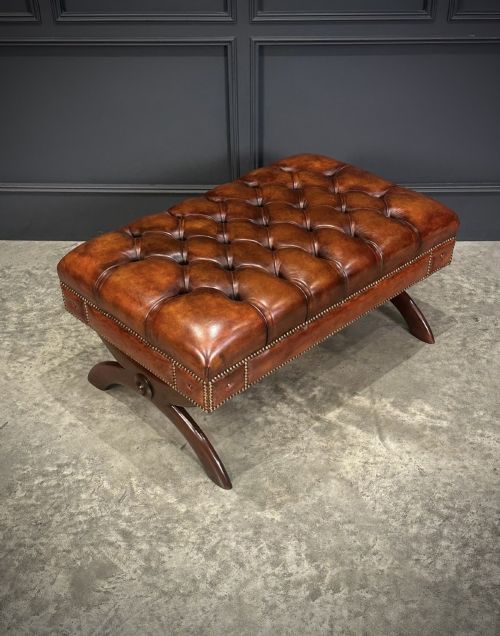
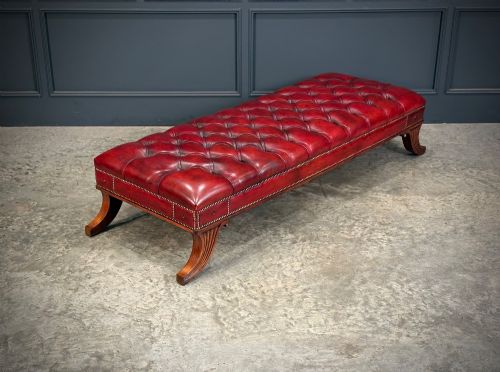
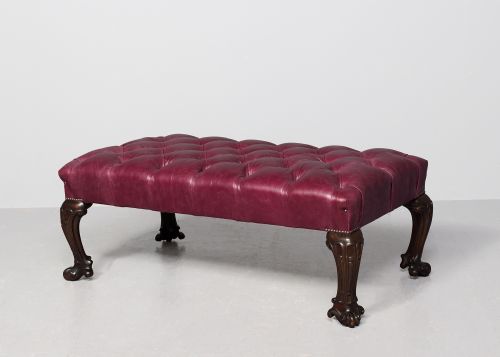
When you search for a traditional leather footstool, you encounter low seating designed for resting feet or serving as centre stools in a room. The pieces on this page span the Victorian era, the Edwardian period, and the early twentieth century, showing periods like 1880, 1890, 1900, and 1920.
Forms include large ottomans, joint stools, and buttoned centre stools alongside paired wingback armchairs. You will most frequently meet mahogany-framed examples and red or oxblood hide upholstery across these listings.
Origins stretch from English country house designs to Georgian and Chippendale styles, as well as Jacobean revival interpretations. Each item brings specific period proportions and classic frame shapes to domestic spaces.
How they were made
Frames rely on sturdy timbers such as mahogany, oak, yew, and general hardwood, shaped into traditional joinery. Metal studs often secure the hide tightly to the wooden structure.
Upholstery involves hand-dyed leather and buttoned hide work, finished with careful padding. Artisans shaped these materials using established woodworking and trimming techniques.
Materials recorded on this page include mahogany, oak, yew, brass, and metal studs alongside leather.
What varies in quality
The refinement of the wooden frame separates simpler vernacular pieces from sophisticated revival work. Mahogany and yew frames with detailed carving or faithful Georgian styling demand closer attention than basic hardwood structures.
The depth and uniformity of the leather buttoning and the richness of the hand-dyed hide dictate visual appeal. Rich oxblood or red hides that age evenly show superior material selection by the maker.
The Traditional Leather Footstool Glossary
- Hide
- Animal skin prepared for upholstery. It provides a durable and supple covering that develops a distinct patina over decades of use.
- Joint stool
- An early form of wooden stool constructed with mortise and tenon joints. These sturdy seats preceded lighter upholstered forms and date back centuries.
- Buttoned
- An upholstery technique where twine pulls the leather deep into the padding to form dimples. This secures the filling and creates a formal quilted pattern.
- Centre stool
- A large freestanding stool designed to sit in the middle of a room rather than against a wall. They frequently feature generous proportions and buttoned leather tops.
- Oxblood
- A deep, dark red shade commonly found on vintage and antique leather furniture. It offers a rich alternative to standard brown leather.
Traditional Leather Footstool: Frequently Asked Questions
How do I use a traditional leather footstool at home?
These pieces serve primarily as footrests before armchairs or as central ottomans in a living space. Their sturdy frames also allow them to function as informal occasional seating when guests visit.
Position a large centre stool in the middle of a room to anchor the layout and provide a useful surface. Pairing them with wingback armchairs creates a cohesive traditional arrangement.
How can I tell a Victorian footstool from an Edwardian one?
Victorian pieces often display heavier mahogany frames with deep buttoning and rich red hide upholstery. They tend to reflect formal revival styles like Georgian or Jacobean influences.
Edwardian examples often lean towards lighter oak or alternative hardwoods, sometimes showing simpler joint structures. Reviewing the listed period and timber characteristics helps clarify the distinction.
What woods were used for these footstools?
Makers utilised a variety of timbers including mahogany, oak, yew, and general hardwood for the frames. Mahogany frequently appears in Georgian-style and Victorian pieces.
Yew wood and oak appear in vernacular or joint stool forms, offering distinct grain patterns and sturdy construction.
How do I care for antique leather upholstery?
Keep leather hides away from direct sunlight and heat sources to prevent the material from drying out. Regular gentle dusting preserves the surface finish.
Apply appropriate leather balms sparingly to maintain suppleness. Avoid harsh chemical cleaners that can strip the original hand-dyed colour.