


Antique Style Leather Ottoman
An antique style leather ottoman combines practical comfort with enduring character, offering a rich focal point for a traditional room.
Antique Style Leather Ottoman
When you search for an antique style leather ottoman, you encounter a variety of forms including footstools, long benches, and coffee table alternatives designed for traditional interiors. These pieces typically originate from the nineteenth and early twentieth centuries, spanning periods such as the Regency, Victorian, and Edwardian eras.
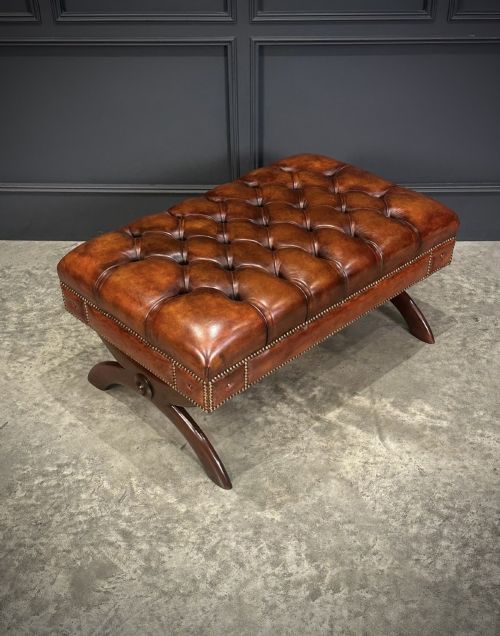
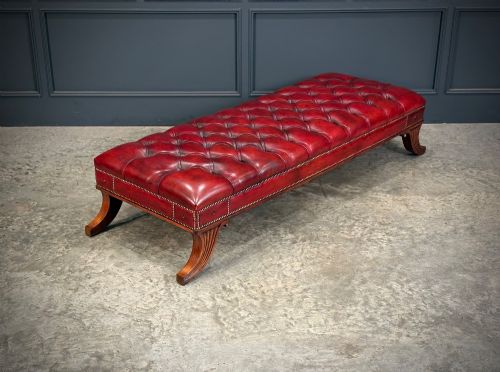
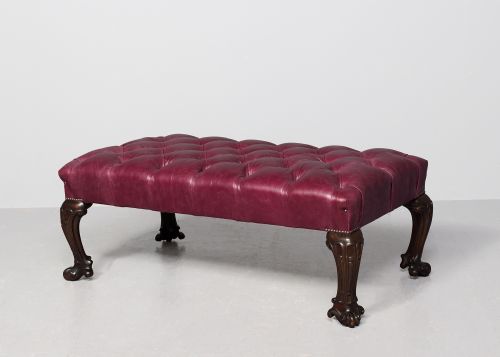
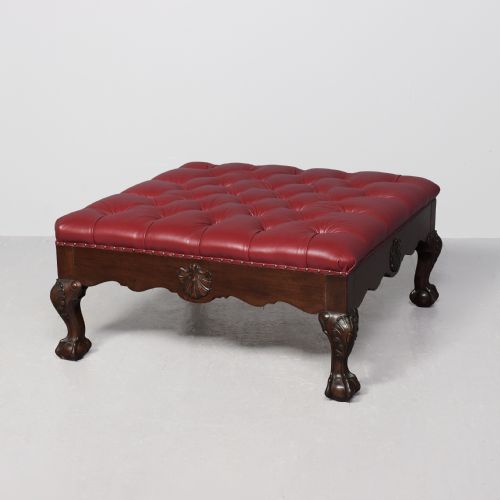
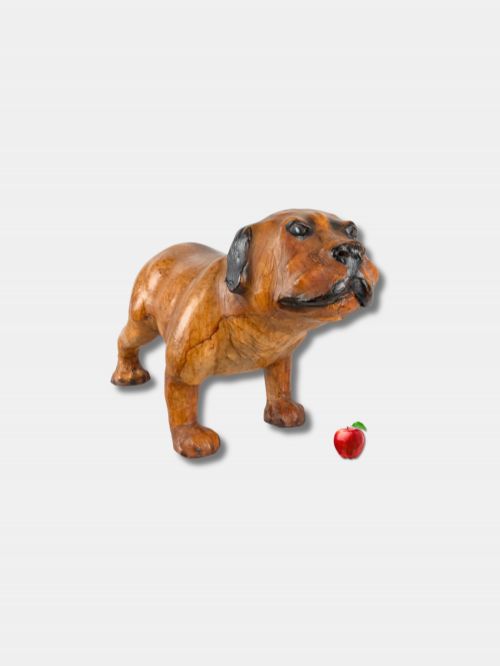
The version most frequently met on this page is the buttoned leather footstool or centre stool, often framed in mahogany, walnut, or oak. Examples range from compact gout stools to large country house benches and whimsical animal forms.
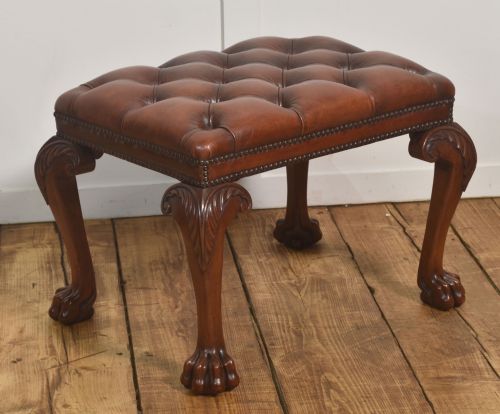
Makers and designers drew on historical revivals, producing pieces in the Chippendale style, Queen Anne style, and Carolean style. These sturdy items function equally well as low seats or resting surfaces in a living space.
How they were made
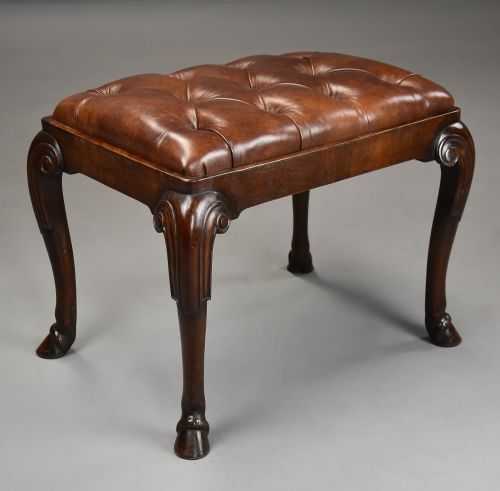
Makers constructed the supportive frames using dense timbers like mahogany, walnut, oak, and painted wood, joined to withstand heavy daily use. Turners shaped cabriole, fluted, and straightforward legs to suit the prevailing aesthetic of the period.
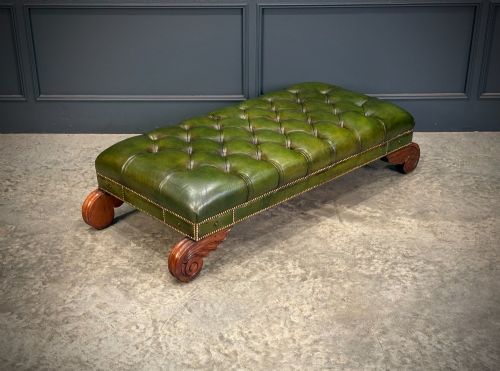
Upholsterers stretched hand-dyed, burgundy, tan brown, or green hide over stuffing, securing the surface with deep buttoning and occasional brass detailing. This leather top was fitted firmly to the wooden base, creating a durable and tactile finish.
Leather animal footstools bring a touch of the menagerie indoors, offering a robust seat disguised as a friendly hound.
What varies in quality
The distinction between tiers rests upon the density of the timber frame and the depth of the cabinetmaker's skill in shaping the legs and rails. Heavier woods and more complex carving signal a higher grade of manufacture.
Leather selection and the precision of the buttoning dictate the visual success of the piece. Hand-dyed hides that show natural variation and careful placement of upholstery tacks separate standard utility furniture from finer commissions.
Omersa For Liberty
The Antique Style Leather Ottoman Glossary
- Buttoned leather
- A method of upholstery where depressions are formed in the hide using tufting strings or buttons, creating a padded diamond pattern. This technique secures the internal stuffing and adds texture.
- Cabriole leg
- A furniture leg that curves out and then in, mimicking an animal's limb. It often terminates in a pad or claw foot.
- Gout stool
- A specialised adjustable footstool designed to elevate and support the foot of someone suffering from gout. These often feature a mechanical hinge to alter the angle.
- Centre stool
- A large freestanding stool intended to sit in the middle of a room or serve as a low table. They frequently feature substantial wooden frames and buttoned leather tops.
- Chippendale style
- A furniture design movement inspired by eighteenth-century cabinetmaker Thomas Chippendale, characterised by intricate carving and robust proportions.
Antique Style Leather Ottoman: Frequently Asked Questions
How do I use an ottoman as a coffee table?
Select a large centre stool with a firm, flat leather top to hold books and trays securely. Position it in the middle of the seating arrangement.
Ensure the height matches your existing sofas or chairs for comfortable access and visual balance.
What is the difference between a footstool and an ottoman?
Footstools are generally smaller items designed primarily to support the feet when sitting. Ottomans tend to be larger, sturdier, and capable of functioning as seats or tables in their own right.
Both categories utilise similar leather upholstery and wooden framing techniques across the historical periods.
How do I care for antique leather?
Keep the hide away from direct sunlight and heat sources to prevent the material from drying out. Clean gently with a dry or slightly damp cloth.
Apply suitable leather balms sparingly to maintain the suppleness of the surface over time.
How do I identify a Victorian leather stool?
Look for heavy walnut or oak frames combined with deep buttoned red or dark leather upholstery. These pieces often display robust turnings and substantial proportions typical of nineteenth-century rooms.
Construction details such as hand-cut screws and dense timber weight help confirm the era.