

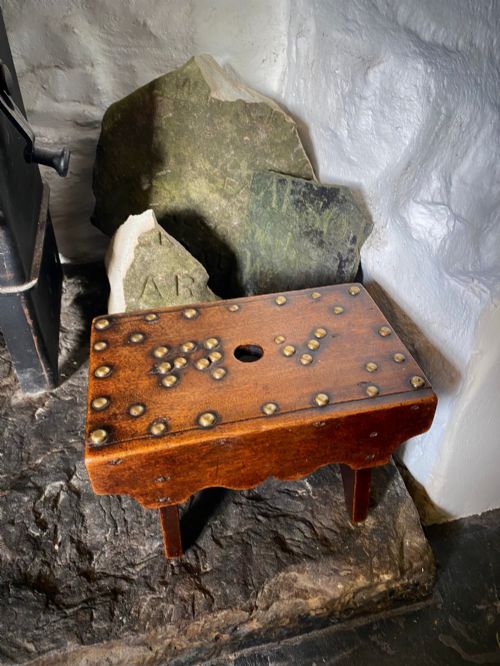
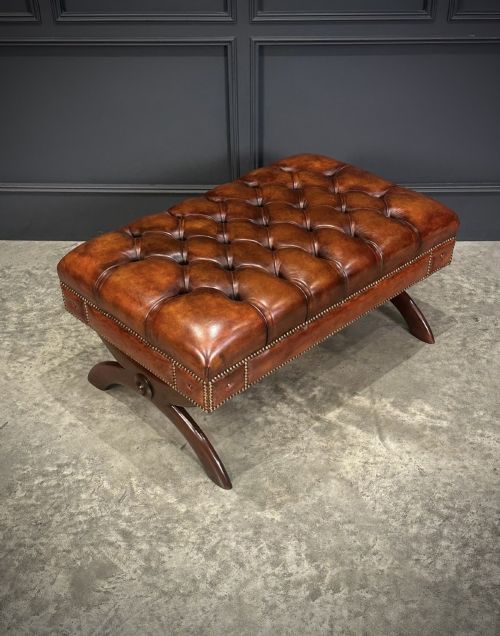
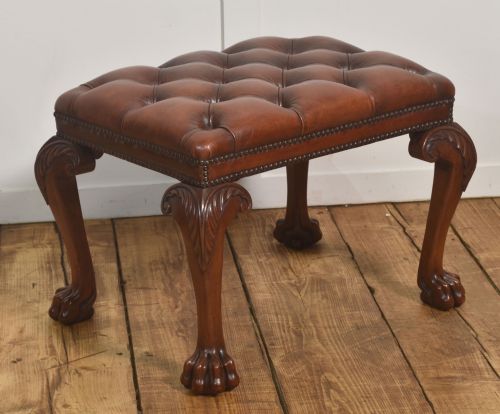
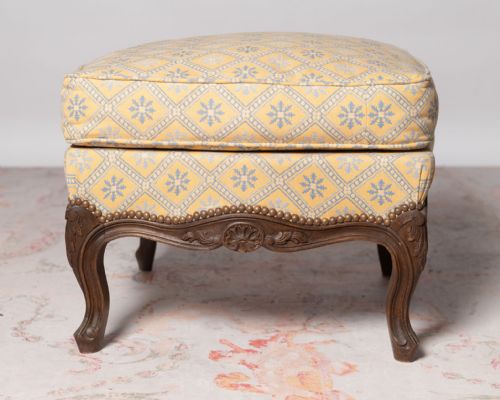


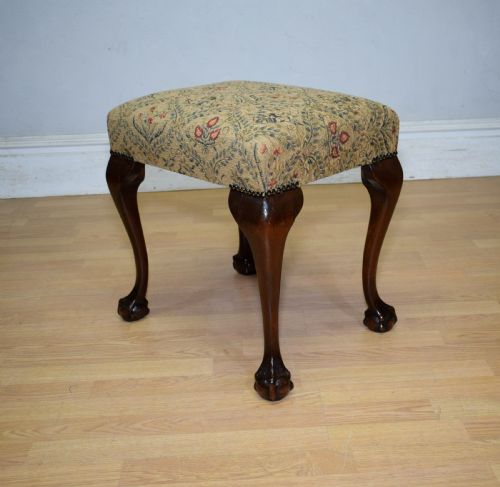


Brass Studded Footrest
These brass studded footrest pieces offer solid period construction and traditional seating comfort for any room.
Brass Studded Footrest
A brass studded footrest typically appears as a low stool, dressing table stool, or footstool designed for domestic comfort. These pieces serve as functional seating or leg supports in traditional interiors.
The selections available here span the Victorian, Edwardian, and early twentieth-century periods, alongside revival styles such as Chippendale and Regency. Most examples combine timber frames with upholstered tops secured by brass studs.
Makers from the nineteenth and early twentieth centuries produced these items in various forms, ranging from simple footstools to large upholstered dressing table stools and adjustable armchairs.
Materials and construction
Frames rely on hardwoods including mahogany, walnut, oak, and rosewood, shaped into cabriole legs, carved details, or X-frames. Joinery reflects traditional cabinet-making methods of the nineteenth and early twentieth centuries.
Brass Studded Footrest Retail Price Guide 2026
Typical asking prices for brass studded footrest among the pieces listed under this phrase on Sellingantiques today, from the lower quarter to the upper quarter. They describe what is for sale here now, not the wider market.
Some larger nineteenth-century examples feature concealed brass castors to help heavy walnut frames glide smoothly across thick parlour carpets.
Judging quality in these stools
Quality rests in the timber selection and the depth of carving on the frame, where finely carved mahogany or walnut demonstrates superior craftsmanship compared to plain woodwork. The weight and solidity of the frame dictate stability.
Upholstery finish also separates examples, particularly where hand-dyed buttoned leather and evenly spaced brass studs show careful attention to detail. The integration of functional elements like brass castors affects the overall standard.
The Brass Studded Footrest Glossary
- Cabriole leg
- A furniture leg that curves outward at the knee and tapers inward to an ankle, popular in Victorian and revival designs. This form draws inspiration from animal limbs.
- Buttoned leather
- Upholstery pulled tight and secured with recessed buttons to create a diamond pattern. This technique adds firmness and texture to the top of the stool.
- X-framed
- A base construction formed by two intersecting diagonal members shaped like the letter X. This structural style provides robust support for stools and benches.
- Castor
- A small wheel fitted to the base of a leg to allow easy movement. These are typically made of brass on nineteenth-century seating.
- Chippendale style
- A revival design drawing on eighteenth-century motifs featuring carved woodwork and ornate detailing. Pieces in this style often incorporate rich mahogany.
Brass Studded Footrest: Frequently Asked Questions
What is a brass studded footrest?
A brass studded footrest is a low upholstered stool or footstool finished with decorative brass nails along the border. These items were used in period sitting rooms and dressing areas.
They provide a stable surface for resting feet or low seating near dressing tables and armchairs.
How do I date a footstool?
Dating relies on identifying the timber used, the framing style, and upholstery methods. Victorian and Edwardian examples often feature specific leg shapes and hardware.
Reference points include the presence of mahogany or walnut frames and the application of buttoned leather.
Where were these stools used?
These pieces functioned primarily in Victorian and Edwardian parlours, bedrooms, and dressing rooms. They accompanied armchairs, dressing tables, and fireplace seating.
Their compact size allowed them to move easily around domestic living spaces as needed.
How do I care for leather upholstery?
Leather surfaces benefit from periodic cleaning and conditioning to maintain flexibility and colour. Avoiding direct sunlight prevents the hide from drying out.
Brass studs can be dusted gently to preserve their finish without disturbing the surrounding leather.