



Leather Upholstered Ottoman
A leather upholstered ottoman provides sturdy seating and foot support, bringing traditional comfort and rich hides to period interiors.
Leather Upholstered Ottoman
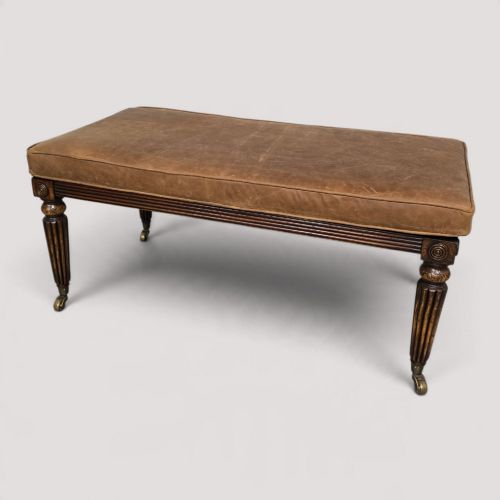
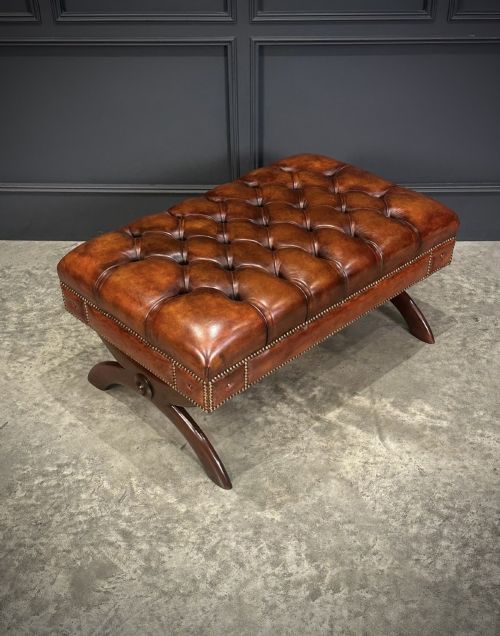
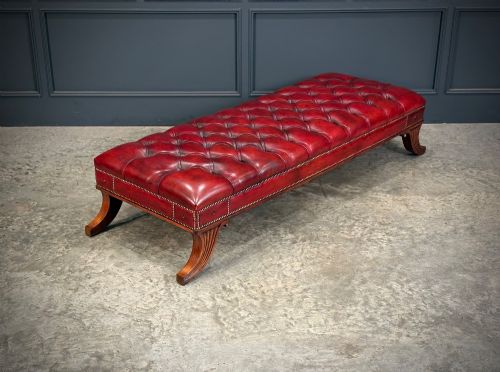
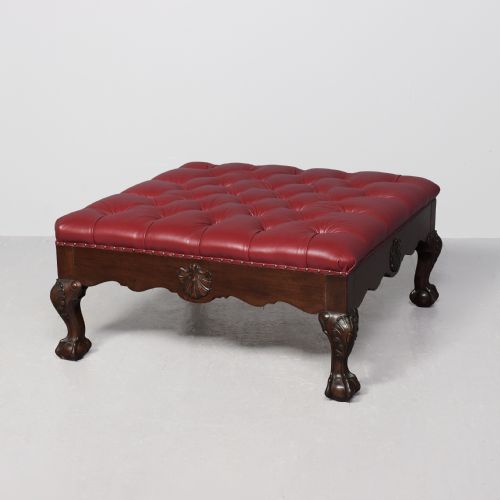
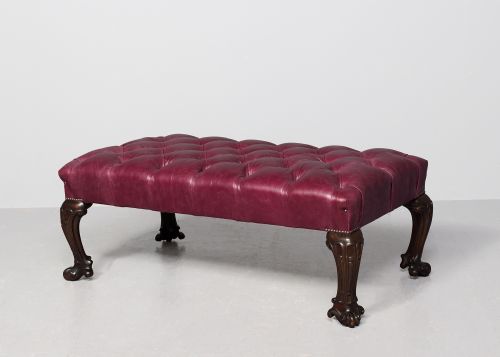
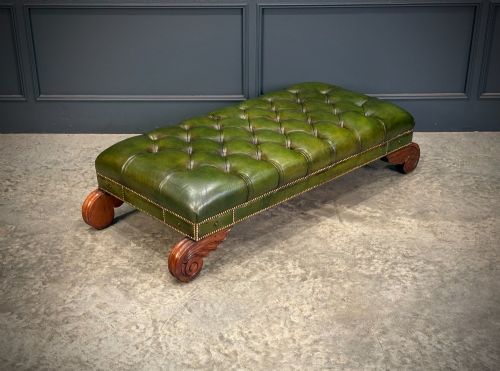
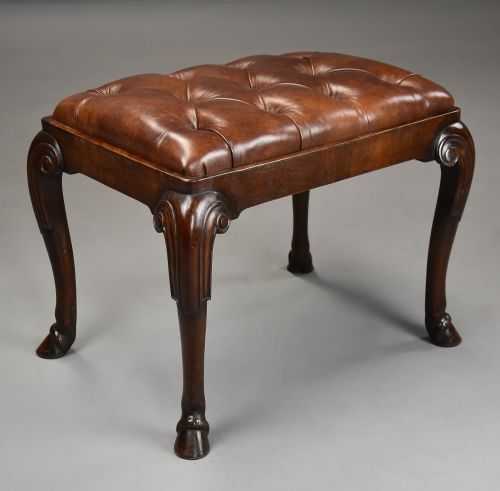
A leather upholstered ottoman encompasses a diverse selection of low seating, including footstools, long benches, window seats, and blanket boxes. These pieces emerge across several centuries, spanning the Georgian, Regency, Victorian, and Edwardian eras.
The selections on this page range from compact footstools to large library window stools and box ottomans. Buyers encounter substantial mahogany frames, walnut supports, and rosewood constructions shaped by various revival movements.
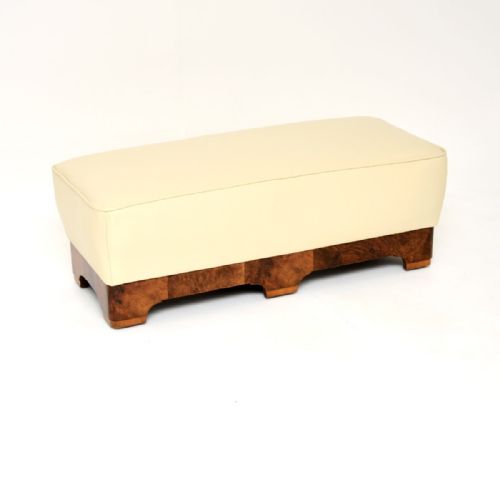
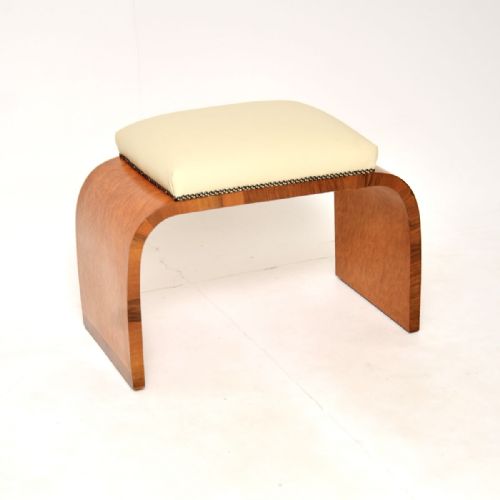
Stately Georgian and Regency styles sit alongside ornate Victorian designs and streamlined Art Deco pieces. Each object serves a dual purpose as a functional seat and a decorative low table or footrest.
Materials and construction methods
Frames rely on dense hardwoods such as mahogany, walnut, rosewood, birch, and burr walnut. Skilled cabinetmakers shaped these timbers into fluted legs, cabriole supports, and sturdy box structures.
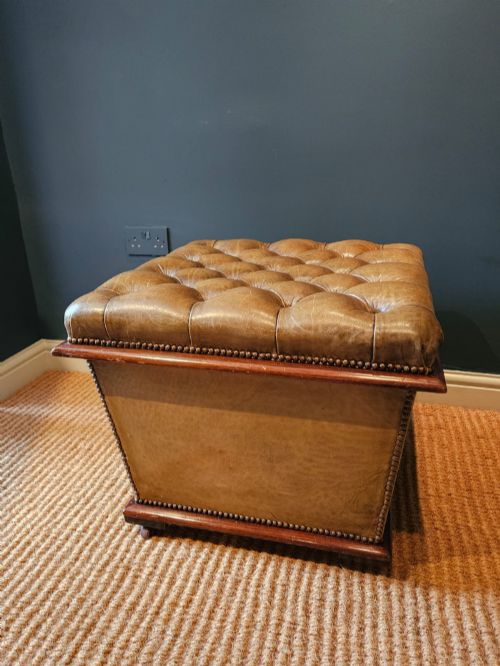
Upholstery techniques involve durable leather, hide, and coloured leathers secured with brass studding. Traditional buttoning provides structural tension across the padded surfaces while creating distinct geometric patterns.
Leather Upholstered Ottoman Retail Price Guide 2026
Typical asking prices for leather upholstered ottoman among the pieces listed under this phrase on Sellingantiques today, from the lower quarter to the upper quarter. They describe what is for sale here now, not the wider market.
Listings feature mahogany, walnut, rosewood, and birch frames paired with traditional buttoned leather and brass studding.
Distinctions in craftsmanship and finish
Evaluation rests upon the selection of timber and the precision of the frame joinery. Dense hardwoods and intricate carved details distinguish finer examples from simpler constructions.
The depth of the buttoning, the suppleness of the hand-dyed or coloured hide, and the alignment of brass studs dictate the overall refinement of the upholstered top.
James Shoolbred
The Leather Upholstered Ottoman Glossary
- Ottoman
- A low upholstered seat or bench without a back or arms, often featuring internal storage or a deep buttoned top.
- Buttoning
- An upholstery technique where twine pulls the leather tight into sunken pleats, securing the internal stuffing and creating a padded surface.
- Cabriole leg
- A furniture leg that curves outward at the knee and inward at the ankle, commonly seen on Queen Anne and Georgian pieces.
- Hide
- The natural animal skin used for heavy-duty upholstery, prized for its durability and rich surface texture.
- Box ottoman
- A low seating form featuring a hinged or lift-off lid that conceals an internal compartment for blankets or storage.
Leather Upholstered Ottoman: Frequently Asked Questions
How do I use a leather ottoman?
These pieces function primarily as footrests, extra seats near windows, or low tables in libraries and living spaces. Some forms include internal storage compartments for blankets and household items.
Position them before sofas or against walls to introduce rich textures and warm wood tones into a room scheme.
What periods do these ottomans represent?
The pieces span from the George III and Regency periods through the Victorian era into the Edwardian years and Art Deco times. Each era brings distinct wood choices and frame silhouettes.
Revival styles such as Chippendale and Queen Anne also appear among the selections.
How do I care for leather upholstery?
Maintain the surface by dusting regularly with a soft cloth and avoiding direct sunlight or intense heat sources that dry out natural hide. Conditioning treatments help preserve the suppleness of older leather over time.
Protect the material from sharp objects and excessive moisture to keep the surface intact.
How do I identify a Regency ottoman?
Regency examples often feature rosewood or mahogany timbers combined with clean architectural lines, fluted legs, or brass stud detailing. They frequently take the form of long benches or box ottomans.
Proportions tend to be balanced and classical, reflecting the early nineteenth-century design ethos.