

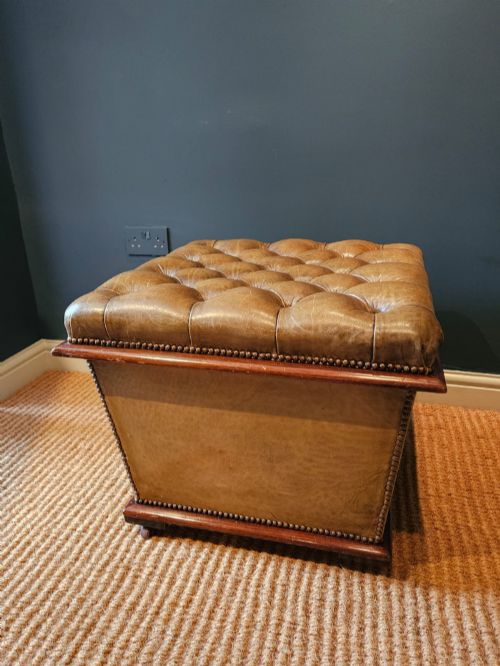


Chesterfield Footstool
A Chesterfield footstool brings low-slung, buttoned comfort to a room, offering deep leather padding and solid timber framing.
Chesterfield Footstool
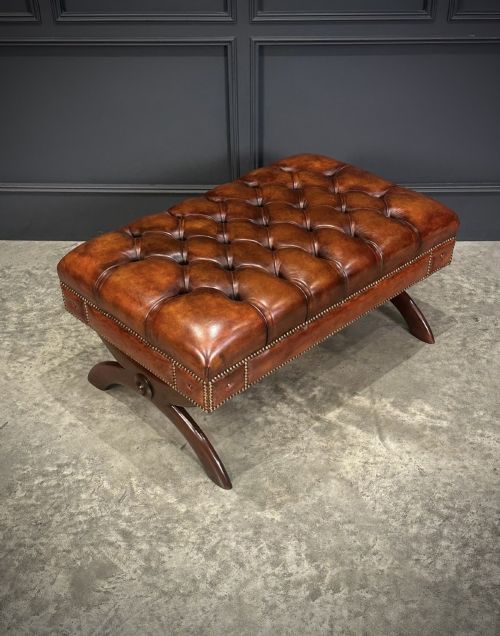
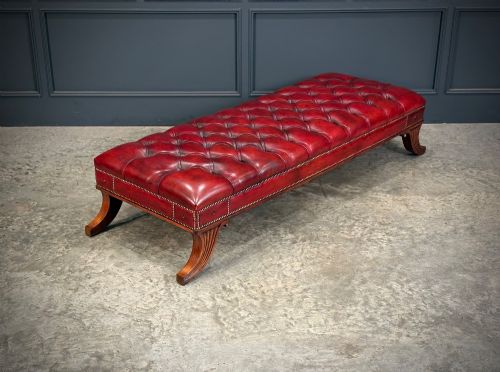
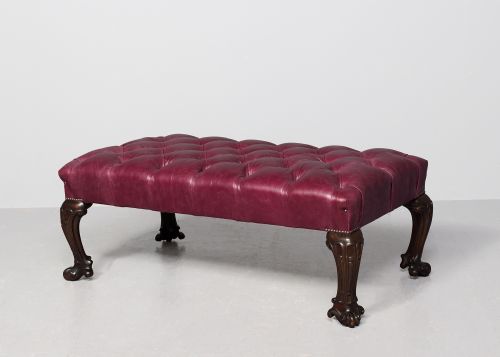
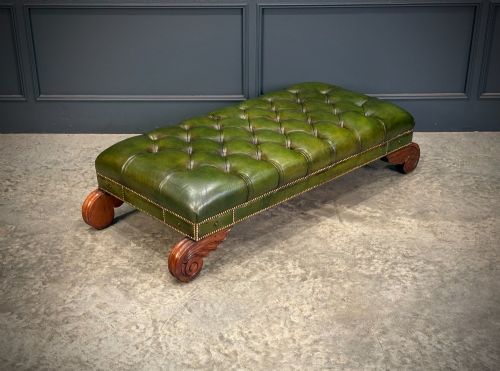
A Chesterfield footstool sits low to the floor, combining deep-buttoned leather upholstery with robust frames of mahogany, walnut, oak, or hardwood. These pieces serve primarily as footrests, centre stools, or library window seats, often matching the stout proportions and rolled forms associated with traditional English seating.
The versions most commonly met across these listings span the Regency, Victorian, and early twentieth-century periods. Examples range from compact footstools to large red, green, or oxblood leather ottomans, occasionally accompanied by matching armchairs or built with substantial wooden underframes.
How they were made
Makers built these footstools using sturdy timbers such as mahogany, walnut, and light oak to form the structural base and legs. Hardwood framing supports the considerable weight of the internal stuffing and the heavy leather hides.
Upholstery relies on traditional hand-buttoning techniques to secure the leather hide into deep indentations across the surface. Brass details, such as stud work or castors, frequently finish the edges and feet of these pieces.
Chesterfield Footstool Retail Price Guide 2026
Typical asking prices for chesterfield footstool among the pieces listed under this phrase on Sellingantiques today, from the lower quarter to the upper quarter. They describe what is for sale here now, not the wider market.
Listings demonstrate that these footstools span the Regency, Victorian, and Edwardian eras up to the 1930s, utilising leather, brass, mahogany, walnut, and oak.
What varies in quality
The distinction between ordinary pieces and superior examples lies in the depth of the buttoning and the richness of the leather hide. Hand-dyed leather with a mature patina elevates a piece above standard modern re-upholstery.
Frame construction and timber selection also divide the range. Solid mahogany or walnut frames with finely turned legs display a level of joinery superior to plain hardwood alternatives.
The Chesterfield Footstool Glossary
- Buttoned
- A method of upholstery where depressions are formed in the padding using tight cord or thread, often secured with leather buttons. This technique keeps the internal stuffing evenly distributed.
- Hide
- The natural leather skin used to upholster the top surface of the footstool. It often shows hand-dyed coloration and a soft sheen developed through age.
- Centre stool
- A large, freestanding stool designed to sit in the middle of a room or library rather than against a wall. These pieces function as tables or seats.
- Ottoman
- A fully upholstered piece of furniture without a back or arms, frequently used interchangeably with large footstools. It provides a broad surface for resting feet or sitting.
Chesterfield Footstool: Frequently Asked Questions
What is a Chesterfield footstool?
A Chesterfield footstool is a low, traditionally upholstered seat featuring deep buttoning across a leather top. These pieces are built on timber frames ranging from mahogany to oak.
They appear in various sizes, from compact footrests to large country house centre stools and ottomans designed for libraries and living spaces.
How were they used historically?
Historically, these stools served multiple purposes in traditional English interiors, functioning as footrests before armchairs or as occasional window seats in libraries.
Large centre stools also provided flexible seating in the middle of grand rooms or served as surfaces for holding books and trays.
How do I live with one?
Living with a leather footstool involves treating the material with appropriate leather balms to maintain its suppleness and prevent drying. Placing them away from direct heat sources preserves the hide.
Their sturdy wooden frames and durable leather surfaces make them practical for everyday use as coffee table alternatives or footrests.
How do I date a footstool?
Dating relies on examining the timber species, leg turnings, and the style of the frame construction. Regency and Victorian examples show distinct joinery methods and foot designs compared to later twentieth-century pieces.
The characteristics of the leather hide and the type of underlying webbing also help place a piece within periods such as the nineteenth century or the 1930s.