


Walnut Leather Footstool
These walnut leather footstools combine solid timber frames with upholstered leather tops for practical everyday seating.
Walnut Leather Footstool
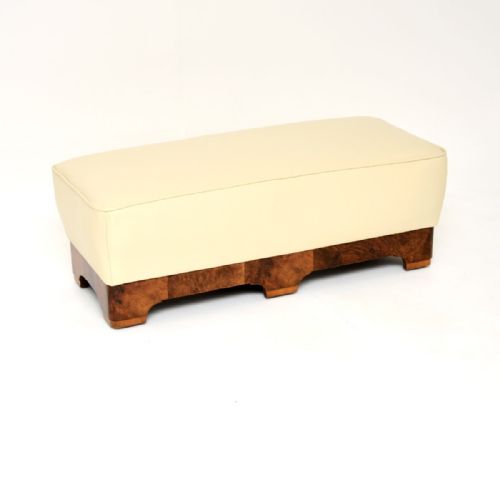
A walnut leather footstool is a low seating piece built from walnut timber and finished with a leather upholstery top. The pieces appearing here range across Victorian, 19th Century, and 1930 Art Deco periods.
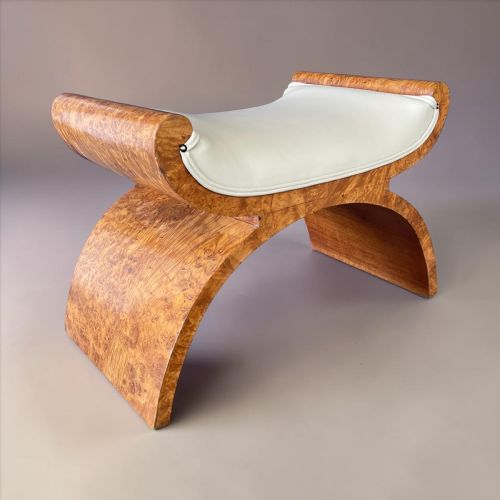
Forms include long foot stools, library window stools, X-framed examples, and low hall seats. Many incorporate specific revival styles such as Queen Anne, Carolean, and Renaissance revivals alongside distinct Art Deco designs.
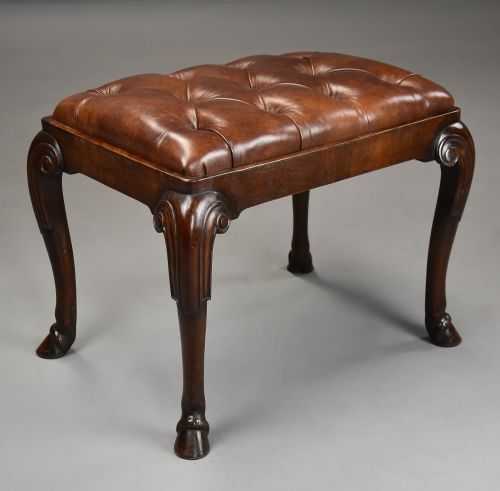
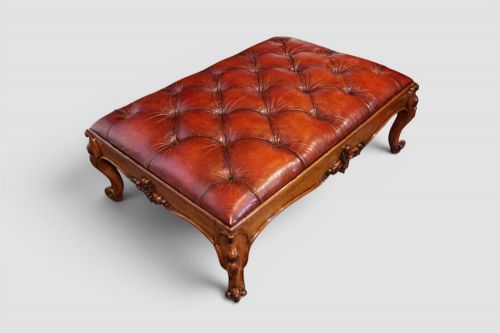
Buyers meet variations involving buttoned red leather, burr walnut veneers, and carved cabriole legs. These items function equally well as traditional footrests or low occasional coffee tables.
How they were made
Frames rely upon solid walnut or burr walnut timbers, often shaped into cabriole legs, X-frames, or turned supports. Joinery techniques secure the timber structures to withstand regular weight and daily use.
Upholstery employs leather tops, frequently finished with buttoned detailing. Brass elements sometimes accent the designs, particularly on period library window stools and decorative variants.
Some X-framed stools look entirely ready to host a very dignified Victorian pet if the humans aren't using them.
What varies in quality
The sophistication of the woodwork sets the standard for each piece. Carved cabriole legs, crisp X-frame geometry, and figured burr walnut veneers elevate the visual weight of the frame.
The execution of the leather top and its buttoning defines the finish. Hand-dyed English leather and precise button tufting separate standard utility seating from finer library and parlour examples.
Harry and Lou Epstein
The Walnut Leather Footstool Glossary
- Cabriole leg
- A furniture leg that curves out and then narrows inward, typically ending in an ornamental foot. This form appears frequently on Queen Anne style walnut stools.
- X-frame
- A structural base formed by intersecting diagonal timbers that create an X shape when viewed from the side. This format provides sturdy support for Victorian and nineteenth-century stools.
- Carolean revival
- A style of furniture reproduction emulating the rich carving and ornate turning popular during the reign of Charles II. Pieces in this manner utilise walnut and deep upholstery.
- Buttoned leather
- An upholstery technique where leather is pulled tight and secured with deep buttons to create a padded, diamond-patterned surface. This treatment is common on Victorian library stools.
Walnut Leather Footstool: Frequently Asked Questions
What periods do these walnut stools come from?
The available pieces span the Victorian era, the nineteenth century generally, and the 1930 Art Deco period. Styles draw on earlier revivals including Queen Anne and Carolean motifs alongside modernist designs.
Matching the timber, leg shape, and upholstery style helps determine the approximate age of each individual stool.
How were these stools originally used?
These items served various roles in period interiors as footrests, low hall seats, and library window stools. Long variants and buttoned examples often doubled as low coffee tables.
Their sturdy walnut frames and leather surfaces allowed them to withstand heavy daily use in reception rooms and studies.
How do I care for the leather top?
Leather upholstery benefits from regular dusting and occasional treatment with appropriate conditioning creams to keep the material supple. Avoiding direct sunlight prevents the leather from drying out or fading.
Gentle cleaning maintains the finish of hand-dyed English leather surfaces found on Victorian and Art Deco pieces.
Can these stools function as coffee tables?
Larger rectangular and buttoned variants provide a stable surface suitable for holding books or decorative objects. Their low height mirrors standard proportions for occasional tables.
Using a leather and walnut stool in this capacity combines solid wooden construction with a durable wipe-clean top.