


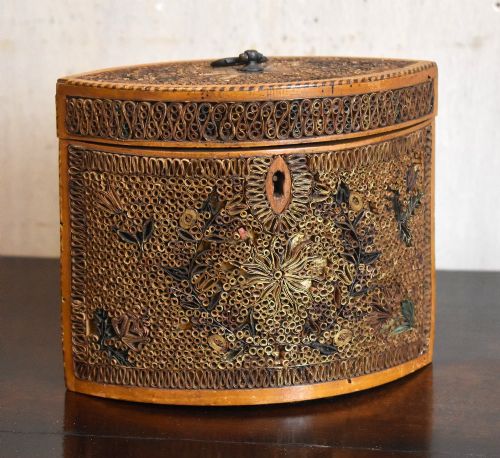


Decorative Wooden Caddy
A decorative wooden caddy is a refined receptacle for storing precious leaf, shaped by centuries of joinery and cabinet-making to sit handsomely in the parlour.
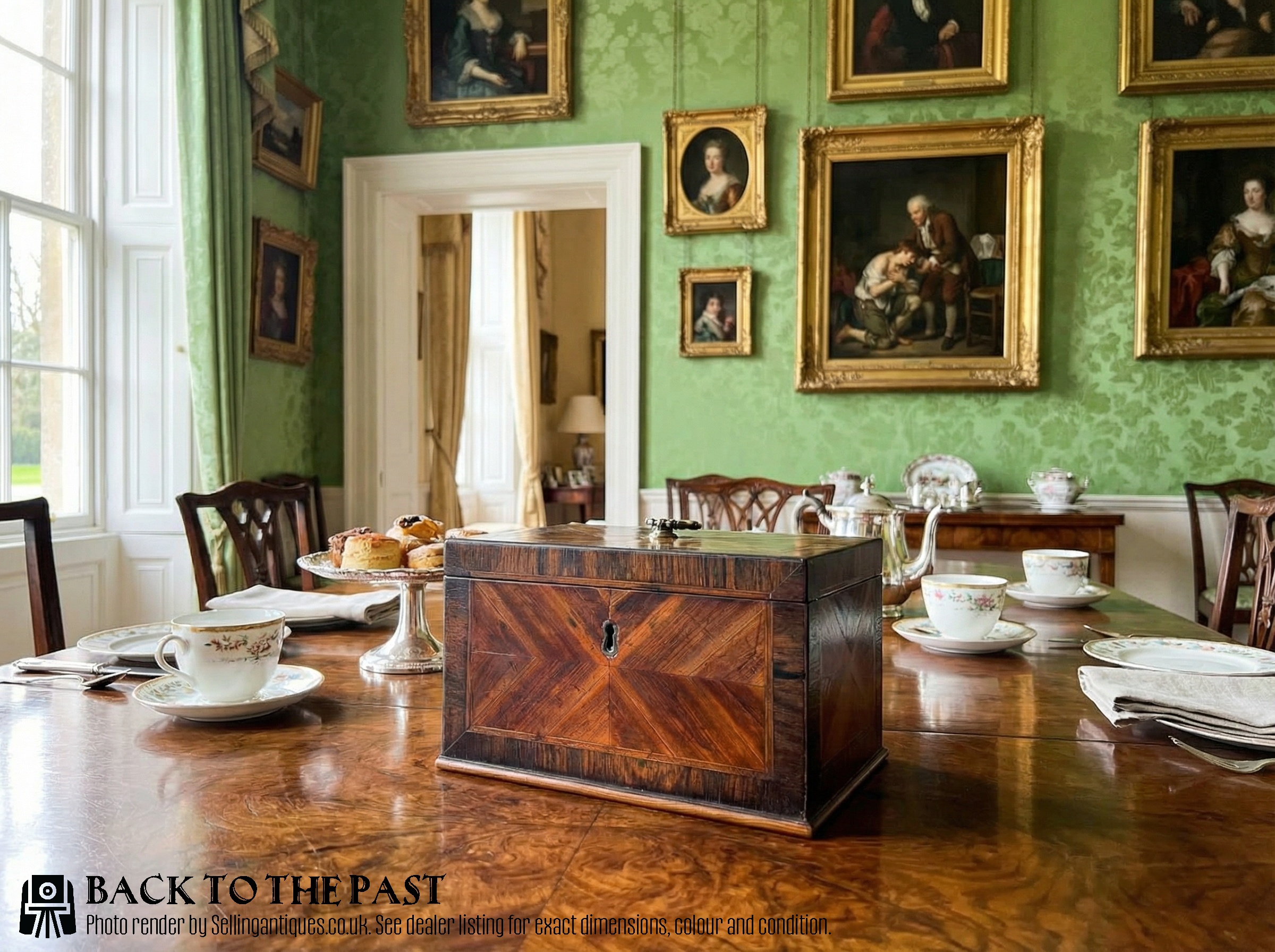
Decorative Wooden Caddy
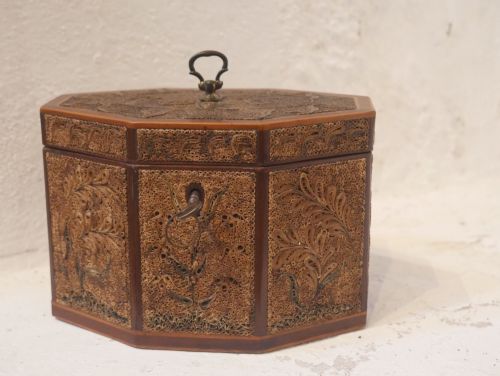
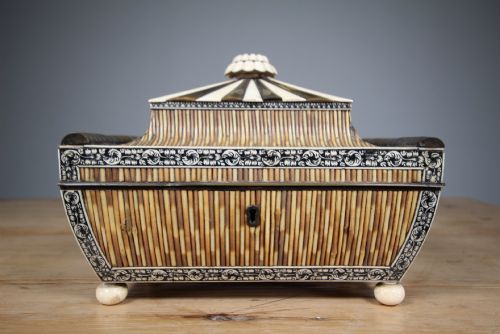
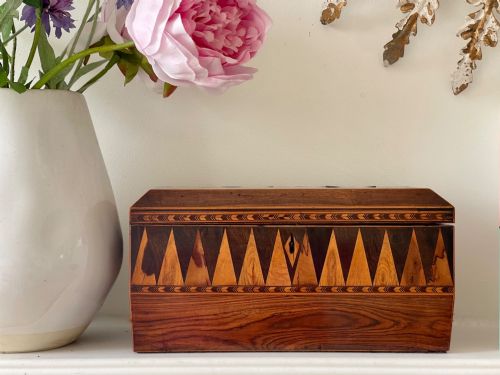
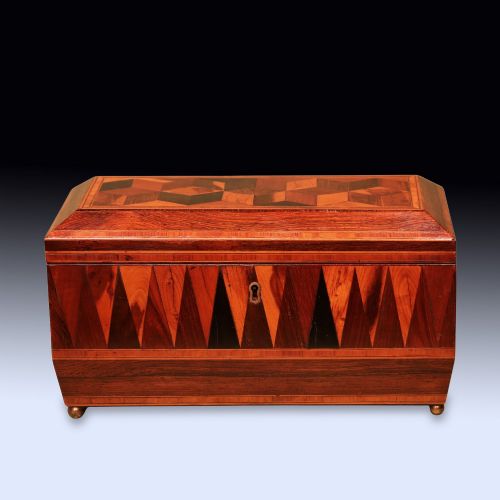
A decorative wooden caddy takes many structural forms across the Georgian, Regency, and Victorian eras, ranging from simple rectangular containers to sarcophagus shapes and barrel profiles. The listings show a strong presence of Georgian and Regency examples alongside later Victorian interpretations.
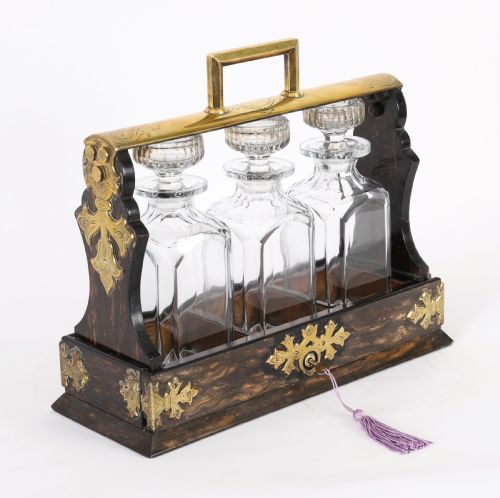
Beyond standard tea storage, these pieces frequently overlap with keepsake boxes, sewing boxes, and specialised collector cabinets. Walnut, rosewood, mahogany, and exotic veneers define the primary body timbers encountered here.
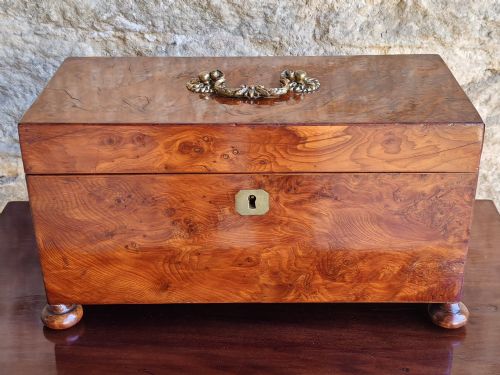
Makers often shaped these containers into navette, hexagonal, semi-circular, or sarcophagus profiles to display the natural grain of woods like yew, padouk, and burr walnut. Buyers examine these diverse silhouettes to find the exact proportion that suits a room.
Evaluating Execution
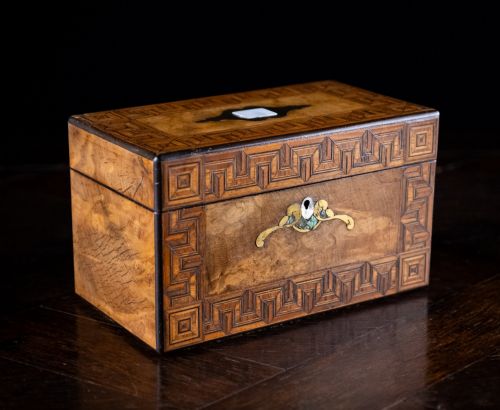
Quality rests upon the crispness of the parquetry, the precision of the brass or mother-of-pearl inlay, and the selection of figured timber such as burr yew or amboyna. Finer pieces demonstrate careful book-matching of veneers across the lid and sides.
The integrity of the interior compartments, original glass mixing bowls, and functioning locks distinguish superior examples. Superior craftsmanship shows in the seamless alignment of mitred joints and the preservation of original surface finishes.
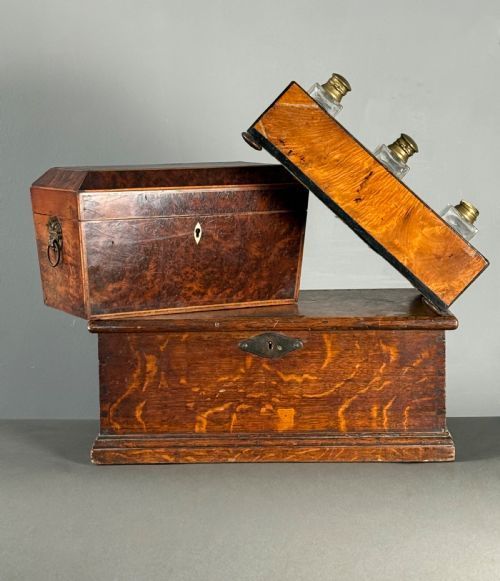
Several caddies come equipped with tiny original glass mixing sticks for brewing tea blends at the table.
Tahan of Paris
The Decorative Wooden Caddy Glossary
- Sarcophagus
- A box shape featuring a sloping lid and often resting on bun feet, mimicking ancient stone tombs. This silhouette became especially popular during the Regency period for larger tea containers.
- Tunbridge Ware
- Woodworking involving tiny, precisely cut coloured wood tesserae assembled into mosaic pictures or geometric bands. It originates from the spa town of Tunbridge Wells.
- Parquetry
- Geometric mosaic woodwork formed by small veneer pieces applied to a structure. Craftsmen arranged contrasting timbers like mahogany and boxwood to create repeating patterns.
- Penwork
- Surface decoration created by drawing intricate designs in ink upon a prepared wood background before varnishing. This technique appears on games boxes and decorative caddies.
- Navette
- A pointed, boat-like oval shape utilised for the footprint of specific Georgian tea containers. The profile offers a graceful alternative to standard rectangular boxes.
Decorative Wooden Caddy: Frequently Asked Questions
What was a decorative wooden caddy used for?
These vessels originally served to store and protect expensive tea leaves under lock and key in the formal dining room or parlour. Servants or hosts measured out precise portions using internal canisters before locking the lid.
Over time, many surviving examples transitioned into general receptacles for keepsakes, letters, or sewing accessories. Their compartmentalised interiors made them adaptable for various domestic storage needs.
How do I identify a Regency period caddy?
Regency pieces often display classical architectural influences, including sarcophagus silhouettes, brass lion-mask ring handles, and bold brass stringing. Cabinet-makers heavily utilised dark exotic timbers like rosewood during this era.
Feet frequently take the form of carved paw supports, ball feet, or flattened bun shapes. The joinery generally exhibits high precision with symmetrical grain selection across the main facades.
Are interior fittings usually original?
Many surviving caddies retain elements of their original fitted interiors, such as foil-lined compartments, removable canisters, or central glass mixing bowls. Replacement liners and missing mixing sticks remain common due to centuries of domestic handling.
Examining the interior timber and lining reveals whether compartments have undergone modern restoration. Complete interiors naturally command greater interest from collectors seeking authentic domestic items.
How should I care for a wood caddy?
Wooden caddies require placement away from direct sunlight and strong heat sources to prevent timber splitting and veneer shrinkage. Maintaining a stable indoor humidity preserves both the wood and delicate inlays like mother-of-pearl.
Occasional dusting with a soft, dry cloth is generally sufficient for surface maintenance. Avoid harsh chemical polishes that can degrade historical French polish or wax finishes.