






Rosewood Box with Brass
A rosewood box with brass brings together rich dark timber and bright metal inlay, offering a practical container that has survived from the Regency, Georgian and Victorian periods.
Rosewood Box with Brass
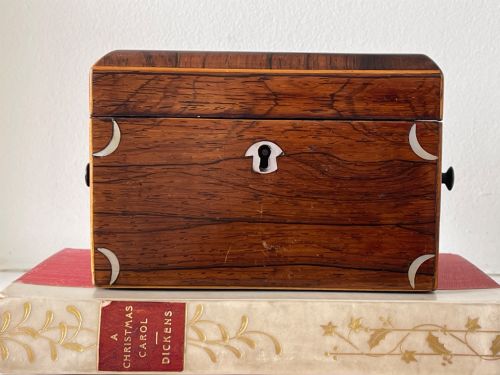
A rosewood box with brass covers a variety of antique forms designed for writing, storage and correspondence across the Georgian, Regency and Victorian eras. These containers served domestic and travel needs, ranging from simple tea caddies and sewing boxes to fully fitted writing slopes and jewellery boxes.
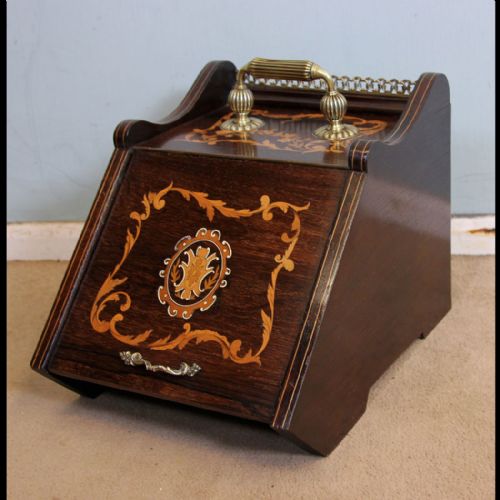
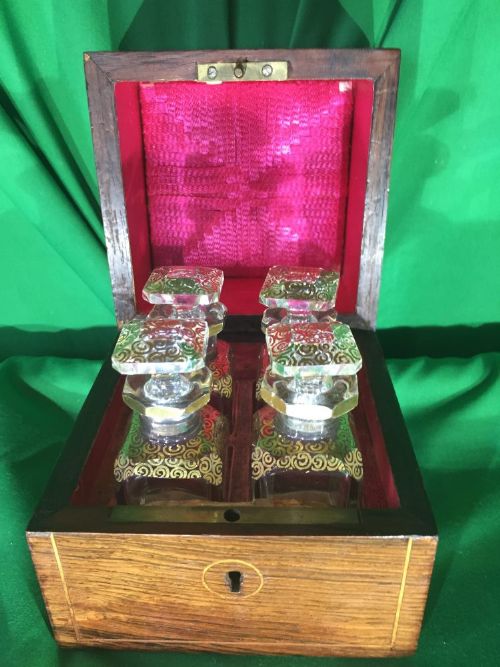
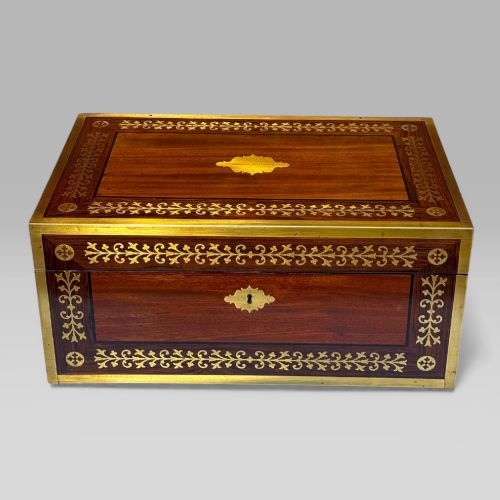
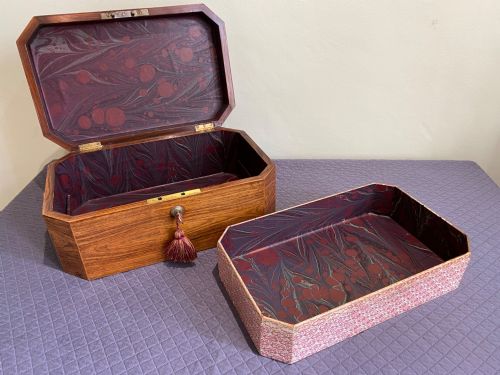
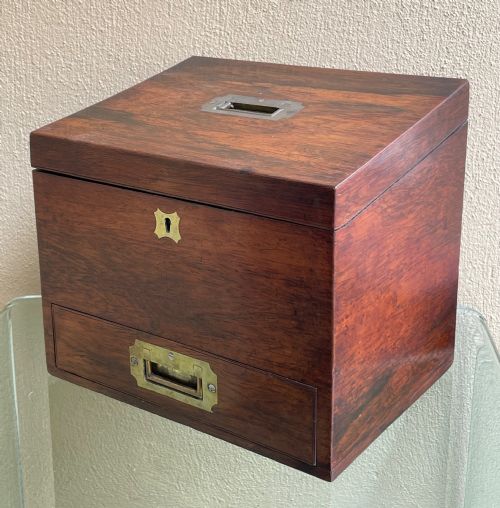
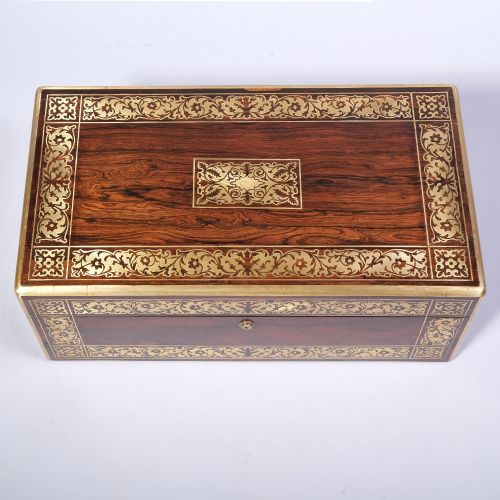
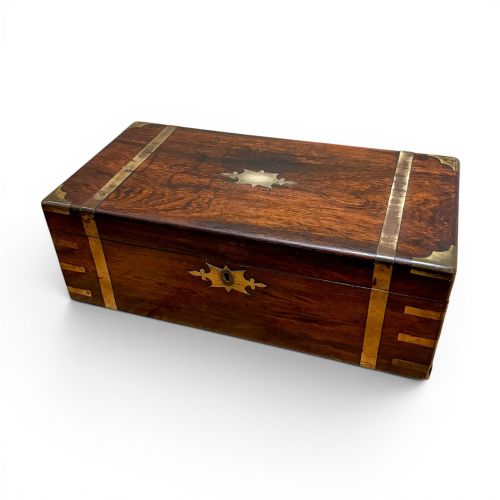
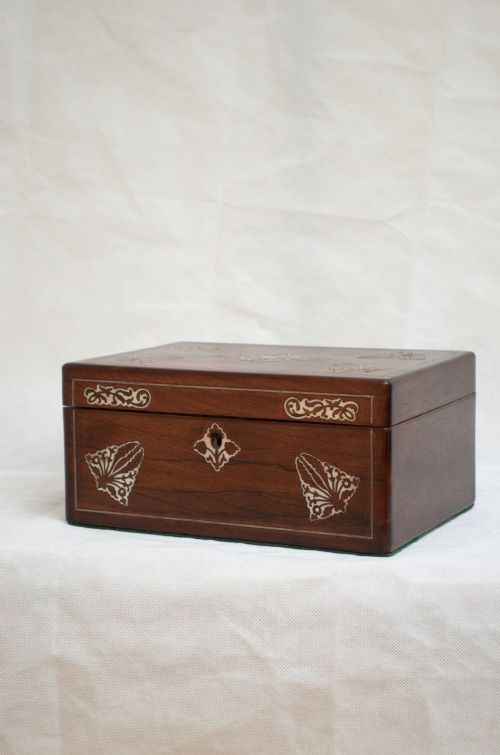
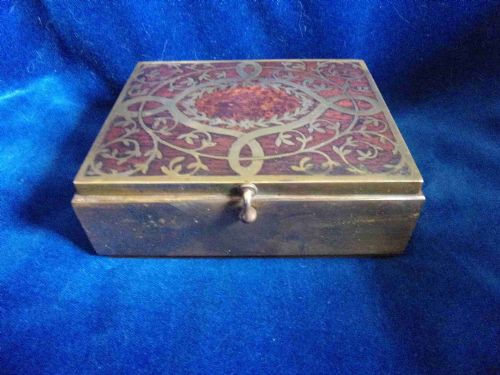
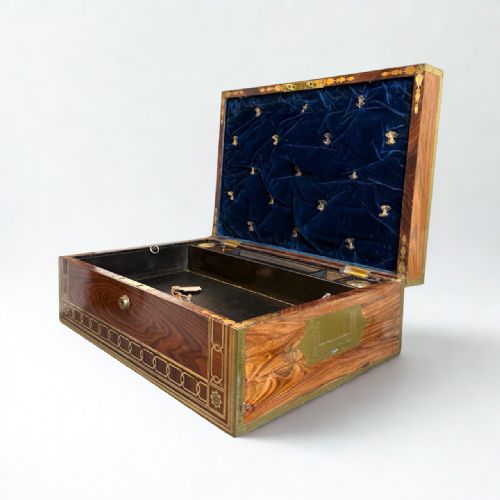
The pieces on this page are most commonly Victorian or Regency examples, frequently featuring brass banding, cartouches or cut brass inlay set into dense rosewood. Writing slopes and jewellery boxes dominate the forms encountered here, often retaining fitted interiors with trays, velvet or leather surfaces, and secret drawers.
Materials and construction
Cabinetmakers built these boxes using heavy rosewood timber for the primary structure, selected for its deep grain and dark hue. Brass was incorporated either as structural edge binding to protect corners during travel or as precise inlaid motifs across the lid and front panel.
Internal components often combined secondary timbers such as mahogany with glass inkwells, steel hardware, and linings of velvet or leather. Boxwood marquetry inlay also appears alongside brass elements on specific Regency and Victorian pieces.
Rosewood Box with Brass Retail Price Guide 2026
Typical asking prices for rosewood box with brass among the pieces listed under this phrase on Sellingantiques today, from the lower quarter to the upper quarter. They describe what is for sale here now, not the wider market.
Several writing slopes include secret drawers behind dummy partitions, built so owners could hide private papers from prying housemaids.
Judging quality in rosewood and brass boxes
Quality rests on the precision of the brass inlay and the tightness of the mitred corner joints in the rosewood carcass. Superior examples display flush metalwork where the brass sits perfectly level with the surrounding timber without gaps.
The presence of original fitted interiors, secret drawers, working keys and functional locking mechanisms elevates a piece. Better boxes also maintain well-preserved rosewood grain contrast and intact interior linings such as velvet, leather or newly restored velvet trays.
The Rosewood Box with Brass Glossary
- Writing slope
- A portable desk that opens on a hinge to reveal a slanted writing surface, inkwells, and compartments for stationery. These boxes fold flat for travel.
- Campaign style
- Furniture and boxes designed for military travel, characterised by brass corner bindings and recessed carrying handles for durability. This style appears on mid nineteenth century pieces.
- Tea caddy
- A container designed to store loose tea leaves, often featuring internal lidded compartments to keep different blends separate. Examples from the Victorian period frequently utilise rosewood and brass.
- Cartouche
- An ornamental panel, often in the shape of an oval or shield, inlaid into the lid of a box in brass. It was frequently used for engraving initials.
- Marquetry
- Decorative wood veneer work where pieces of different woods, such as boxwood, are fitted into a contrasting background. It often decorates Victorian tea caddies and davenports.
Rosewood Box with Brass: Frequently Asked Questions
What is a writing slope?
A writing slope is a portable desk that folds open to provide an angled surface for writing letters. Inside, they typically contain compartments for pens, paper, and inkwells.
Many examples from the Georgian and Victorian periods also feature hidden compartments or secret drawers accessed by removing internal panels.
How do I date a rosewood box?
Dating relies on stylistic clues, construction methods, and materials associated with specific periods like the Regency or Victorian eras. Regency boxes often feature intricate cut brass inlay, while later Victorian versions frequently utilise heavier brass banding and fitted jewellery trays.
Mouldings, lock types, and secondary timbers inside the box also help narrow down the decade of manufacture.
How do I care for rosewood?
Rosewood requires stable humidity levels and protection from direct sunlight to prevent the timber from drying out or fading. Gentle dusting with a dry, soft cloth is generally sufficient for maintenance.
Avoid placing these boxes near heat sources or using modern silicone polishes, which can damage antique French polish or wax finishes.