




Victorian Lockable Caddy
These victorian lockable caddy pieces are secure, fitted containers for tea leaves or decanters, prized for their handsome woods and working locks.
Victorian Lockable Caddy
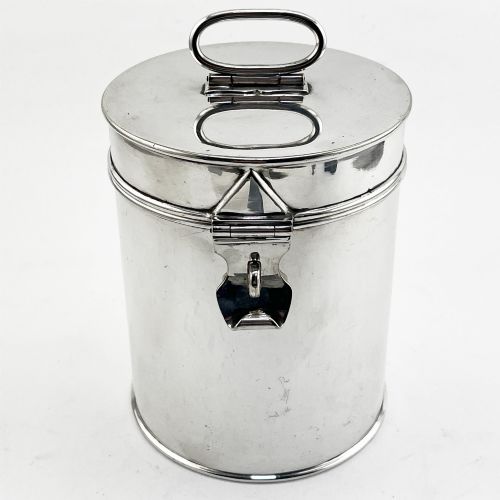
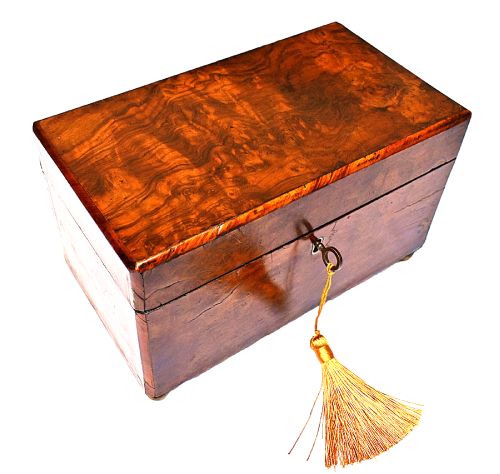
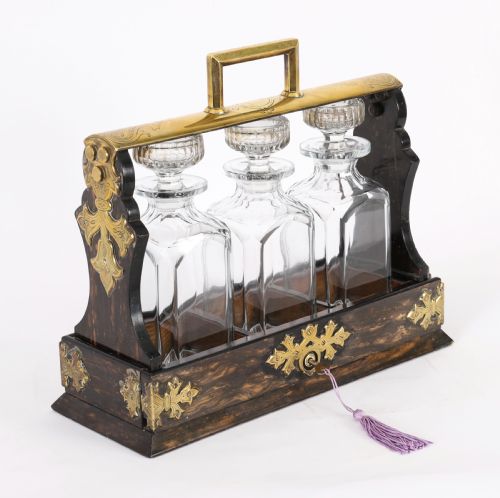
A victorian lockable caddy encompasses both tea storage boxes and spirit tantalus sets designed to keep valuable contents secure. These pieces reflect the domestic habits of the nineteenth century, where tea and spirits were closely guarded under lock and key.
The selections on this page span tea caddies in sarcophagus and dome forms alongside brass-mounted tantalus sets fitted with cut crystal decanters. Most examples date from the Victorian period, though related Regency and William IV pieces also appear.
Materials and construction
Cabinetmakers utilised dense timbers such as rosewood, mahogany, coromandel, and walnut, often applying intricate parquetry, marquetry, or brass inlay to the exterior surfaces. Many boxes feature domed lids or sarcophagus shapes built with sturdy internal compartments.
Metal fittings including brass handles, escutcheons, and working locks provide structural security, whilst silver plating and sterling silver appear on select barware items and tea caddies.
Victorian Lockable Caddy Retail Price Guide 2026
Typical asking prices for victorian lockable caddy among the pieces listed under this phrase on Sellingantiques today, from the lower quarter to the upper quarter. They describe what is for sale here now, not the wider market.
Design styles span the Victorian era, Regency period, Napoleon III, and William IV.
Assessing quality and craftsmanship
Quality rests in the choice of timber veneer, the precision of the inlay work, and the integrity of the original locking mechanism with its matching key. Dense burr veneers and crisp brass mountings distinguish superior examples.
Finer boxes retain fitted interior compartments, intact glass mixing bowls, and original crystal decanters, whereas heavily restored or altered pieces lack the cohesion of untouched period specimens.
The Victorian Lockable Caddy Glossary
- Sarcophagus form
- A box shape featuring a domed or sloping lid resembling a stone coffin, popular for nineteenth-century tea caddies.
- Tantalus
- A locking wooden stand that holds decanters visible yet out of reach until the mechanism is unlocked with a key.
- Escutcheon
- A flat plate of brass surrounding the keyhole that protects the surrounding wood from wear.
- Marquetry
- The art of applying decorative pieces of veneer to a structure to form intricate patterns and pictures.
- Coromandel
- A dense, heavily grained exotic timber prized for fine nineteenth-century cabinet work.
Victorian Lockable Caddy: Frequently Asked Questions
What is a victorian lockable caddy used for?
These boxes were originally manufactured to store valuable dry tea leaves securely away from household servants or damp air. Today, collectors use them to store small keepsakes, jewellery, or desk accessories.
Larger tantalus versions were built to secure decanters of spirits in dining rooms and studies. Both forms served as functional items of household security and decorative status.
How do I know if the lock works?
Many surviving pieces retain their original working locks and accompanying keys, which adds significantly to their utility and appeal. Descriptions will generally note whether a key is present and if the mechanism turns properly.
If a key is missing, a specialist locksmith can often fit a period-appropriate replacement. The internal bolt should slide smoothly when turned.
How do I tell different wood types apart?
Rosewood typically displays a deep reddish-brown hue with dark grain figuring, whereas mahogany presents a smoother, lighter reddish tone. Coromandel is heavier with distinctive contrasting dark stripes.
Burr walnut and burr maple exhibit swirling, knotty grain patterns created from tree growths. These decorative veneers were selected for the most prominent exterior surfaces.
How should I care for polished wood?
Keep wooden boxes away from direct sunlight and heat sources to prevent the veneers from drying out and lifting. Regular dusting with a soft, dry cloth is sufficient for maintenance.
Avoid using silicone-based polishes or excessive moisture. Occasional application of a traditional beeswax helps nourish the historic timber.