







Georgian Style Tea Chest
A georgian style tea chest is a refined timber box designed to preserve leaf tea, prized for its intricate marquetry and enduring elegance.
Georgian Style Tea Chest
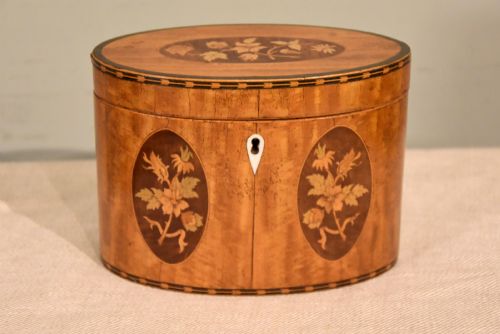
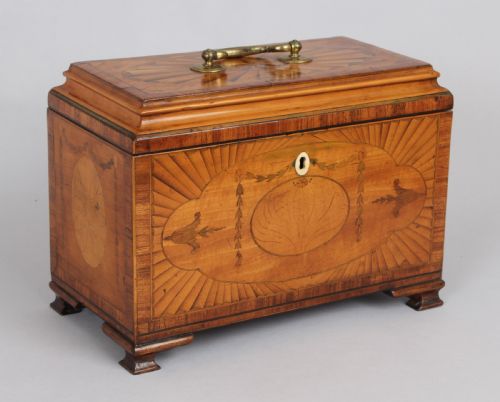
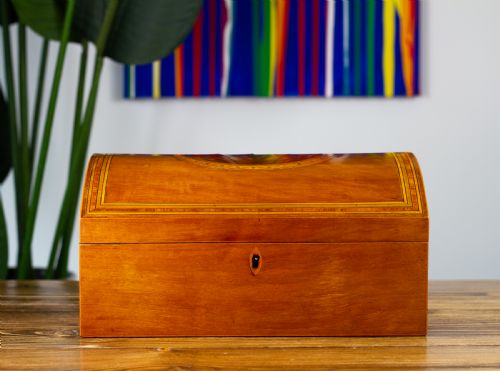
When searching for a georgian style tea chest, a buyer encounters sophisticated wooden containers designed to store and lock away expensive tea leaves during the eighteenth and nineteenth centuries. These items take the form of tea caddies, boxes on stands, and chests or coffers.
The versions met most frequently on this page date from the Georgian and Victorian periods, spanning the late eighteenth century up to the nineteenth century. Examples range from simple octagonal and oval geometries to elaborate sarcophagus forms.
Many specimens utilise fine decorative timbers such as satinwood and mahogany, often enhanced by contrasting boxwood, ebony, and bone details. Such boxes reflect the high status of tea as a precious commodity in period households.
How they were made
Cabinet makers constructed these pieces using dense hardwoods like mahogany and rosewood as a sturdy structural base. They applied decorative veneers of satinwood and partridge wood over this core to create polished exterior surfaces.
Craftsmen embellished the exteriors using intricate wood inlay, marquetry, and butterfly or shell motifs composed of boxwood, ebony, and bone. They finished many boxes with brass hinges, escutcheons, and internal compartments fitted for tea storage.
Georgian Style Tea Chest Retail Price Guide 2026
Typical asking prices for georgian style tea chest among the pieces listed under this phrase on Sellingantiques today, from the lower quarter to the upper quarter. They describe what is for sale here now, not the wider market.
Some chests include tiny interior lids so well fitted that lifting one creates an air suction pop.
What varies in quality
The refinement of the timber selection and the precision of the wood inlay distinguish superior examples from simpler ones. Elaborate marquetry and well-executed shell or butterfly motifs indicate a higher level of craftsmanship.
Structural integrity and the retention of original brass fittings and internal divisions affect the standing of a piece. The warmth of the polished grain and the subtlety of contrasting veneers elevate the visual impact of the work.
The Georgian Style Tea Chest Glossary
- Tea caddy
- A small box or chest designed to hold loose tea leaves securely under lock and key. These containers often featured internal lids or compartments.
- Marquetry
- Decorative veneer work forming pictures or geometric patterns by assembling small pieces of different coloured wood. This technique defined the decorative surface of finer chests.
- Satinwood
- A lustrous, hard timber with a yellowish sheen utilised extensively for eighteenth-century cabinet work and veneers. It provided a bright contrast against darker woods.
- Escutcheon
- A flat plate of brass surrounding a keyhole to protect the surrounding wood from wear. It serves both a functional and an ornamental purpose.
- Sarcophagus
- A distinct chest shape featuring a sloping lid reminiscent of an ancient stone coffin. Victorian makers adapted this classical silhouette for luxury tea boxes.
Georgian Style Tea Chest: Frequently Asked Questions
What is a georgian style tea chest?
A georgian style tea chest is a wooden box created to store and protect valuable tea leaves in period homes. These pieces often feature fitted interior compartments and locking mechanisms.
Craftsmen built them using dense timbers like mahogany and satinwood, frequently decorating the exteriors with intricate marquetry and contrasting wood inlays.
How were these chests used?
Households used these chests to keep expensive dry tea safe from moisture, odours, and theft in the parlour or dining room. The mistress of the house typically held the key to portion out the leaves.
Inside, lidded compartments separated different varieties of green and black tea before brewing.
How do I tell Georgian from Victorian pieces?
Georgian pieces often favour lighter veneers like satinwood, paired with delicate oval, octagonal, or hexagonal shapes and subtle butterfly or shell inlays. They date from the eighteenth century up to around eighteen hundred.
Victorian examples frequently utilise darker rosewood and adopt heavier sarcophagus silhouettes with bolder marquetry decoration, reflecting nineteenth-century design shifts.
How do I care for wooden tea caddies?
Keep these wooden boxes away from direct sunlight and sources of extreme heat to prevent the delicate satinwood and mahogany veneers from drying or cracking. Maintain a stable indoor environment.
Dust the surface gently with a dry, soft cloth and avoid harsh chemical polishes that might damage the antique finish.