

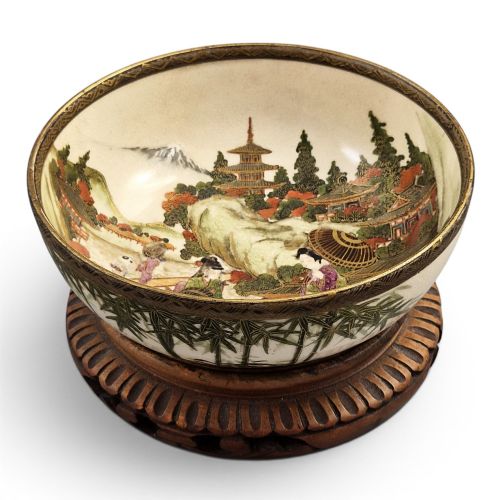
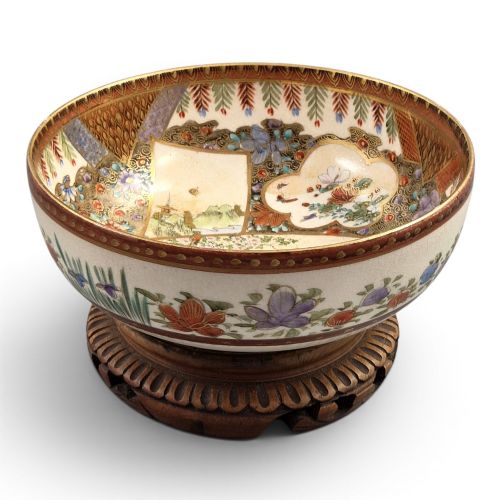


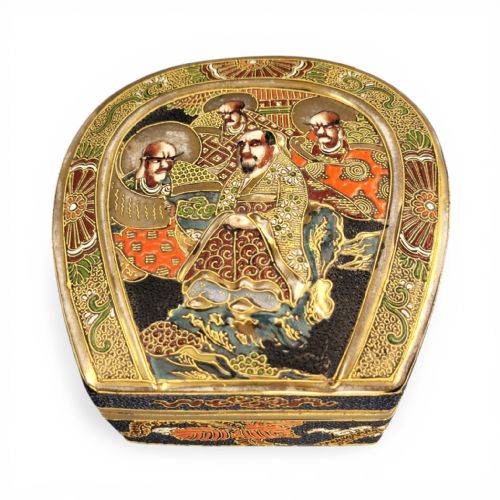


Decorative Satsuma Pottery
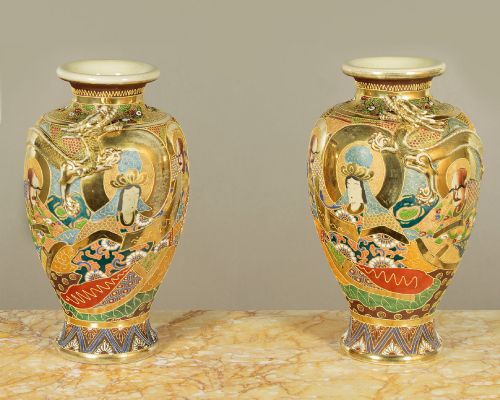
Decorative satsuma pottery brings together intricate hand-painted Japanese earthenware, heavy gilding and rich enamel palettes from the Meiji period onwards.
Decorative Satsuma Pottery
Decorative satsuma pottery comprises a wide array of ceramic vessels and figures originating in Japan, spanning the late nineteenth century through to the Showa period. Collectors encounter everything from miniature cabinet vases and shallow dishes to large palace vases, garnitures, jardinieres and table lamps.
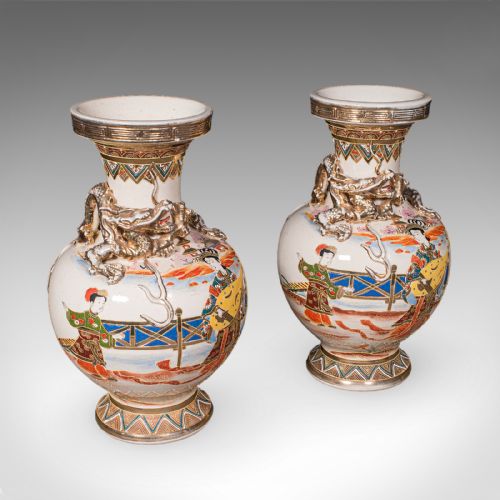
The majority of pieces seen on this page date from the Meiji period and the early twentieth century, reflecting both traditional Kyoto workshops and later production centres. Forms range from globular and baluster vases to intricate okimono figures, koro incense burners and lidded boxes.
Makers utilised characteristic earthenware bodies covered in a distinctive crackle-glaze, serving as a canvas for dense pictorial scenes. These items were produced both for domestic use and export markets, adapting traditional Japanese motifs for Western interiors.
How they were made
Potters shaped the porous earthenware body, applying a cream or ivory glaze that developed an intentional network of fine crackles upon cooling. Artisans then painted intricate designs by hand using mineral enamels, often building up raised patterns known as moriage.
Gold leaf and rich gilt work were applied extensively to outline figures, frame panels and embellish backgrounds, adding a reflective quality to the matte enamel colours. Many finer pieces bear painted signature seals or the Shimazu family crest on the base, identifying the kiln or artist.
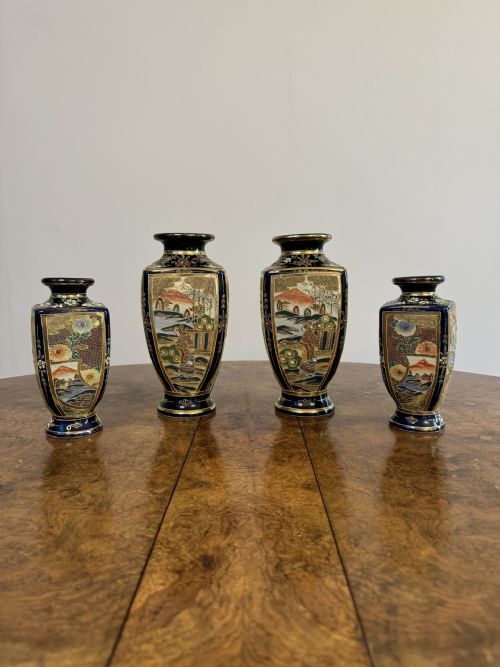
Listings feature periods spanning the late nineteenth century through to the 1930s, encompassing earthenware forms decorated with gold leaf, enamel and cobalt blue.
What varies in quality
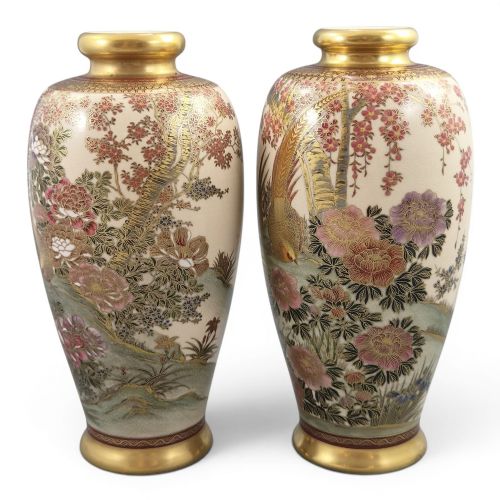
The distinction between standard export items and the finest studio pieces lies in the precision of the brushwork and the density of the gilding. Master workshops such as Kinkozan or Hododa achieved extraordinary detail in facial expressions, landscape depth and millefleur patterns.
Purity of the crackle-glaze ground and restraint in the composition separate superior Meiji examples from later, more commercial output. Heavily layered moriage and crisp cobalt blue accents indicate heightened craftsmanship.
Koshida·Manpei·Gyokkō·Kozan·Toshozan·Kinkozan·Chosei·Shuzan·Nanzan·Nikko·Kizan·Hakusan·Hododa
The Decorative Satsuma Pottery Glossary
- Moriage
- A Japanese pottery technique where slip or enamel is piped onto the surface in dots or lines to create a raised, tactile pattern. This decoration often catches the gilt highlights and adds significant depth to floral and geometric borders.
- Okimono
- A standalone Japanese display figure carved from wood or modelled in ceramic for placement on a shelf or tokonoma alcove. These figures frequently depict deities, historical figures or everyday workers with expressive detail.
- Koro
- A traditional Japanese incense burner typically supported on three legs and fitted with a pierced cover. They appear in ceramic and metalwork forms, designed to diffuse fragrance during tea ceremonies or formal gatherings.
- Shimazu Mon
- The heraldic badge or crest of the Shimazu clan, featuring a cross within a circle. This mark appears frequently on satsuma pottery originating from the Satsuma domain and associated Kyoto workshops.
- Millefleur
- A decorative pattern composed of a dense field of tiny, multicoloured flowers covering the entire surface of the ceramic. Artisans painted these intricate arrangements by hand across bowls and vases during the Meiji period.
Decorative Satsuma Pottery: Frequently Asked Questions
What is satsuma pottery?
Satsuma pottery is a distinct type of Japanese earthenware characterised by a pale, ivory-coloured crackle-glaze decorated with polychrome enamels and heavy gold leaf. Originating in Satsuma Province, production later flourished in major artistic centres like Kyoto and Yokohama for both local and international markets.
These ceramics range from tiny cabinet vases to large exhibition pieces, featuring detailed scenes of figures, landscapes and flora. The aesthetic bridged traditional Japanese iconography with the tastes of Victorian and Edwardian collectors.
How do I date satsuma pottery?
Dating relies heavily on stylistic shifts, artist signatures, kiln marks and the nature of the ceramic body. Pieces produced during the Meiji period generally exhibit finer hand-painted detail and heavier gilding compared to later twentieth-century output.
Examining the base often reveals artist signatures, workshop stamps or the Shimazu family crest, which help narrow down the period of manufacture. Earlier nineteenth-century examples tend to show softer enamel palettes and more restrained gilding.
How were satsuma vases used?
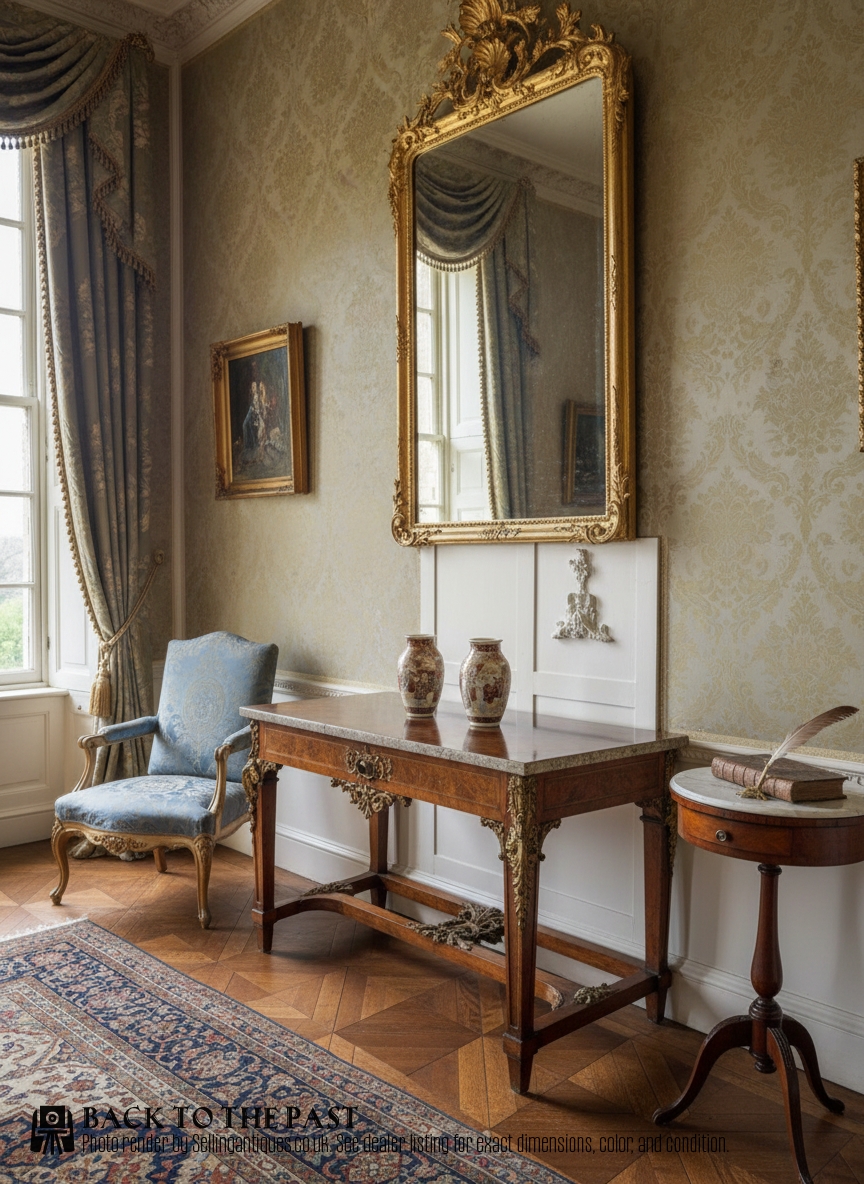
Satsuma vases served primarily as decorative display pieces within grand Victorian and Edwardian interiors, often arranged as pairs or part of larger garniture sets. Their rich gilt surfaces and narrative scenes were designed to catch the light and command attention in drawing rooms.
While some larger forms could hold dried botanicals or display branches, most were valued purely as ornamental works of art. Smaller vessels and bowls functioned as cabinet pieces or decorative catch-alls for affluent households.
How should I display satsuma pottery?
Display these ceramics in stable environments away from direct sunlight to preserve the delicate enamel colours and gold leaf highlights. Placing them on secure shelving or mantelpieces allows the intricate hand-painted panels to be viewed at close quarters.
Pairing vases with complementary wooden stands or grouping them with other Meiji period works enhances their visual impact. Gentle dusting with a soft, dry brush is sufficient for routine maintenance.